
TRAVEL MEMOIRS
Waiting for a Fire and Light Show From Hawaii’s Kilauea Volcano
When you visit Hawaii’s most active volcano, you are at the mercy of Madame Pele
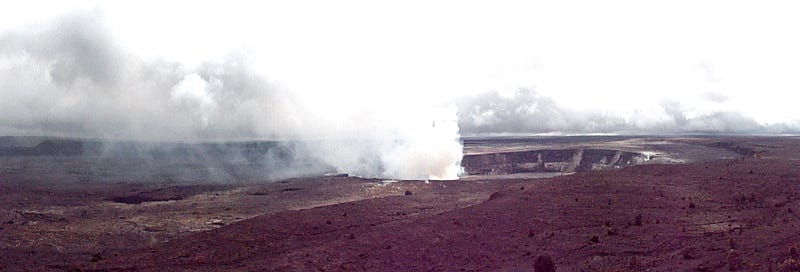
When I dreamed of my first visit to the erupting Kilauea Volcano on the Big Island of Hawaii, I expected to see exploding geysers of molten red lava shooting high into the air, and burning rivers of rock snaking down the blackened mountain to the Pacific, dying off in a plume of steam. But my experience turned out to be far less spectacular.
You can’t depend on Madame Pele (the Hawaiian Goddess of Fire and Volcanoes). We were warned. I did my homework and saw by the latest entries that there would be no lava flow to the ocean during my visit. There would be no active flows, and the massive Halema’uma’u Crater had been covered by a layer of solidified lava.
All of that is good news for the people who call this part of the island, home. An inactive Kilauea may be bad for business but an active volcano can be disastrous. It certainly didn’t stop my friends and me from going. You never know what Madame Pele has in store.
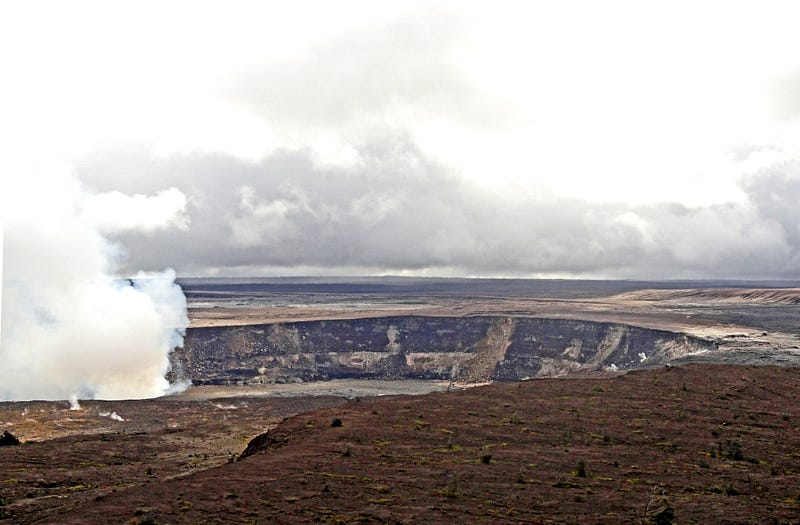
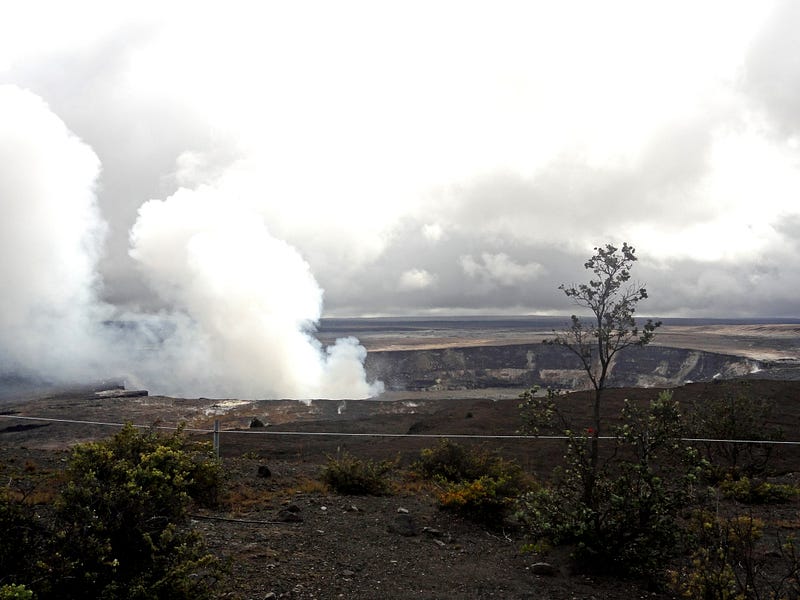
As soon as we entered Volcanoes National Park we were greeted by more than a dozen plumes of steam all around us. We stopped the truck and got out, making the short walk to the edge of an enormous crater. It is breathtaking although we could barely make out the distant plume of steam from the most active part of Kilauea. Not much to see here folks.
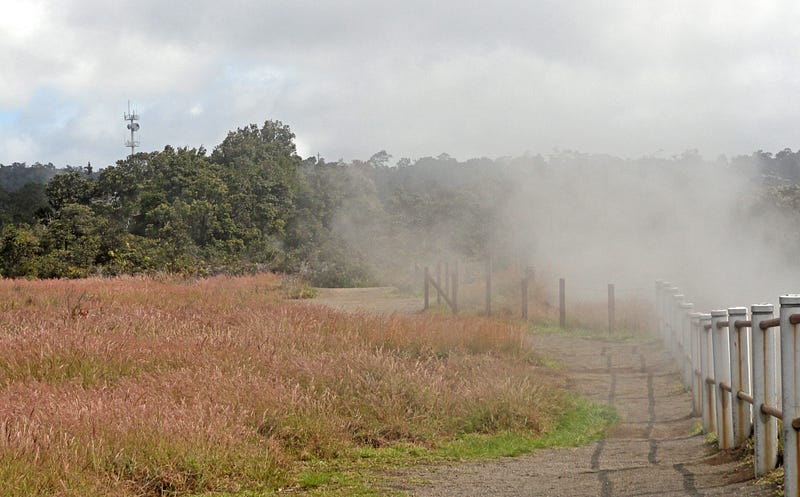
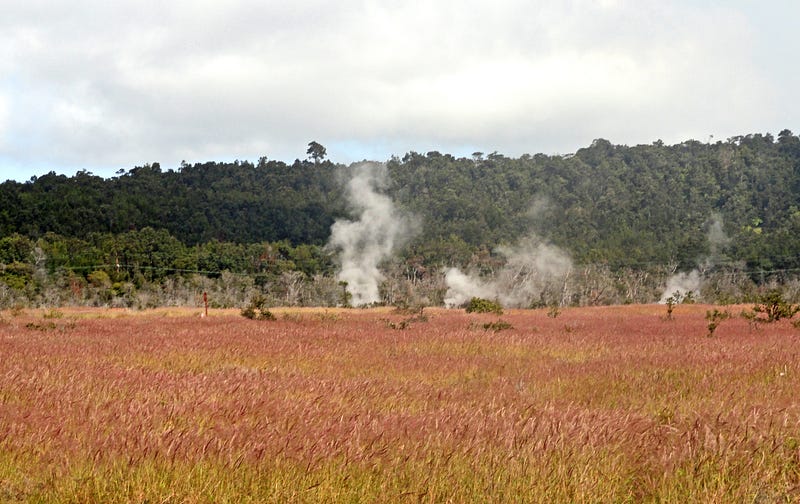
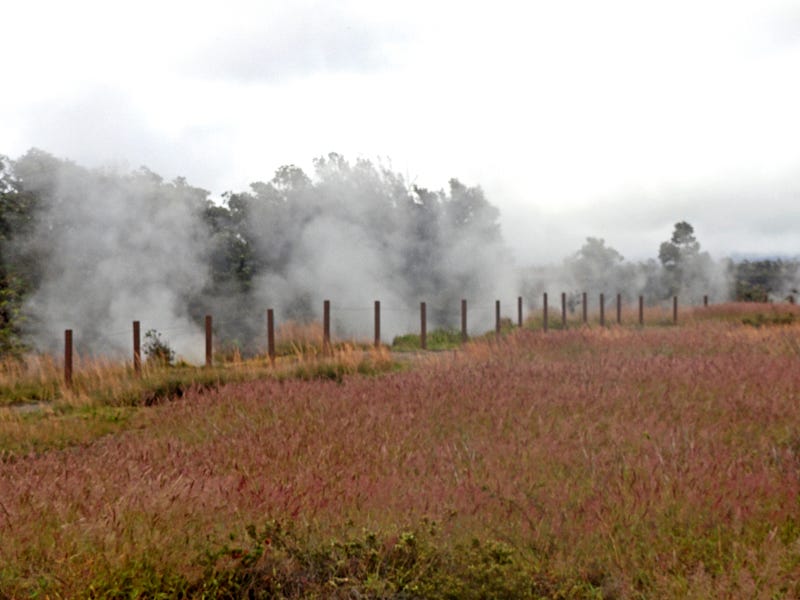
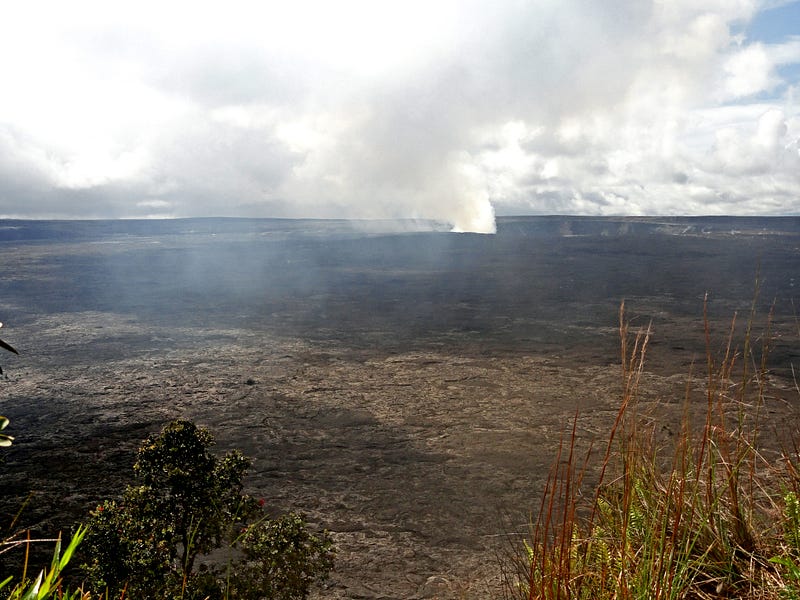
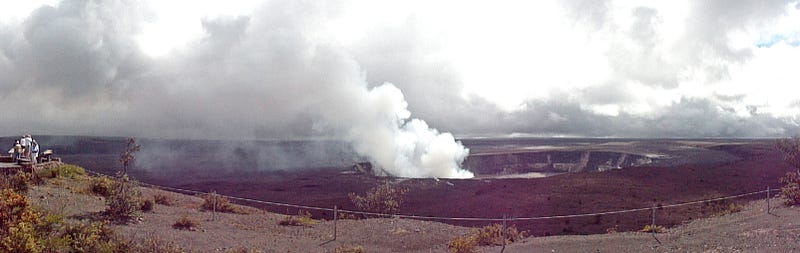
We hopped back in the truck and drove on to the Jaggar Museum, the best vantage point and the end of the road, heading counterclockwise around the crater, because of roadblocks. This is the most active site on the volcano and there was a huge plume of steam coming up from the edge of the Halema‘uma‘u crater.
Inside the museum is information about the history of the volcano and its eruptions. There is even a display of something called Pele hair, created naturally with volcanic glass strands.
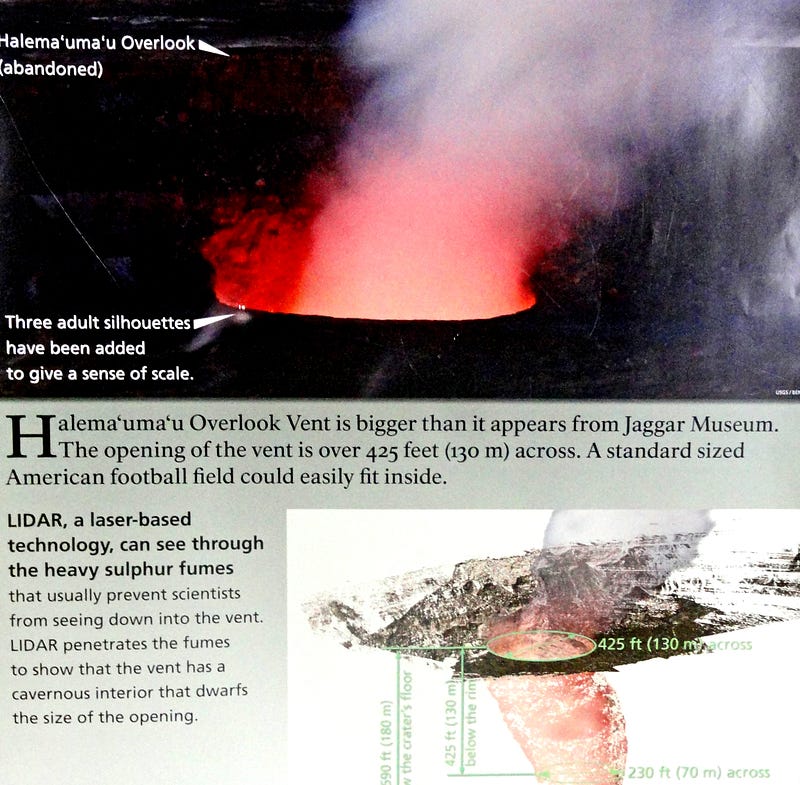
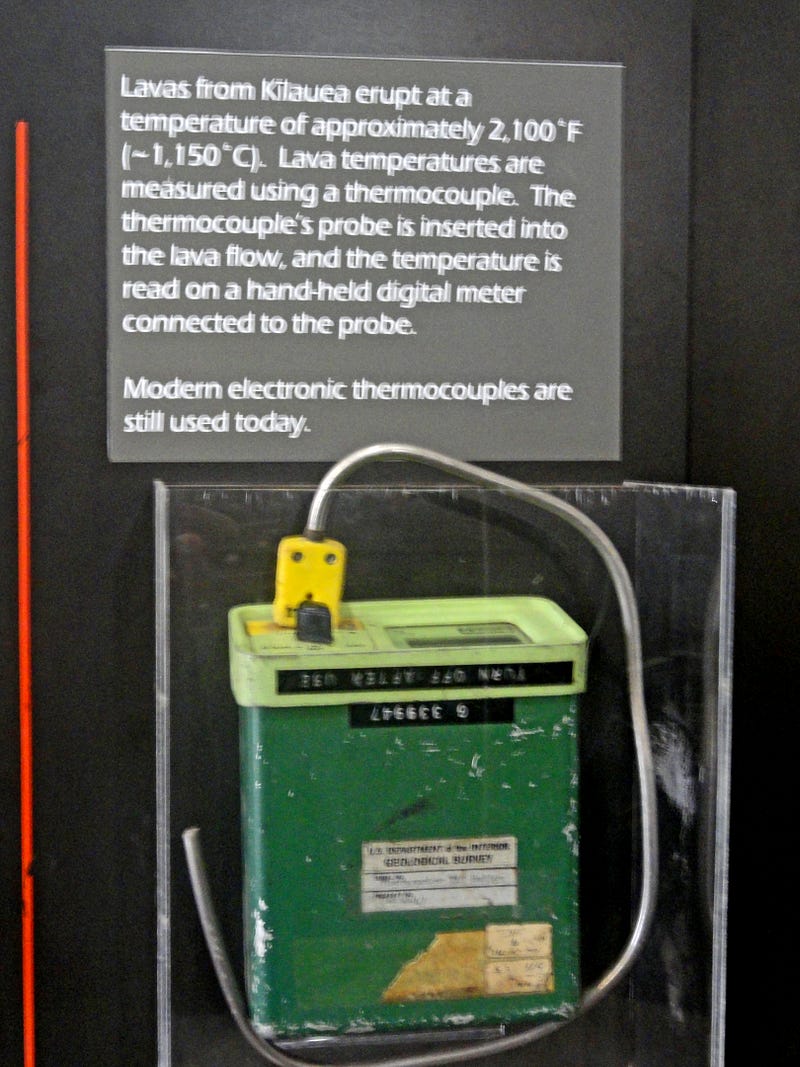
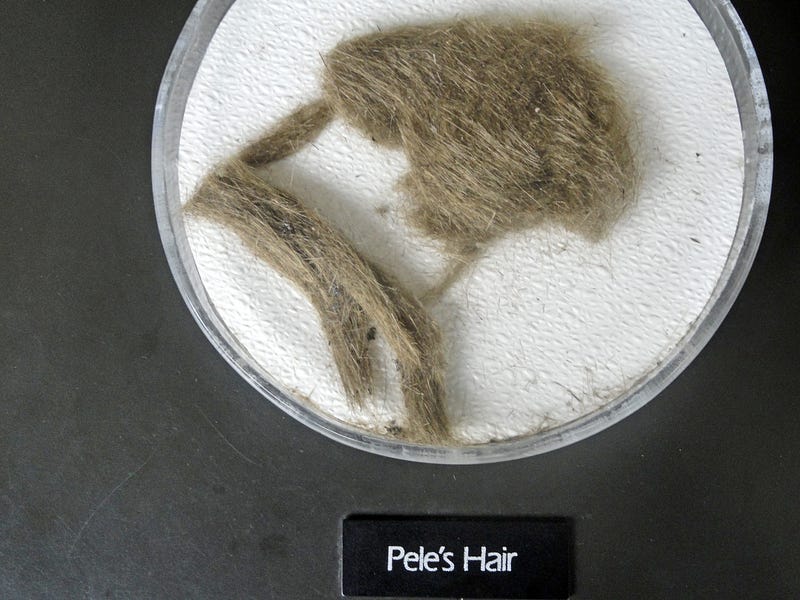
We returned later that evening to see the dome in the crater glow red. It is spectacular, a miracle of nature, but it was too faint to be captured by my camera. I‘m glad I decided not to spend the money for a helicopter tour of the lava flows – they were just not dramatic enough to justify the price.
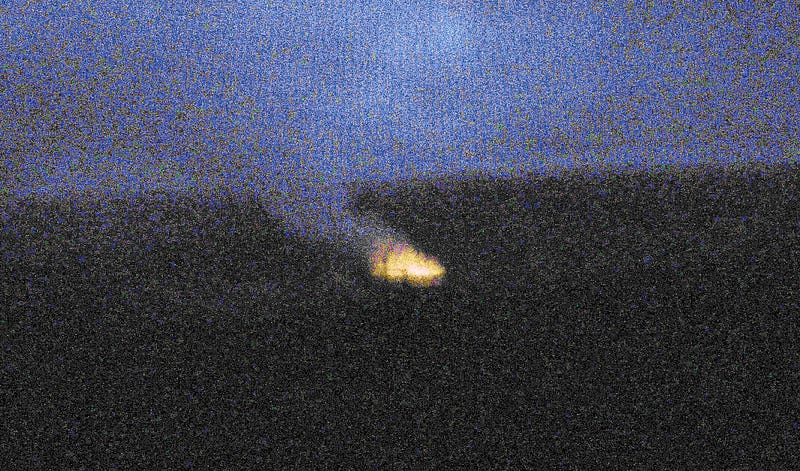
It was hard to comprehend that what we were seeing is the stuff that the earth is made of. The building blocks for the planet. As I looked across the barren landscape, I was thinking about that simmering pot of lava, ready to break through the rocks and continue reshaping the island.
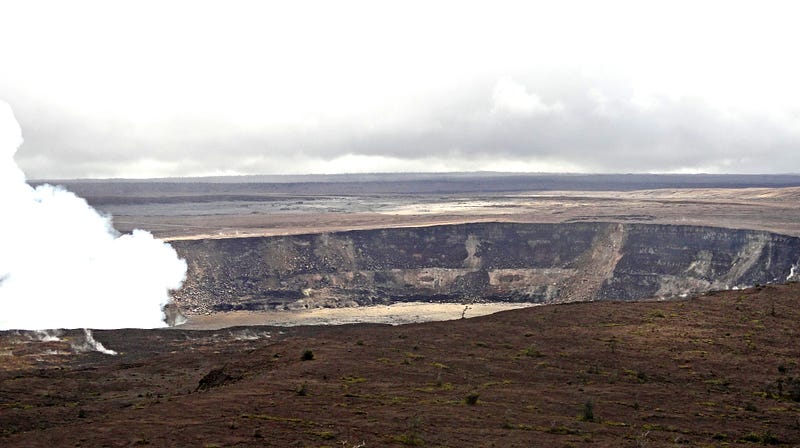
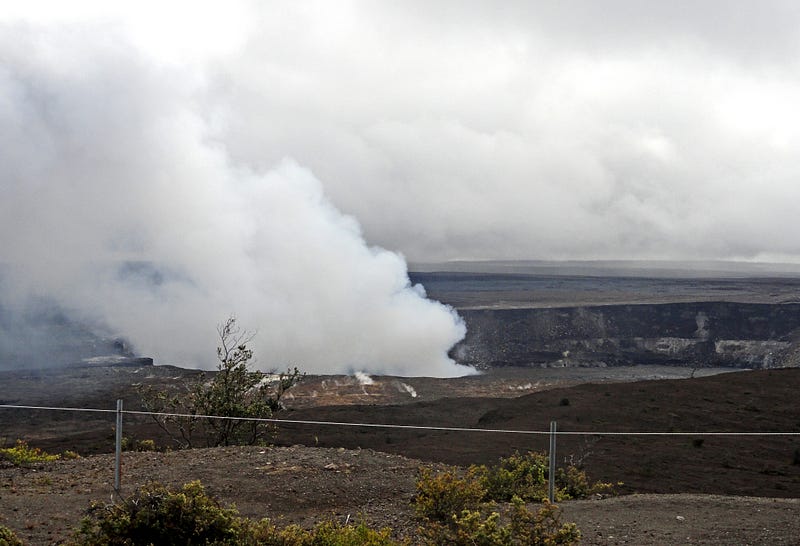
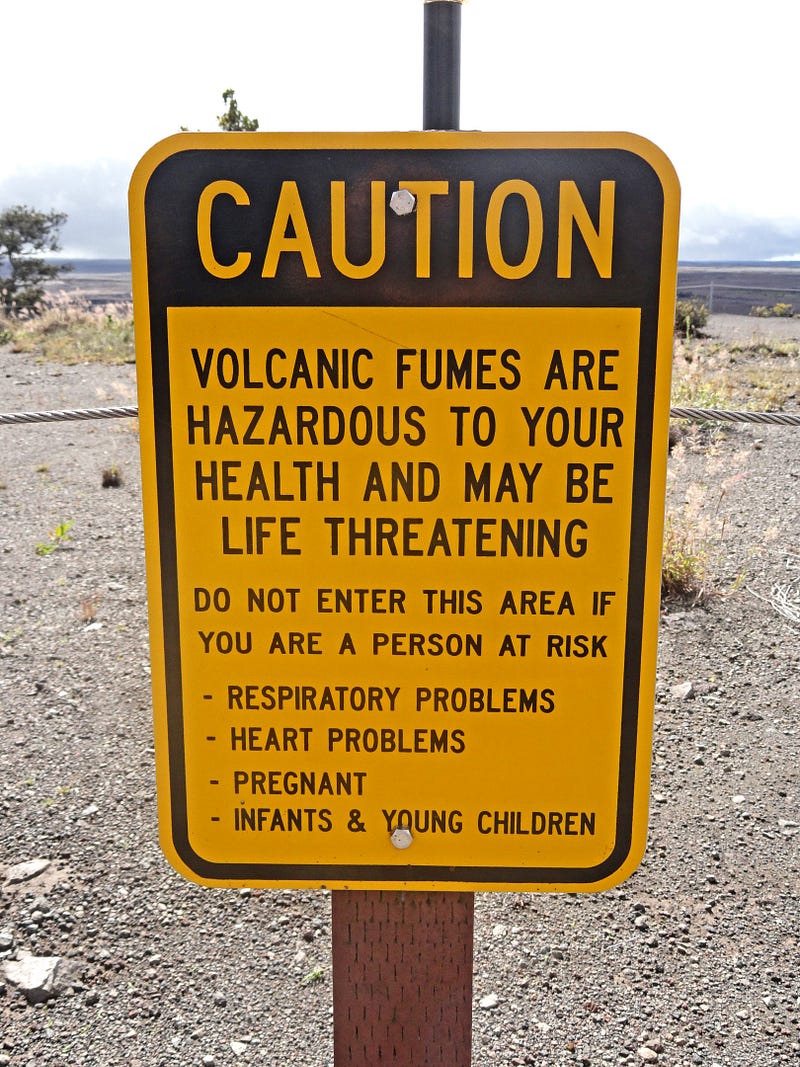
There is just a thin wire fence surrounding the pit crater Halema’uma’u and a few warning signs around the viewing area especially about the threat from poisonous sulfur gas. It was reassuring though that there was plant life growing outside the restricted area.
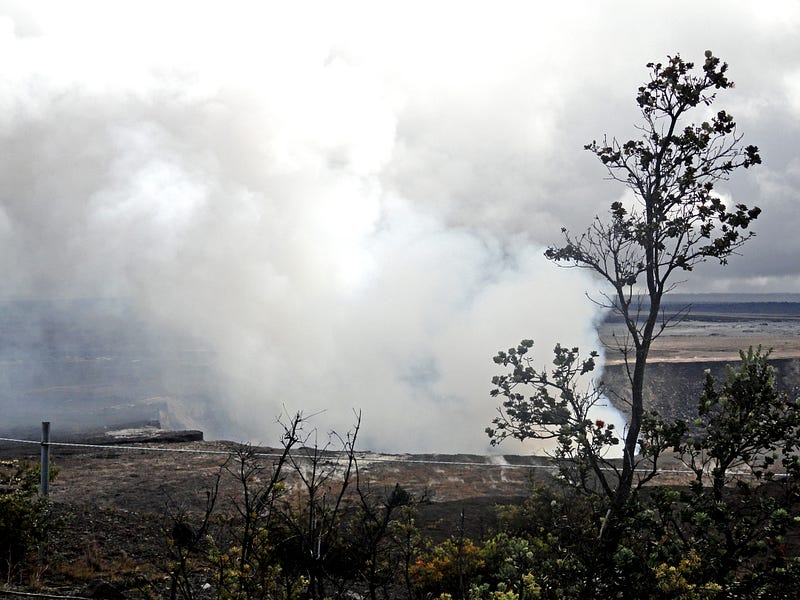
We decided our next stop would be the nearby ancient lava flows where petroglyphs had been carved into the flat porous rock. The drive to the site is other-worldly, passing through lava flows marked with signs “1979 eruption” and “1973 eruption.”
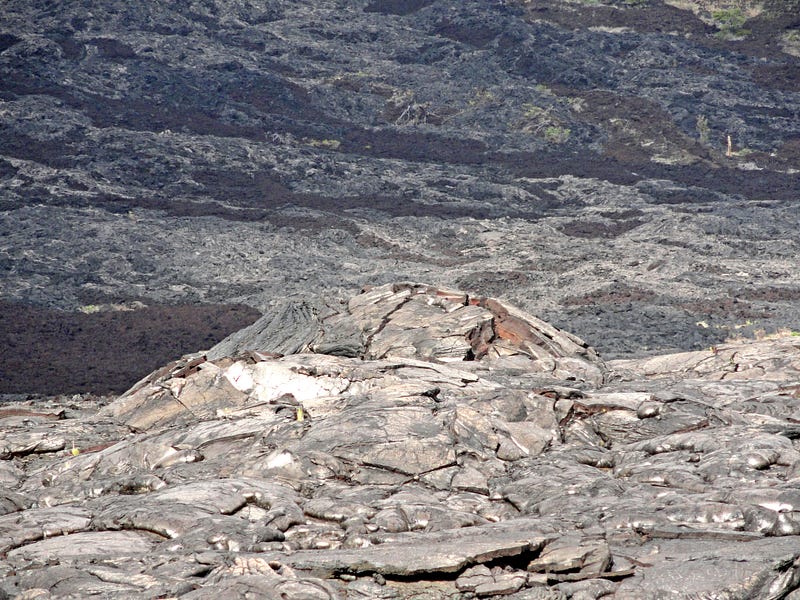
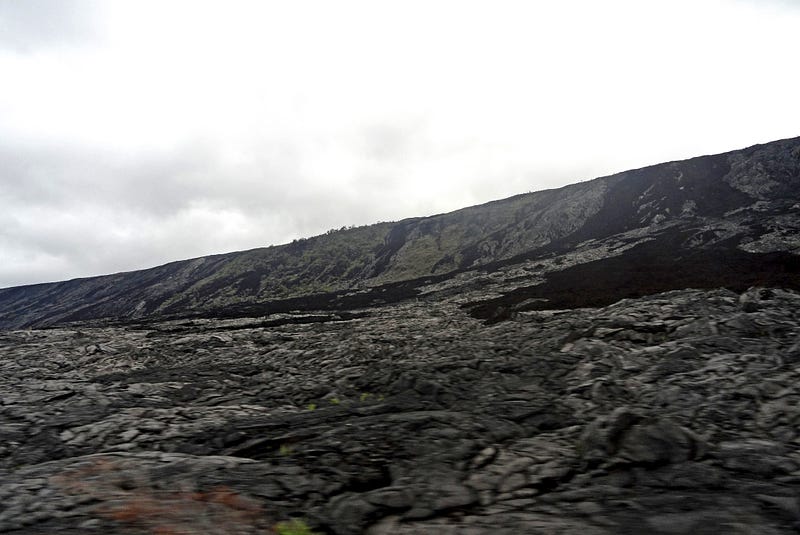
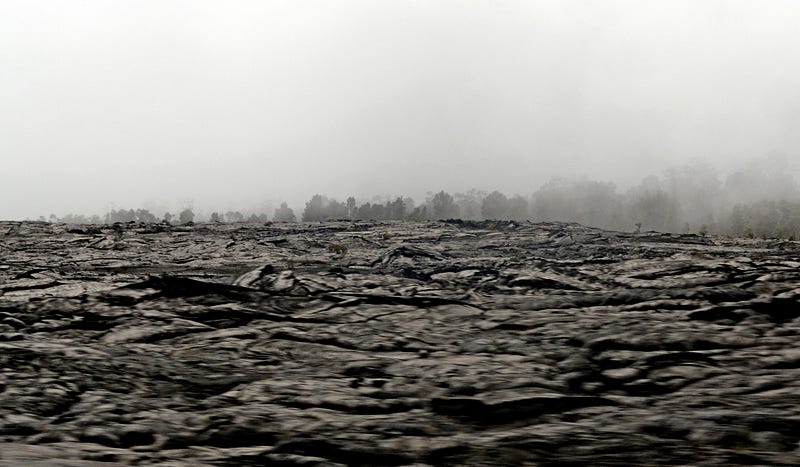
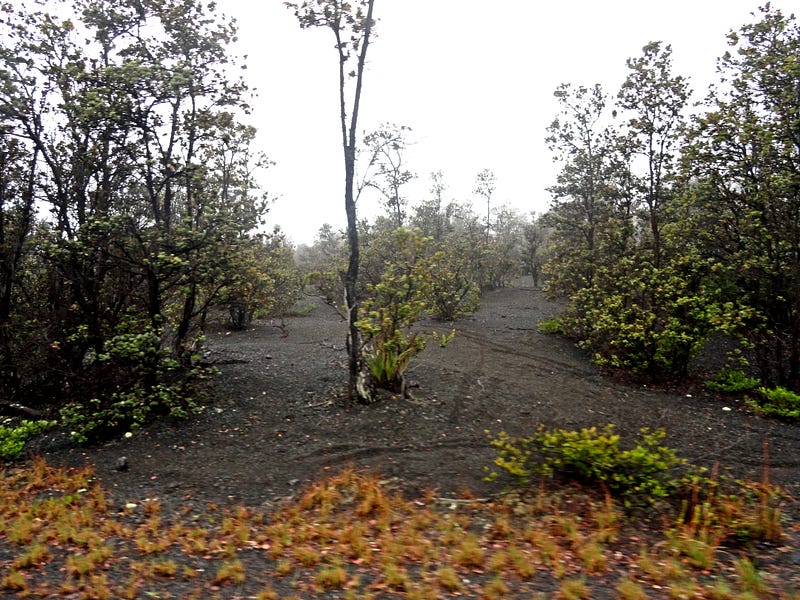
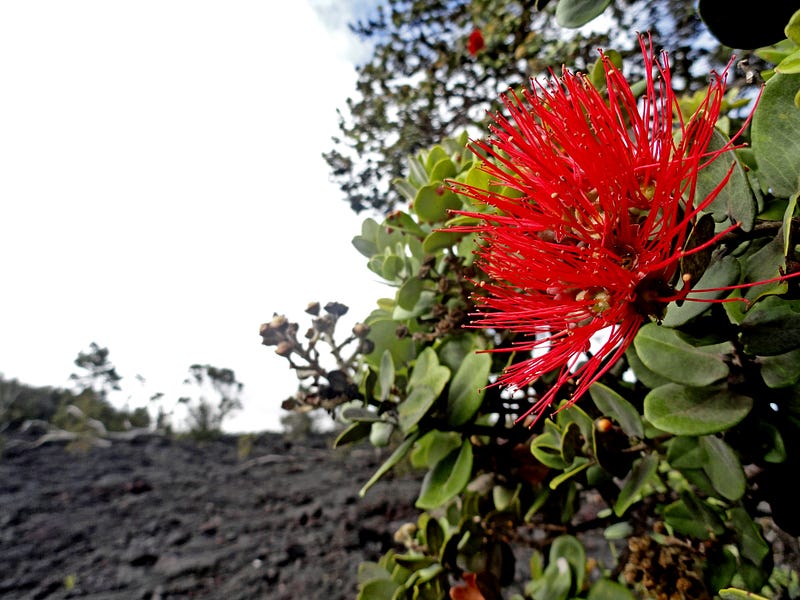
Even the tropical forest doesn’t quite look right. The green isn’t as vibrant as you find in other parts of the island. There are dead trees, bushes, and piles of dead ferns scattered everywhere, most killed off by the acid rain that continues to affect the plants.
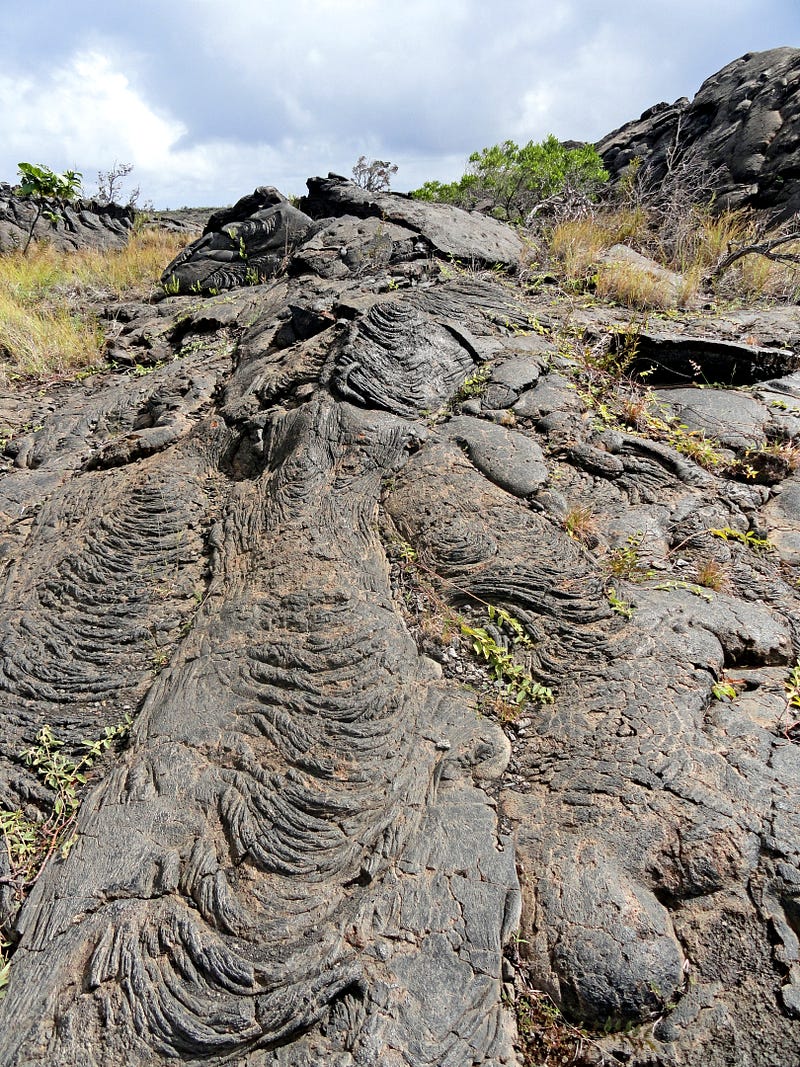
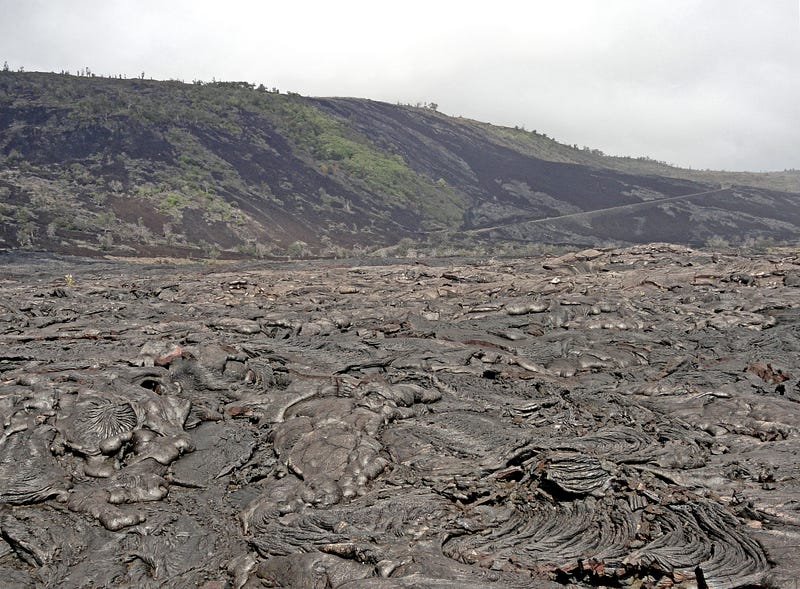
We parked along the side of the road and started the quarter-mile trek to the Puuloa Petroglyph Field in the Ka’u Desert on the south side of the volcano. It was a challenge walking across the uneven fields of lava but the rocks themselves were works of art, created by the forces of nature. Lava had hardened into layers of rope or became wrinkled as it was pushed in different directions.
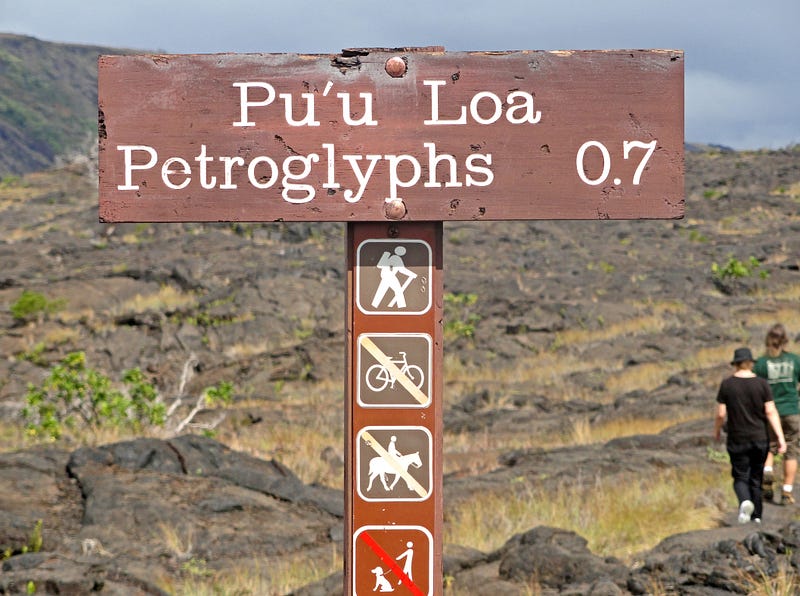
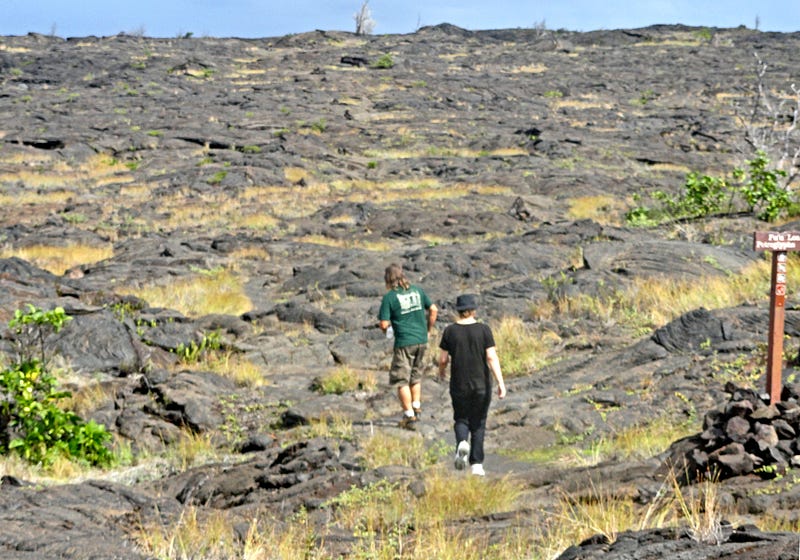
There are mounds of rocks scattered along the path, serving as markers so tourists don’t wander too far off the route. When we finally arrived, we were greeted by an eerie silence, with only the sound of the wind.
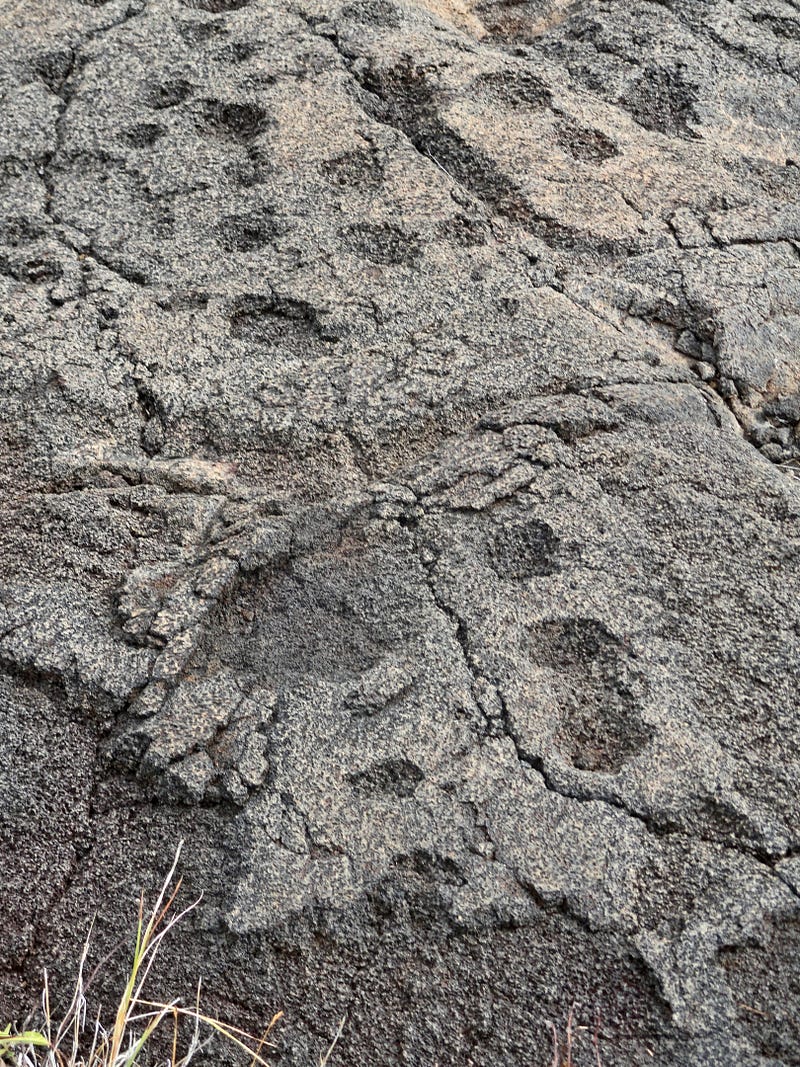
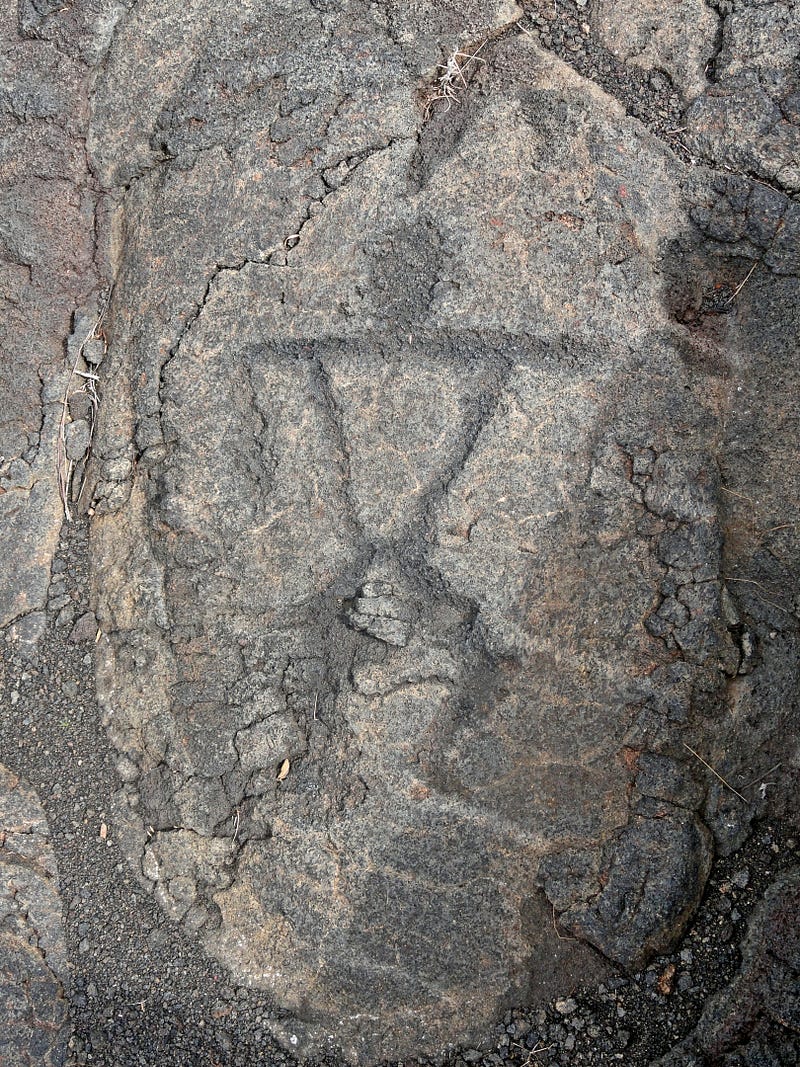
We spotted dozens of petroglyphs, carvings made by ancient Hawaiians, in the lava rock. While they are found on all the Hawaiian Islands, there are more at the Pu’uloa sacred site than anywhere else.
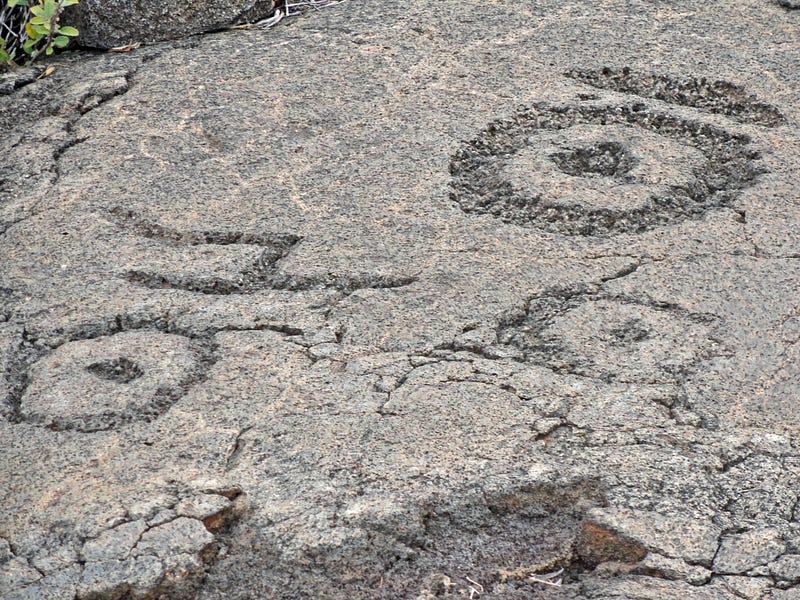
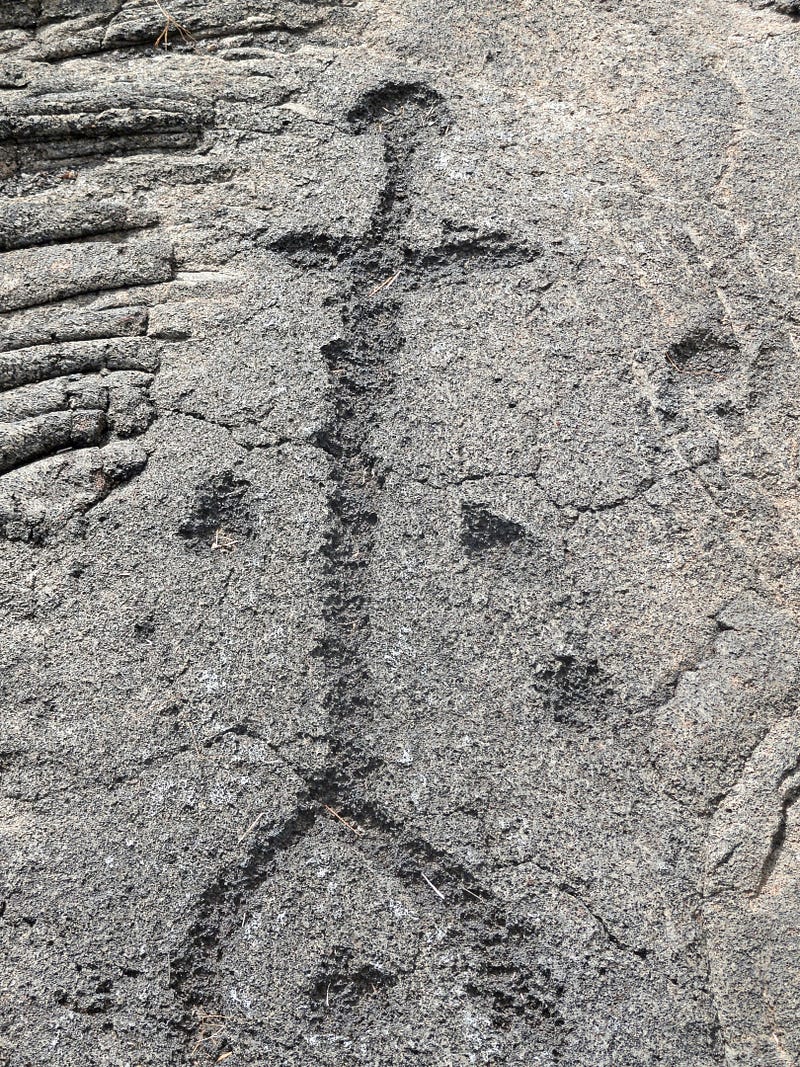
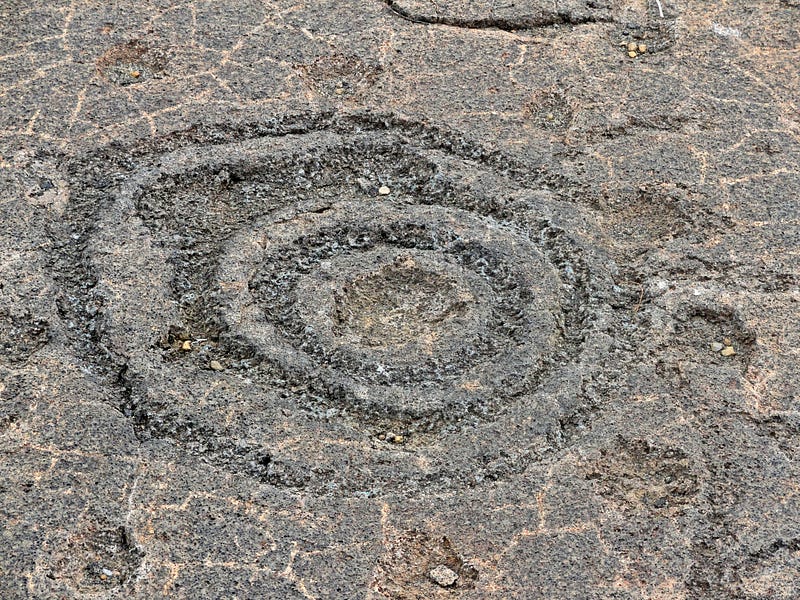
There were numerous concentric circles, as well as fish, turtles, boats, and people. They all have specific meanings to the ancient Hawaiians. There are holes called piko dots. Pikos are the dried pieces of umbilical cord that eventually fall off a newborn’s navel. Hawaiians set the pikos in carved circular holes at the site which is meant to ensure a long life.
In 1914, anthropologist Martha Beckwith wrote:
A dot was “the hole for a child” A dot in a circle “the hole for the first born” A dot with two circles “the first born of an ali`i (a ruling chief)” A plain circle was a “calabash” A jagged line was a “mo`o [a lizard]” A circle with a long line was a “puloulou (a tapa covered ball on a stick carried by an ali`i as a symbol of taboo)” A cross with a dot at each end was “a cross before a chief at night in travelling.”
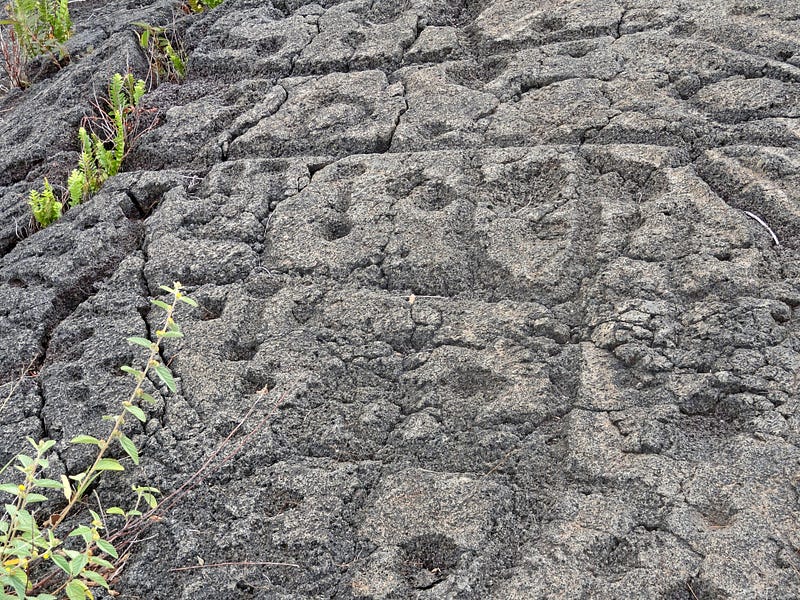
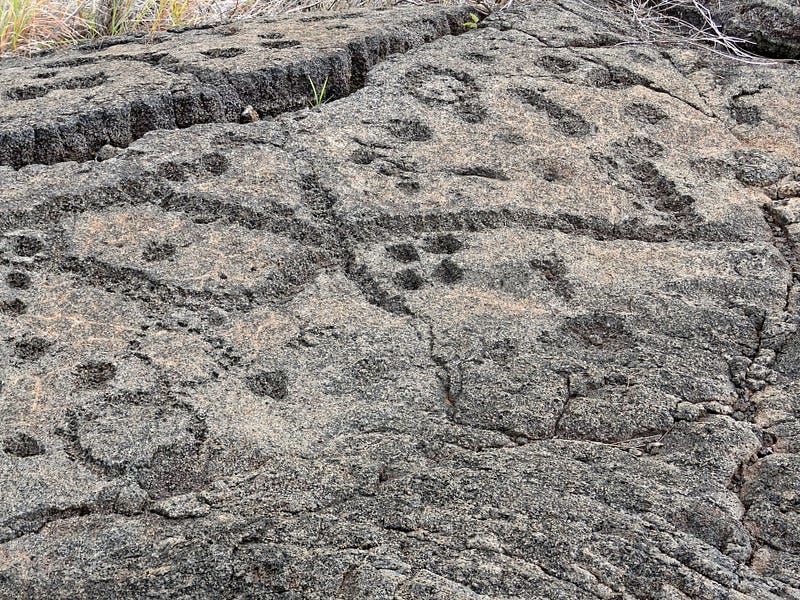
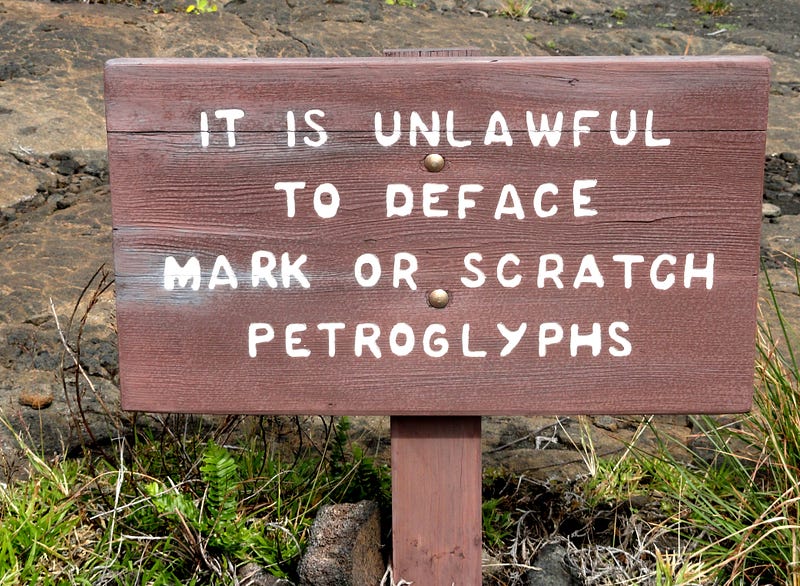
There are warnings to respect the petroglyphs. Some people need to be told but it seems the Hawaiian culture has a powerful effect on its young people. You don’t see a lot of graffiti, especially around sacred sites.
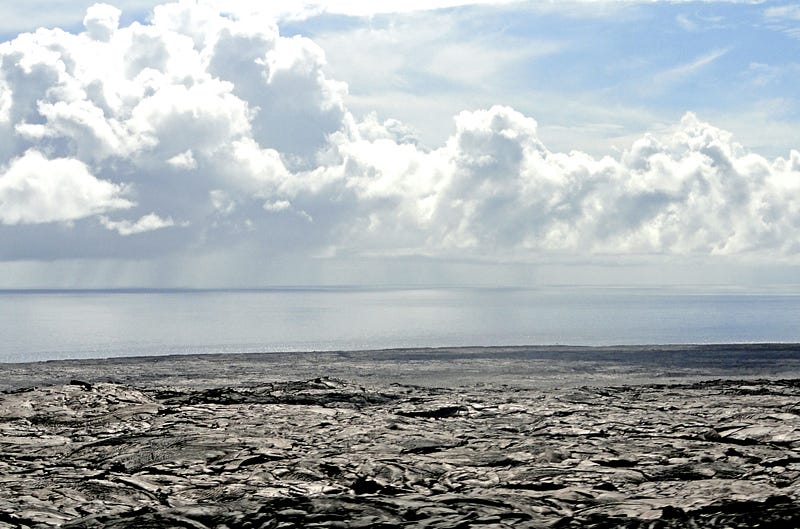
Before we headed back to Hilo, we stopped off at South Point, the southernmost point in America. It was a picturesque drive down the coast as the barren lava fields gave way to rainforest and then farmland.
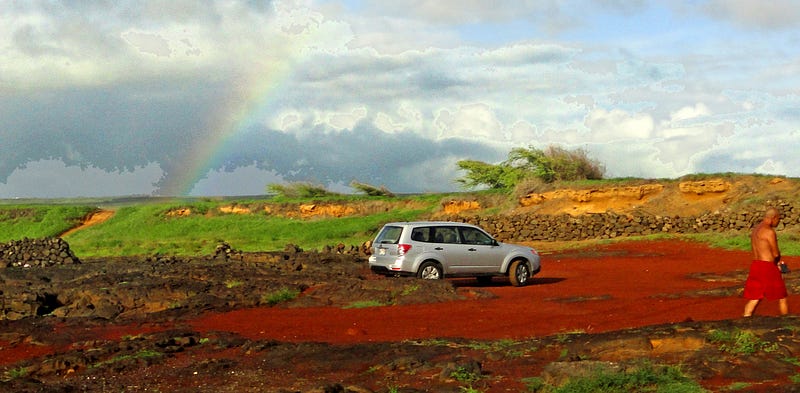
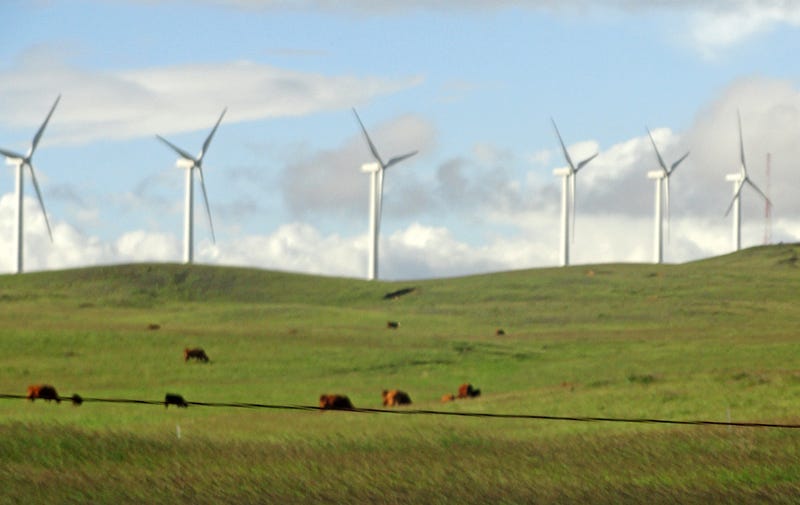
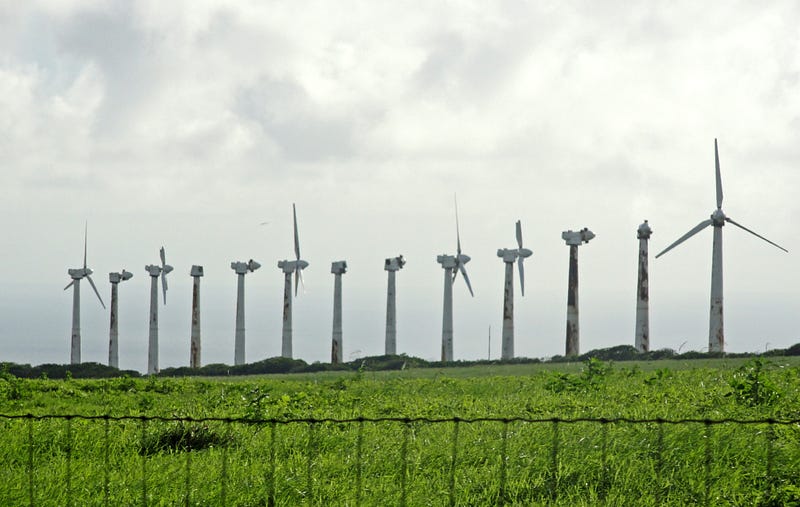
There is a large wind farm to mark South Point but only one line of windmills were turning in the strong wind. At the end of the line, there is a parking lot and a cliff leading down to the deep blue Pacific.
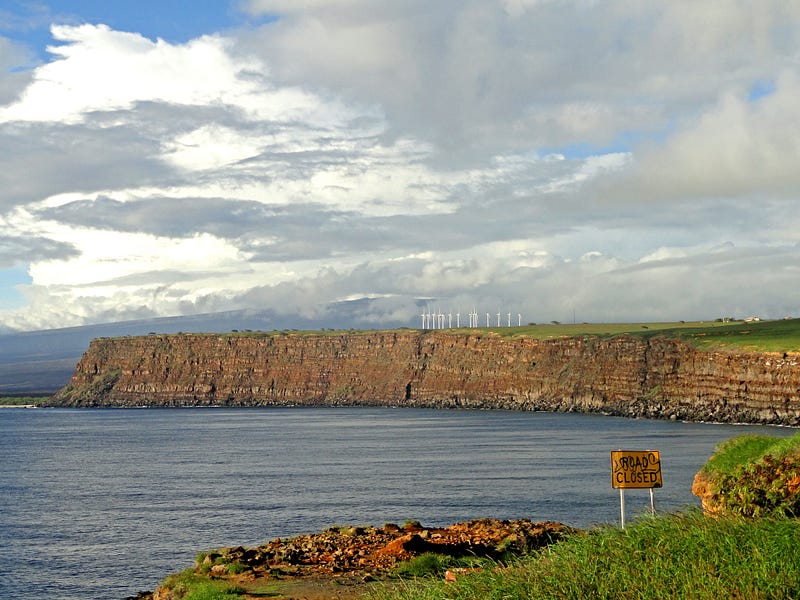
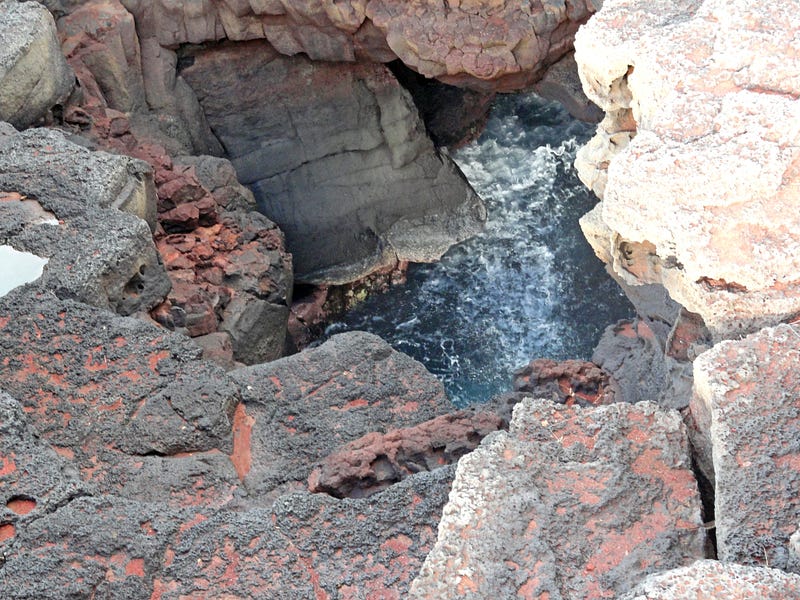
We found a large hole in the lava rock that allowed us to see down to the ocean and a small cove. It may have once been a lava tube and while its natural beauty is awe-inspiring, I kept my distance.
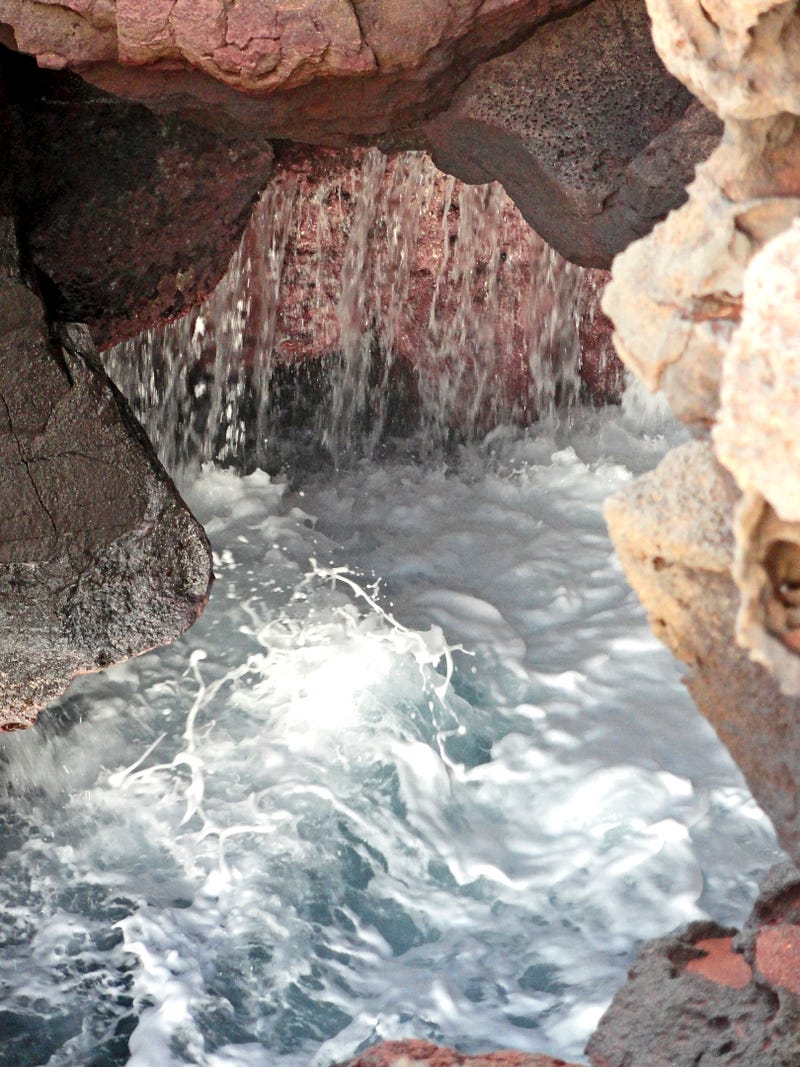
And then, just as we were leaving a group of locals arrived. One guy walked straight up to the hole and jumped in, landing in the ocean below. I stood there watching, with my mouth hanging open. He emerged from the hole a few minutes later, all in one piece. He had a big smile on his face while I was trying to get over my shock and horror.
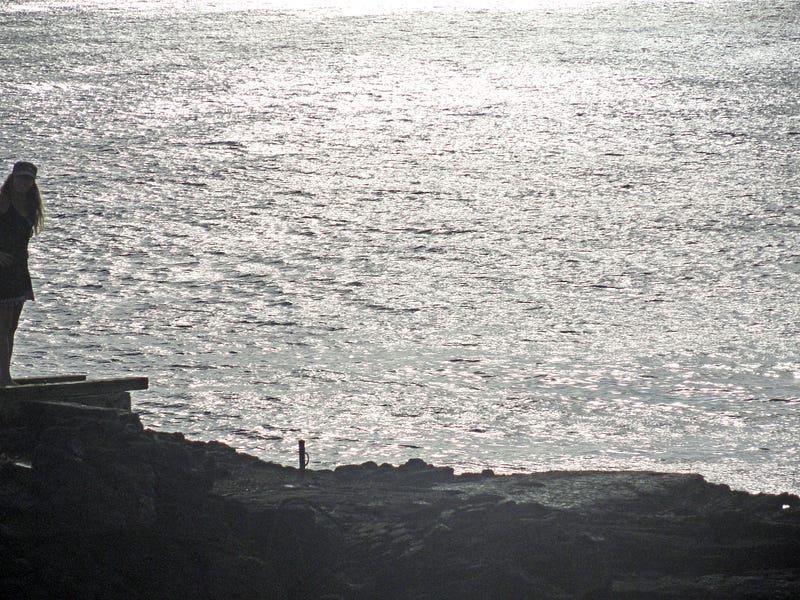
Then just as we were backing out of the parking space a girl standing along the cliff in front of us, suddenly jumped in. Apparently it is something that the Hawaiian people have been doing for generations. It’s not something you will ever catch me doing.
Kilauea and the lava fields are spectacular in their beauty and they are a big part of Hawaiian culture and traditions. I learned more about Hawaiian beliefs during my short visit there than I have in any of my other visits to the islands.
Several years after I visited Kilauea the volcano roared back to life with a spectacular eruption in 2018 and again in 2020–2021 before it settled back down again. But not before Pele had claimed hundreds of acres of land, destroyed several hundred homes, and extended the island into the Pacific.
All is quiet now but history has shown, it won’t be for long. I hope to return the next time Madame Pele decides to demonstrate her fiery spirit.
Thanks for reading.


