
Wait! You Want to Tear Down THAT Statue?
What You Don’t Know May Hurt Us All

Paul Harvey’s “The Rest of the Story” was a Monday through Friday (and later Saturday) radio news program that aired from May 1976 through February 2009. Often, it was aired more than once a day.
I loved to listen Harvey on my way to and from work and on errands because his show gave listeners a more rounded perspective.
You see, far too often, we only hear part of the story or just one side of the story, but Paul Harvey brought to us the parts of the story that the mainstream media left out.
A Current State of Affairs
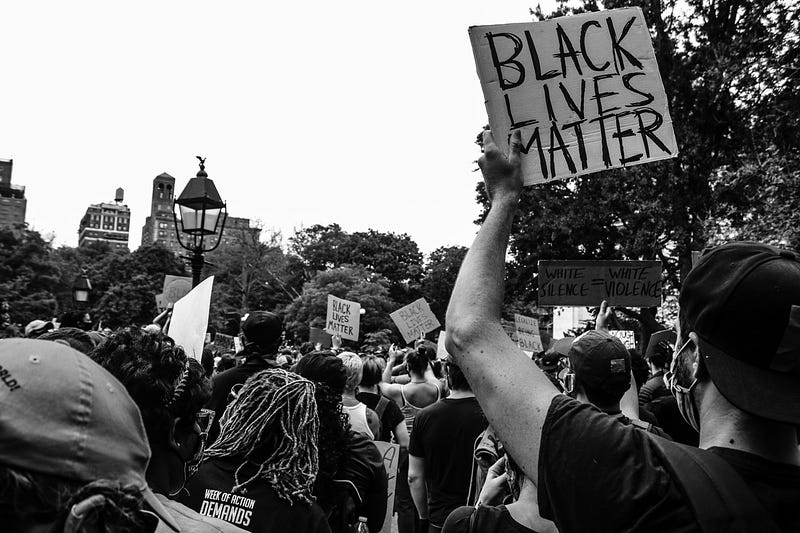
In May 2020, protests over the killing of George Floyd found people declaring “Black Lives Matter” and vandalizing many historic statues around the country. Many of these statues, they complained, honored the Confederacy and therefore acted as a symbol of racism, a reminder that before the Civil War many people owned slaves.
BUT, when the protests and vandalism began to attack the positive role some Blacks played in American history, I began to shake my head. I got irritated, not that racism still exists, but that the protesters and movement followers seemed focused on only one thing: Destroy reminders that we have a history. It seemed to me that they were doing more to drive a wedge between the races than to mend the relationships between the races and cultures.
Why do I say that?
BECAUSE,
I found myself shaking my head when protesters burned down the business owned by a Black man.
BECAUSE,
I found myself shaking my head when protesters defaced the memorial to the 54th Massachusetts Regiment, one of the first African-American units of the Civil War. Yes, they were part of the Union, but if the protest was about equity, equality, getting rid of reminders of racism, and diversity, why was this regiment a target?
This regiment fought to be paid the same amount as white soldiers, AND they refused to fight if they didn’t receive it.
BECAUSE,
I found myself shaking my head when protesters tore down the statue of Frederick Douglass in Rochester, New York. Douglass, a black man. Douglass, an abolitionist. Douglass, an abolitionist leader who delivered the speech “What to the Slave Is the Fourth of July?” to the Rochester Ladies’ Anti-Slavery Society. (Have you read it? NO? Read it HERE.)
The Value of a Statue

As the protesters and citizens continue to demand the removal of statues, they feel convey reminders of systemic racism or white privilege, I find myself shaking my head for many reasons.
First, why are the protesters including statues that honor minorities? Doesn’t that defeat the purpose of chanting “black lives matter?”
Second, these statues are works of art. AN ARTIST took valuable time to draw out and create that work of art. To me, vandalizing and/or tearing down statues because they offend you is the same as burning books because they contain ideas that you don’t espouse.
Third, do we really have the right connotation about the various historic statues? OR, do we just know what we have been taught?
Finally, and most importantly, are we really understanding the person in totality or are we just seeing only one facet of the individual, the facet pushed by the mainstream media? As Paul Harvey broadcast daily, at least for one of the controversial statues — “Here’s the rest of the story.”
Nathan Bedford Forrest and Me
I’ve lived in Tennessee for almost five years now, and recently, a renewed push for the removal of the bust of Nathan Bedford Forrest has been begun.
I knew only that Forrest had something to do with slavery and the Confederacy. Since I am a transplant to the South, I wanted to know more about this man. Living in Northern Illinois for most of my life, the history I was “fed” and my history books had focused on the Union — the winner.
Was Nathan Bedford Forrest really as bad as what some people were saying? Did he die in one of the battles in the Civil War? If not, how did his involvement in the Civil War affect him after the South lost? Had he learned, grown, and changed in his values and perspective about slavery as the world and his life changed?
What Kind of Researcher Are You?

I know many people who, in researching a person’s life and accomplishments, stop reading when they get to the first negative details about that individual.
Let me rephrase that into a question:
When reading about an individual in history, do you stop reading when you find the first negative details about that person?
I wondered if people had done that with Nathan Bedford Forrest, or if they only knew the “propaganda” that the North had spewed about his war record. The North’s perspective.
How many of you would stop reading the History Channel’s biography page about Nathan Bedford Forrest after the first section?
Why?
The second to last sentence in the first paragraph states:
“After the Civil War Forrest worked as a planter and a railroad president, and served as first grand wizard of the Ku Klux Klan.”
Did your mind go, “Yup, that sentence proves Forrest was a racist and a terrible person. He was a grand wizard of the early Ku Klux Klan?” Did your mind inform you that if Forrest was part of the Ku Klux Klan, he must be a racist and a terrible person?
OR would you read further to find out more?
Will you do that with this article?
Stop here and declare that if “The History Channel” connects Forrest to the Ku Klux Klan, Forrest must have been a horrible person?
I hope not.
Although the Civil War ended in 1865, Forrest didn’t die until 1877. That’s 12 years of his life you don’t know about or care about. Right?
But if you believe that individuals are dynamic — that they can grow and learn and change — you need to investigate what happened in those 12 years. In addition, you just might need to uncover his life before the Civil War AND during the Civil War.

Follow me. Let’s look at those 12 years, but let’s begin with a look at his upbringing and his role in the Civil War.
Forrest was born in Chapel Hill, Tennessee (not far from where I live), in 1821. (Note: The population of Chapel Hill in 1880 registered 112 people. Even today, Chapel Hill is a small town with a population under 1,600.)
Nathan and his twin sister were the oldest of 12 in the Forrest family, but typhoid fever claimed five of the siblings at a young age. Forrest grew up poor and basically uneducated; in fact, he only attended a formal educational facility for six months. Nathan’s father worked as a blacksmith, but when his father died, Forrest became the head of the household at the age of 16.
I understand that you might be upset that Forrest became rich through the slave trading business,
BUT,
he was also a successful planter and owned a stage-coach company. AND YES, he was a slave owner,
BUT
he offered freedom to his 44 slaves if they would serve WITH (not for) him in the military. ALL agreed according to the article “Forrest: Memphis’ First White Civil Rights Advocate.” AND they chose to stay with Forrest for the duration of his command.
With the onset of the Civil War, Forrest enlisted in the Tennessee Mounted Rifles, and even though he only ranked as a private, he helped equip the outfit with his own money.
He became a well-known Southern military leader,
BUT
too often he is judged only by his actions during the Battle of Fort Pillow in Tennessee. He captured the Federal (Union) troops by force. (Is that not what happens in a war?) In doing so, he and his men (who, according to one source, Forrest had lost control over) killed over 200 UNION soldiers (NOT CONFEDERATES) during the battle, many of them former slaves.
Newspapers of the Confederacy reported that “Forrest had begged them to surrender but not the first sign of surrender was ever given.”
HOWEVER,
According to the UNION survivors, Forrest and his men had turned a deaf ear to their call of surrender.
So, after the war, Forrest was charged with the massacre of these men during the Battle of Fort Pillow.
And this is often for what he is judged.
(Note: It reminds me of how we treated the soldiers who came back after the Vietnam War — ok, not a war, but a police action.)
BUT WHAT ABOUT HIS LAST 12 YEARS?
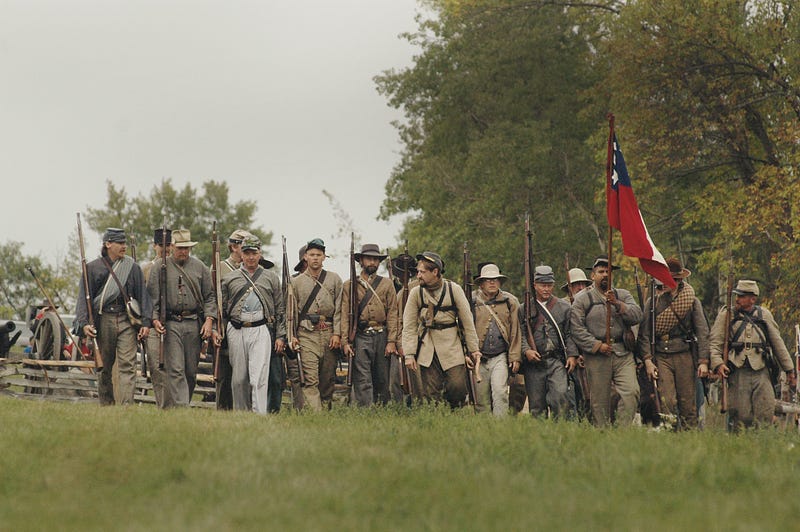
Yes, what about those years?
After the Civil War,
Nathan Bedford Forrest worked to build what has been called the “New South.”
Nathan Bedford Forrest, although the first grand wizard of the Ku Klux Klan, ordered the organization disbanded in 1869. (We all know how that order was taken.)
Nathan Bedford Forrest became a civil rights activist.
Nathan Bedford Forrest organized the Memphis and Selma Railroads.
Nathan Bedford Forrest hired blacks in many high-level jobs: think architect and construction engineer.
Nathan Bedford Forrest, in August 1874, volunteered to seek out the individuals who lynched four black men and to “help exterminate those men responsible for the continued violence against blacks.” He faced rebuke from the South for promoting “inter-ethnic harmony.”
Nathan Bedford Forrest, on July 5, 1875, was invited to be the guest speaker at the Independent Order of Pole-Bearers Association, the organization that grew to be the NAACP. (The context of his entire speech can be read HERE.)
Nathan Bedford Forrest was, according to author Jack Hurst, “a man whose social attitudes may well have changed farther in the direction of racial enlightenment over the span of his lifetime than those of most American historical figures.”
Here Is My Thought
We expect that when a criminal is released from prison, he is a changed person. Changed because of the experience of prison. Changed because the person has accepted that what they did was wrong. Changed because they have grown, learned, and changed.
We, as a society, are expected to accept the change in that person.
Why then, do we not look for the rest of the story about the individuals in our history and the history of the world?
We need to learn to look for “The Rest of the Story.”
In Parting
Say what you will about Nathan Bedford Forrest being a symbol of systemic racism. And yes, for the better part of his 56 years on earth, he seemed caught up in the dynamics of the time, but in his later years, he did much to fight racism.
I believe that we should look at him and say, “Here is an example of dynamic man. A man who learned that “black lives matter,” and fought for their place in society.
If we forgive a criminal (because it seems that much of society has forgiven George Floyd of his criminal past), why can we not forgive Nathan Bedford Forrest and use him to show that change can happen?
For more of my articles, visit
Rebecca Writes The articles and comments in Rebecca Writes relate to living in this crazy world. Articles about being a parent and grandparent to traveling to relationships to education to health and wellness to being a decent human being — and beyond.
Rebecca (Becky) spent 34 years in a teaching career, but when she retired in 2014, she picked up her pen and pursued her passion to write. As a high school English teacher, Becky held the philosophy that she wouldn’t give any writing assignment that she personally wouldn’t or couldn’t do. That philosophy strengthened and broadened her own writing.
In addition to publishing her writing on various platforms, Becky also blogs at Life is for Living, a blog to encourage, motivate, and help others live the best life possible. As an extension of Life is for Living, she also publishes a weekly newsletter, Let’s Chat. (Check it out HERE.) Life is for Living also has a social media presence with the group Coffee on my Porch. (Check it out HERE.)
After teaching writing for 34 years, Becky began Ink & Keyboard, a blog for writers at all levels. She supplements what she writes on the blog with a subscription newsletter, The Writer’s Notebook (Check it out HERE.), the social media group Ink & Keyboard (Check it out HERE.), and a Medium publication Ink & Keyboard (Check it out HERE.).
Here are some other articles you might be interested in
Sources
Forrest: Memphsis’ First White Civil Rights Advocate
Forrest’s Speech to the Independent Pole-Bearers Association


