
Voting by Mail Myths and Facts: Everything You Need to Know Before the Election
How to make sure your vote counts in 2020
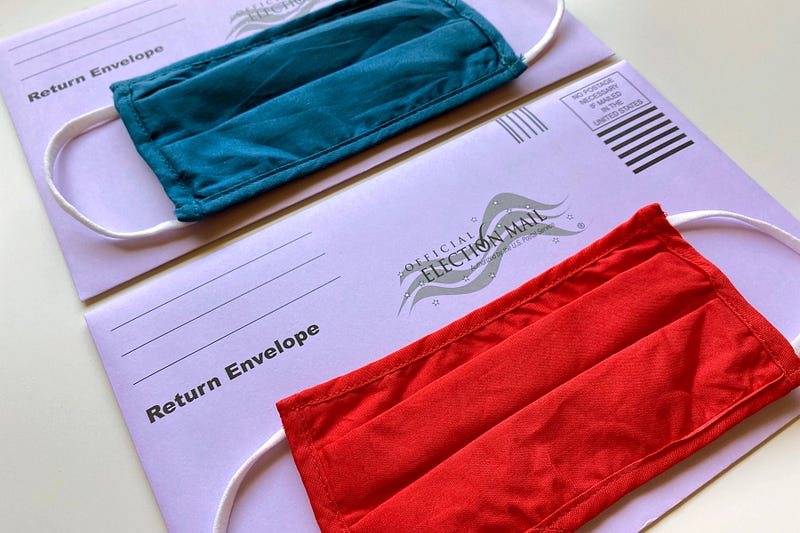
Voting by mail will be more prevalent than ever in the 2020 election. But you need to understand the rules in order to make sure your vote counts.
Here are some common myths and facts about voting by mail.
Myth: Absentee voting is different from voting by mail. Fact: Absentee voting, voting by mail and mail-in voting are exactly the same thing.
Myth: You have to be out of town or have a good excuse if you want to vote by mail. Fact: In most states, you do not need to have an excuse to be able to vote by mail.
However, in 16 states, you do need an excuse to vote absentee. These states are Alabama, Arkansas, Connecticut, Delaware, Indiana, Kentucky, Louisiana, Massachusetts, Mississippi, Missouri, New Hampshire, New York, South Carolina, Tennessee, Texas and West Virginia.
Some of these states have amended their voting rules for 2020 to allow you to vote by mail if you are concerned about getting Covid-19. The states that have done this (as of this writing) are Alabama, Arkansas, Connecticut, Delaware, Massachusetts, Missouri, New Hampshire, South Carolina, Tennessee and West Virginia.
To look up your state’s voting rules, check out Vote.org’s absentee voting rules.
Myth: Voting by mail is rife with problems and opens the door to widespread fraud. Fact: Some people fear that there can be coercion or voter impersonation when votes are cast by mail. However, there is no basis for this fear.
The fact is voter fraud, in general, is rare. The Heritage Foundation, a conservative think tank, maintains a database of election fraud. It found that in the last 20 years, approximately 250 million ballots were cast, and of those 250 million, there were just 1,200 cases of alleged voter fraud.
But that’s not all. Of those 1,200 alleged voter fraud cases, only 204 involved voting by mail, a tiny fraction of the total number of ballots cast.
Critics might say that’s because voting by mail only represents a tiny fraction of overall votes cast. That may be true for some states, but not for Colorado, Hawaii, Oregon, Utah and Washington, because these states have all mail-in elections.
That means that all voters in these states are automatically sent a mail-in ballot. They mark it, put it in a secret envelope or sleeve (provided by the state), then put it in another envelope (provided by the state), sign an affidavit on the outside of the envelope, and mail it.
The Heritage Foundation’s data for these states show a grand total of 44 instances of voter fraud out of 44,917,586 ballots cast.
Moreover, voting by mail was already on the rise long before the coronavirus pandemic. According to the U.S. Election Assistance Commission, the total number of voters who voted early or by mail more than doubled between 2004 and 2016, from 24.9 million to 57.2 million. That’s approximately 40% of all ballots cast.
Myth: I registered to vote a few years ago, so I can vote. Fact: Just because you registered to vote once does not mean you are still registered to vote.
According to the American Bar Association, several states, including Georgia and Ohio, routinely purge voter rolls if you haven’t voted in several consecutive elections or responded to a letter asking you to confirm where you live.
If your name has been purged, it means you won’t be able to vote unless you register again.
That’s why the first step to ensuring your vote counts is to make sure you are registered to vote. Vote Save America has a tool that lets you check to see if you are registered to vote.
And if you aren’t currently registered, you can register there, too.
Myth: If I can vote by mail for any reason in my state, I don’t have to request an absentee ballot. Fact: Unless you live in one of the five states that automatically send an absentee ballot to every registered voter (or you live in a state that is sending absentee ballots because of Covid-19), you have to request one.
Vote.org has a form that lets you request an absentee ballot.
Myth: I don’t have to think about getting an absentee ballot until October or November. Fact: Every state has a different deadline for when you have to request your mail-in ballot and when you have to return it.
Check with your state’s board of elections or vote.org to see what your state’s rules and deadlines are.
You should request your ballot as soon as possible in order to avoid problems with the deadlines or the postal service.
Myth: Voting by mail means your vote is counted last or only if it would make a difference in the outcome of the election. Fact: Every state has different rules for when and how mail-in ballots are counted.
For example, Colorado begins counting mail-in ballots 15 days before the election, while Arizona and North Carolina begin counting absentee ballots 14 days before the election.
Some states, like Arkansas, Georgia, Michigan, Nevada, New Jersey, Pennsylvania, South Carolina and Texas, don’t begin counting absentee ballots until election day.
And others, like Maine, Massachusetts, Minnesota, Mississippi, New Hampshire, New York, North Dakota and South Dakota, don’t allow those ballots to be counted until after the polls close.
And some states, like New Mexico, Ohio and Vermont, will scan or insert absentee ballots into voting machines before election day, but won’t count the ballots until after polls close.
One state — Maryland — doesn’t even begin counting absentee ballots until the Wednesday after the election is over.
The National Conference of State Legislatures has a table that shows the deadlines for processing and counting absentee ballots by state.
Like this story and want more? Sign up for my newsletter now!