
Voices Of Women
How New York City and a quirky magazine helped
In 1999, I was invited to be on a panel that changed my life.
When I was little, I dreamed of being an artist, one that could use her work to speak about things that I thought were important. Growing up during Watergate was key, very influential. In fact the whole period of my youth was influential. Woodstock, hippies, assassinations, Vietnam, Civil Rights Marches, Women’s Libbers. But strangely, it never occurred to me that my drawing had anything to do with being a woman. I just wanted to draw. When I became a professional, I was aware I was a minority in my chosen field of New Yorker cartooning, but I was just glad I got into the magazine. I didn’t see myself, and still don’t, as a woman cartoonist. I am a cartoonist who happens to be a woman.
It wasn’t until I was invited to be on the panel that I started to think about gender more personally. The American Association of Editorial Cartooning invited me to participate on a panel about women in cartooning. I was not a member of the AAEC — I believe they asked me because they couldn’t find enough of us! I had done political cartoons for The New Yorker, but the AAEC was mostly newspaper cartoonists; at the time, there were only two women who were professional (it’s still that way).
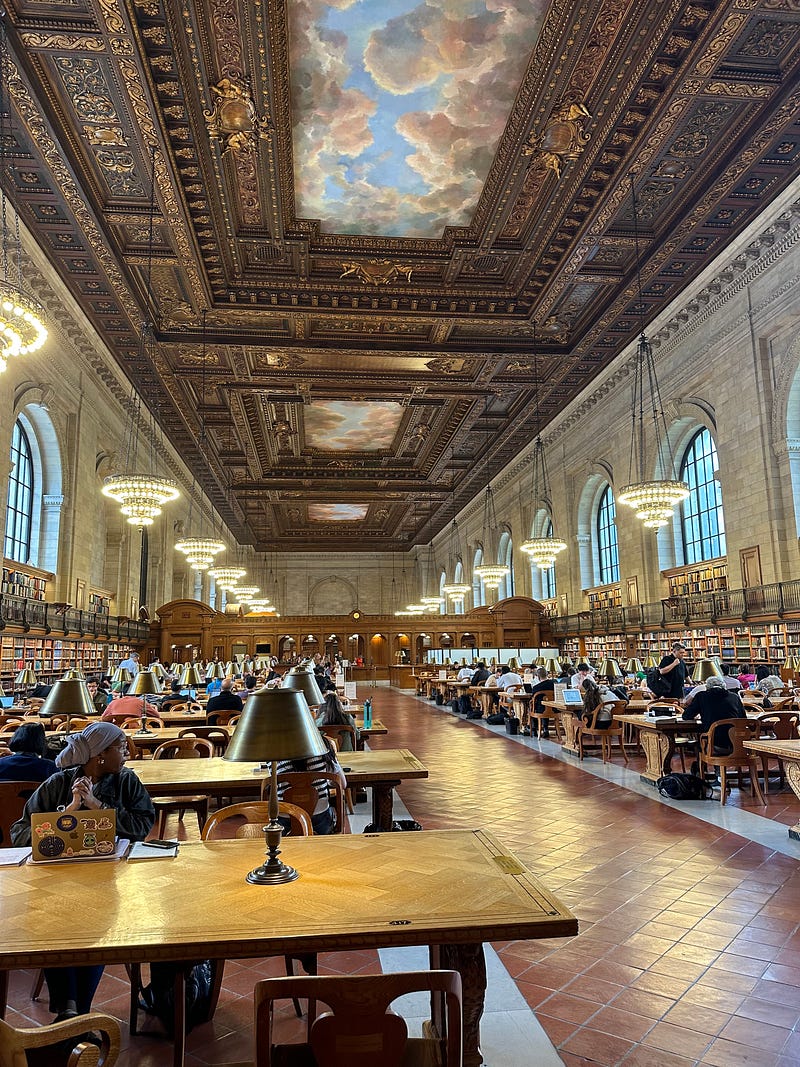
Over the course of preparing to be on this panel— researching the burning question as to why are there not more women doing this — I became fascinated. I decided to look into who came before me. What I found was surprising and energizing. My studies took me to the New York Public Library in NYC where The New Yorker Archives are housed.
I also went to the library in The New Yorker, which at the time was located in midtown Manhattan. There, they had scrapbooks containing all the cartoons from The New Yorker since its founding in 1925, clipped out and meticulously pasted in large books. Each artist had their own section, and some had several volumes of their own books.
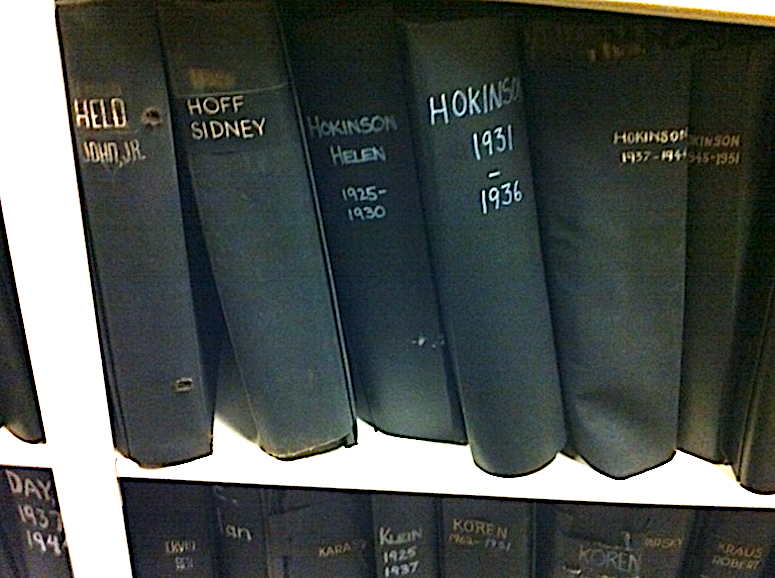
What I discovered was that there was a cartoonist who was a woman in the very first issue of The New Yorker in 1925. Her name was Ethel Plummer. Not only was I pleased to find one woman drawing in the first issue, each week in the magazine’s pages revealed more women, from Helen Hokinson, Alice Harvey, Peggy Bacon, Barbara Shermund and more. They were still in the minority, but: they were there.
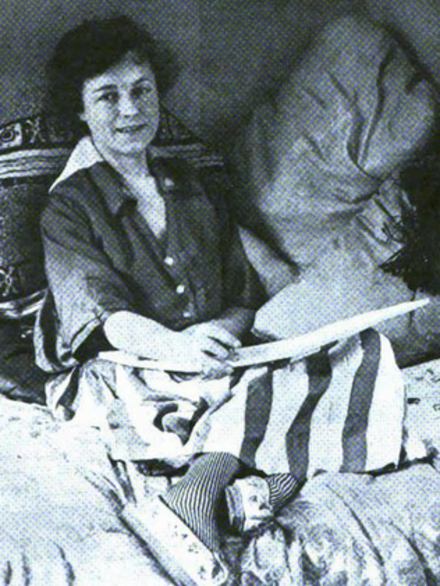
These women had come to New York either before or just as The New Yorker was founded. What brought them to the city? This period in the early 20th century was known as the Golden Age of Newspaper publishing, and cartoons and comics were extremely popular. In addition, for some women, the gaining of suffrage in 1920 may have made them feel freer to explore the world of work.
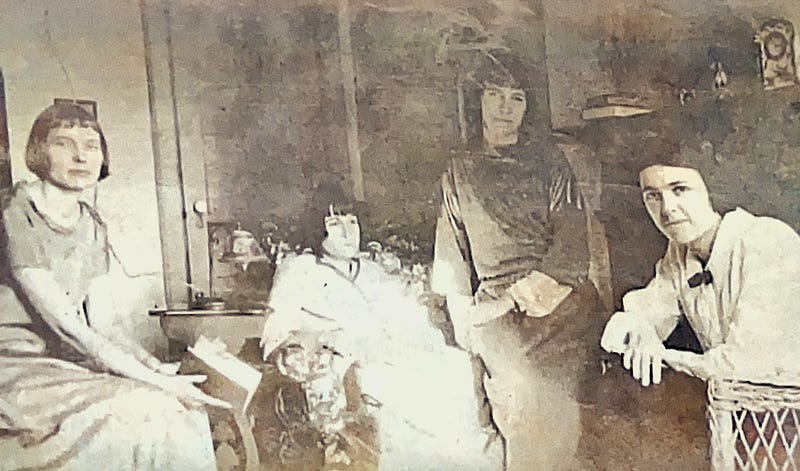
There are two women who drew cartoons for The New Yorker who became particularly well-known in their day: Helen Hokinson and Barbara Shermund. Their stories in particular interest me for a variety of reasons.
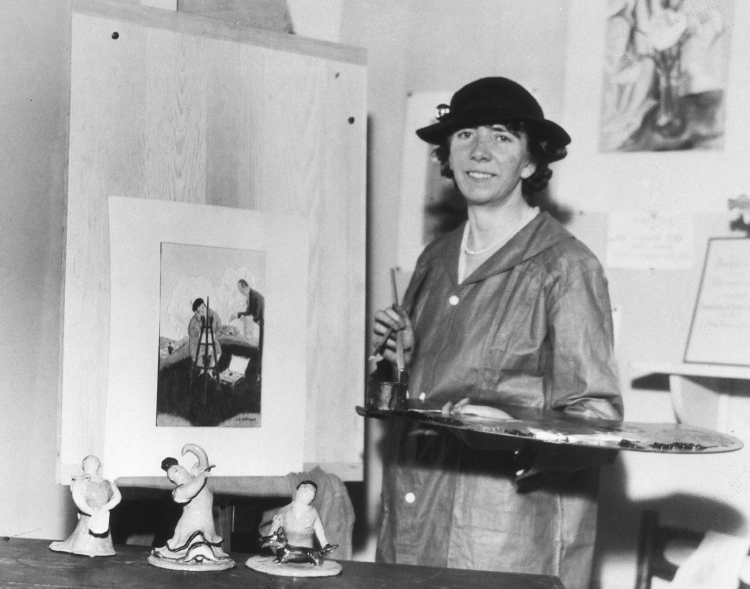
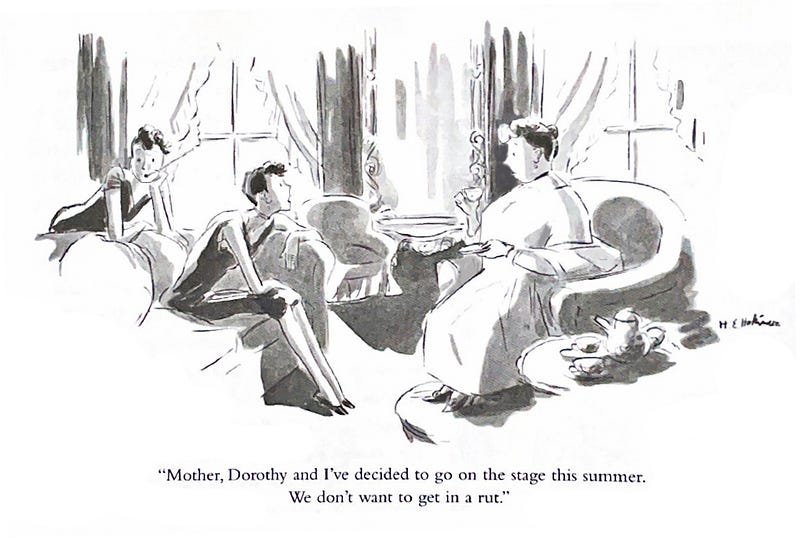
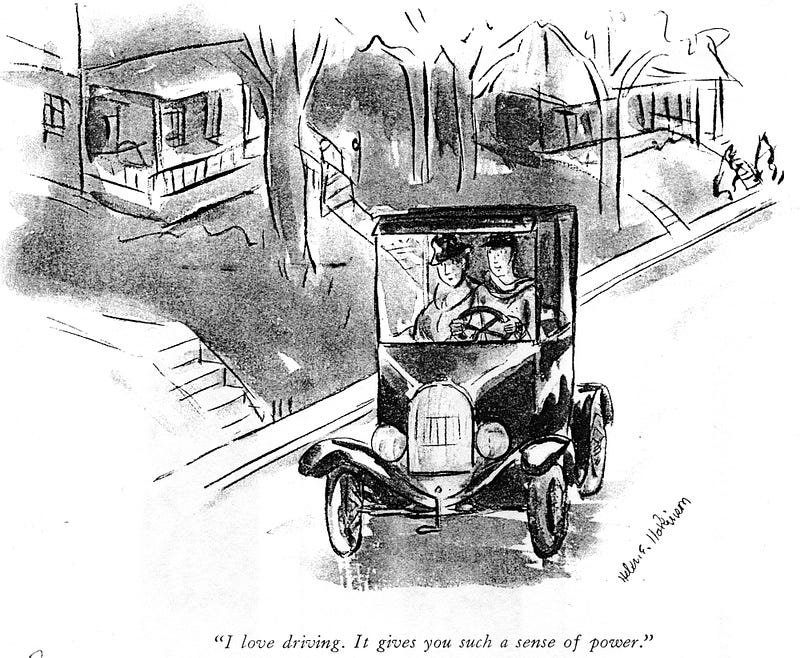
Helen Hokinson grew up in a small town in Illinois. Helen, always drawing, convinced her parents to send her to Chicago Art Institute where she studied art, live drawing, illustration and comics; then she moved to NYC to begin her efforts to make a living at drawing. She loved to sketch in the streets of NYC and after one such outing, a teacher of hers (she was taking classes while looking for work) suggested she take one drawing in particular to the new publication down the block, The New Yorker. It was this one, a lady waving goodbye to friends heading off on a ship. The editors bought it and asked her to return weekly with more. Helen became one of the most beloved contributors in the pages of the magazine, and on the cover, until her untimely death in a plane crash in 1949.
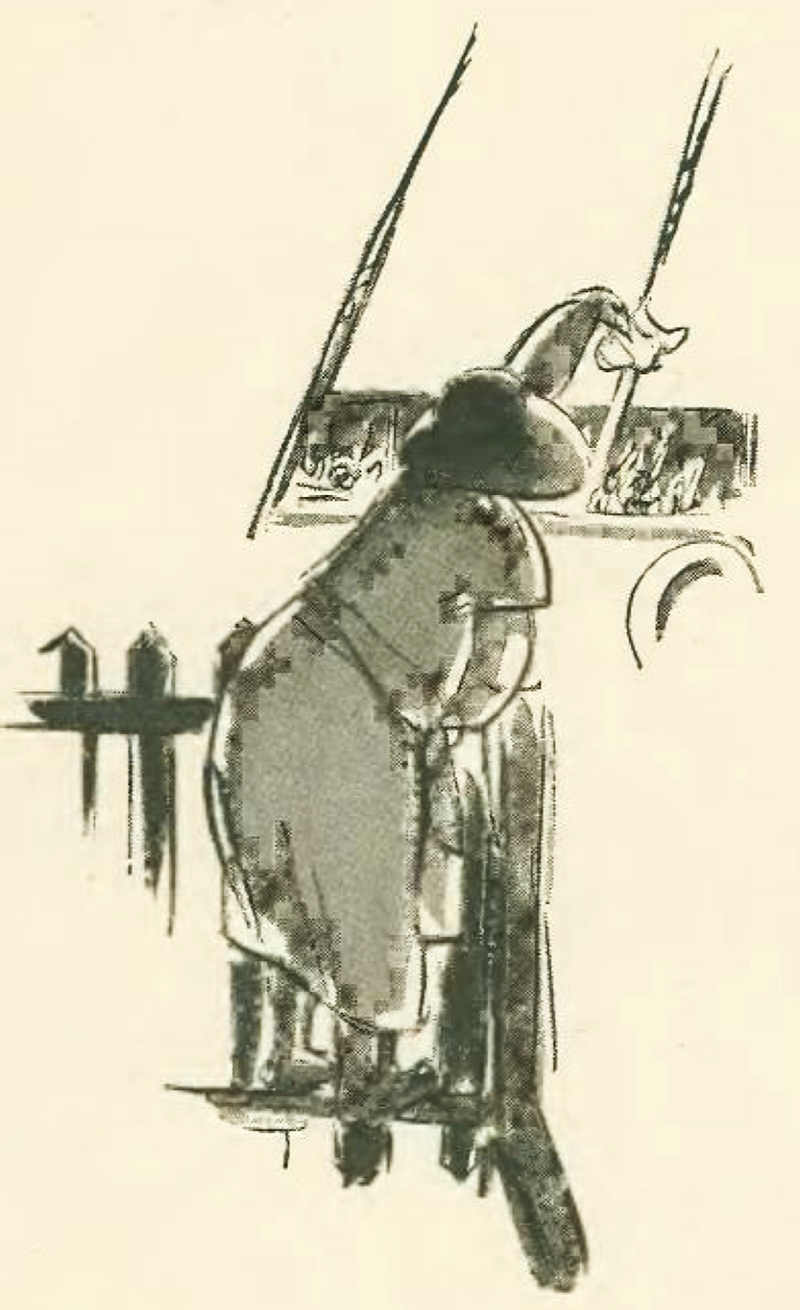
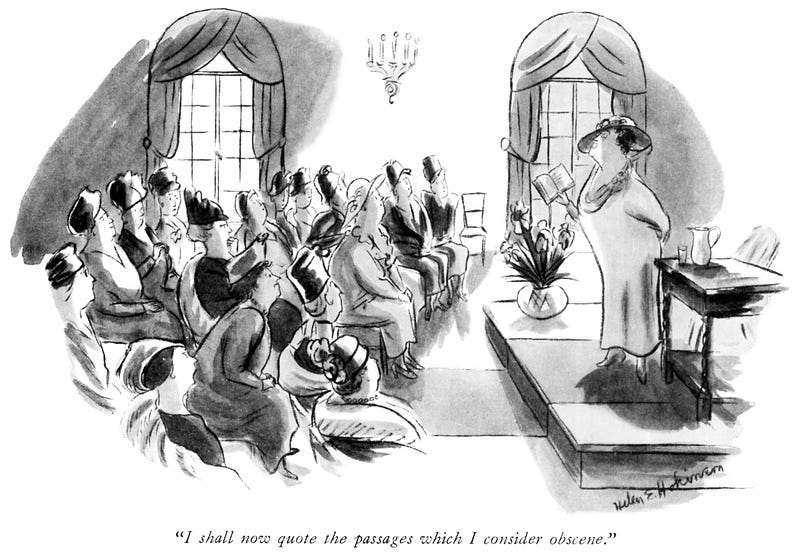
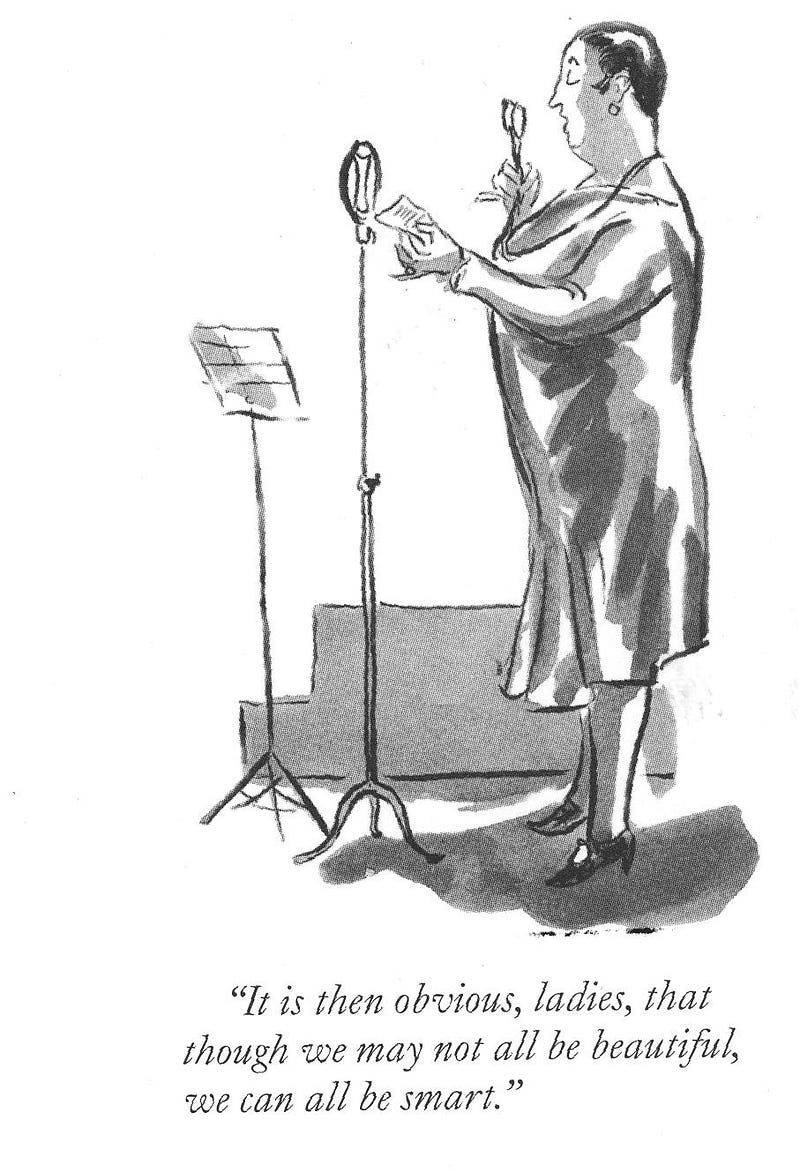
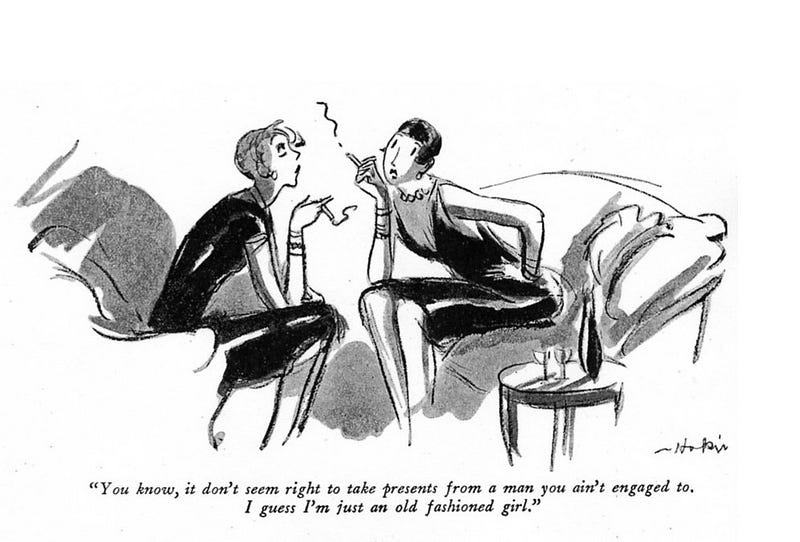
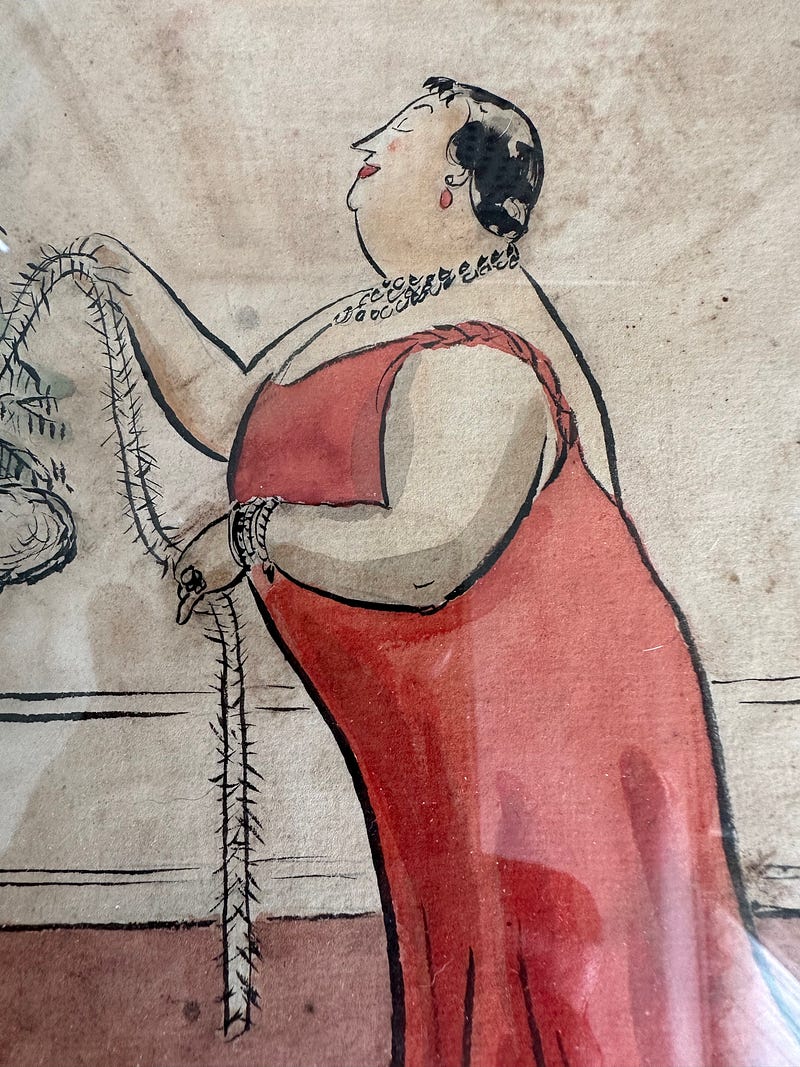
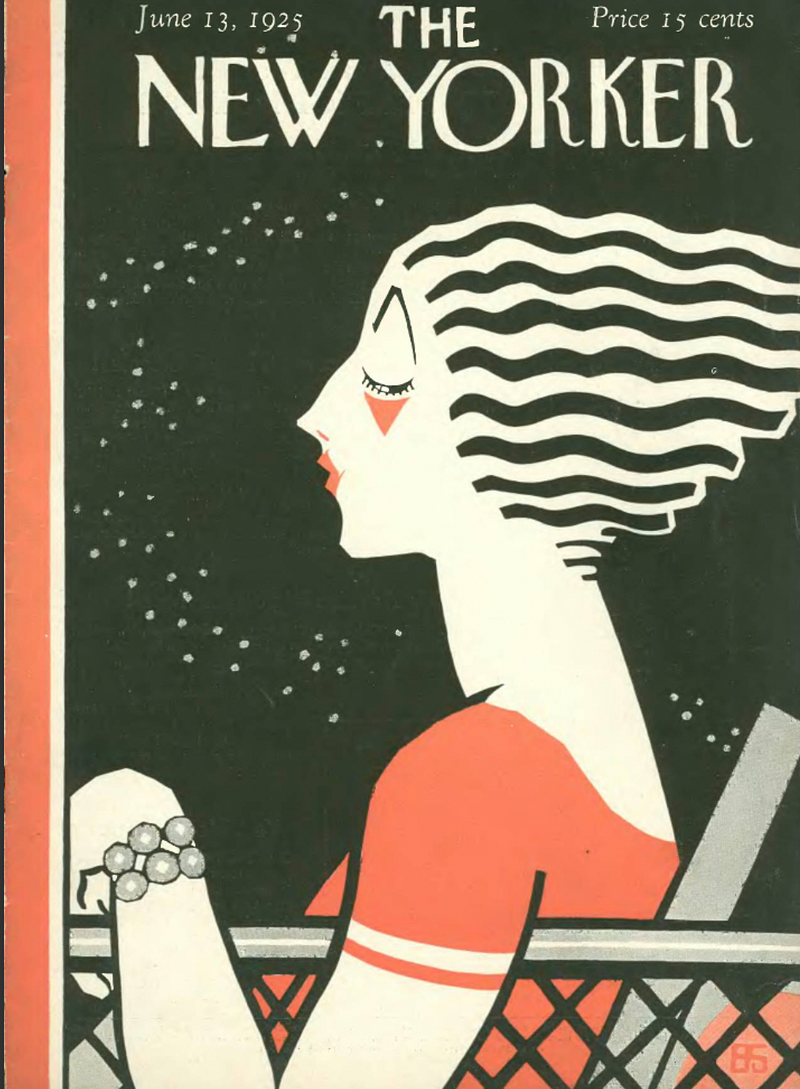
Barbara Shermund was born in San Francisco and traveled to New York to become an artist. She started at The New Yorker in 1925 as a cover artist.
She began doing drawings for inside the magazine, soon finding that she could also write ones with captions. Shermund was extremely popular in the first decade of the magazine’s life, published frequently. Her work was spirited in style and in content, her ideas had a feminist tone and she often drew about the life of a flapper in the roaring twenties.
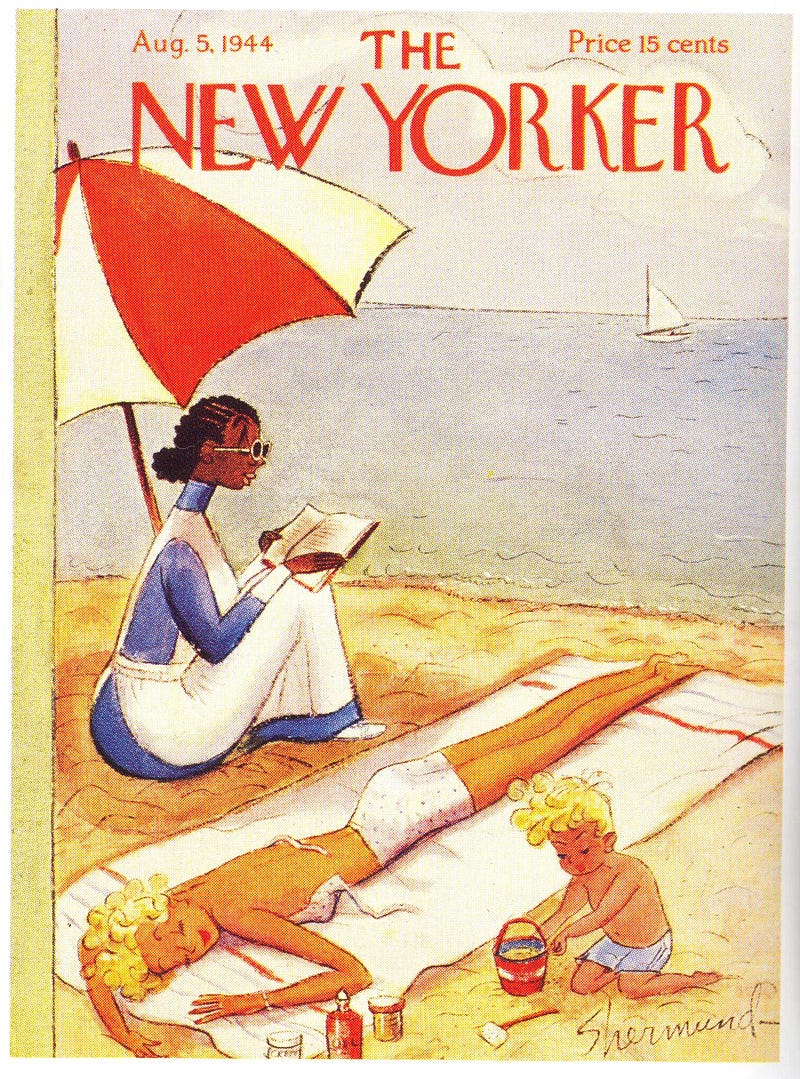
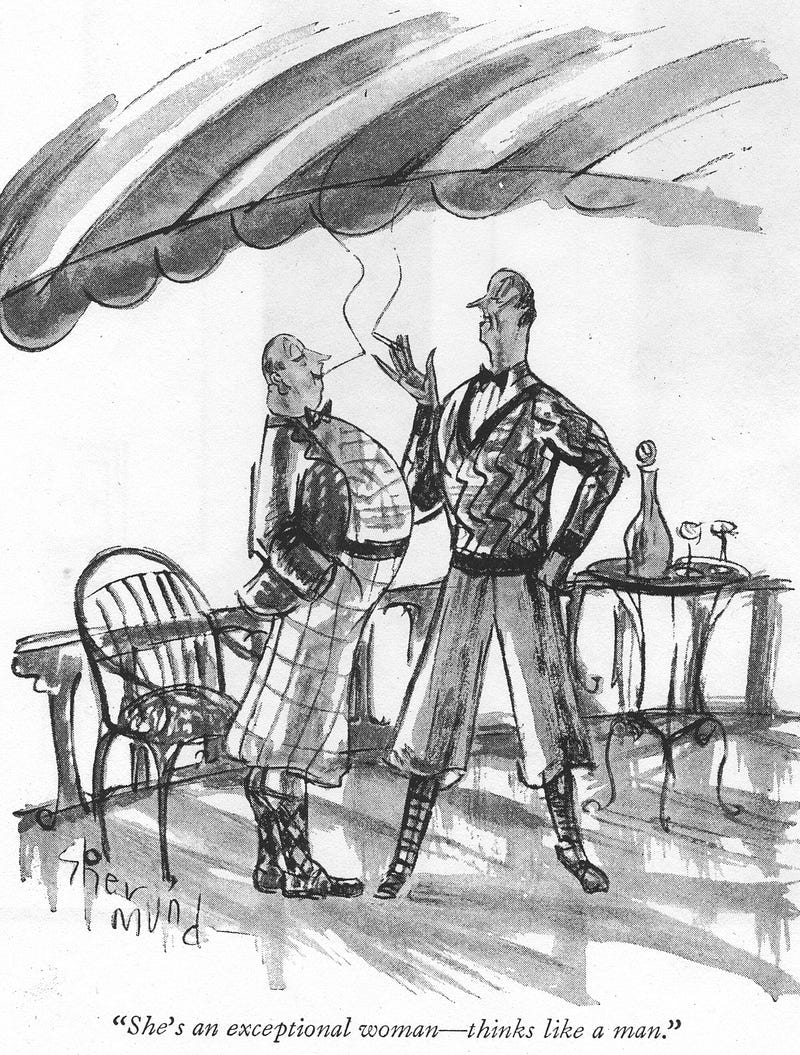
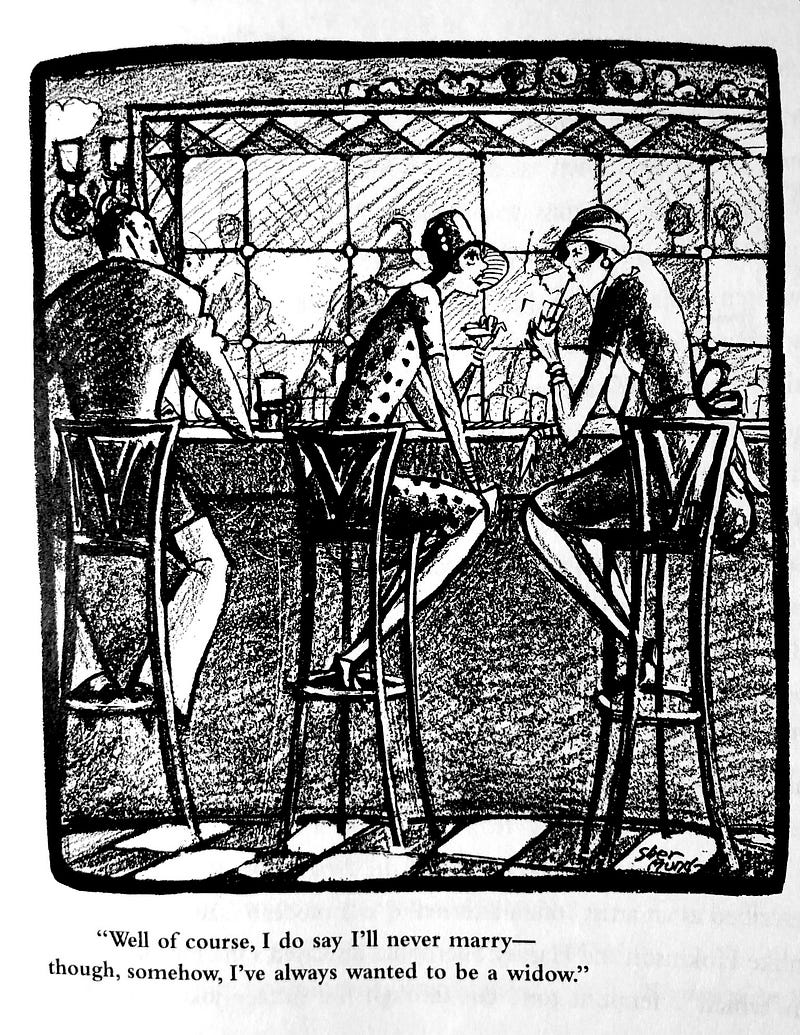
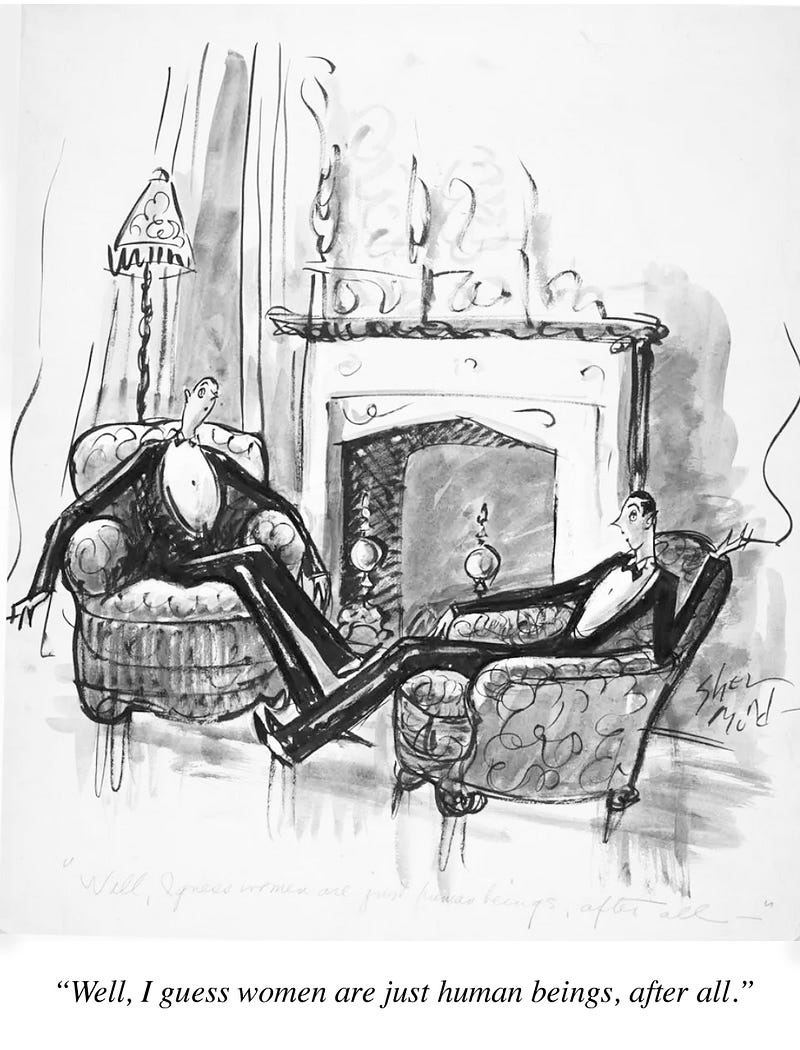
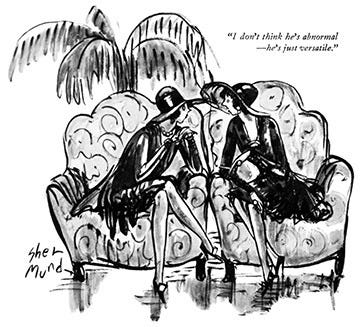
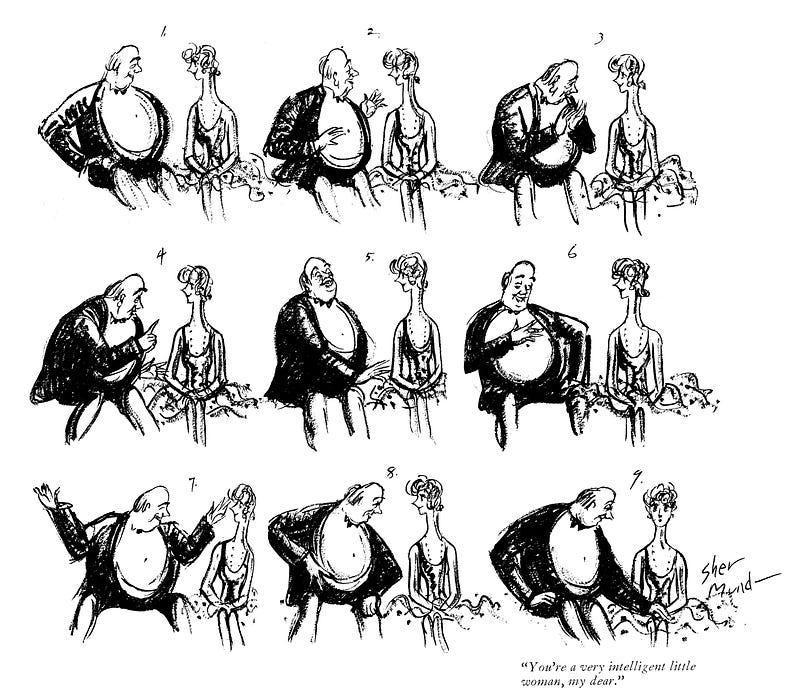
Shermund died in 1978. She had a good career at The New Yorker while it lasted, but as the culture changed, her work did too. As the 1940’s approached, the magazine used less and less of her work; she began using writers for her cartoons, publishing mostly in the men’s magazine, Esquire.
Hokinson and Shermund are interesting to me for a variety of reasons. Both artists were prolific in the early days of The New Yorker. Hokinson unfortunately died too soon; we will never know how her work might have adapted to the shifts in the culture. The characters she drew in her career did change somewhat, later becoming mostly about matronly ladies. This is something I attribute to cultural tastes — it was easier for the readers to enjoy humor about an older lady than to understand the vicissitudes of a modern woman. When Hokinson died in the plane crash, she was on a speaking tour to help her fans understand “her ladies,” as she called them. She was concerned that readers were laughing “at them,” instead of “with them.” As the 1900’s progressed into the 1950’s, American culture became a more conservative and restrictive time for women. Humor tended to portray women as housewives, secretaries and bimbos. Shermund’s work also changed. She no long drew about independent women; her later drawings reflected women only obsessed with dating and men.
In the 1960’s there were no women drawing cartoons for The New Yorker. The few who had been published since the start in 1925 (around 8) left the profession over the course of three decades, or died. It wasn’t until the 1970’s that women returned to cartooning. As in the 1920’s after gaining suffrage, there was a feeling of opportunity for women, this time coming after the Second Wave of Feminism. And in 1973, The New Yorker hired a new Art Editor with an open mind for diversity, a man named Lee Lorenz.
The same is happening now. More and more women are drawing cartoons and expressing what it’s like to be a woman, with humor. Currently at the magazine, there are equal numbers of men and women drawing cartoons. This was expedited by the Senior Editor David Remnick hiring a new Cartoon Editor, a woman named Emma Allen. Together, their vision is to increase diversity in contributors across the board.
Like Hokinson and Shermund, artists no longer need to travel to New York City in order to feel freedom to create. New York’s welcoming of diversity helped those two women realize their dreams, helped them find their voices. As did the editors of The New Yorker, who brought them into the fold and encouraged them. New York is still welcoming, but I believe there are many more places in this country that encourage women.
There should be more.
I moved to New York City in 1977 to realize my dream, too. The New Yorker and New York City helped me. The panel in 1999 set me on a path of discovering these women, further understanding my own.
My book, Very Funny Ladies: The New Yorker’s Women Cartoonists, 1925–2022, is available everywhere.