
Vivekananda and the Parliament of Religions
The moment the interfaith movement began
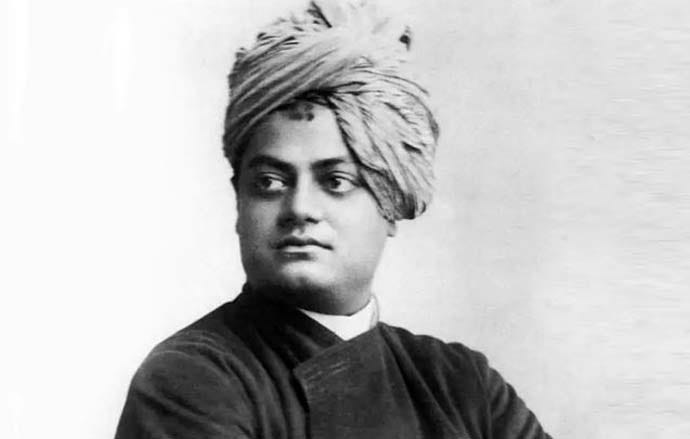
Today many of us accept that, despite differences in names, doctrines and forms of worship, all religions worship the same Divinity. This is reflected in the interfaith movement in which worshippers reach out to one another, closing the divides that historically stood between them.
This attitude didn’t occur by accident. Those in a position to influence their fellow worshippers supported its acceptance. Clearly, many thousands of people have contributed to this movement over the decades.
However, one person arguably took advantage of the opportunity they were afforded and made the first significant public step towards opening closed minds. This is the story of that moment.
One Sunday morning in September 1893, Mrs George W. Hale looked out the front window of her house and saw an unshaven and somewhat dishevelled Indian man sitting on the pavement outside. What made this sight so incongruous was that she lived in one of the mansions that lined Lake Shore Drive, among Chicago’s wealthier areas, and that the Indian was wearing the orange robes and turban of a Hindu monk. The man was Narendranath Dutta, better known as Swami Vivekananda (1863–1902).
Vivekananda was in the United States to attend the World Parliament of Religions, which had been organized to run in conjunction with the great Exposition being held in Chicago. However, the Parliament had been postponed by several weeks, and the delay had caused him to run out of funds. Luckily, the hungry and exhausted Vivekananda had come to a rest under the right window because Mrs Hale was a personal friend of Dr Burrows, the President of the Parliament’s organizing committee. She took Vivekananda in and, with others, gave him food and housing for the duration of the Parliament.
This inauspicious event, involving an Indian monk and a Western society lady, may be seen as emblematic of a new approach in Western spirituality that also occurred during this age of scepticism and doubt. With the leading authorities of mainstream Christianity not wishing to engage with the rapid changes that were occurring in the world, the field was open to alternative possibilities, and the translations scholars were making of the texts of all the world’s religions and spiritual traditions provided those new possibilities.
The impact made by translations of the world’s major spiritual, ethical, and philosophic texts on eighteenth and nineteenth century readers cannot be underestimated. Today we expect to go into any quality bookstore and find translations of the Bhagavad Gita, the Analects of Confucius, the Dhamapada, and the Egptian Book of the Dead. In the eighteenth and nineteenth centuries these were still new texts, brim full of exciting new concepts, offering new ways of seeing the world and God in relation to it. Voltaire had been attracted to Chinese thought and culture, among the German thinkers Hegel, Goethe, Schopenhauer, and Nietzsche each found much to enthuse over in Buddhism, and Max Müller was far from alone in being impressed by the Indian Upanishads, their ideas equally inspiring the poet Samuel Coleridge and the American Transcendentalists Henry David Thoreau and Ralph Emerson.
Indeed, such was the general enthusiasm for non-Western spirituality that by the 1870s Western culture had become a great mixing bowl in which various currents of religious, mythological, spiritual, scientific, literary, and philosophical thoughts were swirling. This was the period which saw the founding of Christian Science in 1866 by Mary Baker Eddy, while in 1875 Madam Blavatsky drew together a range of Eastern and Western beliefs to establish the Theosophical Society. This was also when spiritualism and mediumship became popular, along with an appreciation of the spiritual implications of diet, health, psychology, and environment. Collectively, these all laid the foundations of what we today call New Age practices and beliefs.
Accordingly, when Vivekananda, a real Indian swami dressed in authentic robes, appeared at the World Parliament of Religions, he had a primed audience. This was an ideal opportunity for a charlatan to take the eager and open Parliament attendees for a ride. However, Vivekananda had genuine depth. He possessed a commanding presence, a sharp intellect, a Western-style education, and a profound understanding of Indian spirituality and philosophy, and he proved to be the ideal person to introduce the practical aspects of Indian spirituality to Westerners.
Naren, as Vivekananda was called by his family and friends, was born and raised in Kolkata (Calcutta). As a child he was naturally drawn towards spirituality, even meditating with his friends after school. However, at school he was introduced to Western science and philosophy, including the philosophy of Hegel. As a result he developed not just a sceptical attitude towards the existence of God, but also towards the excesses of Indian religion. For a time he even became an atheist, as he could find no rational basis for maintaining a belief in God. However, because he felt that the only way of knowing something is to experience it, the teenage Naren then developed an intense desire to find someone who had perceived God and so settle for him the question of God’s existence and nature once and for all. Over the years he visited a variety of professors, teachers, and holy men, but none could affirm that they had seen God. Then, in 1881, he met Ramakrishna Paramahamsa. To Naren’s question of whether he had seen God, Ramakrishna replied, “Yes, I have seen God. I see Him as I see you here, only more clearly.” [Nikhilanada, Vivekanda, p 24]
Ramakrishna was then accepted as one of India’s greatest holy men. He was engaged in the task of reviving an understanding of India’s ancient spiritual traditions at a time when the impact of Western science and social attitudes were causing many of India’s educated to discard their country’s spiritual and philosophic traditions. Ramakrishna’s impact on Naren was profound. He not only answered Naren’s questions regarding God, but took him into deep meditative states, and taught him the deepest aspects of Indian spirituality, particularly the non-dualist principles of Advaita Vedanta. After Ramakrishna’s death in 1887 Naren became the leader of a group of young monks. It was in this role that it was suggested he travel to Chicago and attend the World’s Parliament of Religions. The Rajah of Khetri gave him the funds to do so, and also gave him the name of Vivekananda.
Vivekananda became the sensation of the Parliament. While representatives from most of the world’s major religions were present, from his first appearance it was Vivekananda who attracted all eyes. Newspaper reports focused on him due to his singular and authoritative appearance, and Chicago buzzed with anticipation as to what he would say, an anticipation that was intensified when he declined his first opportunities to speak due to extreme nervousness.
Finally, Vivekananda approached the rostrum. He began his speech with the words, “Sisters and brothers of America.” While the other speakers had used the much more formal, “Ladies and gentlemen,” Vivekananda’s opening words were typical of his relaxed outlook. The response was electric. Most of the seven thousand attendees immediately stood, their applause lasting a full two minutes.
Vivekananda’s message to the Parliament was a simple one of tolerance and acceptance. He spoke of how Indian spirituality assumed that all religions and all creeds were variations on each other, and how there were no missionaries in India because Indians considered that all religions worshipped the same God — this at a time when large numbers of Christian missionaries were arriving in India to convert the “heathen” Hindus to the “one true” religion of Christianity. Vivekananda also called for an end to fanaticism and intolerance, and for their replacement with the universal acceptance of all creeds:
If the Parliament of Religions has shown anything to the world, it is this: It has proved that holiness, purity, and charity are not the exclusive possessions of any church in the world, and that every system has produced men and women of the most exalted character. In the face of this evidence, if anyone dreams of the exclusive survival of his own religion and the destruction of others, I pity him from the bottom of my heart and point out to him that upon the banner of every religion will soon be written, in spite of resistance: “Help and not Fight,” “Assimilation and not Destruction,” “Harmony and Peace and not Dissension.” [From Vivekananda’s closing address, September 27, 1893]
After the Parliament was over Vivekananda travelled the country giving lectures on Indian religion, philosophy, and spirituality. He ended up staying for four years, establishing the Vedanta Society there in 1894.
In many ways Vivekananda’s arrival in the United States can be seen as the real beginning of the impact of Eastern spirituality in the West. Previously, Westerners had translations of the ancient texts of the Vedas and Upanishads. Vivekananda brought a personal understanding of what those texts meant and how Westerners could use them in their own personal search for God.
This is an excerpt from The God Revolution: How Ideas About God Radically Changed During The Modern Era. Winner of Best Book in New Zealand’s 2013 Ashton Wylie Awards for spiritual writing.


