avatarAlexander M. Combstrong

Summary

Vitamin B12 deficiency is a widespread yet under-recognized health issue that can lead to serious health consequences, but it is easily preventable through supplementation.

Abstract

Vitamin B12 deficiency is a silently growing problem, affecting a significant portion of the global population, with prevalence estimates ranging from 2 to 40 percent. This deficiency can lead to a host of health issues, including depression, difficulty walking, anemia, cognitive decline, and fatigue. Despite its severity, public awareness remains low, and many are unknowingly at risk due to dietary insufficiency, inadequate soil levels, and biological absorption challenges. While B12 can be found in fortified foods, meat, and dairy, the depletion of B12 in soil necessitates supplementation for both humans and livestock. Symptoms of B12 deficiency develop gradually, often going unnoticed for extended periods. Given the simplicity of addressing the deficiency with supplements, the article suggests that taking a proactive approach to B12 intake is a prudent choice for maintaining health.

Opinions

  • The article implies that the lack of awareness and education about vitamin B12 deficiency is a significant factor contributing to its prevalence.
  • It suggests that reliance on food sources alone may be insufficient due to modern soil depletion and dietary choices, making supplementation a practical solution.
  • The author strongly advocates for B12 supplementation as a straightforward and effective measure to prevent the negative health outcomes associated with B12 deficiency.
  • The tone of the article indicates that the risk of experiencing the detrimental effects of B12 deficiency outweighs the simplicity of preventing it through supplementation.
  • The author emphasizes the importance of getting tested for B12 levels to ensure adequate intake and prevent the slow onset of symptoms.

Vit. B12 Deficiency is Huge in Both Prevalence and Consequences. Why Risk it?

It creeps up invisibly
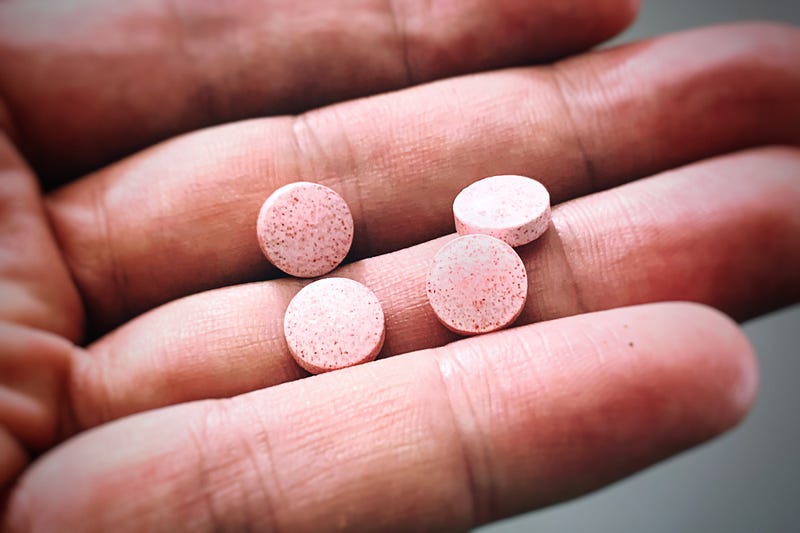
Vitamin B12. Photo by Alexander M. Combstrong

If a virus was spreading around the world causing depression, difficulty walking, anemia, cognitive decline and fatigue, and plenty more, you would hope that the world’s governments would be on it pretty damn quick.

So why is it that vitamin B12 deficiency, a common cause of all of the above, is so little heard of? Studies put its prevalence somewhere between 2 and 40 percent of the population, increasing with age, with most somewhere in the middle. That’s far too many when there’s such a simple fix for most.

Why are so many people deficient?

One reason is education. People have never heard of it and so make no effort at all to address it. Combine that with the fact it can be difficult to find in some diets and some people biologically struggle to absorb it from food, and the numbers start to grow.

We can’t produce our own B12 in our gut. Nor is it in the foods we’d normally reach out to for health reasons – fruit and veggies. It used to be prevalent in the soil, and our ancestors would get enough from eating dirty veg and meat. But now the soil is depleted to the degree there’s pretty much none left.

Vegans get it mostly from B12 fortified food such as plant milks. It’s also in meat and dairy, but often only because the animals are given supplements while they’re still alive as they too can’t get enough from the soil. Between these things, it is possible to get enough from food, for most people. But how would you know?

Symptoms creep up so slowly that it might be months or longer until you even realise you have a problem.

Got any of the above symptoms? Or are you a person who just doesn’t want to risk it?

Aside from getting tested for B12 levels, there are only two options really. One is to risk suffering depression, physical weakness and cognitive decline. The other is to take a supplement. To me, it’s a no brainer.

More info about B12 from Britain’s beautiful NHS can be found here

Health
Nutrition
Depression
Supplements
Diet
Recommended from ReadMedium