
Visual Modelling with Heptabase & Scrintal
At face value, these apps are similar but have two very different use cases. However, take note as both demonstrate a seismic shift in knowledge management.

Introduction
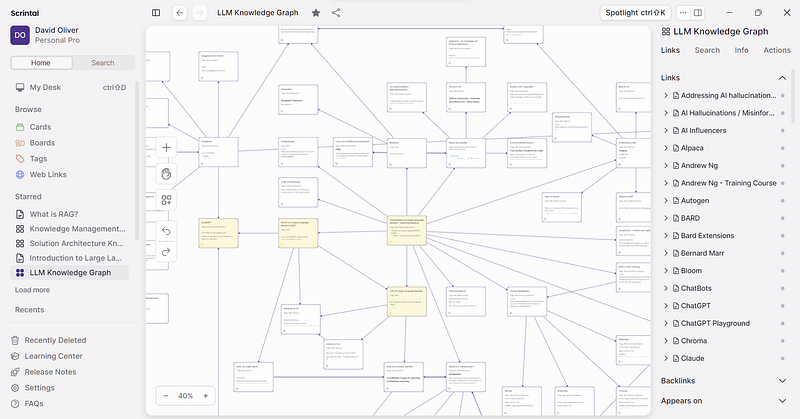
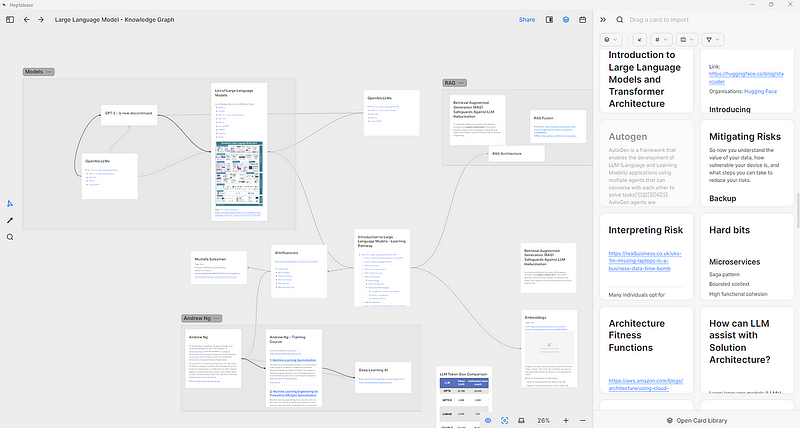
This is my second article on Visual Thinking. Heptabase and Scrintal look very similar. In both applications, you can create Cards and capture anything you need, formatting using Markdown with pictures, videos and PDFs. Cards are a ubiquitous way of storing knowledge of differing types.
You can create BD links (Bi-Directional links) between cards that are expressed as lines between them denoting a relationship. In my article Drawing Conclusions — The Art of Thinking Visually I discussed Visual Perception and how powerful the human brain is when using visual reasoning. So you can understand how powerfully linking cards together aids our understanding and problem-solving.
Modelling Tools
Heptabase and Scrintal are essentially modelling tools crafted to crystallise your thoughts, ideas, and plans into an organised visual format. Unlike diagramming applications such as Visio or Lucidchart, Heptabase and Scrintal are not intended for detailed diagram creation. Instead, Heptabase and Scrintal enable you to map and structure your thoughts. In contrast, diagramming tools serve the purpose of generating specific types of visual representations, such as flowcharts, wireframes, or network diagrams.
Within these modelling environments, a Card is not just a placeholder; it’s an emblem of an underlying concept or element you can integrate into various models as needed. This interconnectedness means that any alteration or elimination of a card is visible across all instances where it’s been applied, offering a dynamic and holistic view of how changes affect the broader picture. Despite their simplicity, these models are deceptively powerful, providing a multifaceted yet straightforward approach to organising complex information.
Different Audiences
Heptabase and Scrintal can help you create models so you can explore anything you wish visually. However, both applications are aimed at very different audiences, and understanding this will help you choose which application is suitable for your needs.
Heptabase is for personal use only. Heptabase can work across multiple devices, yes, but it isn’t intended for use by anyone other than you. Heptabase is the equivalent of a messy notebook for working things out or for capturing fleeting notes on the go, then exploring and expanding on them later on when you have more time.
Scrintal for Collaboration and Sharing
Scrintal, on the other hand, focuses on collaboration. Multiple users can share boards and work together simultaneously. Scrintal also has an excellent publishing mechanism so you can share your boards with everyone with access to a Web browser. No additional installs or licensing is required, so you can share your ideas far and wide with whomever you wish! I have done precisely that with my Large Language Model Knowledge Graph.
The Seismic Shift
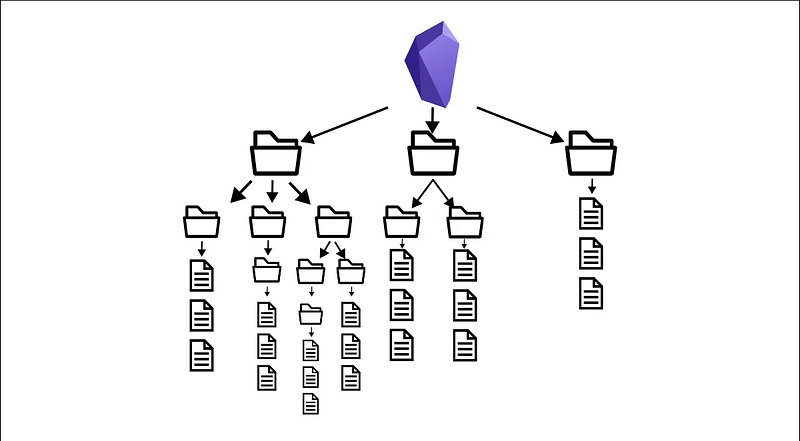
In the digital landscapes of Heptabase and Scrintal, the hierarchy of files and folders isn’t used, replaced by an intuitive system of Cards, Tabs, and Boards. A Card in these environments can establish an unlimited array of connections with its counterparts and can populate numerous Boards simultaneously without the need for replication. The power of this system lies in the visibility of these connections — understanding the influence of one Card over another and observing the ripple effect of changes or deletions within the network.
Confronting a conventional document folder now evokes a sense of sadness. I am acutely aware that, although relationships between content exist, they remain hidden from view, their potential for insight unexploited.
While applications such as Obsidian and Logseq offer Graph views illuminating the interlinkages between files, they remain tethered to the file-and-folder paradigm. In contrast, Heptabase, Scrintal, and similar applications have crossed over this digital chasm. They embed their intelligence directly within the Graph, liberating knowledge management from the confines of hierarchical structures and propelling it into a more interconnected and dynamic realm. Gregory J Gaynor demonstrates how Obsidian can also cross over.
Security
Let’s turn our attention to security. If there’s something of value, it warrants safeguarding. Merely encrypting the primary device storage is insufficient, as it leaves unencrypted knowledge exposed. Heptabase and Scrintal, however, provide robust protection through end-to-end encryption as data travels and ensure encryption of data at rest, guaranteeing the privacy of your work regardless of its location.
Facilitating seamless data transfer, Heptabase and Scrintal simplify importing and exporting your knowledge. Each platform includes backup functionalities that efficiently convert your data into markdown files, providing an added layer of security and convenience.
Connectivity
Heptabase doesn’t require an Internet connection all the time and will sync when there is a connection to the Internet, but it will happily work without one. Scrintal does require an internet connection to work but will quite happily work from a browser anywhere.
In Summary
As you can see, Heptabase and Scrintal are different, so I use both! Have they replaced the use of the other applications I use? Yes, I have migrated away from my other PKM and Knowledge Management Applications. Yes, Cards overlap from one tool to the other. I have taken a great piece of advice from Tiago Forte, and that is to make sure that you use the same organisational system from device to device, app to app, to organise your knowledge, and so I do!
Scrintal and Heptabase are not just tools; they are gateways to a reimagined realm of knowledge management. They stand as testaments to the power of innovation, transforming the way we interact with information with their intuitive interfaces and robust security measures.
Whether through Scrintal’s visual boards that turn complexity into clarity or Heptabase’s fluid card system that adapts to our thought processes, these platforms are more than just a part of a digital toolkit — they are companions in our journey of lifelong learning and exploration. They encourage us to break free from the constraints of traditional data organisation and embark on a path where our ideas can interconnect in an ever-expanding digital canvas.
As we navigate through the sea of information our world offers, Scrintal and Heptabase serve as our lighthouses, ensuring that no insight is lost and knowledge finds its place. They have not only replaced other applications but have raised the bar, encouraging us to think differently about how we organise our thoughts and manage our knowledge.


