
Visiting White Sands National Park
Tularosa Basin, New Mexico
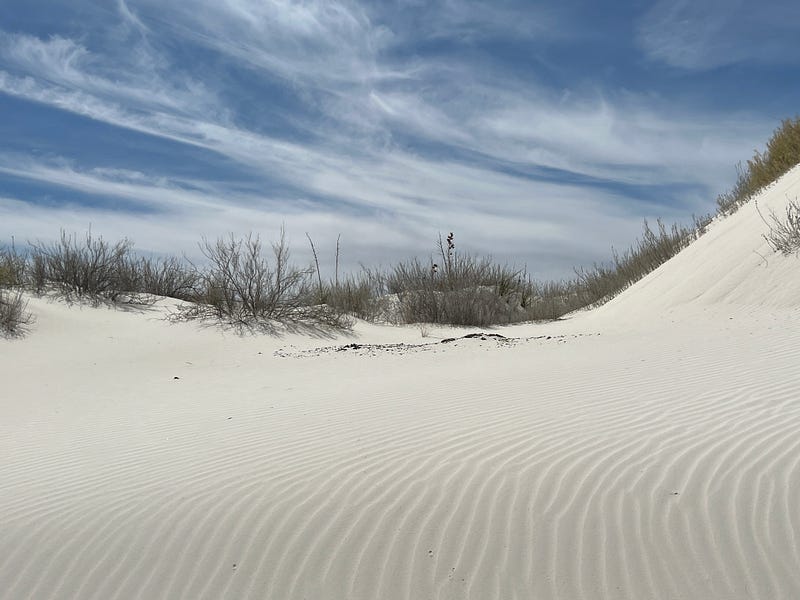
We are currently living in Carlsbad, New Mexico, so to get to White Sands National Park was a three-hour drive. I wanted to see it while we were this close. I know we won’t get back this way for a while. I am so glad we did.
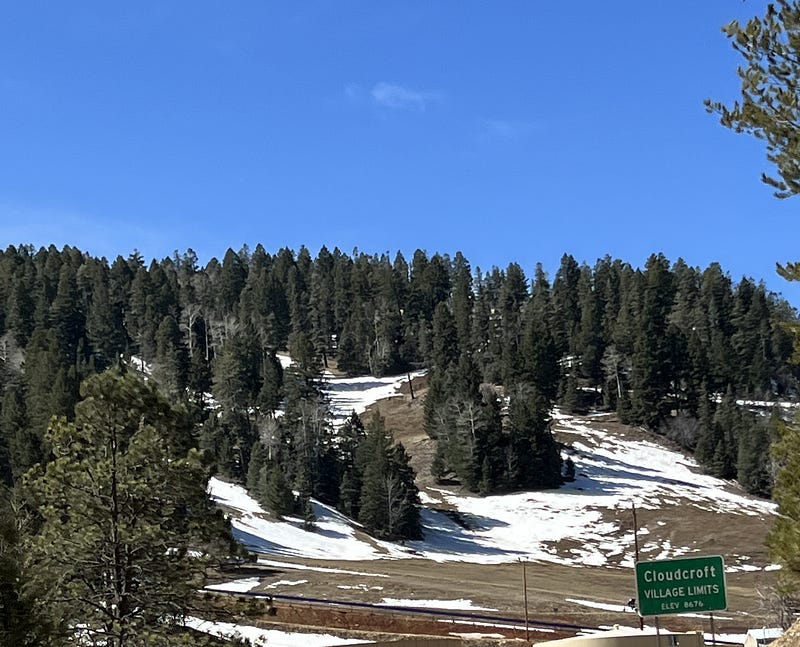
The drive on Highway 82 from Artesia to Mayhill, up to Cloudcroft at 8,676 feet, and back down to La Luz, is one of the most beautiful drives through the Lincoln National Forest and the Sacramento Mountains. The drive alone was worth the trip.
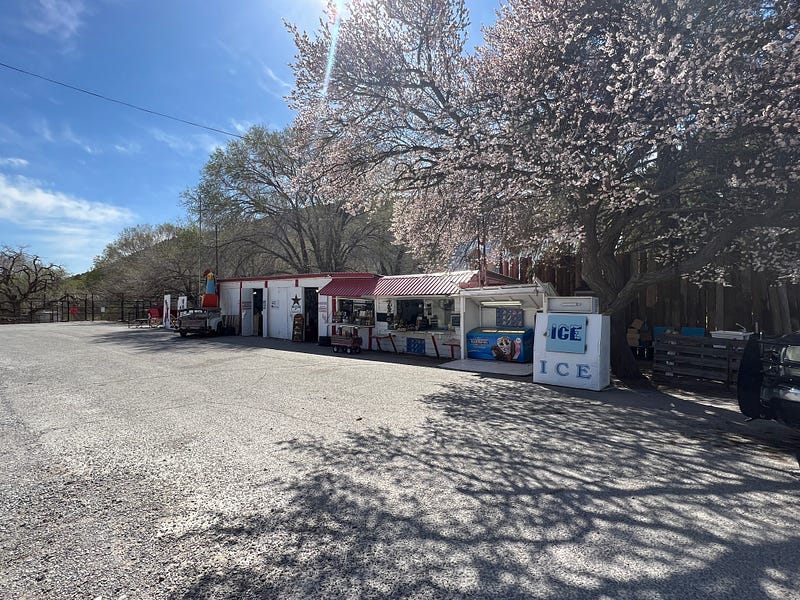
We found the neatest little stop along the way at Tom & Pam Runyan Ranches. They have a whole petting zoo and farm behind the little snack shop with lots of fun photo opportunities. And they also have the only restroom for miles. Don’t plan on hitting a rest stop because there aren’t any. Be sure to purchase a little something because the sign clearly states, “You Can’t Pee For Free!”
The terrain changes from a flat empty desert to rolling hills dotted with bushes to full-blown mountains filled with pine trees and snow.
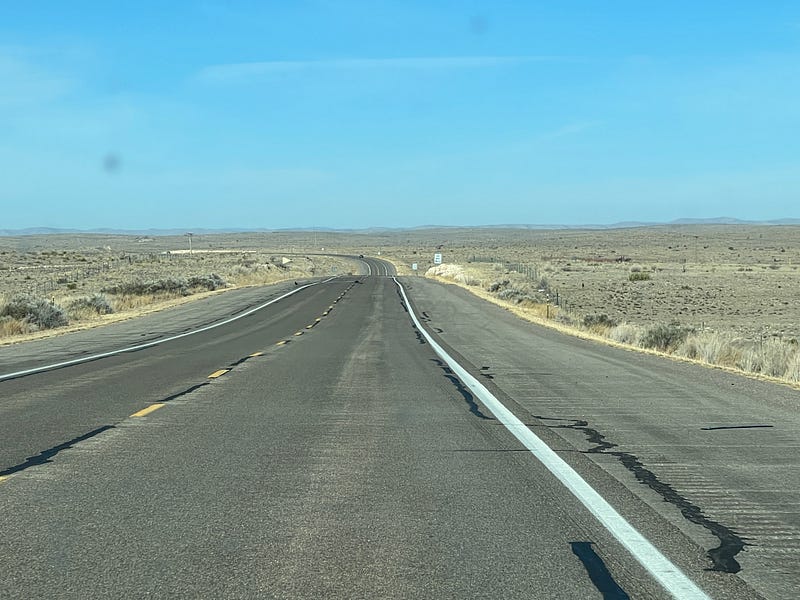
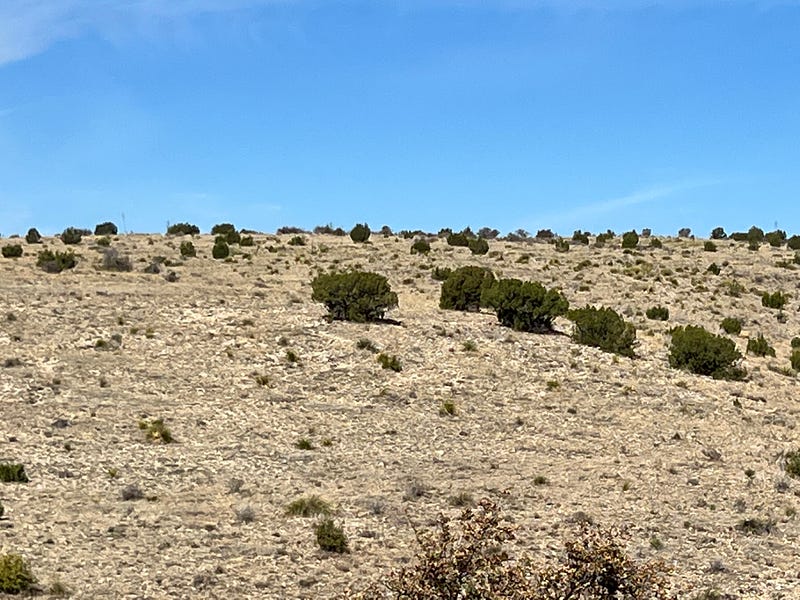
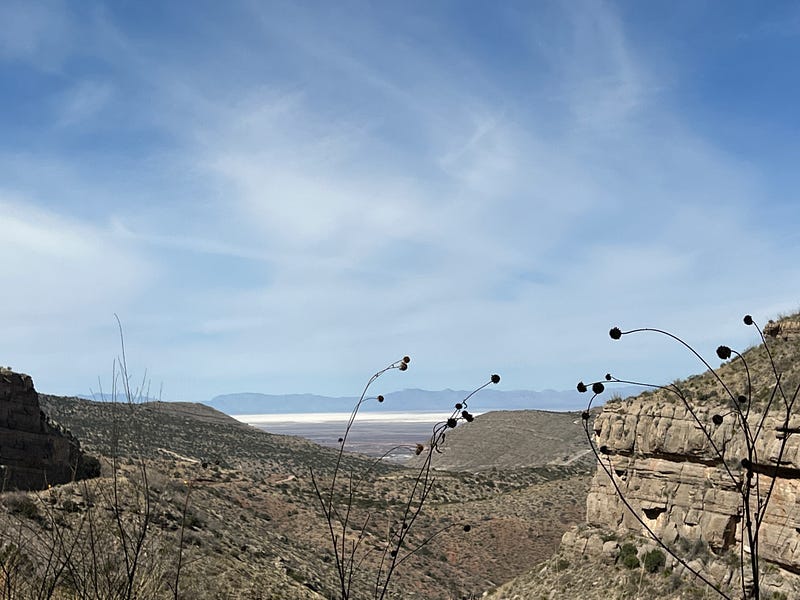
The neatest part is getting that first glimpse of the glistening white sands through the mountain peaks. We stopped at the Tunnel Vista Observation Site to take a few photos and enjoy the view.
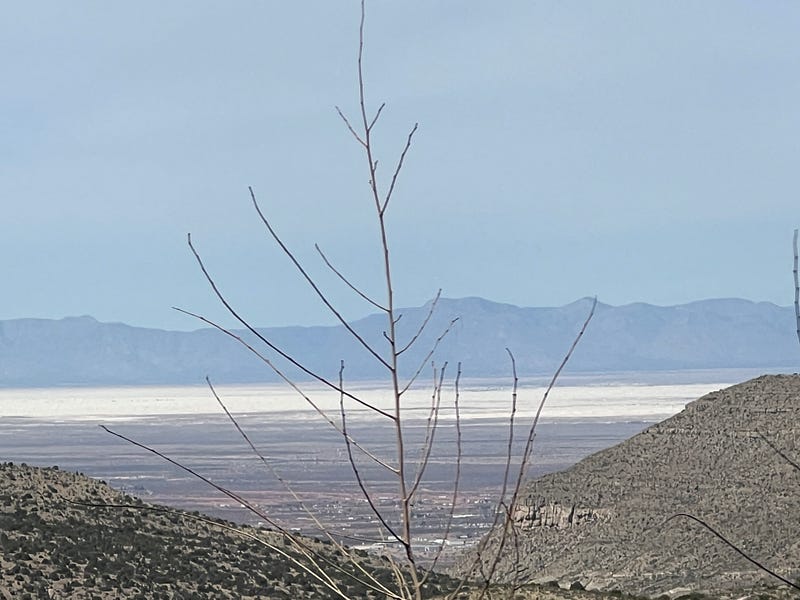
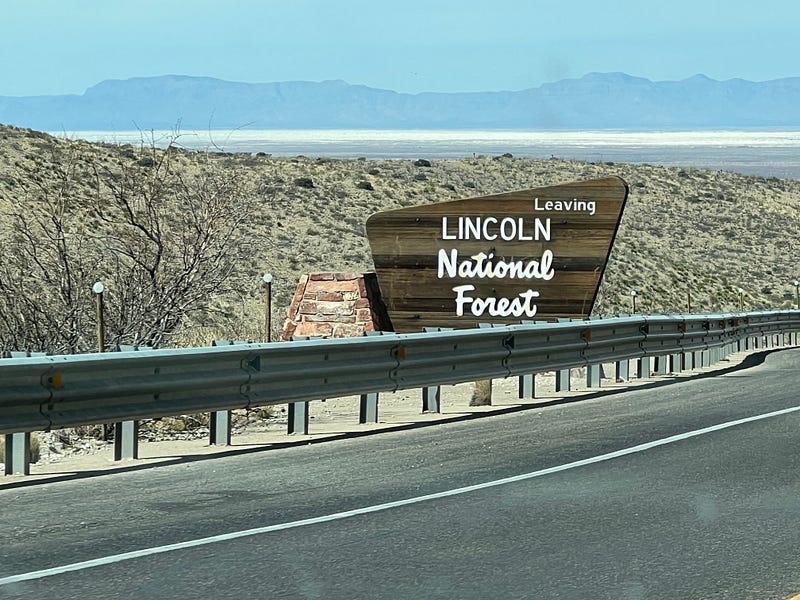
Leaving Lincoln National Forest and the mountains behind, it is all downhill from here.
It was Monday, March 13, 2023, and neither one of us realized it was Spring Break from school. I have never seen a National Park so busy on a Monday. The Visitor Center was packed, and there was no place to park. Even all the non-parking spots were full. Rich drove around a few times waiting for a car to leave with no luck. We skipped the visitor center and headed straight down the road to the dunes.
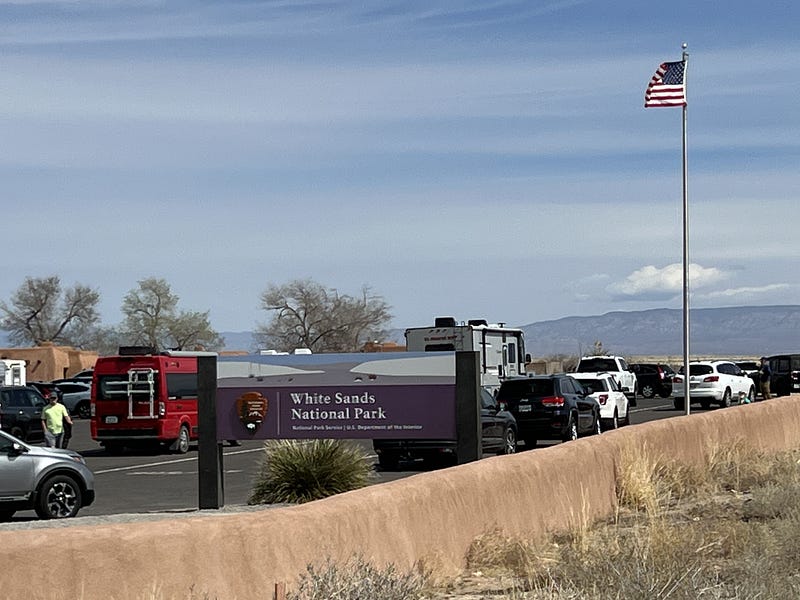
White Sands National Park is one of the most visited National Parks in the country with over 660,000 visitors a year. We waited in line to get through the gate for over fifteen minutes.
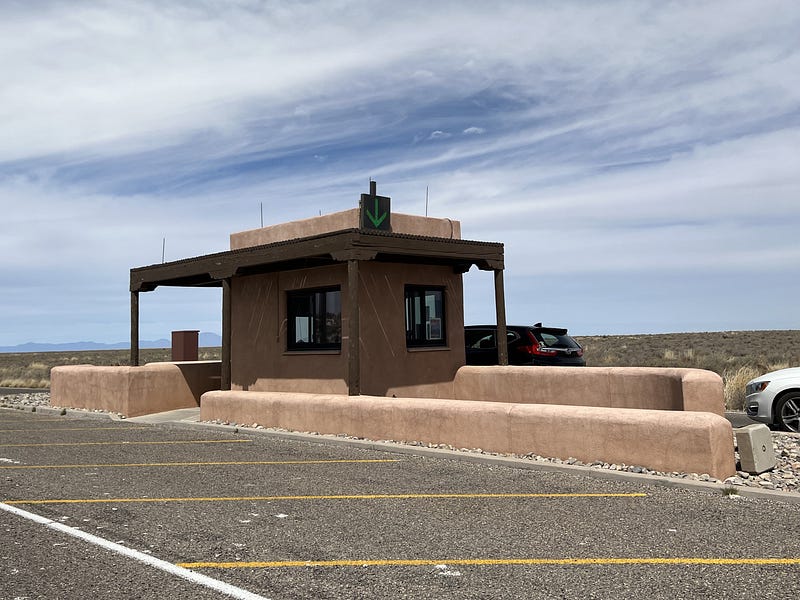
The park covers more than 145,000 acres in the Tularosa Basin. It is completely surrounded by the White Sands Missile Range. It is regularly closed due to missile testing at the range, so it is always recommended to call ahead for the closure schedule. Or better yet, just check the alerts on the website at nps.gov/white sands.
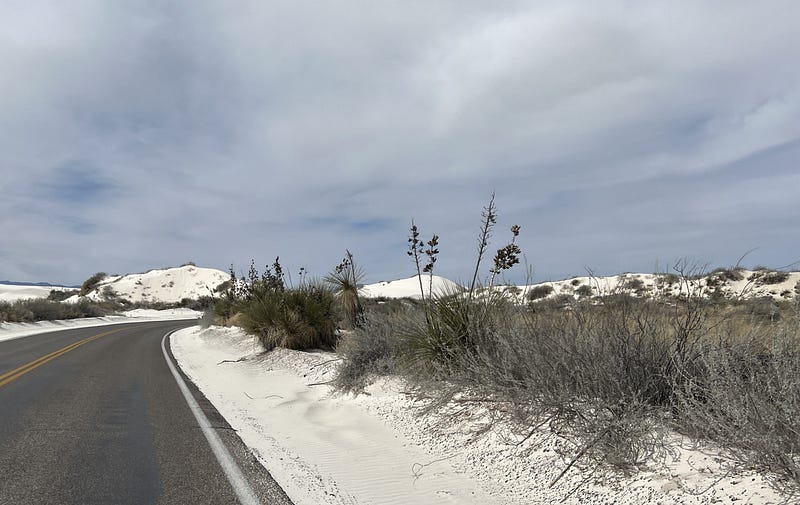
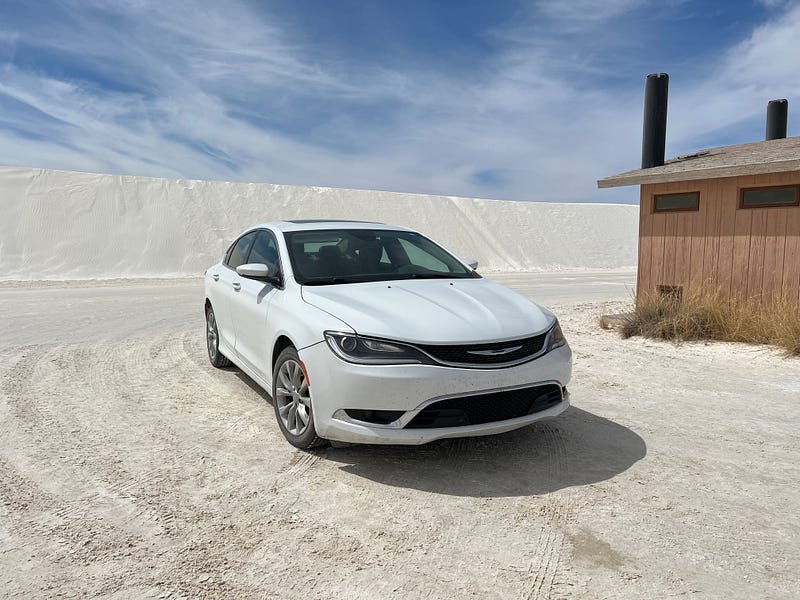
The Dune Road is approximately eight miles long one way and then circles around at the end and comes back. The first half is paved, with the last half being packed with gypsum sand. It was fine for our little white car to drive. We even saw several campers and trailers.
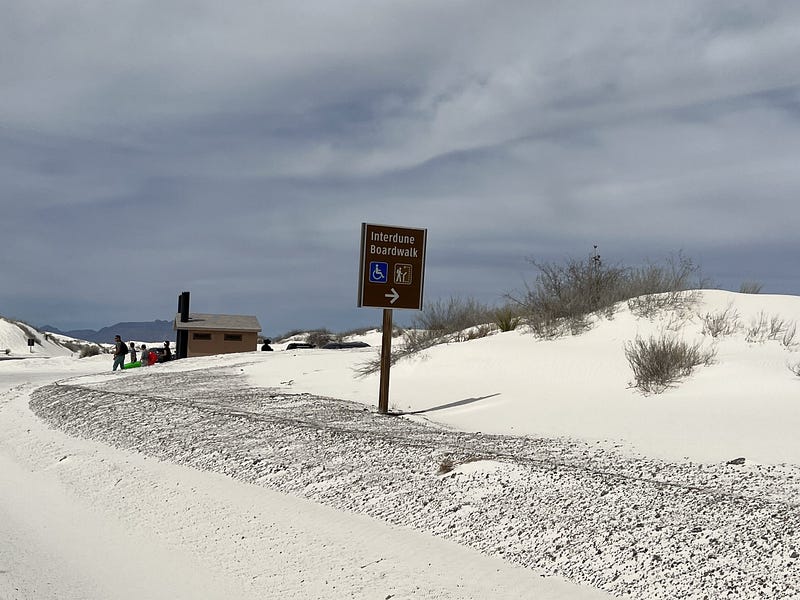
The Interdune Boardwalk parking lot was packed full and once again there was no place to stop and park. We drove on by. It was also packed full on the drive back so we did not get to walk the boardwalk.
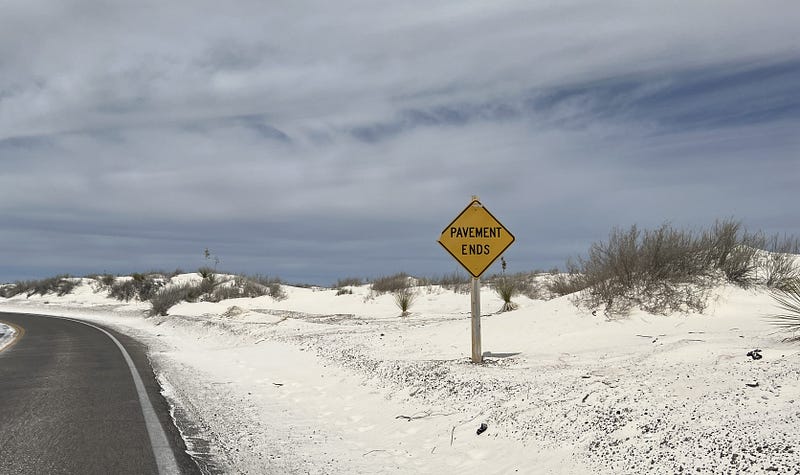
I was a little disappointed that it was so busy, but actually pleased to see so many people visiting a national park. This is the snow of the west. Everyone was sliding down the huge drifts on their sleds just like back home in Ohio when everyone sleds down the hills of snow. Except, this type of sledding doesn’t require ten layers of clothes to stay warm. The kids and adults were fun to watch climbing the dunes and sledding down.
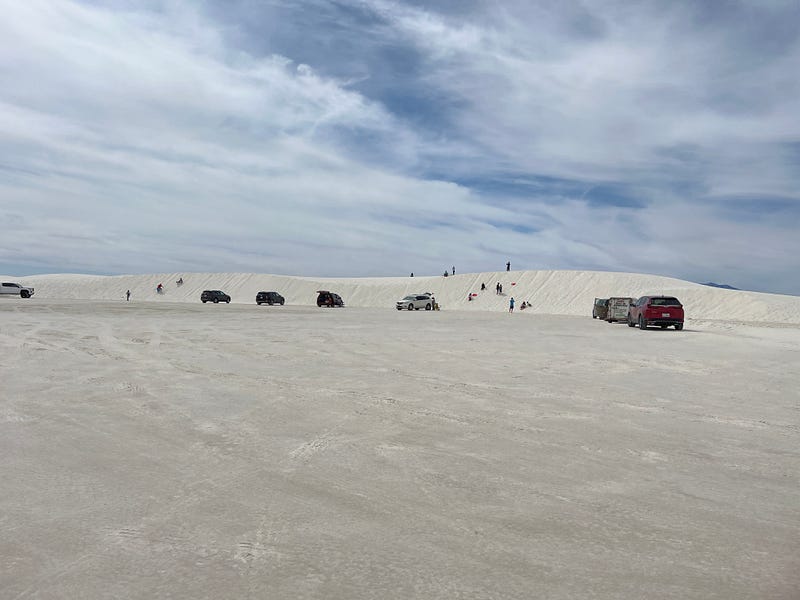
It was a beautiful day, temperatures close to 70 degrees with minimal winds. We stopped and got out a few times to let the dogs play in the sand.
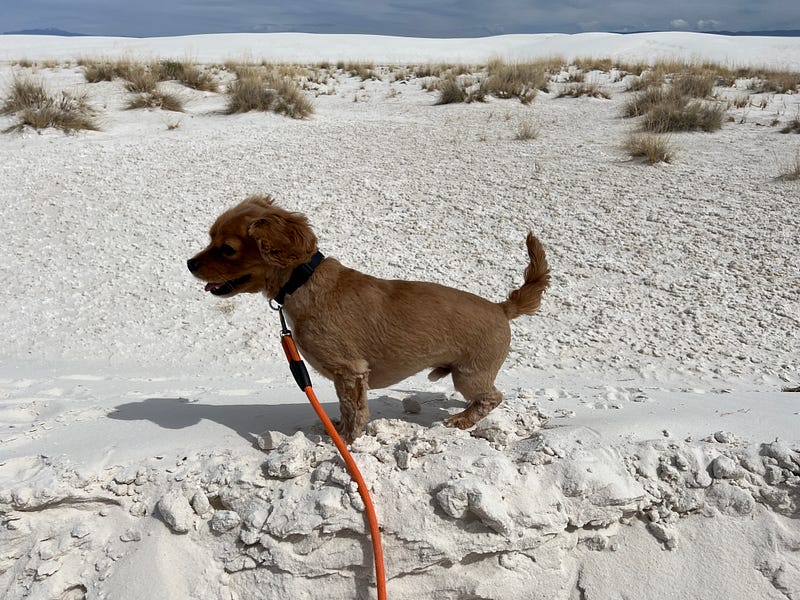
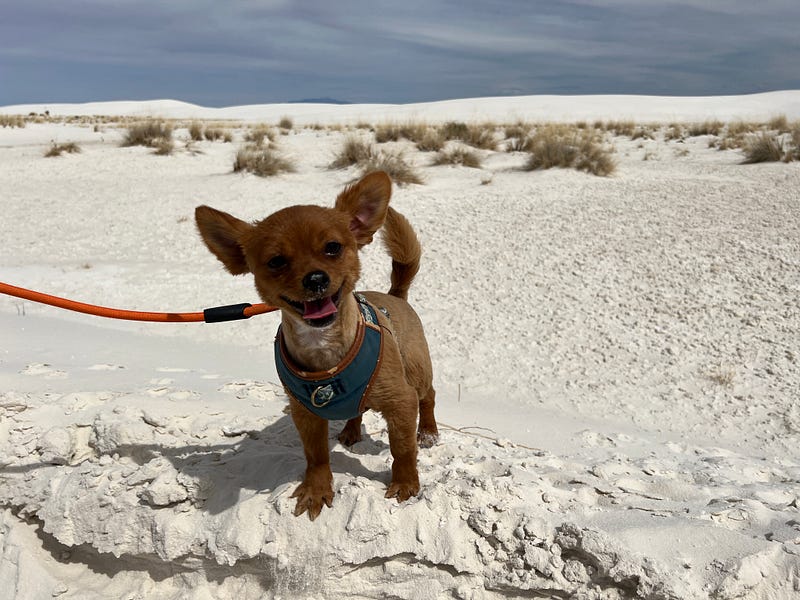
This white gypsum sand is much different than the fine sand at Padre Island National Seashore. That sand is sticky from the seawater and salt. This sand is not sticky and slides right off your skin. Gypsum is a mineral composed of calcium sulfate. It is widely used as a fertilizer and is one of the main components of plaster, drywall, and chalk.
We drove through the Sacramento Mountains on the eastern side of White Sands, and could view the San Andreas Mountains on the western side.
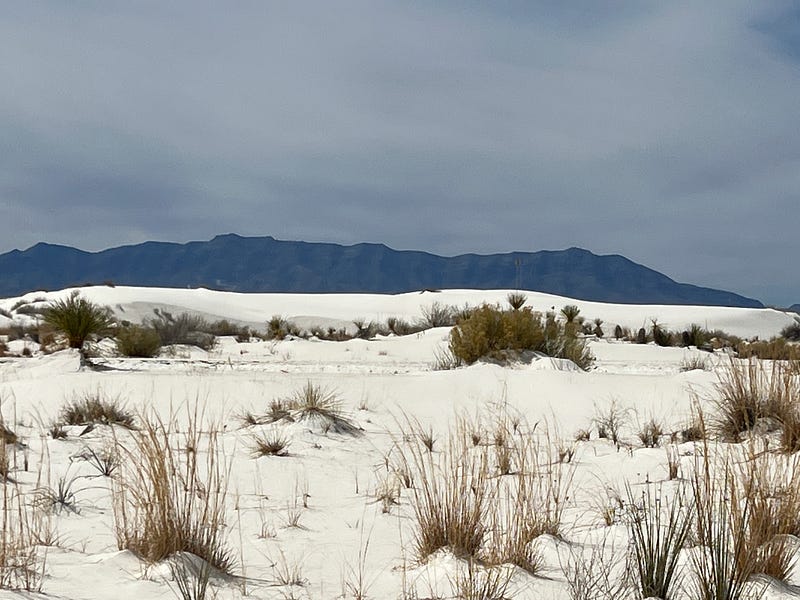
As congested and packed as the Visitor Center and the Interdune Boardwalk was, once you get back to the dunes, the room seems endless. There are several parking areas dug out with restroom facilities, and some parking areas without facilities.
White Sands was designated as a National Monument in 1933 by President Herbert Hoover. Democratic Senator Martin Heinrich from New Mexico introduced a bill to change the designation to a National Park in 2018 and it was approved in 2019 by Congress and signed into law by President Donald Trump.
While technically, National Monuments and National Parks are both considered equal with the same mission in mind, National Parks are larger, are visited more as a destination site, and hunting and extractive activities are prohibited. The primary reason for preserving the land as a Park instead of a Monument is to protect their scenic, inspirational, educational, historical, and recreational value.
I thought it was interesting to learn that several movies were filmed here before it became a National Park, including Four Faces West (1948), Hang ’Em High (1968), The Hired Hand (1971), My Name Is Nobody (1973), Bite the Bullett (1975), and Young Guns II (1990). Additional feature-length films with location shooting in the park include King Solomon’s Mines (1950), The Man Who Fell to Earth (1976), White Sands (1992), Transformers (2007), Transformers 2 (2009), The Men Who Stare at Goats (2009), Year One (2009), and The Book of Eli (2010).
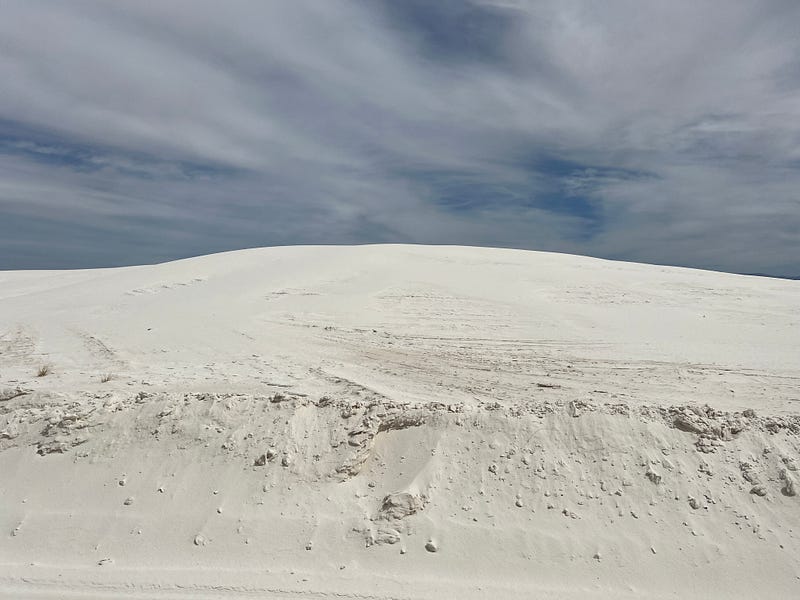
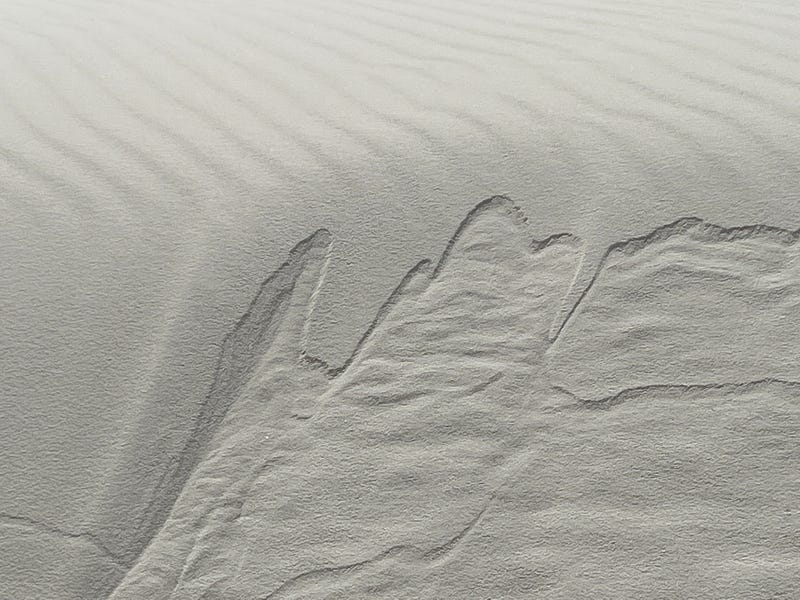
The dunes at White Sands are landforms composed of wind-driven sand. There are various forms of dunes found at White Sands. Dome dunes are oval or circular mounds that lack a slip surface. Transverse dunes lie across the wind direction. Barchan dunes are crescent-shaped, and Parabolic dunes are u-shaped with a flat blowout in the middle where the wind has blown all the sand out of the center.
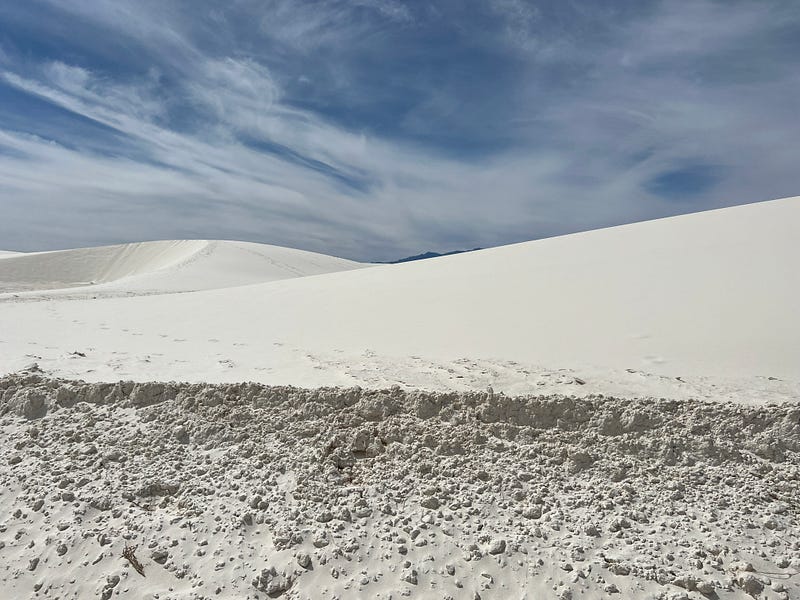
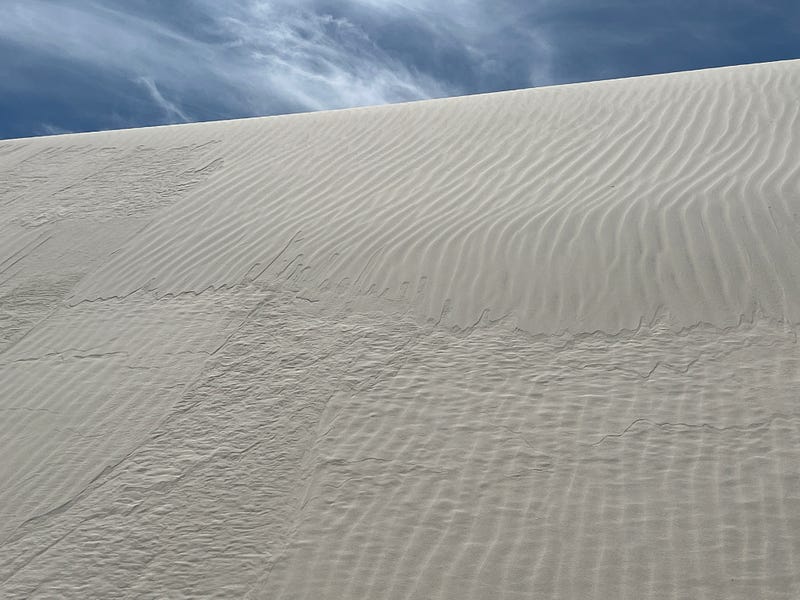
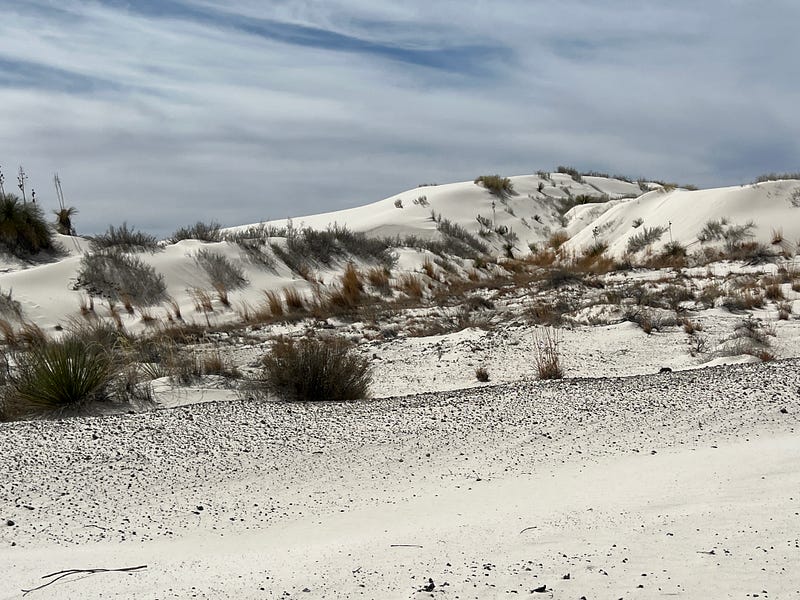
One major thing I noticed is that plants were growing in the dunes near the front of the park, but none grew in the larger dunes near the back of the drive. Compare the photos to see for yourself. The plants provide food and shelter for some of the wildlife in the park. The plants are tough enough and resilient enough to live in the nutrient-poor high alkaline soil of the dunes.
We saw a lot of rice grass along with a few cactus and yucca plants. We did not see any of the lizards, rats, and spiders that are known to frequent this area. Of course, we did not hike any of the short trails away from the main road either.
Visits to National Parks have risen tremendously since the Covid Pandemic. Getting outside in nature is a great way to spend time while still keeping your distance from others. Rich and I are thoroughly enjoying traveling around and visiting as many National Parks in America as we can.
I wish we would have had more time, but maybe someday we will come back to the area. The mountains were absolutely beautiful and there is so much more to see in the area surrounding White Sands National Park.
Works Cited