
Virtue Signaling — The Ultimate Humblebrag
A feel-good way to accomplish nothing of substance
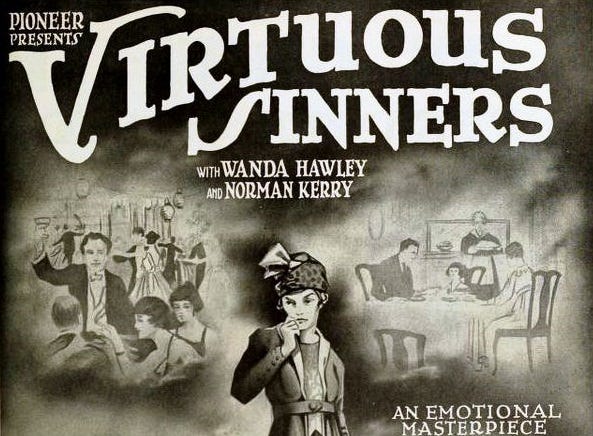
_-_Ad_1.jpg)
vir·tue sig·nal·ing; noun
- the action or practice of publicly expressing opinions or sentiments intended to demonstrate one’s good character or the moral correctness of one’s position on a particular issue.
hum·ble·brag; noun
- an ostensibly modest or self-deprecating statement whose actual purpose is to draw attention to something of which one is proud.
Take a stroll through any wealthy, predominately white neighborhood in any liberal, West Coast city such as Seattle or Portland, and what will you see?
Beyond the immaculately-kept lawns, the palatial Craftsman homes, and the sidewalks conveniently free of the garbage and feces and discarded heroin needles and homeless encampments you can’t avoid passing en route, there’s one additional feature whose presence is nearly as ubiquitous — the moralizing yard signs. For placed prominently near the front of at least every other lot, you’ll find colorful placards proudly proclaiming their owners’ support for the Black Lives Matter movement or contritely acknowledging the stolen native land their homes unashamedly sit upon.
Now, taken at face value, such displays seem like a noble gesture. For are they not an effort to atone for past sins by offering moral support for the oppressed, advertising “allyship” and the “safe space” that theoretically lies within? Perhaps.
But just as I don’t believe that the signs at gas stations claiming their security cameras are “installed to ensure customer safety” aren’t in reality just an effort to prevent fuel theft and protect the corporate bottom line, I’m not buying it.
To start with, I think it’s fair to ask, “Who’s the intended audience for these signs?”
Is it all those poor, disadvantaged Black folks you’ll never once find sauntering through such swanky neighborhoods, enjoying the leafy ambiance and fashionable décor while basking in the goodwill and empowering message of their affluent fellow urbanites? Or perhaps it’s the displaced, homeless natives who likewise are utterly absent from the area, consolidated instead in the gritty inner-core of the city, beneath the overpasses and scattered amid the trash-strewn greenbelts flanking the interstate.
The very notion is insulting to one’s intelligence. Obviously, the signs exist for the sole edification of their bearers’ fellow wealthy, privileged residents. Their only effective purpose is to advertise the moral superiority and ideological conformity of the avocado toast-eating, Toasted White Chocolate Mocha Frappuccino® Blended Beverage-drinking inhabitants comfortably ensconced within their unblemished walls.
Just the other day, I happened to pass by one which read:
We acknowledge that we are on the traditional land of the first people of Seattle, the Duwamish People past and present and honor with gratitude the land itself and the Duwamish Tribe.
My immediate thought was that if I were Duwamish, I’d be like, “Nice sign, bud. How about you sign your deed over to me instead? Then we can talk. No? Then shove your vapid sign up your ass!”
But perhaps that’s just my culturally inherited oppressor mentality talking, a lingering artifact of Western Civilization in all its hubristic folly, while the way of the peaceful warrior is that of forgiveness and universal brotherhood.
So I did a bit of research. As it turns out, the Duwamish are all about such signs. They even have a special section on their website explaining it:
It is important to note that this kind of acknowledgement is not a new practice developed by colonial institutions. Land acknowledgement is a traditional custom dating back centuries for many Native communities and nations.
I’ll admit, I was happy to have my prior cynical suspicion put so quickly to rest — the suspicion that such acknowledgements are just another hyper-politically correct absurdity dreamt up in some faraway ivory tower without any input from those they actually pertain to. (Like when a Black colleague of mine had to innocently ask her white, social justice warrior coworker to explain to her what “BIPOC” meant, thinking it might be yet another of the endless corporate acronyms one has to contend with daily.)
The Duwamish website continues:
For non-Indigenous communities, land acknowledgement is a powerful way of showing respect and honoring the Indigenous Peoples of the land on which we work and live. Acknowledgement is a simple way of resisting the erasure of Indigenous histories and working towards honoring and inviting the truth.
Put so sincerely and eloquently, it sounds lovely, a classic win-win — the natives are happy and their displacers righteously satisfied. What’s not to like?
That is, until increasing numbers of natives have to start telling these would-be saviors to give it a rest, because, in true Western chauvinistic style, it’s been appropriated and is being used “formulaically” and “performatively” as “empty words of acknowledgment.”
Even the name Seattle is an unwitting insult. As the History Channel explains:
The Suquamish believed the mention of a dead man’s name disturbs his eternal rest. To provide Chief Seattle with a pre-payment for the difficulties he would face in the afterlife, the people of Seattle levied a small tax on themselves to use the chief’s name.
White folks just keep getting it wrong.
Like with my old high school mascot, the “Issaquah Indians.” Yup — Sioux feathered headdress and all — in the Pacific Northwest. Naturally.
Shortly after I graduated, and partially spurred on by a bunch of douchebag football players burning a totem pole in effigy to insult an opposing team, “the Sammamish Totems,” there was public outcry to at last remedy this egregious affront to native peoples everywhere by changing the school’s nearly hundred year old mascot.
Predictably, this led to much acrimony, with one side declaring the mascot “extremely dehumanizing and racist,” and the other accusing them of trying to “impose their leftist ideologies on our children.” What was needed was a modern-day Solomon to decide the matter. And who better than those very people whose name and caricatured likeness were at issue? And decide it they did.
The Snoqualmie tribal chairman (and IHS grad), Ray Mullen issued a statement saying, “Indian is a word to some, a way of living to others. If this mascot doesn’t taste good in your mouth, it’s probably not right,” and urging the school district to drop the mascot. Which the district promptly did.
Until two months later, the tribe apparently changed its mind, with the chairman writing a letter stating, “The Snoqualmie Tribe disapproves of changing the Issaquah High School mascot from the ‘Issaquah Indians.’”
Go figure.
But the funny part is, true to form, rather than honor the revised request, the all-white school board members instead professed puzzlement and called the letter “totally a reverse of the conversation.” And thus continuing a long tradition of Euro-Americans putting their own needs ahead of native desires and interests, the decision to eliminate the Indian name and mascot stood.
One has to wonder what old Chief Seattle would have made of the controversy. Actually, scratch that. We know exactly what he’d think. He’d find it par for the course. In his own sad, prophetic words:
I will not dwell on, nor mourn over, our untimely decay, nor reproach my paleface brothers with hastening it…
[Your God] folds his strong protecting arms lovingly about the paleface and leads him by the hand as a father leads an infant son. But, He has forsaken His Red children…
Postscript
In a final, ironic twist of fate, fast forward twenty years, and as a result of local tech giants importing so much foreign talent to keep the economic powerhouse humming along, Issaquah has now become home to a significant and thriving population of actual Indians. As in, from India. (You know, Columbus’s intended destination.) It’s become a literal Simpson’s episode.
In fact, I was telling a Mumbai-born friend of mine who recently moved to Issaquah about the history of my old alma mater, and he jokingly replied that they should have just kept the name and swapped out the mascot. But I digress.
All of the above is so typically ham-fisted, such tone-deaf, misguided adventurism. It’s the social justice equivalent of releasing cane toads in Australia, ignorantly exacerbating your problems with ill-considered “solutions.” Or, as historians Amna Khalid and Jeffrey Aaron Snyder labeled it, “a naïve, left-wing, paint-by-numbers approach” to remedying past injustices.
Even if the intent is good and its vacuity subconscious, posting preachy yard signs is a too-easy, feel-good copout. It’s like all those “hashtag activists” on Twitter that put #resist in their bio and then fancy themselves Han Solo.
“But wait a minute,” you might be thinking. “Didn’t you say the displaced indigenous people actually appreciate the sentiment behind such signs, even if the execution is poor?” Again, perhaps. But perhaps not. Just look at what happened with BLM.
There was an article in the Seattle Weekly a few years ago, back in the Before Times — before the pandemic, before the Summer of Floyd — where a local Black journalist, Marcus Harrison Green, was complaining how white people (white Leftists in particular) had essentially appropriated the BLM movement for themselves in their fervent desire to show off their anti-racist street cred.
As he put it:
In a very short time, the tide had turned toward crisp irony. Here was a BLM march with a majority of white participants ardently shouting about how much “Black Lives Mattered” in an area that “black life” had been forced to abandon due to high rents and low prospects.
He then goes on:
…and though they meant well, the overwhelming whiteness of the march inspired in me a deep cynicism that poisoned the well of communal warmth. I wondered how many of my white kinfolk were in attendance to simply build their personal brand, this event simply another addition to their “Social Justice CV,” along with #BLM Facebook profile pics, effusive Obama sycophancy, and platinum membership to the Ta-Nehisi Coates fan club, all accentuating how “not racist” they were.
Mr. Green grew so frustrated with the absurdity of it all that he stopped attending the protests and even stopped covering them as a journalist. How sad is that?
When are my brethren going to wake up? Not in the sense of being “woke,” but in the sense of realizing their pathetic attempts at bolstering their own pride or putting their guilty consciences at ease through all talk and no meaningful action is an affront to the very people they’re professing to want to help.
If people truly wanted to help, they’d take bold action, like the rare few who have invited homeless people to set up tents in their back yard or move into their garden shed. My aunt recently vacated her multimillion dollar home near D.C. to let a family of Afghan refugees live there rent-free for six months while they establish themselves and get back on their feet. Now that’s walking the walk.
But if these well-meaning uber-Lefties are going to be all talk, then like the cult their movement has become, they’d do well to heed the words of that all-time world champion cult leader — Jesus Christ.
For did he not explicitly warn against ostentatious displays of piety?
And when you pray, do not be like the hypocrites, for they love to pray standing in the synagogues and on the street corners to be seen by others.” (Matthew 6:5)
Which was of course, a paraphrase of a far older warning from the Old Testament:
Be careful not to perform your righteous acts before men to be seen by them. If you do, you will have no reward from your Father in heaven. So when you give to the needy, do not sound a trumpet before you, as the hypocrites do in the synagogues and on the streets, to be honored by men. (Deuteronomy 15:7–9)
So after all that, I guess I’m right back to my initial reaction on seeing the native land acknowledgment sign: Either sign over the deed to your house or shove your vapid sign right up your ass.

Colby Hess is a freelance writer and photographer from Seattle, and author of the freethinker children’s book The Stranger of Wigglesworth.
If you’re just discovering Medium and you like what you see, please help support this author and others by subscribing here.