
Virginia Woolf: Badass Literary Woman
A glimpse at the life and death of a cultural rebel
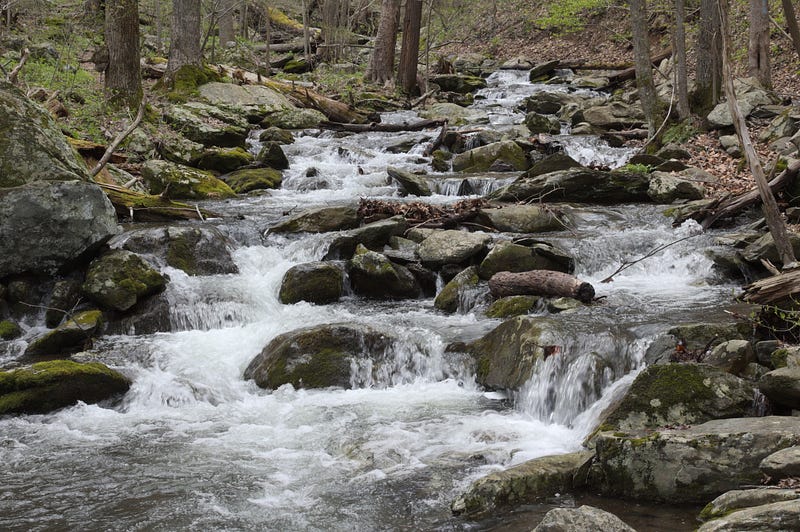
After finishing up her letters to her husband, Leonard, and beloved sister, Vanessa, Virginia Woolf grabbed her walking stick and as was typical for her, she strolled down to the River Ouse.
Somehow and in what manner no one knows for certain, she loaded the pockets of her coat with rocks and waded into the water. Her body was found drowned about three weeks later on April 18, 1941.
After years of attempts, Virginia set off to that river with determination. Thinking back on the letter she wrote to Leonard, her husband, she recalled her own words:
I feel certain I am going mad again. I feel we can’t go through another of those terrible times. And I shan’t recover this time.
A good swimmer, she made sure that her body would be weighed down. She would die this time. After years of trying this cure and that cure, she was taking control.
Unfortunately, Mrs. Woolf is often remembered for her suicide and her long history of mental illness. Her issues are undeniable facts. She was most likely sexually abused by her half-brother. Her life was marred by constant tragedy (her mother, half-sister, and brother all died young). She also probably suffered from bipolar disorder.
Nonetheless, never forget that Virginia Woolf is one of the top badass women of literature.
Virginia Woolf’s background is crazy impressive.
Virginia was born to Julia, a former (Pre-Raphaelite model, and Leslie Stephen, an eminent author, and critic. Her parents were notable (for their time) free thinkers. Her home life was far from conventional.
Her father was first married to Harriet Thackeray, daughter of William Makepeace Thackeray. Regular visitors to the home included Henry James, Thomas Hardy, and Lord Tennyson.
One can only imagine the conversations and ideas that she was exposed to!
Like many girls of her time, she was denied a formal education. However, her day to day life, filled with visits from contemporary intelligentsia, likely provided her with a unique education.
On top of that, her father gave her free access to his personal library. As a result, she roamed his library and her mind was fed with a widespread range of literature from an early age.
Like most uneducated Englishwomen, I like reading — I like reading books in the bulk.
It was in his library that she found the freedom to exercise her mind and her will however she liked. Here she was able to obtain the education that was restricted by the customs of Victorian life.
A Room of One’s Own is a direct protest of the formal education that was denied her
While she was fortunate to have a background rich in literature and philosophical thought, she was still denied a formal education. She did have tutors but her education was haphazard and secondary to learning to be a proper woman that could handle marriage and a household.
Meanwhile, her brothers went to Cambridge.
Her famous essay argues for equal access to education. She recognized the link between having an education and freedom. She understood that as long as women were denied good educations, they would have a hard time finding financial independence and freedom.
Women would continue to be subjugated as long as they were not educated. She saw right through the repression of patriarchy and she called them on it.
The value of education is among the greatest of all human values.
Alongside her husband, she created Hogarth Press
Virginia and Leonard started the press as a hobby for Virginia. Avoiding stress was one of the many cures prescribed to Virginia over the course of her life long struggle with mental illness. Having had an interest in publishing and bookbinding, the Woolfs created the press as a stress reliever and therapy for Virginia.
Quickly, the Woolfs grew more serious about their stress relieving hobby. The Hogarth Press became their obsession.
We get so absorbed we can’t stop; I see that real printing will devour one’s entire life.
Moreover, self-publishing gave Virginia the freedom and independence to publish her work in the way that she wanted and without little interference from editors.
Naturally, the Wooolfs published their own work and debuted in 1917 with its first book, Two Stories. However, they also published notable authors such as T.S. Eliot and E.M. Forster.
Not only did she make sure she had a room of her own to write, but she went one step further, and had a press of her own.
She was a forerunner in modernist literature.
Virginia Woolf wrote prolifically. She wrote novels, essays, book reviews, and short stories. She was also filled pages and pages up in her many diaries and letters to friends.
She was not afraid to experiment either and in doing so, was a pioneer in modernism and specifically, stream-of-consciousness writing. Her embrace of stream-of-consciousness writing led to the creation of some of the most breathtaking passages in literature as evident in her classic Mrs. Dalloway and The Waves.
Now I spread my body on this frail mattress and hang suspended. I am above the earth now. I am no longer upright, to be knocked against and damaged.
On top of her own work, Hogarth Press published seminal modernist texts such as Eliot’s The Waste Land.
Her love affair with Vita Sackville West was legendary
Virginia met Vita in 1922. Their relationship was passionate, loving, and intense. Interestingly enough, there is no definitive confirmation that the relationship between the two women was ever sexually consummated.
Nevertheless, there is little doubt that they loved one another.
What can one say — except that I love you and I’ve got to live through this strange quiet evening thinking of you sitting there alone.
Their relationships was celebrated in books such as The Letters of Vita Sackville-West to Virginia Woolf and movies like Vita and Virginia.
Of course, their relationship was immortalized by Virginia herself when she penned Orlando: A Biography, the 1928 novel that among other things celebrated her genderfluid lover- much to the scandal of the general contemporary public.
It cannot be overemphasized the progressive nature of their “sapphic” relationship – which was not exactly hidden from the public or even their respective husbands. We also also cannot overlook the bravery of living and loving as openly as they did.
Virginia set out for the River Ouse full of determination. She had first attempted suicide at twenty-two and had since then attempted multiple times again. She endured years of futile treatments and with the threat of mental illness hovering over her once again, she was having no more of it.
She died much as she had lived: according to her own terms. She should be remembered for all of her life’s accomplishments and the fierce determination that fueled them.
As an avid reader of all things Virginia Woolf, I highly recommend Hermione Lee’s classic biography Virginia Woolf and Virginia Woolf’s collection of autobiographical essays Moments of Being.