
Violence and Under-Educated Police
How this impacts the people they are supposed to protect
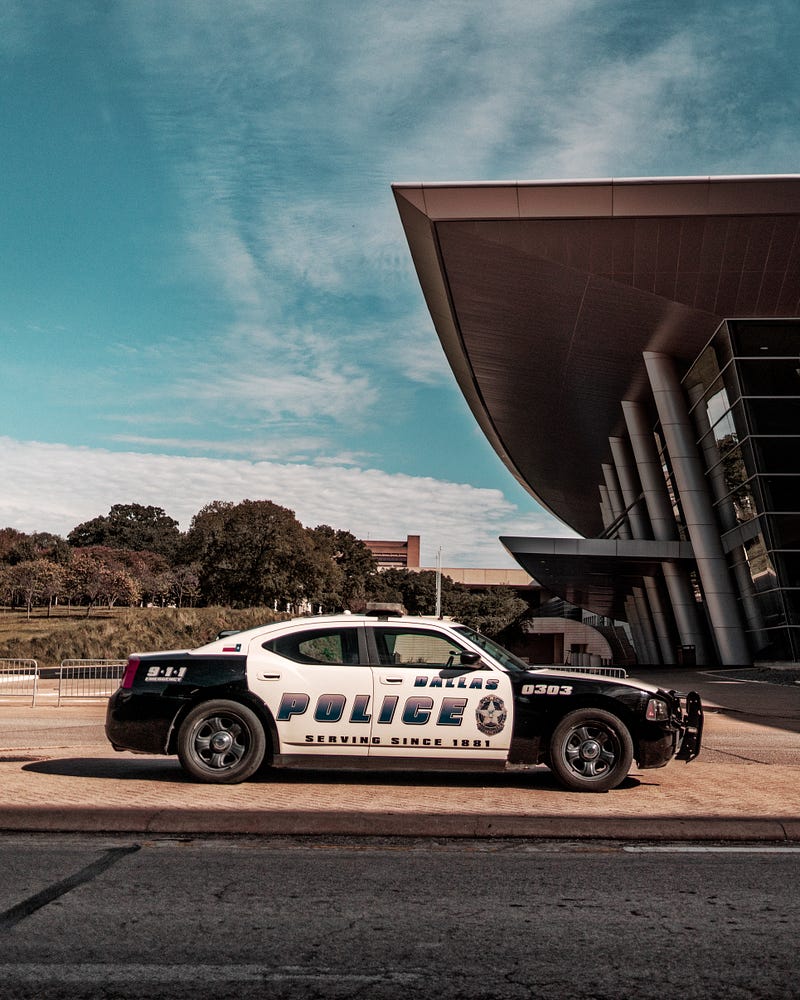
When I was growing up in my small town, I only knew one cop. His name was Bucky (honestly, it was). He attended the same church as my family. Bucky was about 6'4", maybe 200 pounds, and the sweetest guy in the world. He was such a nice guy, we all really wondered how it was that he could be a cop. We couldn’t imagine him running after a perp (yes, I said that — don’t judge me) until he caught up and handcuffed the criminal. It just didn’t compute. Climbing up a tree and rescuing a cat, yes, that we could visualize.
I lived in a nice suburb, didn’t have any personal brush with the law, and watched lots of TV police dramas that could have influenced my early perceptions of what cops were like. I knew there were bad cops (Dirty Harry) and good cops (Serpico) and that most of the police fell somewhere in between the two extremes.
Those days are over. If you have been living under a rock, then maybe you can be forgiven for not knowing that police countrywide are much harder on people of color than they are on whites. We now have police bodycam footage providing visual proof of racism. We now have proof of outrageous, ignorant and lethal situations that black people deal with on a highly consistent basis.
Could that racism and ignorance minimize if police administrations required all policemen to have a 4-year degree?
September 2017 Policing around the Nation report specified that the vast majority (81.5%) of surveyed agencies require only a high school diploma to be hired.
A small percent of agencies require recruits to have earned some college credits (6.6%), a 2-year degree (10.5%), or a 4-year degree (1.3%).
Why is it possibly important that police be more educated than is required?
“The Effect of Higher Education on Police Behavior,” by Jason Rydberg and William Terrel, and published in the March 2010 Police Quarterly provides data to prove this point:
Using data from 186 officer-involved shootings in Southern California,…(researchers) found that officers with a college degree were more than 41% less likely to discharge their firearms than officers with a high school diploma or some college but no degree.
Less than 1% of police departments require a 4-year degree
Prior to 1975, less than 1% of police agencies required a four-year degree. In 1988 the Police Executive Research Forum (PERF) conducted a national survey examining the state of police education in the United States, which included a review of the literature and survey of police agencies. The biggest change from the past was seen in officers holding a 4-year degree. The findings indicated that 23% of the 250,000 officers surveyed held 4-year degrees, up from 9% in 1974. And yet, even by 1988, only 9% of departments required a 2-year degree, and still less than 1% requiring a 4-year degree.
Many police departments could be reluctant to implement an educational requirement because there is a lack of evidence to demonstrate that a college education leads to more positive outcomes. Prior studies didn’t show significant data-driven proof that increased officer education at the 4-year degree level changed levels of arrests or searches. The only situation that was notable was in the use of force.
When compared to arrest and search behavior, there have been substantially more studies that have examined the role of education on the use of force. Much of this work, especially more recent research in this area … has found that college-educated officers use force less often than their less educated counterparts… More specifically, officers with some college exposure or a 4-year degree are significantly less likely to use force relative to non-college-educated officers.
The June 2020 issue of “Nature” states that “about 1,000 civilians are killed each year by law-enforcement officers in the United States. By one estimate, Black men are 2.5 times more likely than white men to be killed by police during their lifetime.”
When you watch the footage of police brutality against people of color on TV, it’s hard to not come to the conclusion that lack of education is at least partially a cause. It seems obvious that the use of force is often the result of police sometimes having authoritarian tendencies combined with racial issues.
Dr. Rebecca L. Paynich, Ph.D. in her paper The Impact of a College-Educated Police Force: A Review of the Literature, (from the August 2020 PoliceOffice.org) provided highlights that college-educated police officers:
- Communicate better;
- Are more tolerant;
- Display more clarity in thinking;
- Hold a more comprehensive understanding of the criminal justice system;
- Have a better understanding of civil rights from multiple perspectives;
- Are more professional;
- Have fewer personnel and administrative problems;
- Receive fewer citizen complaints;
- Have fewer preventable accidents;
- Are less cynical;
- Are more open-minded;
- Place a higher value on ethical conduct; and
- Are less likely to use deadly force.
There is often the claim from agencies that making this kind of requirement for policemen to obtain a degree would be discriminatory. Pay would have to be increased, and therefore it would cost communities more to have a better-educated police force.
It’s my opinion that the cost would definitely be worth it.


