
“How many times does the past have to repeat itself to stay in the past?” wrote Kyiv resident Tony Solovjov on Medium last weekend. Solovjov fled his home city only to come back days later, and then to leave again for a city further west — where he’s waiting, like the rest of the world, to see what comes next.
On Medium over the last few days, Ukrainians like Solovjov — residents of Kyiv and Kharkiv who only days ago were dropping off their children at school or meeting for coffee in the park — have published anguished, bewildered dispatches from their apartments; a former BBC commentator has offered crucial perspective on the geopolitical landscape the war in Ukraine is being fought on; and former President Barack Obama published his statement on what this war means for us, now and in the future. “Over the long term,” he wrote, “we all face a choice, between a world in which might makes right and autocrats are free to impose their will through force, or a world in which free people everywhere have the power to determine their own future.”
In various ways, Ukrainians have been fighting to maintain their freedom for centuries. And while Vladimir Putin insists that Ukraine is not a “real” nation, the citizens of Ukraine have a very different story to tell. It’s impossible to ignore their voices, and their stories’ reminders: that peace is always hard-won, and freedom is an immense privilege.
Because Medium exists to deepen our collective understanding of the world — all of it, all the time — we thought we’d share a few of the truly singular perspectives on the Russian invasion of Ukraine that we’ve come across over the last week. Most were published recently. Some were published years ago, but are suddenly more relevant than ever. These stories illuminate the war by either zooming in to tell a specific (often personal) story or zooming out to provide important context. We hope they give you some much-needed perspective — both at the geopolitical level and the human one.
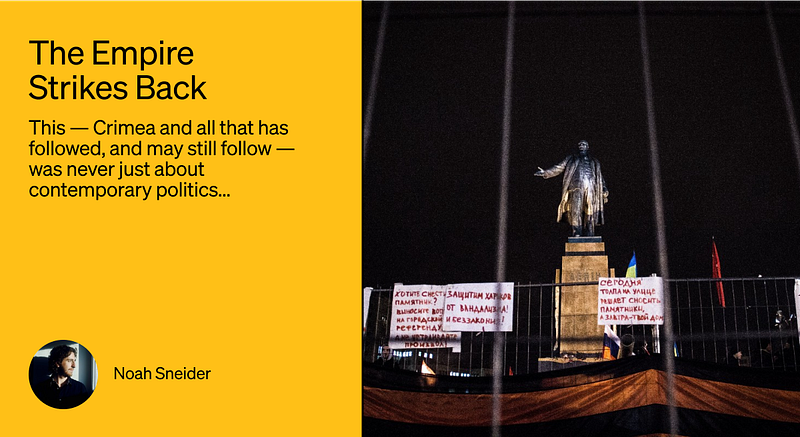
From the Medium archive, this longread by former Moscow correspondent for The Economist Noah Sneider tells the thousand-plus-year history of Russia and Ukraine. Sneider, who grew up in Moscow, spent weeks in Ukraine during the 2014 annexation of Crimea and spoke with Ukrainians and Russians alike. As Sneider writes: “Two nations riding fundamentally incompatible historical narratives have crashed. The stakes could not be higher, and not simply because Russia fears NATO expansion, but because Russia fears losing its brother, losing its family, and thus losing itself.”
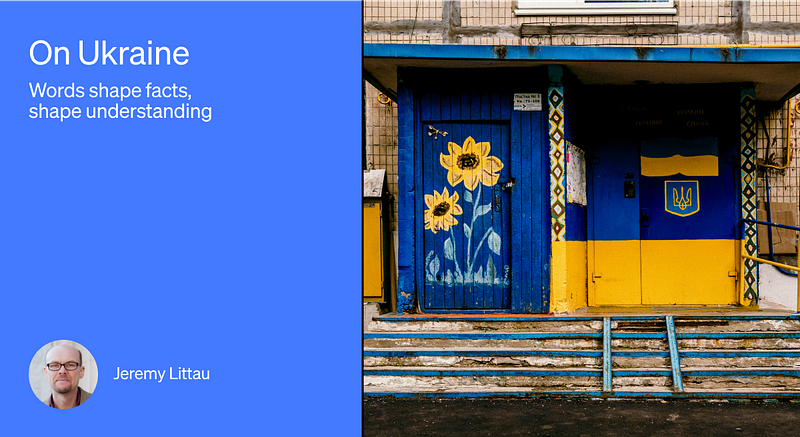
Media sociologist Jeremy Littau advises us to think carefully about the words we use to describe what’s happening in Ukraine. Whether you refer to the situation as an “invasion,” a “war,” or a “conflict,” you’re making an implicit judgment about the facts.
Could we have stopped this? Former economics editor at BBC Newsnight Paul Mason answers that and other questions you’ve (probably) asked yourself over the last week in this Q&A, originally published just before Russia’s invasion on February 24. Follow Mason on Medium and check his profile for more recent developments — he’s shared several breakdowns of the war.
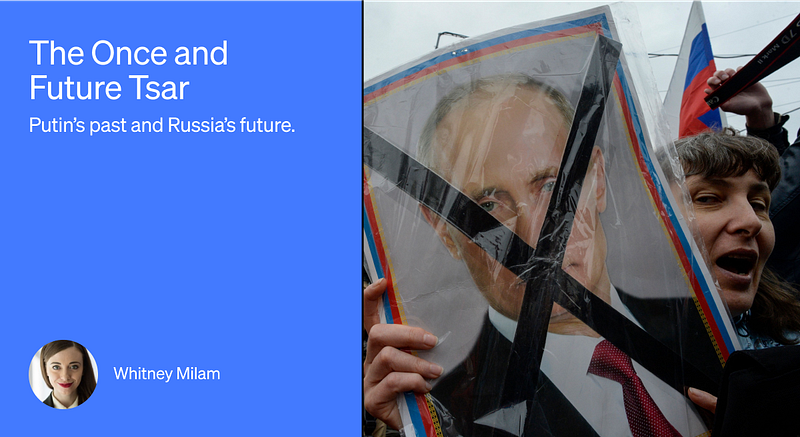
“The Russian people have had to sacrifice their freedoms, their finances, and frequently their lives at the altar of Putin’s power,” writes Whitney Milam in a sweeping profile of the man who has ruled Russia for a total of 16 years.
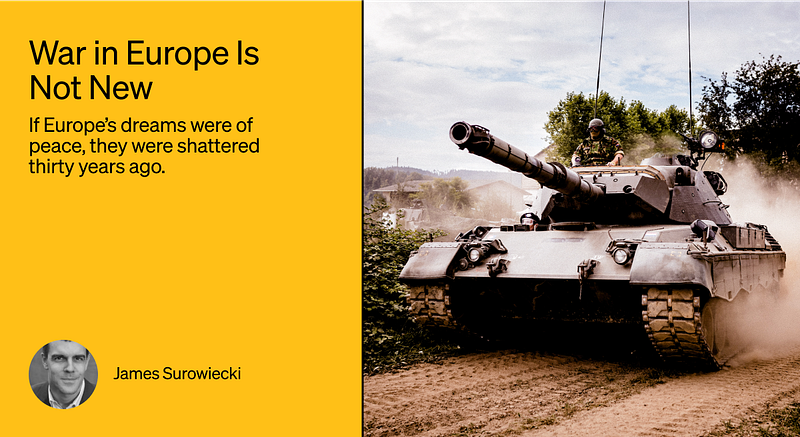
Author and New Yorker columnist James Surowiecki interrogates the idea that violent conflict in Europe ended with World War II. In fact, as Surowiecki writes, Ukraine has been fighting separatists in the provinces of Donetsk and Luhansk for almost a decade. This has been anything but a cold war.
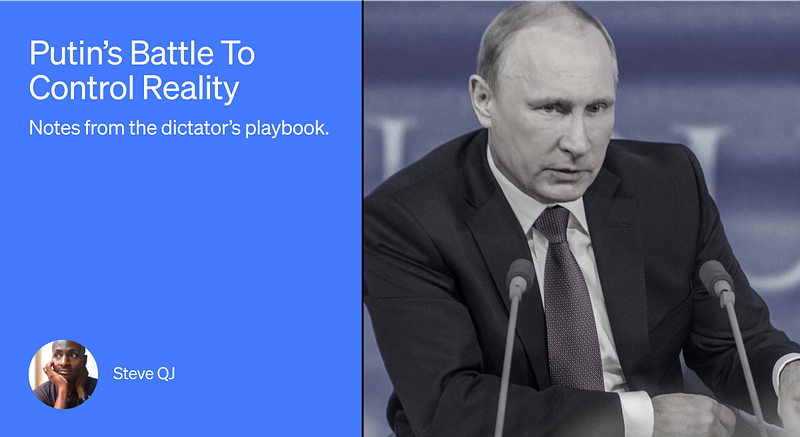
“The easiest way to control a population is to control what they see and hear,” writes Steve QJ in this guide to the tactics Putin (and autocrats before him) have used to stay in power.
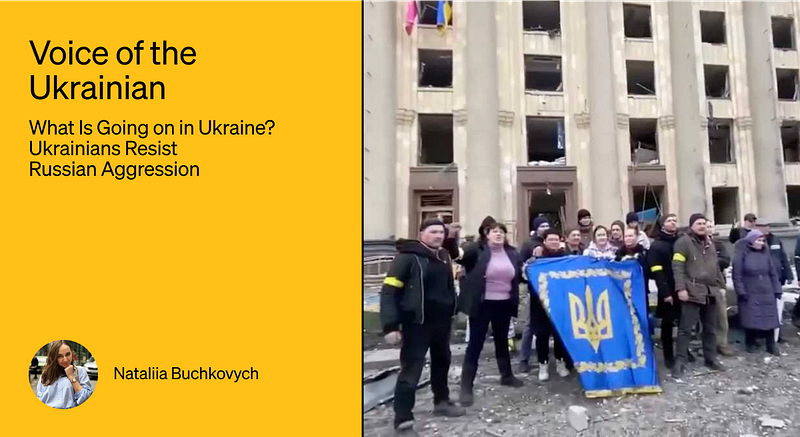
Ukrainian human rights activist Nataliia Buchkovych writes from Kyiv, where she is reporting on Russia’s war crimes and the Ukrainian army’s defenses. Buchkovych concludes: “We don’t want war. However, we definitely will not let Russia subjugate us. We will resist with all our hearts.”
For more stories that contextualize the war in Ukraine, browse this list. We’ll be updating it as we come across perspectives worth reading on Medium.
To support civilians displaced by the war in Ukraine, and to donate to verified fundraisers, visit #StandWithUkraine.