
Vielle
Third time’s a charm when it comes to rejecting this word
Today’s New York Times Spelling Bee letters:
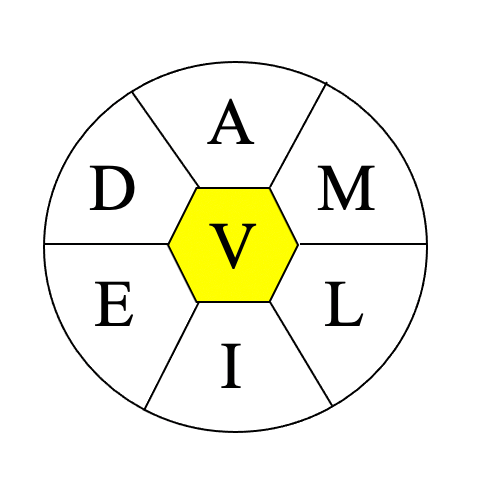
A, D, E, I, L, M, and center V (all words must include V)
Merriam-Webster says…
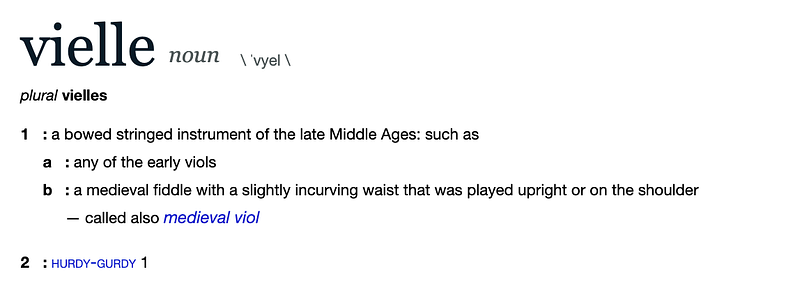
Silly little dictionary! Don’t you know vielle can’t possibly be a word if the New York Times says it ain’t?
For further fascinating facts, check out the Spelling Bee Master.
What’s your favorite dord* from today’s puzzle?
My Two Cents
When I wrote “third time’s a charm” right below the title of today’s column, I was referring to the fact that today is the third time this week (if you count Sunday as the first day, which I do) that the word vielle is rejected by the Spelling Bee game.
I’m not sure how often that has happened, but seeing as you need (1) four of the seven letters to be E, I, L, and V; and (2) have one of those four letters be a center letter, I’d say the odds are small that this has happened before within the framework of a slice of calendar. Sunday, January 9, was the first instance, and Wednesday, January 12, was the second. Today was the third time.
I took at as a sign that I should write about that word. I doubt it will come up again very soon… but I could be wrong. I often am, as my ex-wife used to remind me.
Another interesting point––and skip this paragraph if you are still working on today’s game–– is that the rejected word (vielle) has a strong connection to the pangram word (medieval).
Fiddle diddle dee
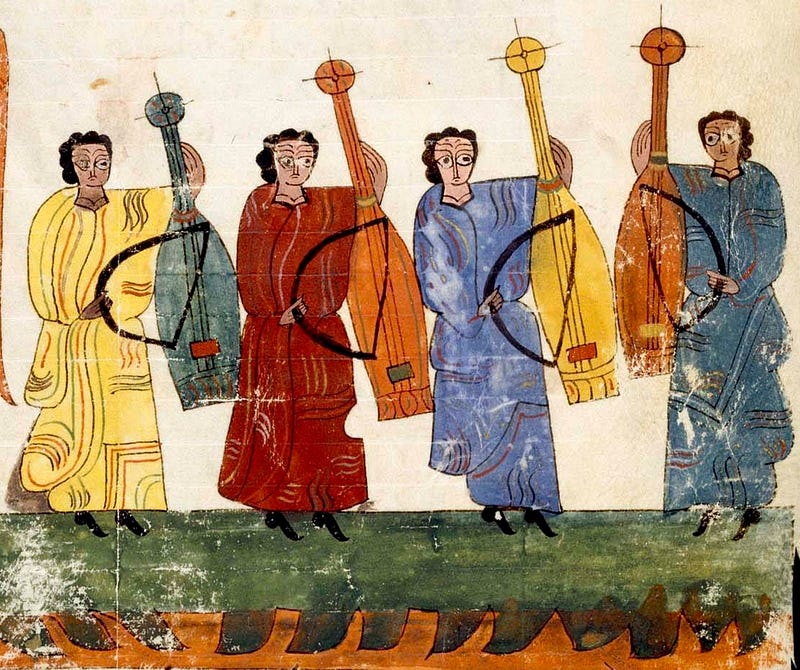
The vielle was a bowed stringed instrument used in the medieval period, chiefly in the European continent. See? I told you the vielle had a strong connection to the word medieval. Never doubt anything I say ever again!
I love the description of vielle given by the 1911 Encyclopedia Britannica, so I will quote this public domain source here in order to sound intelligent and pad up this article’s word count:
“VIELLE, viole, vièle, a French term, derived from Lat. fidicula, embracing two distinct types of instruments: (1) from the 12th to the beginning of the 15th century bowed instruments having a box-soundchest with ribs, (2) from the middle or end of the 15th century, the hurdy-gurdy (q.v.). The medieval word vielle or vièle has often been incorrectly applied to the latter instrument by modern writers when dealing with the 13th and 14th centuries. The instruments included under the name of vielle, whatever form their outline assumed, always had the box-soundchest consisting of back and belly joined by ribs, which experience has pronounced the most perfect construction for bowed instruments. The most common shape given to the earliest vielles in France was an oval, which with its modifications remained in favour until the guitar-fiddle, the Italian lyra, asserted itself as the finest type, from which also the violin was directly evolved.”
I love how “soundchest” used to be a word. Apparently that is not the case anymore:

The dictionary explains that the word vielle comes from the Middle French viole meaning “viol or viola”, from the Old Provençal viola, viula, meaing “viol”, probably from Medieval Latin word vitula. Perhaps that Medieval Latin vitula originated from the older Latin fidicula, as the encyclopedia claims.
And if fidicula sounds familiar to you, thats because the word fiddle also traces its origins to the Medieval Latin vitula.
While most people (including me up to about ten minutes ago) think of fiddle and violin as synonymous, the word fiddle can actually refer to any bowed string instrument or any instrument resembling a violin. But even when a fiddle looks almost identical to a violin, there may be some structural differences that help the fiddler play more folksy music. For example, the bridge may have a flatter arch to limit the range of bow-arm motion needed for certain techniques.
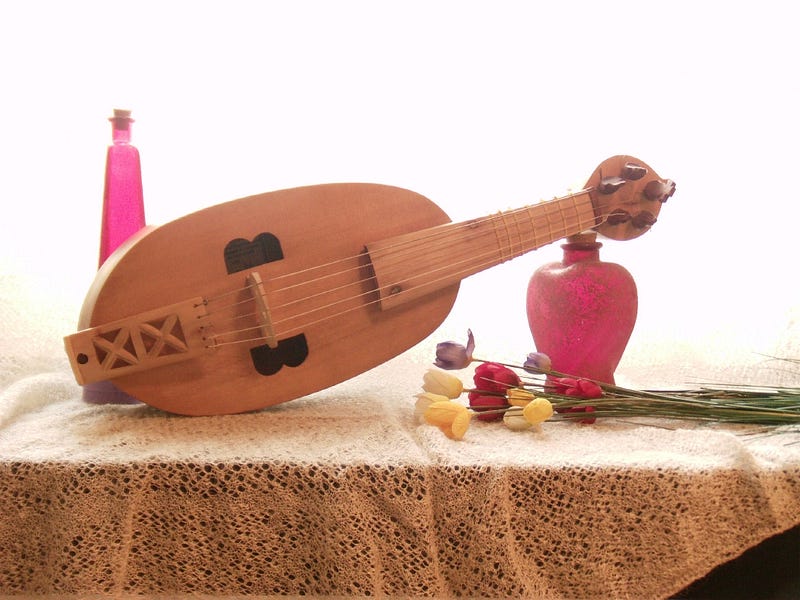
Here is a photo of a modern version of a vielle, made in Spain. (I’m locally sourcing my vielles for this article).
And below you can find a description of a vielle in the Polish Museum of Folk Musical Instruments’ webpage. (Well, there goes my locally sourcing efforts!)
And finally, to source my vielles even further away, here is Kate McWilliams explaining some details about a vielle she crafted, and giving us a wonderful demonstration of its sound:
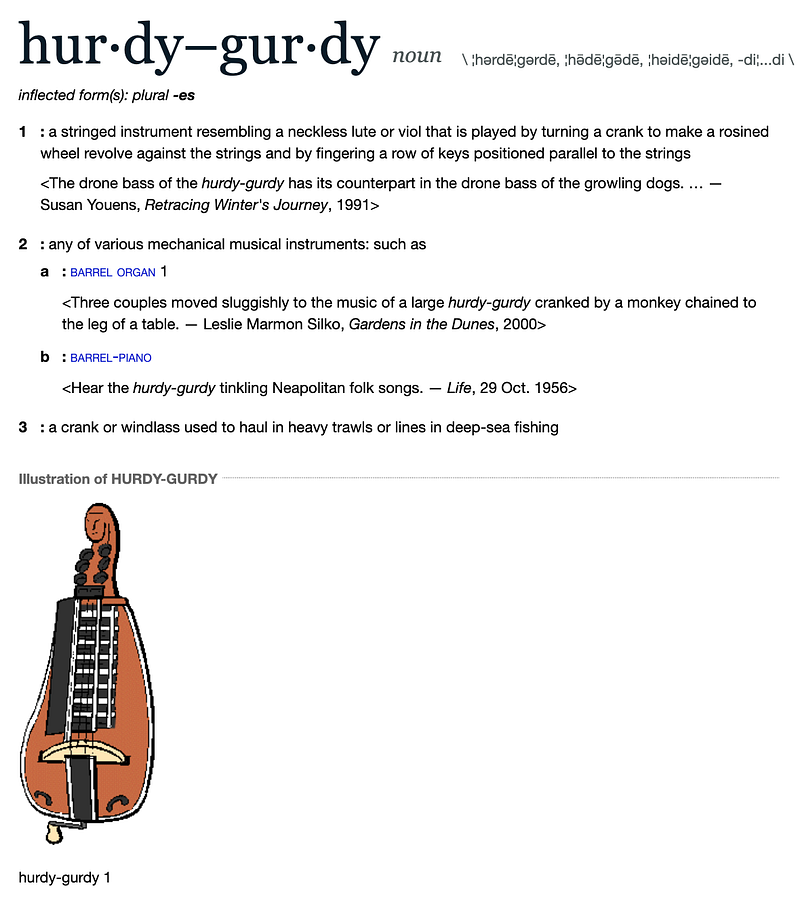
Holy hurdy-gurdy, Batman!
The second definition given to us for vielle by our living friends at Merriam-Webster is simply “hurdy-gurdy”. And our dead friends of the 1911 Encyclopedia Britannica concur, as you may have read earlier (if you weren’t just scrolling down to check out images and videos).
In case you are mostly interested in pictures, here is an additional one. It’s at the bottom of a bunch of words you may or may not wish to read:
And here is another picture which at first glance may seem obscene and incongruous with the fact that it’s located on the facade of a cathedral, namely the one in Santiago de Compostela, Spain. (And… I’m back to locally sourcing my musical instruments. Yesss!)
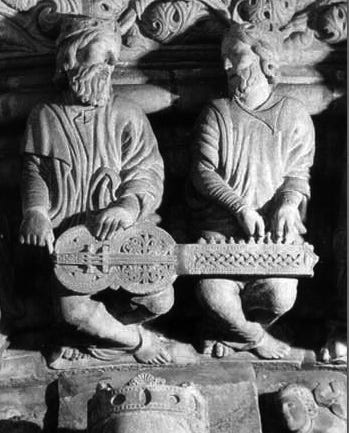
To make things even more obscene, this instrument––an early version of the hurdy-gurdy–– is called the organistrum. So yes, one guy is playing another guy’s organ-istrum right on top of a cathedral. Talk about your medieval troll sculptors! Way to get around 13th century censorship, guys!
Hurdy-gurdy is also the name by which barrel organs were called a long time ago. If you’re over 100 years old, surely you remember this 1929 cartoon (the barrel organ first appears around the twenty-second mark):
The MC, Oswald the Lucky Rabbit, was created by Walt Disney in 1927. A year later Disney lost control of the character to Universal Studios (for whom he had created the character) and decided to create a replacement for himself. Enter Mickey Mouse.
Almost a century later no one remembers the name Oswald (except as the non-cartoon warehouse shooter who allegedly killed JFK), but everyone still talks about Mickey Mouse.
Yep, that’s right! Mickey Mouse is the “Lou Gehrig” of cartoon characters, with Oswald the Lucky Rabbit relegated to the role of Wally Pipp. And you heard it here in Silly Little Dictionary! first.
Well, today we’ve discussed a couple of ancient stringed instruments, a sculpture of two men doing lascivious things at the top of a church, one of Disney’s first animations, and a baseball legend. And yet, despite all of that… the editors of the Spelling Bee decided that the word vielle is a dord*.
You can check out my previous entry on another dord* here:
*What the heck is a dord, you ask? Here’s the answer: