
Video Game Developers — Overworked, Underpaid, in Trouble
Work morale is being “crunched” away from passionate game creators

Picture this: a disgruntled staff of developers hunched over computers, hastily typing away at a foreign language of code, hoping to pump out anything before the impending deadline. Pizza boxes scattered throughout the office and empty coffee mugs constantly needing to be refilled. Stress, crying, a lack of escape. This is the gaming industry. The art of creating video games should be glorious. Days, months, more often years of dedication leading up to the point of release — it’s an immense feat that should invoke pride in the creators.
The dedication that goes into masterpieces of gaming is admirable. Whether it be designing, coding, producing, or even testing a game, it is clear that passion is abundant from people working “behind the screen”. While this euphoric hype is indeed an aspect of the gaming industry, more often than not the wave that pushes these passion-filled developers forward is harsh and ruinous, leaving nothing but a husk of what once was a spirited creator.
This intimidating facet of game development is commonly known as “crunch”, and it needs to be purged from the gaming industry.
Crunch is the practice of overworking developers to unacceptable hours of overtime without pay. Crunch unnecessarily stresses video game developers and leads to the sacrifice of free time, actual issues within the games themselves, and ultimately, workers abandoning the industry to avoid the harrowing experience altogether.
Working overtime in the gaming industry does not yield any overtime pay for developers, mainly due to salary pay. Considering how prevalent crunch is, this is unacceptable. Jason Schreier, a games journalist who formerly reported for Kotaku news, writes the following:
“…for people who work in video games, it’s always there. And because most game developers work on salaries, it’s almost always unpaid.”
Unpaid overtime would already lead to a lack of motivation, with acute passion and overbearing managers being the only thing keeping these crunched developers going. This issue is major and too widespread within the gaming industry.
The mere fact alone that developers slave away at computers for hours and even days on end is bad enough, but not being reimbursed for those hours with pay is horrific. This issue is the first that leads to a loss of passion from developers who once had a love for creating games. Regardless of all these problems with crunch, the fact that the practice can lead to debilitating health issues is another matter that needs to be brought to light.
Spending so much time at work droning away on the computer can cause problematic health issues for developers, both physically and mentally.
Developers are forced to neglect daily lives and free time when crunching. The passion they once had slowly depletes, coming to an abrupt halt, which results in an exodus from the industry. Crunch time causes immense stress, more often than not because developers are working against the clock with intimidating deadlines.
Countless horror stories have come out from ex-developers who know crunch is bad news. After a 70, 80, or even 90 hour work week, spending quality time with the kids and spouse becomes more of a challenge than a relief. An offset of these overworked developers not being able to take basic care of themselves is an inclination to abandon the industry.
Paul Tozour, a writer for the Games Outcomes Project, knows this too well.
“It’s common knowledge that crunch leads to higher industry turnover and loss of critical talent, higher stress levels, increased health problems, and higher defect rates — and quite often, broken or deeply impaired personal relationships.”
These highlighted issues are supported by the examples Schreier brings up in his article as well. Two industry veterans from separate corners are speaking out against the same issue. Gaming is losing some of the brilliant minds behind the veil because of blatant corporate greed.

It doesn’t help that one of the industries’ leading companies is constantly under scrutiny for the mistreatment of workers. Activision Blizzard, developers behind popular titles such as Overwatch and the Call of Duty franchise, had a recent controversy involving the laying off of workers.
Early last year, it was revealed in Activision Blizzard’s fourth-quarter earnings call, that the company will be laying off nearly 9,600 employees. This was bundled with more “positive” news stating that the company had increased profits by 7.1% the year prior. That number? Roughly $7.36 billion. On top of this questionable decision, it should also be mentioned that Activision CEO, Robert Kotik, annually receives a 30 million dollar compensation.
This isn’t the end of it. Blizzard employees, according to an internal survey done in 2019, are largely not okay with current pay compensation. Schreier’s reporting on this issue is very informative, giving accurate and detailed information as to how these workers are being paid less as Activision as a whole is making more each year.
Activision’s flagrant mistreatment of workers as a CEO receives massive annual bonuses is both contentious and demoralizing.
Being underpaid is bad enough, but the crunch doesn’t get any better. In the event that developers actually have the choice to work overtime, choosing to do so without pay in an effort to help their game launch before a specific date can cause a rift to form. Team issues occur between those who don’t work overtime and those who do, decreasing the overall quality of the product.
When the crunch is voluntary, developers often feel pressured into working overtime by their managers or even colleagues who are choosing to sacrifice personal time for the sake of their game. Once more referencing Schreier, issues like this are brought to light.
“Many of the game developers I interviewed for this story said that when some members of their teams voluntarily crunched while others didn’t, the crunchers would grow to resent the people who left at 6 or 7pm every day. Even in studios where crunch is never mandatory, a divide like this can rip teams apart — unless there’s a manager forcing people to go home.”
A team that isn’t working together, or at least nicely together, easily has more issues figuring out solutions to problems. This whole loss of a team dynamic catalyzes the crunching process because important things aren’t being accomplished and more issues with the game itself are arising.
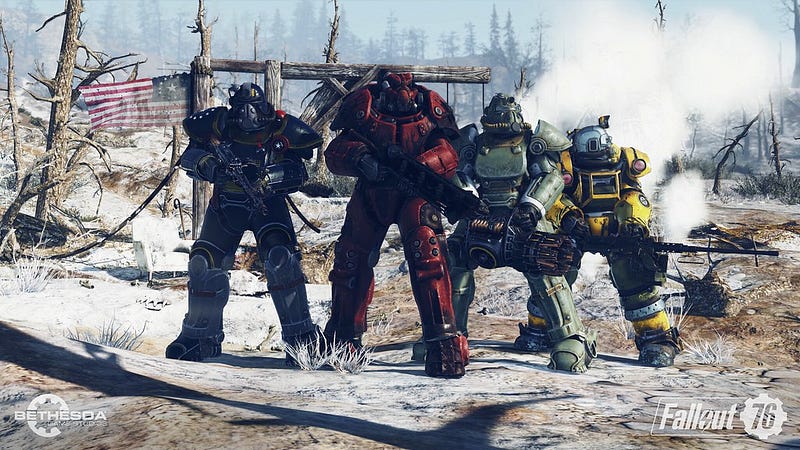
When a game doesn’t work, it is hardly received well. Fallout 76, one of Bethesda Game Studios’ titles released in 2018, suffered from this. The game was plagued with an innumerable amount of bugs and still is to this day, which led to it being the most poorly received recent title from Bethesda Game Studios.
It isn’t known just how much crunch was involved with Fallout 76, but clear mismanagement of the game is to blame. The example is referenced to show the outcome of a poorly handled title, crunch or not. Regardless, this game is a prime example of bugs causing a game to fail; crunch causing bugs is no good and furthers the argument against the practice.
Some people actually argue in favor of crunch. Claims that the practice can lead to ‘extraordinary results’ and enhanced productivity among developers have been spewed about.
This counter-argument is a low attempt at justifying an otherwise morally bankrupt practice.
It has already been explained that crunch can lead to the exact opposite of extraordinary results: buggy messes that aren’t favored. When the reception of a game isn’t good, developers who are already crunched may feel totally lost. This can fuel the yearning to abandon the industry altogether.
Direct results from The Games Outcomes Projects were highlighted by previously mentioned project member Paul Tozour when investigating crunch through data tests and anonymous surveys from game developers also disprove this idea entirely.
“Our results clearly demonstrate that crunch doesn’t lead to extraordinary results. In fact, on the whole, crunch makes games LESS successful wherever it is used, and when projects try to dig themselves out of a hole by crunching, it only digs the hole deeper.”
People who actively try to defend crunch with bogus claims such as the one previously mentioned are either ignorant to the practice’s outcomes or purposefully neglect them to further their own agendas. Crunch exists as a way to release games before schedule, but the dates for release and push to get the titles done, along with the unpaid work, make it exceptionally egregious. Claiming that the practice is required to make a good game is deceptive.
Christopher Dring, the publisher of an article discussing crunch by gamesindustry.biz, wrote an article discussing crunch. He quoted a developer from the United Kingdom in his article.
“Ultimately, crunching is a result of feature creep, design iteration, poor planning or, most commonly, an all or nothing approach to design, which is often mandated from the top down.”
Crunch can be avoided, but the industry is in a constant loop of crunch, release, repeat, which leads to the various problems already discussed. Change is difficult to achieve, but it needs to happen for the betterment of the gaming industry.
Sometimes, when working in any industry under anyone, it is expected that employees will go above and beyond for the sake of their job. Whether you’re a journalist or even an essential worker at a grocery store, sometimes stepping up to the plate is needed. For employees who are passionate about what they do, this is a give in. Some may argue this is what crunch is in the video game industry, but they couldn’t be any closer to wrong.
Crunch is the exploitation of someone’s passion for video games in order to help a company meet a deadline and for those on top to make the most money.
Coding, writing, and designing, all aspects of creativity utilized in the creation of video games, are not processes that can be squeezed out of people. Creative processes happen over time and can rarely be given a date of completion. Everything about making a video game is creativity. Thinking up the game alone can be a time-consuming task, let alone beginning to write the code, create assets, or having a musical score composed.
Video games are supposed to be an outlet to relieve stress and spark imagination and creativity, but they are instead being exploited by companies to squeeze money out of passionate developers. As someone who has shied away from becoming a developer because of these issues, this is more than disheartening. If crunch isn’t solved, this industry is doomed to failure.


