
Very Special Episodes That Defined My Childhood
What I learned from 80s and 90s family television
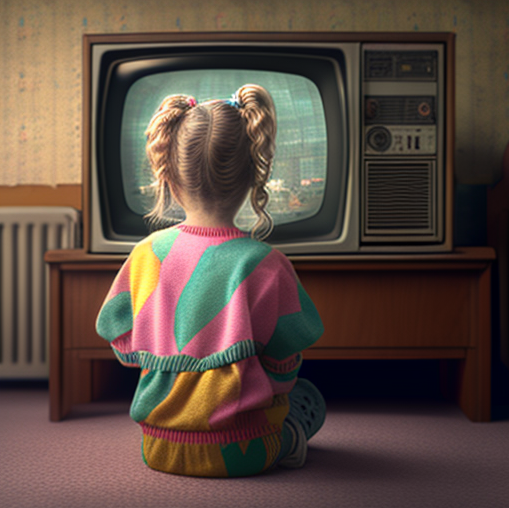
A very special episode is an episode from a TV series that deals with a serious social issue. Pretty much every TV show I watched as a kid in the 80s and 90s featured at least one very special episode. I found some of them jarring when they disrupted my favourite comedies. I found some of them embarrassing when they explored mature themes, albeit in a family-friendly way. But very special episodes sure were memorable. They sunk deep into my young psyche and, 30 years later, I remember more about the very special episodes than the rest of the episodes put together.
Let’s explore some of the most memorable very special episodes. Viewer discretion advised…
Diff’rent Strokes — “The Bicycle Man” (1983)
Diff’rent Strokes is the tale of wealthy widower Phillip Drummond who adopts two African American brothers from Harlem. Although as a kid I thought Arnold and Willis came from Holland…
I thought Arnold was the coolest kid around and I watched Diff’rent Strokes religiously until it jumped the shark with the introduction of Sam. Arnold’s catchphrase “What’chu talkin’ ‘bout, Willis?” is still part of the lexicon.
Diff’rent Strokes explored several serious social issues in a number of very special episodes, but for me the most memorable episode was “The Bicycle Man”.
“The Bicycle Man” is probably the epitome of a very special episode. It was the first episode of this kind I ever saw. I was about eight at the time and didn’t fully understand what it was about, but “The Bicycle Man” opened with a public service announcement by Mr Drummond, so I knew this was serious stuff.
While looking for a bike for his birthday, Arnold meets Mr Horton, the seemingly friendly owner of a bicycle shop. Mr Horton wins Arnold over by letting him ride the bike before his birthday and plying him with banana splits. When Arnold returns to the bicycle man’s shop he brings his friend Dudley. Things get creepy, Arnold leaves but Dudley stays. Arnold tells his family what had been going on and Mr Drummond calls the police and everyone rushes to the bike shop to rescue Dudley.
The Diff’rent Strokes producers made an interesting decision to retain the laugh track for “The Bicycle Man”. As a kid, I thought this helped diffuse the uncomfortable scenes, but rewatching the show as an adult it’s just very, very uncomfortable.
I was very young when I saw “The Bicycle Man” and didn’t really know what was going on. I knew about “stranger danger”, but I didn’t know about child abuse. But I did sense that whatever was going on in “The Bicycle Man” was very serious indeed. The episode reinforced to me the importance of steering clear of strangers, even when they seem nice or offer treats like a banana split.
Punky Brewster — “Accidents Happen” (1986)
Punky Brewster is about a homeless little girl and her dog who move in with curmudgeonly widower Henry. As a kid, I tried to emulate Punky’s colourfully mismatched clothes. My pigtails weren’t as cute as hers and hung limply behind my ears.
Punky wants to become an astronaut when she grows up and so her class arranges to watch the Space Shuttle launch on television. This very special episode is based on real-life events when the Space Shuttle Challenger exploded in January 1986, killing all seven crew members. Punky is devastated, not only by the death of the crew but by the death of her dream to become an astronaut. But then Buzz Aldrin steps in and convinces Punky not to give up on her dreams.
The script for “Accidents Happen” was written immediately after the event as NBC wanted to help children come to terms with this traumatic event, particularly considering one of the crew, Christa McAuliffe, was a school teacher.
At the time, I’d just turned 11. I remember looking at the photo of the smiling Challenger crew and just couldn’t compute that they’d died. At the time the only people I knew who’d died were my elderly great grandparents. That it could happen to young, healthy people was something I didn’t want to think about.
Although it was pretty sugar-coated, “Accidents Happen” did help explain death to me in a child-friendly way. And to a lesser extent, that we shouldn’t give up on our dreams, even if there is an element of risk to them.
Grange Hill — Season 9 (1986)
Grange Hill is one of the longest-running programs on British television, airing from 1978 until 2008. It’s a children’s series about students at a comprehensive school. Each child cast member had about six years on Grange Hill as their character moved from Year 7 to Year 12. My favourite era was the mid-80s through to the early 90s, when I was at school.
Season 9 of Grange Hill follows Zammo and his battle with heroin addiction. He lies and steals and either gets super high or overdoses. The scene where Zammo is found slumped against the bathroom wall, glazed eyes staring into space, freaked me out. He was a kid, only a few years older than me.
The Grange Hill cast also released a song, “Just Say No”, in which the kids sport headphones and sing in the vein of Band Aid or USA for Africa. Grange Hill was heavily involved with the 1980s Just Say No campaign. The cast even visited the White House and met Nancy Reagan.
Just Say No really worked on me. Marketing campaigns and very special television episodes got to me at just the right age. Zammo’s storyline on Grange Hill scared the crap out of me and, not that I was ever offered, I was always ready to just say no.
Mr Belvedere — “Wesley’s Friend” (1986)
My Belvedere is the story of a family from Pittsburgh who employ a posh English butler, as you do. I liked the banter between Mr Belvedere and the youngest child Wesley but found the rest of the characters unmemorable.
Wesley’s classmate, Danny, has AIDS. He is shunned by Wesley and the other kids and eventually excluded from their school. This very special episode is loosely based on Ryan White, a young boy who contracted HIV from a blood transfusion for his haemophilia. White successfully sued his school for trying to prohibit him from attending.
A chat with Mr Belvedere helps Wesley learn about AIDS and he ends up supporting his friend Danny in his fight to return to school.
“Wesley’s Friend” is also responsible for what’s been described as “one of the most painful AIDS jokes in recorded history”. Wesley’s dad asks Danny how he’s going, and the kid replies something like, “Well, I got AIDS, but other than that I’m doing pretty good.”
Any kid growing up in the 80s had AIDS in their consciousness. I was terrified of catching it, even though my parents assured me I was very low risk. They didn’t explain why. Very special episodes like “Wesley’s Friend” at least gave kids a little education.
Small Wonder — “It’s Okay to Say No” (1987)
Small Wonder is the tale of a suburban family, the Lawsons, and Vicki, a robot girl the dad happens to build. The Lawsons try to pass Vicki off as their adopted daughter. No easy task when their nosy neighbours, the Brindles (mom Bonnie Brindle was played by 80s mainstay Edie McClurg), are constantly popping by. Wacky adventures ensure. I thought Vicki was super cool and Tiffany Brissette did a brilliant job not blinking and talking in a monotone for four seasons.
In “It’s Okay to Say No”, Vicki is approached by a pusher with a bag of pills. How a strange adult can walk into a schoolyard and give drugs to a little girl in a frilly dress without teachers noticing is something I’ll never know.
The Lawsons, the school principal and a police officer arrange for 12-year-old Jamie and Vicki to go undercover and buy drugs from the pusher. Hmm…
The sting is completely obvious, even before Vicki spills the beans. She uses her robot powers to lift the pusher above her head and Jamie quips, “Hey pal, from now on that’s as high as you’re gonna get!”
Rewatching this very special episode as an adult, it’s completely unrealistic but when I first saw it as an 11-year-old, it resonated. And 11-year-olds were the audience, not people in their 40s.
Press Gang — “How to Make a Killing” (1989)
This English series was probably my favourite children’s show ever. Press Gang followed a group of teenagers who ran a newspaper, the Junior Gazette. Feisty editor Lynda Day, played by Julia Sawalha, was my role model. So much so that I tried to get into a journalism degree after high school. I was not successful.
Press Gang had a few very special episodes, but the one I remember most is “How to Make a Killing”. In this episode, the Junior Gazette gang investigate a girl who draws chalk outlines of a body. The girl, Jenny, is played by Sadie Frost. In 1995, Frost appeared in the music video of one of my all-time favourite songs, Pulp’s “Common People”. She also married Gary Kemp and, later, Jude Law.
Turns out Jenny’s brother had been abusing solvents and jumped out of a building whilst high. The Junior Gazette writes an exposé about the corner store that sold solvents to teenagers and assistant editor Kenny gets a date with Jenny.
At the time, I’d heard of “petrol sniffing’ but the idea that kids my age could go to their local corner store and buy solvents to get high with was kind of scary. “How to Make a Killing” taught me that abusing solvents could do just as much damage as “hard” drugs. I think this was also my first introduction to the concept of “gateway” drugs and the path they can lead some kids down. For me, this reinforced that it was better to just say no.
Full House — “Shape Up” (1990)
Full House tells the story of widowed Danny Tanner, his three daughters, his brother-in-law and his best friend, who all live together in San Francisco. I loudly dismissed this show as far too saccharine. And yet, there I was every week watching another episode.
In “Shape Up” eldest daughter DJ is invited to a pool party and is worried about how she’ll look in a swimsuit. So she goes on a crash diet and exercises flat out until she collapses. Everything comes out into the open, DJ gets a talk from her dad and learns that healthy eating is the best option.
This very special episode did help raise awareness about eating disorders, at least for me. Back in 1990, I felt the same way as DJ whenever I put on a swimsuit. Thank goodness baggy clothes were in fashion. But I always knew about the dangers of eating disorders. I don’t think “Shape Up” specifically taught me this, but it contributed to my learning about healthy ways to approach food and exercise.
Degrassi Junior High — “A New Start” (1991)
I’m talking about the original series that aired between 1987 and 1991, not the Next Generation series that featured a young Drake. This Canadian television series followed a group of teenagers through junior high and high school. I was the same age as the kids (who were real kids and not 30-year-olds like in some school shows). I liked that real-life issues affecting teenagers — eating disorders, child abuse, homophobia, substance abuse, losing a parent, racism, AIDS — were portrayed in a frank way that often didn’t resolve things neatly at the end.
Pretty much every episode of Degrassi Junior High was a very special episode, but the one I remember most was “A New Start”.
It’s a new school year and Erica finds herself pregnant. She decides the best choice for her is to have an abortion, despite her twin sister Heather (and their church minister) being opposed to it. After a lot of heartache, Erica goes ahead with the abortion, accompanied by Heather. The girls push through the right to lifers protesting out the front of the family planning centre, and that’s all we see.
This was the first time I saw abortion presented in a show for teenagers. Most plots involving teenage pregnancy resulted in the girl keeping the baby or an unfortunate yet timely miscarriage. I liked that both Erica and Heather’s points of view were presented, but at the end of the day it was down to Erica’s choice.
Roseanne — “Crime and Punishment” (1993)
Roseanne revolved around the struggles of the Midwestern working-class Conner family. I reckon this is one of the most authentic TV shows about a family of all time. The dynamics between Roseanne (Roseanne Barr) and Dan (John Goodman) were brilliant and hilarious. I thought of myself as a Darlene, but in reality I was probably more of a Becky.
I knew about domestic abuse from my mum’s women’s magazines, but I approached it with a kind of cognitive dissonance. How could someone do that to their partner, the person they were supposed to love most in the world? As you’ve probably surmised, I was a pretty naive kid.
Aunt Jackie’s boyfriend Fisher has been abusing her, and when Darlene sees the bruises on Jackie’s body she tells her parents. Dan beats Fisher up and gets arrested.
This very special episode explored domestic abuse in a gritty, authentic way. It exposed the complexities of the issue, in that Dan reacted to violence with violence and that Jackie still wasn’t sure about leaving Fisher. These are both themes that crop up when it comes to domestic abuse, and I liked that Roseanne tackled them head on.
Lori Metcalf’s raw performance as Jackie in “Crime and Punishment” earned her an Emmy.
“Crime and Punishment” taught me that domestic abuse is a very, very complicated issue and that anyone, even Jackie who was a police officer, can find themselves in this terrible situation. In my home country, Australia, 1 in 6 women and 1 in 20 men have experienced physical or sexual violence from a current or former partner. And that’s just the reported cases.
By the time “Crime and Punishment” aired, I was in my late teenage years. I felt angry that men like Fisher do this. I realised it was time for men to change and time for society to help them change. That was almost 30 years ago.
Very Special Mentions
I didn’t watch the following shows, but these very special episodes are so very special they deserve a mention:
- Family Ties — “Say Uncle” (1984). Alcoholic Uncle Ned, played by Tom Hanks, downs a bottle of vanilla essence and slaps Alex
- The Golden Girls — “Sick and Tired” (1989). Dorothy’s Chronic Fatigue Syndrome is dismissed by her doctor.
- Saved by the Bell — “Jessie’s Song” (1990). Jessie gets hooked on caffeine pills. It was supposed to be speed but NBC censors preferred caffeine pills.
- The Fresh Prince of Bel-Air — “Papa’s Got a Brand New Excuse” (1994). Will’s father turns up after a 14-year absence and proves to be a disappointing “deadbeat” dad. The scene between Will, his father and Uncle Phil is probably the defining moment that showcases Will Smith as a dramatic actor.
- Boy Meets World — “Cult Fiction” (1997). Shawn falls prey to a sinister cult.
At the End of the Day…
Although sometimes cringe-worthy and peppered with inappropriate laugh tracks, very special episodes helped raise awareness about social issues that affected many young people and their families. The episodes often provided a safe springboard for kids to discuss these issues.
Although everything was often way too neatly wrapped up in under 30 minutes, I learned a lot from these very special episodes. They helped guide my decision making as an older teen and adult. To this day, I just say no. So thank you, 80s and 90s TV.
What very special episodes stick in your memory?
Note on sources: I’ve written about these very special episodes mostly using my own memory, but I did verify dates and a couple details in good old IMDb.


