
“Very French” Secret Affairs
Infidelity in the movies
One of the qualities of affairland I’ve noticed is you spend a lot of time deeply contemplating things, because you can’t seem to tell them to anyone.
So I like to introspect while watching my favorite shows about France.
“Midnight in Paris” (2011): An Affair About Recovering from Denial
“Midnight in Paris” (2011), Owen Wilson, playing Gil Pender, seems to have taken a back seat to his life and is at an impasse. He suffers from writer’s block as a screenwriter and aspiring novelist. While engaged to another (Rachel McAdams) the fiancées go through the motions of wedding planning in Paris.
On the streets of Paris at midnight, Gil/Owen Wilson finds himself in a darkly mysterious and highly romantic time portal which takes him back to the 1920s, where he meets Gertrude Stein, Hemingway, other writers and famous artists of the past.
He meets Adriana (Marion Cotillard), a costume designer who’s allegedly had affairs with Pablo Picasso, Georges Braque, and Amedeo Modigliani. Gil and Adriana go to the Moulin Rouge and otherwise play in an engaging love affair that bedazzles and sweeps me off my feet. It leaves me starry-eyed.
However, Gil inevitably returns to his “real life” with his fiancée in modern-day France. Two scenes struck me while he’s caught between two worlds:
There’s a scene where Gil and his present-time entourage tour Versailles. The female tour guide is so refreshing, because while touring “The Genius of Rodin,” there’s a line that’s offered me respite for a few years.
“…This is, of course, Rodin’s most famous statue. So much of his work was influenced by…Camille. Camille was not the wife, but his mistress,” she says.
The way she says it all so matter-of-factly calms me down as if this was typical and conventional. Mistresses and affairs appear culturally known and accepted. Sigh of relief.
Here’s a clip: https://youtu.be/14FaVOkNd6U?feature=shared
Second scene: After clandestine nights with Adriana/Marion Cotillard, Gil later returns to the tour guide indirectly asking for advice.
“So, can you be in love with two women?” he asks.
“Oh, yes, for sure!” the tour guide answers, as though this is an obvious fact. “Rodin loved both of his women, his wife and his mistress.”
“Well, that’s all very advanced.”
(That’s paraphrased. This other scene I couldn’t find on YouTube.)
The line about loving two people at once as “advanced” struck me hard. I agree: to hold two very different roles in your mind at once about two partners, both loving in their different ways—without making either the villain or the victim—is probably advanced. If anything, in my own world, I’ve experienced it as “out there” or certainly out of the norm.
I love my husband and I also love my married affair partner, both in different ways. They both hold unique roles in my life.
On good days, I consider myself a lucky woman.
On bad days, I hate it all and want to blow it all up.
These women in the movie, to me, represent an opportunity for Owen Wilson’s character to take the lead in his own life. Where did his passion get lost? Where is he unable to express himself?
It’s not about the women — it’s about his internal resolve. I see one of the themes this seeks to address: “Nostalgia is denial. Denial of the painful present.”
“Emily in Paris” (2020, 3 seasons): A Self-Exploration
I loved this show. It gave me mental relief from my own hurdles.
I compared it with contemplations of my own situation.
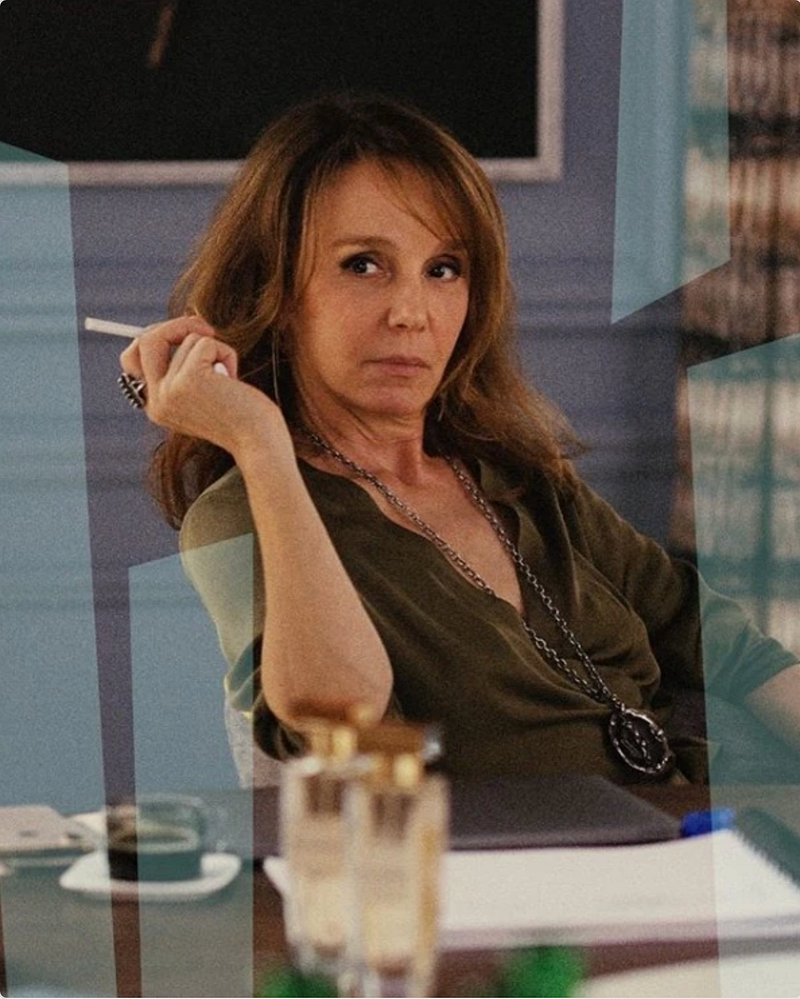
Sylvie Grateau is a powerful exec, and a singleton in a long-term relationship with a married man. She only gets the crumbs—that’s intensified and obvious in the show—but likely incredible sex and a deeper connection than she necessarily wants to.
She’s learned to close herself off from deeper connection and emotional intimacy in the long run because she’s had years piled on top of her of being rejected by her lover. She clearly doesn’t get to feel safe—so she has to be guarded.
It leaves her jaded, yet sexy, but closed off in an untrustworthy world of her own.
I didn’t like Sylvie at first. Her pain, her quest for personal power from a secret relationship that seems to have become her only true love, turned her bitter and afraid.
But the more I watched Sylvie, the more I understood her. I saw a version of myself in a potential future I had to erase.
If breadcrumbs are all you think of getting—if that’s all you THINK you can get—who can blame her? Why step out of your comfort zone if you’re getting just enough from that guy?
When is “just enough” going to be not enough?
Then we have Emily, who finds herself in a menage-à-trois alongside her supposed best friend Camille. She starts looking more and more terrified through each episode as the realization washes over her that she’s actually involved in an affair with her friend’s boyfriend.
However, Emily’s affair guy/pseudo-boyfriend/popper-upper dude pissed me off more and more as the show went on. His whiny-ness started to feel like an immature boy trying to get what he wants, as if he was constantly pulling at the pants leg of his mother. The guy also never fully makes a decision (insofar as I watched the show) and seems to string both women along until he can figure his shit out, which never really happens. After a while I couldn’t stand his character anymore and all his attractiveness went away. I don’t know what angered me more: his immaturity or lack of decision-making skills. I had to stop watching the show.
Ah, Paris.
Ah, France.
Ah, lovers.
Thank you, Lord.
To both these shows—thanks for the respite.
—MDR