Vertigo: How It Started and How I Cured It
Real story

How it started
It started simple. Years ago, once a month or once every two months, I would wake up with dizziness, it was like my head was swirling. I felt lightheaded, almost like I could not balance myself on the floor. The dizziness would go away a while after I had my breakfast or after I took a bath. So I thought maybe it was because I have not eaten anything in the morning. I thought it was just an episode of low blood pressure, because as I know my blood pressure was below standard, so I did not pay attention to it.
At that time, I was studying out of my home city, so naturally, I moved out and lived alone in another city. Then, every end of the semester, I would come back home to stay for a few months before my class started again. I noticed that the episodes of dizziness always occurred when I was home. I also had a heavy allergic reaction whenever I came back home. I thought maybe it had something to do with my allergy. Or I thought maybe it had something to do with my pillows. Because I did not bring my pillow with me every time I came back home or returned to my rented place. I thought maybe because I was not used to changing my sleep position, so I keep turning left and right in my sleep and woke up dizzy as a result of my movement during sleep.
Later, the dizziness occurred more and more often and sometimes it lasted the whole day. I felt dizzy even when I closed my eyes. I came to dislike sleeping because I got so dizzy that sleep was not fun anymore. I started to not use any pillows, just so I would not need to adjust whenever I moved. But it did not work out. I even developed insomnia.
Then I told some friends and went to the pharmacy to buy some vitamins because I did not think it was vertigo, I still thought it was low blood pressure, which is usually curable without medications. The people at the pharmacy told me it was probably anemia and offered me some vitamins usually taken by people with anemia. I ate it, but nothing improved.
After a while, because the dizziness started to affect my daily life, as the frequency increased to almost every day, I can not stand it anymore. I went to the doctor.
How to cure
This is what he told me, it was vertigo. He gave me some medications for my allergy (he found out I had an allergy from the checkup), and asked me to do this exercise every day for 5 minutes.
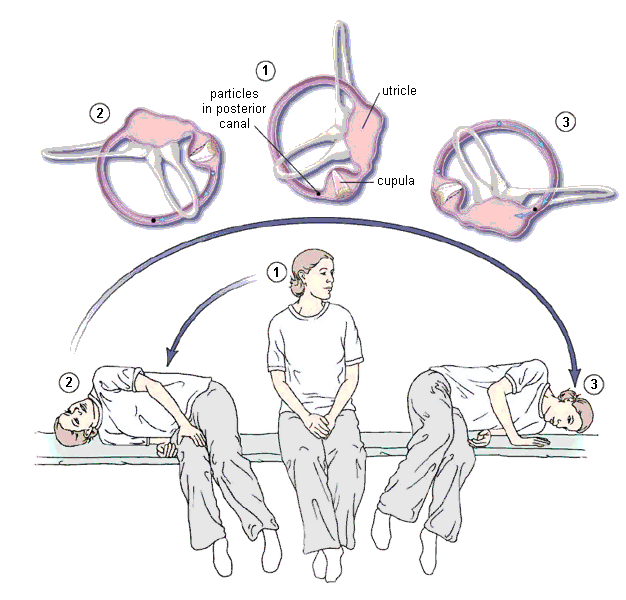
Surprisingly, after a few weeks of doing it, I started to get better. After a few months, it cured my vertigo. I did the exercise until I stopped having dizziness. However, once every few months after I stopped the exercise, vertigo would come. Whenever I had vertigo, I would do this exercise until it was gone. Vertigo will occur sometimes, but with a few days of exercise, it will go away. Now, it has been more than a year since I had a sudden occurrence of vertigo.
What to expect
- You have to be very patient and do it constantly every day. Repeat the 123 positions in the picture. Do it for 5 minutes in total. (For position 1 and 3, stay for 30 seconds, or wait until you become dizzy).
- Do not stop the exercise until your vertigo is gone for a few weeks.
- When you do it for the first time, it can be very dizzy so do not be surprised. The more dizziness you feel, the better it is. It means the exercise does the work.
However, please understand that not every vertigo can be cured in the same way. Some vertigo is an indication of a more serious disease. Go to the doctor if you can.


