
Coronavirus, Ventilators, and How an Ethical Dilemma Might Change Society for the Worse
The wide-reaching consequences of releasing guidelines of who should live and who must die. A philosopher’s worry.

We all read or heard the warnings: COVID-19 is likely to cause a shortage of medical resources. There will be too few ventilators, too few ICU beds, too few physicians and nurses to serve everyone who needs them.
If people will die without medical intervention and there are more people who need medical intervention than there are medical resources then medical staff will have to face a tough decision:
Who gets to live and who will have to die?
Asking this question in the first place, not as a hypothetical but as a real question requiring a definite answer, has immense consequences for our society.

At least in most Western countries, the question of what life is most worth saving is taboo.
A person’s life is precious. Doctors swear an oath to protect it. To save a person’s life, at least unless the person has ordered them not to. Weighting one life against another — that’s usually something governments don’t engage in.
A group of terrorists asks for a businessman to be killed in exchange for the lives of ten children. Will the government agree? No. The organs of one 65-year-old could save the lives of five 20-year-olds. Will the government agree to let doctors harvest the healthy but older man’s organs? Of course not.
We refrain from weighing lives against each other and for good reason.
We are committed to equality. That everyone’s life is worth exactly the same.
That you don’t more deserve to live than your neighbor because you are richer, younger, fitter, prettier, or more useful.
But if not everyone can be saved some won’t be saved.
Sounding Board Recommendations
End of March 2020 a sounding board that consists of mainly medical experts released recommendations that would have wide-reaching societal consequences if implemented.

In “Fair Allocation of Scarce Medical Resources in the Time of Covid-19” the authors ask a fundamentally philosophical question:
What is the ethical allocation of medical resources during the COVID-19 pandemic?
They recommend six criteria by which a team of non-treating medical experts should decide during the COVID-19 pandemic who may live and who will die:
- maximize benefits;
- prioritize health workers;
- do not allocate on a first-come, first-served basis;
- be responsive to evidence;
- recognize research participation;
- apply the same principles to all Covid-19 and non–Covid-19 patients.
Of these six the board considers the first criterion to be the most weighty one. I won’t say anything about 4–6 here.
As a philosopher and a researcher in ethics criteria 1–3 worry me most.
Measuring a person’s life’s worth in years

The best outcome for a patient is to have a qualitatively good life after the medical treatment. There’s little point in life if the person is unconscious for all of it.
And quantity matters too. The longer the qualitatively good life the better for the patient.
But in reality, this goal could get conflict with another goal to maximize benefits: saving as many lives as possible.
Suppose a hospital is faced with this choice:
They can either save 10 lives by stretching the medical resources they have, but this will lead to permanent damage for the patients who will only live for 2–5 months post-treatment.
Or they can save 2 lives with nearly no reduction in their patients’ quality of life after they are released from the hospital.
What to do? The sounding board believes hospitals should prioritize saving as many lives as possible. Simply because there is not enough time and knowledge yet to practically calculate how many years patients will live after the virus.
It makes sense from a practical point of view. It doesn’t solve the more general theoretical question of whether saving more people is more important than saving more years of quality life.

Again from a practical point of view, the board suggests prioritizing people who are likely to recover after the treatment over those who are unlikely to recover.
And again, this makes a lot of sense. When faced with the choice between trying to save the life of a person who will likely benefit from help and the life of a person who likely cannot be helped anymore, by all means, help the one who has a chance. Right?
The board predicts that a likely result will be that priority will be given to “those who are worst off in the sense of being at risk of dying young and not having a full life”.
Since young people are typically more likely to recover than older people who have several underlying conditions the effect will be that a young person is more likely to receive treatment.
Is it worse for a 20-year-old to die than for a 70-year-old? Arguably it is.

If death is worse the more years and experiences it deprives you of, then dying young is worse than dying old.
But does this mean that young people deserve special protection from death? Does it mean that an older person’s life is worth less than a younger person’s life?
Does it mean that when facing a choice we should save a younger person rather than an older one because of the years and experiences they potentially have left?
I think there’s a huge danger in answering “yes”. There is a huge danger in releasing guidelines that recommend, even just as an operational consequence, to save younger people over the elderly.
We need to think about the long-term consequences such guidelines will have on society.
The message they send to society. That the lives of older people are worth less than those of younger folks. Such messages have consequences far beyond the pandemic.
And so might have the recommendation to prioritize medical staff:
Measuring a person’s life instrumentally

The board suggests that health care workers should be prioritized “not because they are somehow more worthy, but because of their instrumental value: they are essential to pandemic response”.
Hospitals need medical staff to operate and save lives. We need them to continue serving others in need.
If medical staff recover and continue helping ill people many more lives can be saved.
So far, so reasonable.
But the board continues their recommendation in a worrisome way; a way that contradicts their denial that medical staff are more worthy.
They write: “whether health workers who need ventilators will be able to return to work is uncertain, but giving them priority for ventilators recognizes their assumption of the high-risk work of saving others.”
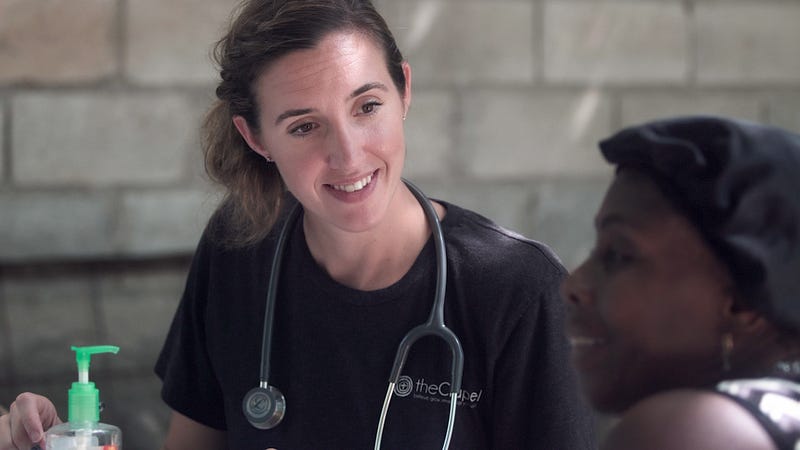
There is no doubt that health care workers are the heroes of the hour. But if hospitals prioritize them to recognize their willingness to risk their lives for others they are saying that health care workers are “somehow more worthy” of being saved.
They are being prioritized for assuming a higher risk, not for their instrumental value in fighting the virus alone.
Is it fair to prioritize medical staff? Do they deserve it more to be saved?
I think the answer has to be “no”.
It may be rational to save a nurse over an accountant. Rational, because assuming that he will recover and be able to return to hospital during the pandemic he will be able to save more lives. But that doesn’t mean it’s ethical to prioritize the nurse over the accountant just because he is a nurse.
Here’s an analogy: It may be rational to cheat on my income tax report because it’s unlikely anyone will find out. But it’s certainly not ethical to do so.
Will saving medical staff over people with other professions have wide-reaching societal consequences? Maybe not. I think many people already tentatively assume that medical staff will receive better treatment when they are ill — after all, they will be treated by colleagues. It wasn’t ethical then. It’s not ethical now.
But there is another danger lurking here when hospitals start to help based on people’s instrumental value.

When faced with the choice between saving a mother of five or a single childfree woman — who should they save? The mother because there would be five children who would suffer without her?
Should the orphaned single man with no siblings die rather than the husband? Because more people’s lives would be shattered if the husband died?
Yes, the instrumental value of medical people is directly related to the pandemic.
But the instrumental value of people should not matter at all when it comes to the question of whether they should live or die.
The mother shouldn’t be prioritized over the single woman just because she’s a mother. The husband shouldn’t be prioritized over the unattached man just because he’s in a relationship. A person’s life isn’t worth less just because they are single or a hermit.
People’s lives are worth the same no matter how useful they are to society. Or how many more years they have to live.
Maybe contrary to what the board believes allocating on a first-come, first-served basis is fairer.

It’s impartial towards age or how many years someone will likely still live. It’s impartial towards your wallet, your status, your profession.
It’s luck that decides, as it does in so many areas in our life, including whether we receive decent medical treatment in the first place.
If we abandon our values towards people’s lives during the pandemic our actions will have wide-reaching consequences for a post-COVID-19 society.
If usefulness and age are good reasons to let a person die during a pandemic, aren’t they good reasons to disadvantage less useful or older people post-virus too?
Even if hospitals don’t have to make hard decisions like these again, there’s a Damocles sword hanging over this vulnerable group. It’s a group vulnerable to having their lives’ value discounted. A group whose lives society will consider less important.
I don’t think that’s a society I am looking forward to living in.
Even if I am (relatively) young.
We all will grow old and useless in this society.
Want More?
Join 3000+ fellow explorers trying to expand their thinking and reach a higher existence.


