
Vegetarianism Saved Me From My Eating Disorder
*I am in no way a licensed nutritionist, psychologist or medical professional. The following article reflects my own experience and similar information obtained online. If you are struggling with an eating disorder, please look at sites such as the National Eating Disorders Association or Beat for advice from licensed professionals.*
If you’re looking for the juicy content, specifics on my calorie restriction or lowest weights, please look elsewhere. A common trend in the Eating Disorder community are these ‘disorder-porn’ sites, where you get tips on how to hide your disorder, ways to further restrict yourself, and motivation through competition with others. This is not that. But I will be sharing some juicy veggie tips, which I personally find to be all the better!
I struggled with my eating disorder for too many years, and it remains a part of me. A voice at the back of my mind, a guilty feeling instilled, a hatred for my own reflection.
But I feel extremely fortunate to have it under control for the past years, and hopefully for many more to come. My biggest saviour in doing this was switching to a vegetarian diet, and I’ll discuss why vegetarianism helped my eating disorder recovery and some tips for becoming vegetarian. This may not be the case for everyone, but it could also be a short term solution to help you re-examine your diet and get back on track, before introducing animal products again.
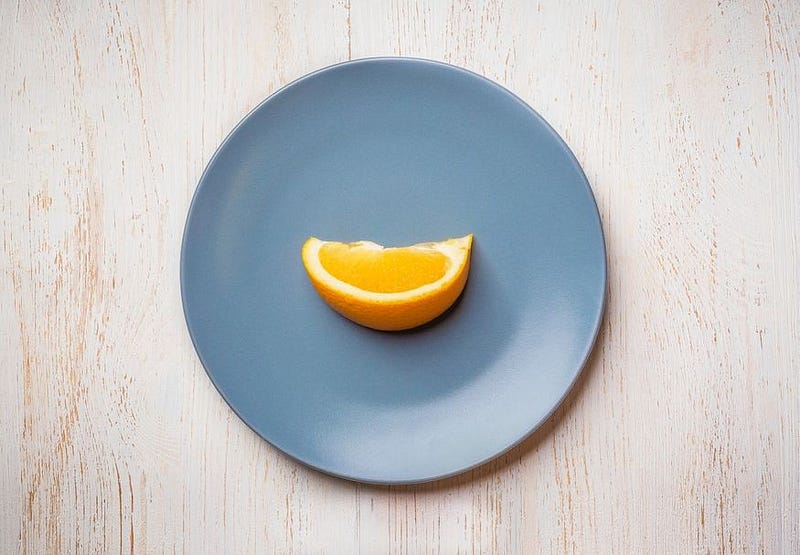
These are the 5 ways that vegetarianism helped my eating disorder recovery:
1. Consider your Nutrients
My eating disorder revolved around very specific calorie restriction, over-exercising and purging when I ate what I now recognise as a normal portion. I was finding it extremely difficult to break out of this cycle, as many with an eating disorder do. Then I decided to try being vegan for a while, knowing it to be a temporary experiment. What I didn’t realise, is that I would end up vegetarian after, still going strong 4.5 years later!
Being vegan or vegetarian makes you re-examine food, and what you eat.
This can be in a negative way, as some people find such diets to worsen their food focus and anxiety. But for me and others, it helped us to remember the purpose of food. For years food had been an enemy, a necessity to be moderated and tested. It was a game. How little could I eat and keep going? How could I pretend to be eating in front of others? I told myself I was healthy, as I was eating plenty of fruit and vegetables and exercising for at least an hour daily. But there was nothing remotely healthy about my psychological torment and calorie deficient existence.
When I went vegan and then vegetarian, I did quite a bit of research. About all these nutrients and specific food groups I needed to include my diet. And that’s the funny thing; when you eat meat you never consider if you’ve had protein that day, or calcium or vitamin D. Even though you may have days without meat or dairy, you don’t ever stop to wonder about it. But as a vegetarian, I’m aware of my specific intakes. If a day comes where I haven’t had anything with protein, I try to include beans or chickpeas in my dinner. If I go for a run in the morning, I make sure to fuel up afterwards with a green smoothie with plenty of spinach and flaxseed in it!
The difference is that food becomes fuel.
It becomes something you need through all these different components you’re reminded to get. People always warn me that vegetarians don’t get protein, and so I’ll eat eggs on toast or hummus with bread, and not be focused on the carbohydrates or the calories. Your focus shifts to getting everything you need, and not to calories. As you learn early on that these lifestyles don’t correlate well with calorie restriction focus.
Considering the health of your food also reduces the chance that you’ll slip into another extreme, of binge eating or similar disordered eating behaviours.
2. Refuelling
Sometimes, I look back and wonder how I was managing, how I was even getting up and getting about, let alone exercising to that extreme. The years lost to my disorder feel blurred, a distant memory, probably because I was simply struggling on the most basic functions. When I turned to a plant based lifestyle, I was able to catch up on the nutrients I’d been missing for so long.
And it was so evident. I put on some weight at first, nothing crazy now that I look back, but of course it was quite scary. It made me doubt recovery and vegetarianism, but I also knew that I simply couldn’t keep going as I was. I was exhausted, not just of starving myself, but of making excuses about food, avoiding food related events, my constant depression and more. Something had to change, even if the additional kilos terrified me.
But suddenly my skin improved, my hair stopped being so brittle and falling out, my nails were growing again. And there were changes within too. My energy increased, my focus and memory. My mood changed. I’d been grumpy and hurting so much. And of course my depression didn’t just disappear, I won’t try to claim vegetarianism does that! But I joined the present once again, I became more interested in those around me who I’d been neglecting.
It was a long road to go, but it helped me to finally start waking up.
3. A Community
I don’t know why the plant based community are so much more of a united body than meat eaters, but maybe it just seems like that because the majority eat meat and most advertising is directed at that anyway, so people don’t feel the need to build community beyond that. But it was incredible to enter this plant based community and feel so welcomed.
They shared recipes, especially basic ones for people just starting. Tips on the best foods for certain nutrients, the best foods for a student budget. But more than that, they also shared stories. And it wasn’t like the eating disorder stories I had found in those toxic websites, which urged me to continue. These were tales of people who had been where I was and survived, improved and thrived. And they were telling me how to, urging me that I could do it too.
It wasn’t just proof that vegetarianism could help me, but proof that I could even be helped, as I had begun to doubt it myself.
4. Ditching the Apps
I detest those calorie counting, fitness focus apps. I know they work for many, but I’ve spoken to too many people who had the same experiences I did. Of becoming fixated on the numbers, logging in every single grape eaten, or a single cup of tea with 2 teaspoons of low-fat milk. It’s an obsession, and it helps to fuel yours.
Even though I try to roughly keep track of protein eaten in a day or other nutrients, I do not write it down, and I certainly do not record it on any app. I wish my brain didn’t even look at how I ate in a day, but it’s easier to change your behaviour than your eating disorder thoughts. Being plant-based doesn’t work well with these apps as they don’t record the food groups and nutrients well. It’s hard to focus on calories, when they don’t translate well in a plant based diet.
All the more reason to delete that app asap!
5. Creativity in Food
For the first time in years, food stopped being a chore, it was no longer my enemy. Dinner time had been my battlefield, I kept up a defence as I pushed things around my plate, I made excuse after excuse. It was so tiring, and drove a wedge between me and everyone who loved me. And it wasn’t about accepting that I had a problem, I knew that. But knowing it’s bad, doesn’t mean you want to get better.
But once I felt ready to leave the world of my eating disorder, when a white flag was waved, food finally became my friend, my partner in cooking. Making meals didn’t have to be stressful and scary and measured to the gram. It could actually be fun?
It was a challenge for sure. Neither of my parents and none of my friends were vegetarian, my sister had lasted about two months vegetarian whilst in L.A., until she came home and devoured turkey on Christmas Day. So I had to work it out on my own. I researched and tested plenty of recipes, sharing them with the people in my life. I began to actually enjoy cooking. Instead of packing a salad I would not eat for my lunch, I brought my rice and curry leftovers, or tested a new wrap. People would ask what I was eating, not only to check that I was, but because it looked delicious! I was looking for a saviour, and instead I found a hobby that I love to this day.
In restaurants, I stopped looking for the healthiest option or easiest one to pretend to eat, and I began looking at the vegetarian section. And keep in mind that several years ago, you had minimal vegetarian options when eating out. It was usually pasta or a veggie burger, so a less stressful decision to make.
I was really lucky to have parents and friends who were really accepting of it, and tried to accommodate it as much as possible. Maybe they were just grateful that I was eating without a fight. But this also left me in charge. To bring my own vegetarian dish when necessary, to cook for my parents instead of the facade of twiddling my fork. I had to become the expert in vegetarianism, and the challenge distracted me over the harder parts. A chef always needs to test their own dish!
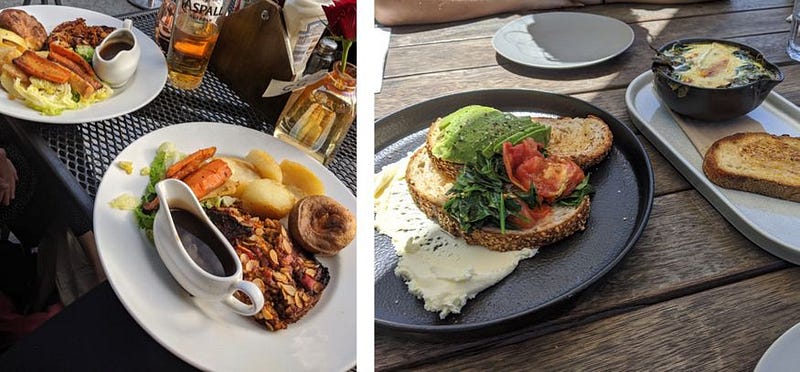
(Did you know that you can now have a vegetarian Sunday roast? It’s delicious!)
Vegetarian vs. Vegan for Eating Disorder Recovery
This is one for personal preference, as everyone has their own experiences and taste preferences. I personally prefer going vegetarian first for eating disorder recovery, even if it is simply to transition into veganism later. I think it helps you to adjust, and ensures that you are getting the nutrients and calories you need to thrive. This is definitely possible on a vegan diet, but going from meat and dairy to removing both suddenly, can be quite difficult and anxiety inducing. It also helps everyone around you adjust, friends, family or your partner, as they can learn new recipes alongside you and take baby steps. If you later choose to go vegan, then just be sure you’re already comfortable with a healthy calorie intake and nutrients wise before making the jump.
Vegetarianism is also slightly easier socially, which can help you begin eating with others again after so long. You can feel more isolated as a vegan, and it is easier to slip into your old habits this way. There are plenty of treats you can enjoy as a vegetarian or vegan, once you feel ready for them, and it may ensure you’re not too focused on the ‘health’ but also the enjoyment of food.
Tips for Going Vegetarian After an Eating Disorder
Now that we’ve looked at why, let’s consider the how! When going vegetarian or vegan, even without an eating disorder, you need to do it with thought.
1. Research is vital. Look at which nutrients you need to get and how to get them. Make a list of the main foods that will have you sorted for each, so that you know what type of recipes to look up. Especially if you already have any deficiencies.
2. Find recipes, and lots of them, either online or through a cookbook. This ensures you don’t get bored. A vegetarian or vegan diet is anything but boring, but if you simply cut out meat or dairy and then carry on as usual, it will feel that way. A traditional meat and potato and veg dinner without the meat is pretty tiresome, and not good sustenance for a vegetarian.
3. That brings me onto the third tip! Re-design your meals. Don’t just cut out meat or dairy or eggs, but reinvent your dinner table. This could be through curries, a stir fry, wraps and more. There are plenty of delicious vegetarian meals.
4. But, to contradict myself slightly, don’t feel sad about losing certain meat dishes, as I guarantee there are vegetarian replacements. Supermarkets have progressed incredibly with their vegetarian meat selection and dairy free milk options. Vegetarian burgers are delicious, either bought or homemade. Jackfruit is an excellent replacement for pulled pork (recommended by meat eaters as well!). Lentils work wonders in a bolognese sauce. And a bean filled chilli sin carne is always appreciated on rice, in wraps or over nachos!
5. Find some fellow plant-based people! Either in your life, and ask them for tips and cook together a few times. Or online if need be. It’s possible not everyone will support your decision, and they probably mean well. But it is up to you to show them why it is a healthy and suitable lifestyle for you. You focus on your plate, and let them deal with theirs.
6. It’s okay to make mistakes sometimes. It doesn’t make you a bad vegetarian and certainly not a bad person. You’re doing great just by trying. Every day that you ate only plant based is a day of success and one you should celebrate.
7. Try to enjoy food again. Don’t get too fixated on what you should and shouldn’t eat. Easier said than done, but a truth nonetheless. Treats are okay, they are more than welcomed.
Food is fuel, but food is also a social and emotional construct that holds a unique place in our lives. Try not to fight it, and to instead enjoy every bite.

As mentioned at the beginning, if you are looking for help tackling your eating disorder, please seek it out! If you’re worried about someone else, try to approach them about it or check out an advice page. Going vegetarian or vegan is a big step, and you can break it down into plenty of small steps. We’re undergoing difficult times, so prioritise your mental health during COVID — 19 and check out my experience of NOT baking sourdough.
Make that first step today!
Join my email list for more insights and articles!
Originally published at https://symptomsofliving.com.