
Vaccine Hesitancy Isn’t New
A long look at our war on viruses
The very first “vaccine” was given to an eight-year-old boy, James Phipps, who had somehow managed to avoid getting smallpox as it ran rampant through English cities and the countryside. Edward Jenner, the doctor, lived in a large estate next door and had convinced the Phippses to let him try a new method of keeping the disease at bay for their son. Exactly how he did this is not entirely known, but what is known is that smallpox was especially deadly in children.
That was May of 1796. The first clinical trials would be performed three years later, in the Smallpox and Inoculation Hospital located in St. Pancras. By then, they had 600 people to try it out on — but between the Phipps lad and 1799, Jenner himself had almost no luck at all getting test subjects.
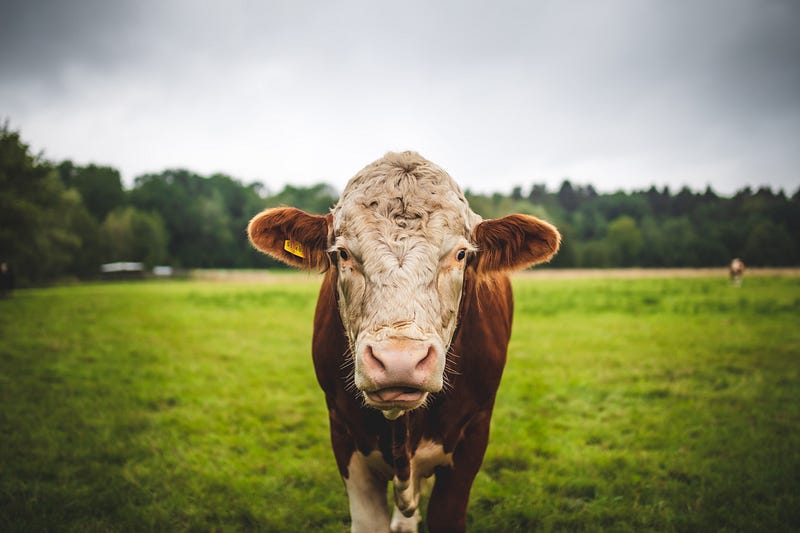
You see, the vaccine had been made by using the less deadly cowpox, which caused a slight rash on the hands. Once injected with cowpox (in Latin, variola vaccinia, after vacca for cow), the body developed immunity to cowpox and smallpox, which protected people from the devastating and disfiguring effects of the disease. Given that it could cover your body in painful, scabby, swollen sores and leave your entire skin surface pocked and scarred, almost as if from burns, you would suppose everyone would get in line to try it. Except they didn’t. Folks were worried it might turn them into cows.
This sounds foolish, I know. But most people were not well educated, and the science behind vaccines still confuses a lot of people (even me). Here was a doctor, experimenting on a healthy eight-year-old with some serum of cow something-something. The anxiety about it reached such a fever pitch that cartoonists depicted half-cow people emerging from Jenner’s study. More than 100 years later, in 1905, smallpox vaccine hesitancy lingered on.
In 1901, smallpox ravaged the city of Cleveland, Ohio. By spring, there were 1,200 cases. The first cases were relatively mild, a less contagious and less deadly variety of smallpox. The mayor ordered the vaccines to be made available, but few people bothered. After all, the outbreak seemed to be over.
Then, in 1902, a traveler from New Jersey arrived in town, and with him came the more deadly variant. Infections spiked. So too did the death toll. Hospitals even put up barbed wire to keep infected patients from leaving and spreading it further. By the fall of that year, with the concerted effort of the town government, the aid of hospitals, and the renewed willingness of the population, 100,000 people would get the vaccine. (You can see photos of cases in the Dittrick Medical History Center’s online exhibit).
Despite the fact that vaccines for smallpox had been in use for over a century, few wanted to have a dose. Not, at least, until fear of the disease outweighed fear of the vaccine.
I’ve heard people remark that this sort of hesitancy “didn’t happen with the polio vaccine.” But it did. Some 50 years after smallpox, with the nation stalked by poliomyelitis, a president who was partly paralyzed by it, and thousands of children locked in iron lungs to keep from suffocating — we still had vaccine hesitancy. We just don’t remember it, because one of the greatest public health campaigns in history managed to overturn even the most reticent recipients. How?
Polio offers a surprising parallel to our current Covid-19 pandemic. To begin with, we didn’t know how polio was transmitted; pools were closed, businesses were shut down, travel came to a halt. The economy threatened to stand still until science could figure out what it was, where we were getting it, and how to stop it. The March of Dimes became a huge part of that solution. A literal “army of volunteers,” says NPR’s Susan Brink, was deployed to raise both funds and awareness. This campaign helped boost confidence in science and gave people a stake in the discovery. As a result, an astonishing 600,000 people volunteered their children when the Salk vaccine (by Jonas Salk, as opposed to the later, highly effective Sabin vaccine) was released. It worked.
But that isn’t the end of the story.
Then, as now, the devil is in the details. The Cutter labs, where the Salk vaccine had been manufactured, made a critical error. Ineffective protocol meant the lab produced a vaccine with living virus cells inside. The shot caused 40,000 cases of polio, 200 cases of paralysis, and 10 deaths. Everything came to a screeching halt while every single detail was examined and reexamined. You might think such a terrible event would have ended any further attempts. But instead, it created the effective federal regulation of vaccines, which today is completely unmatched for safety. But it was the March of Dimes, and a concerted effort on the part of parents to save their children, along with the unceasing ad campaigns and infographics demonstrating how the vaccine worked that won public confidence. (It also didn’t hurt that stars like Elvis Presley lined up to be among the first to get a jab.)
What changed? Not people — not really. We have a healthy fear of most new and untried things, hardwired from eons of ancestry right back to Australopithecus. That caution can help us. It can also hurt us. In the case of smallpox, the sheer horror of the disease as it ravaged communities ultimately spurred even the hesitant to get the shot. For polio, the fear of paralysis and disfigurement combined with grassroots door-to-door persuasion and trust-building. There is, however, one thing more.
You can see smallpox. There is no hiding the rash of pustules or the scars. You can also see polio in the way it disfigured and disabled, in the stunted limbs, crutches, and wheelchairs. There has always been vaccine hesitancy. But there wasn’t a widespread denial of those diseases. Compare this to our present moment. In the case of Covid-19, sometimes the symptoms don’t appear for two weeks. Sometimes, they are mild enough to be ignored in one person — only to infect and kill another. Covid doesn’t look very different from the flu at first. And for those who recover, their challenges are not always especially visible. For perhaps the first time, we are not just facing vaccine hesitancy but also disease denial. How do you convince someone to use a vaccine when they first deny the very thing you aim to treat?
Polio affected 60,000 children and killed 3,000. There have been 37.5 million infections of Covid in the U.S. and 626,000 deaths to date. It is difficult to understand the denial of anything so horrific. But in the cases where vaccines have been ignored because they are not well understood — because there is misinformation, fear, suspicion, and distrust — we yet have hope. Plenty of vitriol and bitterness have been thrown at those who choose not to get vaccinated but to what end? Let us do our best to reach, to convince, to love the hesitant into a place where they trust the vaccines. And in the meanwhile, let’s be safe.
This is dedicated to my Aunt Cheryl, who passed this week of Covid-19, unvaccinated. I’ll always remember the painting.


