
5 Statements To Turbo-Charge Your Vulnerability Super Power
Being more vulnerable can bring real and lasting values to our lives. Saying these 5 things often will help get there.
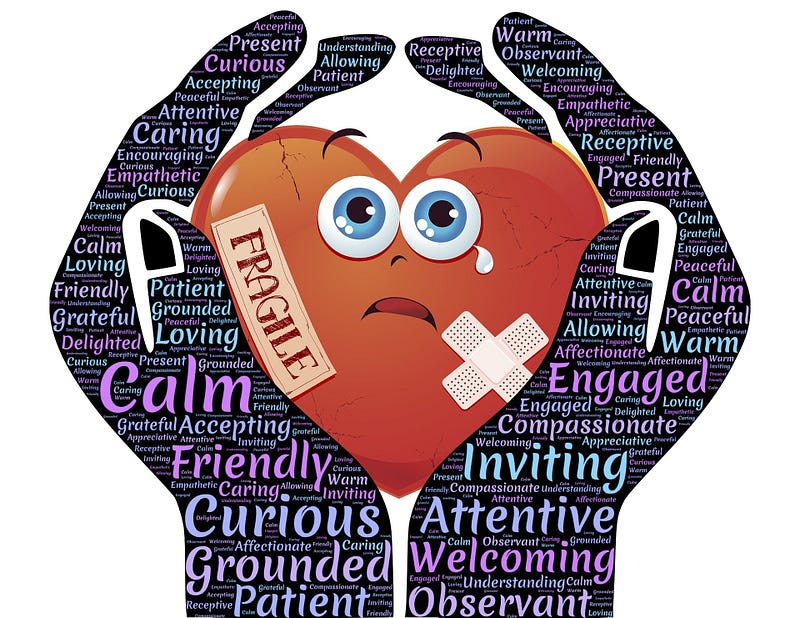
The nice people at The Oxford English Dictionary define it as follows
“The quality or state of being exposed to the possibility of being attacked or harmed, either physically or emotionally.”
There lies the start of the bad rap that vulnerability gets. In the world we live in right now it’s not getting any better either. Coronavirus has led to ominous phrases such as “vulnerable groups” and “vulnerable health services”.
All in all, it’s not a good time for my old friend vulnerability.
Me and old “V” go back a long way. I was born with a disability in the early ’70s. Since that time, I’ve classed as being in a “vulnerable group”.
Now, I have had a fair few things go “off-piste” medically so that categorisation is fair enough. The trouble is the “vulnerable” label does not stop there. As most people with a disability will tell you, it leaks into all other aspects of life. So much so that I have spent a good portion of my life trying to prove that I wasn’t vulnerable. I was as tough and as smart as anyone else dammit!
Then a few years ago I pivoted a bit from engineering into coaching and that’s when me and old “V” met again. This time we were both a lot older and a lot wiser and had become a bit squidgy round the edges.
That’s when I re-examined vulnerability and came to realise, not only is being emotionally vulnerable a good thing it’s a bloody superpower.
Baring your heart, your soul and your brain can lead to life-changing things happening in all aspects of life but most of all it pulverises fear.
Fear is the true blocker to change and removing that can make us almost unstoppable.
So, rather than give you some fluffy “Be more vulnerable” conclusion, the engineer in me wants to make a list. What I have listed here are 5 statements I have spent time trying to use more. Each one exposes me to a greater or lesser extent, but all of them build that vulnerability muscle.
I don’t know
Our culture is often described as “Always On”. While this has initially meant in a technology context it increasingly means “I have to know the answer”. The fact is we don’t have the answers. How can we?
It may be a career or life “rite of passage” we all have to go through, but at some point in our lives we try to be “all things to all people”. That always ends the same way. Overwhelm, burnout, and maybe worse.
Saying “I don’t know” is hard. Our reflex is to think of it as a weakness. But how about we reframe it from a passive statement to an active one?
“I don’t know but I’ll find out” sounds much more proactive and exciting to me.
It holds the promise of new learning at the end of the “I’ll find out” process and who doesn’t want to learn new stuff?
I was wrong
For 25 years I’ve written computer code to pay the bills. Computer programmers get things wrong all the time. We even have our own word for it.
Bugs!
Bugs are inescapable. A good Software Tester will find everything from the most obvious to the most obscure bugs and thus make what they are testing better. You will travel a long way to find a programmer who hasn’t hated testers at one point or another.
This complete exposure of our faults and the things we have gotten wrong, I think, gives us nerds a head start in being able to say, “I was wrong”. But it doesn’t end there.
No programmer will get away with saying “I was wrong” and leave it at that. A solution will be expected so “I was wrong, and I’ll fix it” is again that proactive twist that I mentioned earlier. This, of course, doesn’t have to be limited to my nerdy world. With a little bravery and a little practice, it is transferable to any situation you feel you’d like to correct.
The big win here is that, for the most part, people admire and respect someone confident and strong enough to admit they were wrong. Very rarely will there be a severe backlash for genuine human error and if there is it says way more about them than it does about you. Give it a shot!
I’m sorry
There aren’t many of us these days that aren’t at least a little bit more stressed than we were a couple of months back. Coronavirus is the ultimate “curveball” and we are all dealing with it as best we can.
That doesn’t mean that occasionally we don’t say and do things that don’t serve us and don’t serve others.
When this happens it is very easy to fight our corner repeatedly until things escalate to a point where we almost forget what we argued about in the first place.
It takes awareness, bravery, and a dose of pride-swallowing to stop the snowball hurtling downhill and just say “I’m sorry”. Now, let me be clear, I’m not advocating falling on our swords when the facts are clear and we have nothing to be sorry about.
What I am advocating is going deep. Deep within to see if ego and pride might be getting in the way here. If that is the case then your real, authentic self will thank you for just coming out with it and clearing the air.
I love you
This is the biggie for me. Why? Because I’m not very good at it, that’s why! It’s a work in progress. Sure, for a love-struck teenager or twenty-something “I love you” rolls off the tongue as easily as “A beer please”.
I’m not talking about that, at least not only that. What I’m talking about here are the people in our lives that are so important to us the thought of them not being there anymore physically hurts.
When was the last time we told our parents we love them, or our brother and sisters or our best friend?
Honestly? In my case far too long but I am getting there.
But what difference does it make? All the difference is the simple answer.
Now, more than ever we are reminded of our mortality and the mortality of those closest to us. Whose loss would we feel the most? Whose loss do we not think about at all because it just too painful? Answering those questions is all you need to know.
No!
When I was training to be coach my tutor said something I will never forget.
She said, “No is a complete sentence”.
Saying no to things we just don’t want to do is a hugely empowering thing. I will readily admit I’m not particularly good at this one either but I’m getting better. One strategy I’ve employed (i.e. stolen from someone) is to ask myself if I had to do this tomorrow would I want to? If there is any doubt then “no” has to be at least considered!
An important caveat in saying no is to not qualify it. Not “No because…” or “No but…”. Simply “Thank you for asking but I’m not in a position to do that” or words to that effect. Sometimes without thinking, people will manipulate a situation if you qualify “no” by trying to “accommodate” you so it’s best to just cut that route off.
Could this cause conflict and hurt? Yes, quite possibly. It’s no good me pretending that’s not a possibility, however, this must be balanced against the cost to us. Which price is worth paying more? Answer that and it should guide you to a “yes” or a “no”.
So, there it is. The engineer side of me satisfied with my list.
Back to the coaching side of me and that part of me encourages you to meet my old friend “V” and say hello. Get to know her and she will repay the relationship a hundred-fold. I promise you that!


