Utility Classes And Atomic CSS. Predatory Propaganda Deflection!

As sometimes happens this started life as a response to someone else’s post. It grew in size, scope, and took enough of a different tack on the topic to warrant its own article.
In his article here:
Hajime Yamasaki Vukelic brushes aside the leaves used to camouflage what these two terms are basically used to hide. The construction of monuments to the worst of mid ‘90’s web development practices. Dialing the clock back 25 years with code bloat, hard to maintain complex convoluted WET code, and reeking of a general ignorance of the most basic of HTML and CSS concepts. All concepts I am more than familiar with, and any of you who read my articles will recognize is the exact same thing I’ve been saying for decades.
But there is something more insidious to it. I’ve said it, but never really gone into depth about it. And that’s how these hoi-polloi terms exist not because they are something new, or worthy of their own name… no, they were created as a deflection, a way to avoid saying what is really being done.
They are NOT “atomic CSS” since they have jack freaking shit to do with CSS since you’re talking about shitting classes into the markup to avoid using CSS. They are NOT “utility classes” since the only utility they provide is … well… shitting classes into the markup to avoid using CSS.
THEY ARE PRESENTATIONAL MARKUP, THE BLEEDING EDGE OF 1997 WEB DEVELOPMENT!!!
And why don’t they call it “presentational markup / classes” and created these deflections? SIMPLE! To avoid reality so they can continue to peddle their broken, bass-wackard approach to coding the front end.
As I keep saying, if you don’t understand that:
<div class="text-center font-bold font-lg color-400-red">
Is the exact same broken bloated outmoded mentally enfeebled brain damage as:
<center><b><font color="#EF5350" size="+1">
Please, just admit defeat and go back to writing that HTML 3.2 with all the deprecated presentational tags and attributes, abusing table elements for layout, and all the other hacky nonsense y’all so clearly and dearly miss!
Seriously I know I keep saying it, but that’s ALL this idiocy is. It is literally mollycoddling the people who can’t extract their cranium from the browser wars’ rectum, allowing people to make their HTML “do too much”
And that’s another place where it’s comic tragedy.
If A Function Can “Do Too Much” Why Can’t You Admit That About Your Markup?
Seriously, the sheer hypocrisy of this. So many people working in JavaScript, TypeScript, React, and so forth will parrot the gibberish “that function does too much” claim, break things up into dozens of separate functions and even separate files / modules… But at the same time have no problem telling the separation of concerns in HTML/CSS to sod off? Which is it?!?That so many flat out are blind to the fact that they are the same failing? Classic.
You can see it in React, where instead of keeping things separate so they’re efficient, speedy, easy to maintain, etc, etm? They slop together client-side scripting only markup in the server-side code; “onevent” attributes in that markup; Presentational classes and CSS in JavaScript. Until you end up with these massive complex hard to understand functions being written by the very same people who lose their freaking minds over a switch/case or excessive if/else! Or even sillier balk at do/while.
But this is to be expected in a way, whilst opposing sides of the same argument they are both cases of trying to justify bad practices. Writing more code than needed, in as painfully complex a manner as possible, all because of a refusal to learn enough of the vanilla / underlying languages to even know what “easy” is.
Why The Deceptive Misleading Names?
And that’s easy. It’s plain as day and something I’ve written about before: Propaganda. Specifically “glittering generalities”, “card stacking”, and “transfer.” The overlap of these techniques is a bit fascinating here.
Words like “utility” or “atomic” really don’t have much to do with what these actually do. They sound good so they’re the glittering generality. People understand and like concepts where those words actually mean something, so that’s transfer. They are an evasion oft tied to bad examples of what these clowns THINK vanilla code is / should look like, so there’s your card stacking.
And evasion is indeed the correct word, because even when they write diatribes dissecting the separation of concerns, they are trying to avoid admitting that ALL this amounts to is presentational classes. Using classes to say what things look like.
But What’s So Wrong With That?
Presentation has no business in the markup for a number of really good reasons. I’ve said it before and I’ll keep on saying it.
- HTML is for more than what things look like on screen devices. The ability to have different media targets for your CSS — print, speech, aural — means you don’t have to waste time sending style to users where it doesn’t matter and/or is irrelevant. Your HTML should be written for everyone, not just the perfectly sighted on screens. That’s why semantic markup exists. Why would you send screen appearance to search or braille?
- The more you can move out of the markup, the sooner parallel page-loads can kick in. Large markup delays the loading of external files.
- The more you can move into external files, the more that can be cached for revisits of the current page, and pre-cache for sub-pages.
- Using selectors you can say style once in the stylesheet, instead of the WET (we enjoy typing) of crapping the same classes over and over again on sibling level elements. One of the most basic rules of HTML and CSS, if every sibling-level element is getting the exact same class, none of them should have that class!
Take agonizingly cryptic dumbassery like “Atomic”
        <nav class="home_D(n)--xs">
            <ul class="M(0) Mt(3px) P(0)">
                <li class=" D(ib) Va(m) Pos(r)">
                    <a href="/quick-start.html" class="D(b) C(#fff) Td(n):h">Docs</a>
                </li>
                <li class=" D(ib) Va(m) Pos(r) Mstart(15px)">
                    <a href="/repl.html" class="D(b) C(#fff) Td(n):h">REPL</a>
                </li>
                <li class=" D(ib) Va(m) Pos(r) Mstart(15px)">
                    <a href="/reference.html" class="D(b) C(#fff) Td(n):h">Reference</a>
                </li>
                <li class=" D(ib) Va(m) Pos(r) Mstart(15px)">
                    <a href="/support.html" class="D(b) C(#fff) Td(n):h">Support</a>
                </li>
                <li class="D(n)--xs D(ib) Mstart(15px) Pos(r)">
                    <a class="D(b) C(#fff) Td(n):h" href="https://github.com/acss-io/atomizer">
                        <svg class="nav-on_D(n)--xs Va(m) Pos(r)" fill="#fff" height="24" aria-hidden="true" viewBox="0 0 16 16" version="1.1" width="24">
                            <path fill-rule="evenodd" d="M8 0C3.58 0 0 3.58 0 8c0 3.54 2.29 6.53 5.47 7.59.4.07.55-.17.55-.38 0-.19-.01-.82-.01-1.49-2.01.37-2.53-.49-2.69-.94-.09-.23-.48-.94-.82-1.13-.28-.15-.68-.52-.01-.53.63-.01 1.08.58 1.23.82.72 1.21 1.87.87 2.33.66.07-.52.28-.87.51-1.07-1.78-.2-3.64-.89-3.64-3.95 0-.87.31-1.59.82-2.15-.08-.2-.36-1.02.08-2.12 0 0 .67-.21 2.2.82.64-.18 1.32-.27 2-.27.68 0 1.36.09 2 .27 1.53-1.04 2.2-.82 2.2-.82.44 1.1.16 1.92.08 2.12.51.56.82 1.27.82 2.15 0 3.07-1.87 3.75-3.65 3.95.29.25.54.73.54 1.48 0 1.07-.01 1.93-.01 2.2 0 .21.15.46.55.38A8.013 8.013 0 0016 8c0-4.42-3.58-8-8-8z"></path>
                        </svg>
                        <span class="D(n) nav-on_D(b)">GitHub</span>
                    </a>
                </li>
            </ul>
        </nav>
Switching everything to single letters to make it an even bigger mess of gibberish doesn’t help for what any competent developer would write as:
<nav id="mainMenu">
  <ul>
    <li><a href="/quick-start.html">Docs</a></li>
    <li><a href="/repl.html">REPL</a></li>
    <li><a href="/reference.html">Reference</a></li>
    <li><a href="/support.html">Support</a></li>
    <li>
      <a href="https://github.com/acss-io/atomizer" class="icon_github">
        <span>GitHub</span>
      </a>
    </li>
  </ul>
</nav>
With CSS something like this:
 #mainMenu li {
   list-style:none;
   display:inline;
 }

 #mainMenu li a {
   display:inline-block;
   position:relative;
   margin-right:1rem;
   text-decoration:none;
   color:#FFF;
 }

 #mainMenu li a:after {
   content:"";
   position:absolute;
   top:50%;
   left:50%;
   width:0;
   height:0;
   padding:0;
   border-radius:100%;
   translate:-50% -50%;
   background:#FFF3;
   transition:padding 0.3s;
 }

 #mainMenu li a:focus:after,
 #mainMenu li a:hover:after {
   padding:calc(50% + 1rem);
 }
Which good for a laugh combined is as much code (if we skip the SVG) that idiocy like atomizer wastes on markup ALONE. And then they need their bloated pre-built stylesheet nonsense on top? Hurr-durrz. It’s as much if not more work, in as cryptic a manner as possible, to piss away caching, parallelism, and quite possibly accessibility given they don’t even use media targets.
That anyone would claim crapping on the markup with classes that way is “Easier” or “better” is outright delusional.
Maybe We Need A Catchy Name To Fight It?
I mean if they’re going to start making up terms to justify their ignorant, broken practices in an attempt to steer the narrative, why not play their game? Or better still, meet their deceptive lies with a little bit of truth.
I mean they ARE presentational classes no matter how much they try to use other terms to describe it. Their willful “Wah wah is not” doesn’t change that fact, though it does seem to sway the foolish, gullible, and ill informed masses.
Thus we need something else. How about:
“Wanking Classes”
Since sitting there spanking oneself onto the HTML does seem to be their intent, much less sitting around circle-jerking each-other in their echo-chambers of like minded head-bobbers and blow-jobbers. Seems to fit what’s really going on quite well.
In many ways no different from the halfwitted mental masturbation that are “thoughts and prayers” and other such religious indoctrinational affirmation rituals.
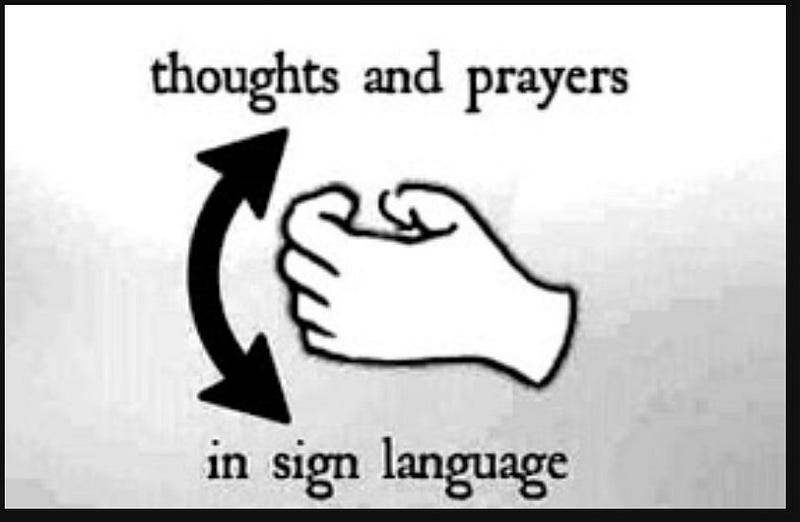
All of this is done because they “can’t get any” when it comes to what HTML is, what CSS is for, how to use either properly. It’s as I wrote in my little hit piece, where the people who create idiocy like Bootstrap, Tailwind, W3.css, and nearly every other HTML/CSS front-end system flat out do not care about speed or ease of development, server load, server-side complexity, sustainability, maintainability, page load times, caching, pre-caching, parallelism, accessibility, search, or any other meaningful metric of the quality of a website.
Which is why the claims that all those systems and broken approaches provide those very things makes them fraudulent.