
Utah: Up Close and Personal
Finding beauty in small discoveries.
Utah is known for its vast deserts, awe-inspiring arches, and sculpted canyons. The basins stretch on for miles, and majestic cliffs call to adventure-seekers from around the globe. But, for me, sometimes it’s better to get look down, get closer and think smaller. To explore the spectacular world of tiny and curious things. Small delights.
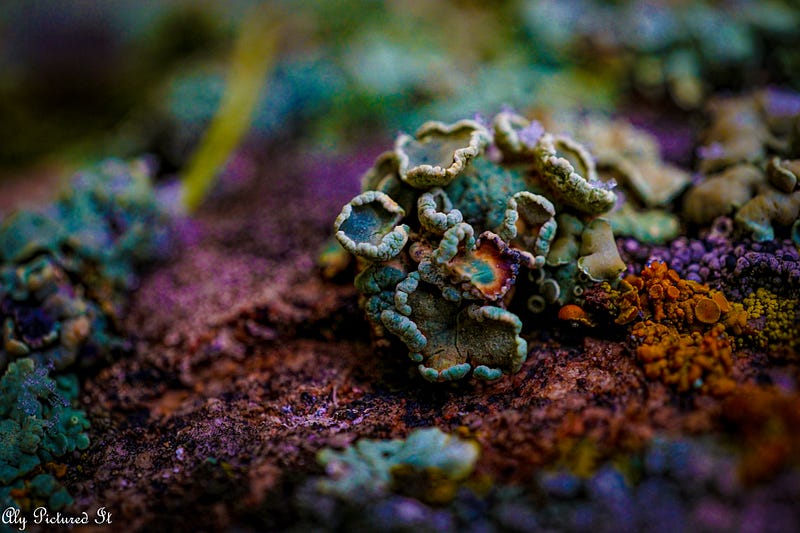
Textured lichen. These colorful and peculiar life forms flourish on sandy boulders, adding vibrance to a subdued landscape. Composite lifeforms — algae or cyanobacteria grow safely in the filaments of friendly fungi. A unique, symbiotic partnership. A one-of-a-kind organism.
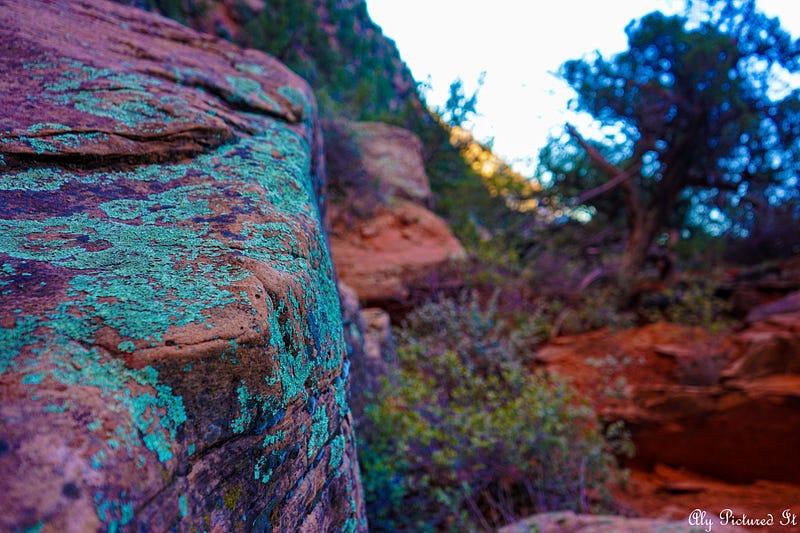
Lichen can be found in an astonishing number of places; the hardy fungus protects the more fragile alga, allowing it to thrive almost anywhere. Deserts, rainforests and even tundra. Lichen can grow on the bark of trees or adorn soil crust. Some may find their home on cold tombstones that line quiet graveyards.
Lichen also fixes nitrogen to the soil, converts Co2 in the air into oxygen, and can be used to evaluate local pollutants, as they readily absorb contaminants, like heavy metals, in their environment.
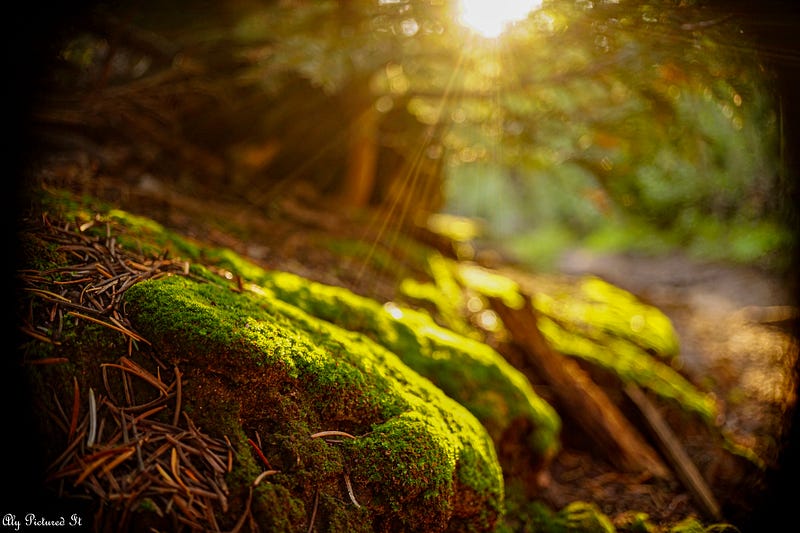
As I wander through the forest, the earthy aroma of mosses and mushrooms fill my senses. Pine needles crunch under my feet. Dense, green mats of moss line the trail, while sunlight filters through the trees, embracing them in a warm glow. With chloroplasts situated throughout their bodies, they can photosynthesize from all sides. Producing their own nutrients from rays of soft light.
Often mistaken for lichen, mosses grow in similar environments, and the two organisms are often found right next to each other. Both unique and beautiful. These primitive plants are often found in damp or shady places. Near a burbling creek. Beneath a grove of pines. Exuberant.
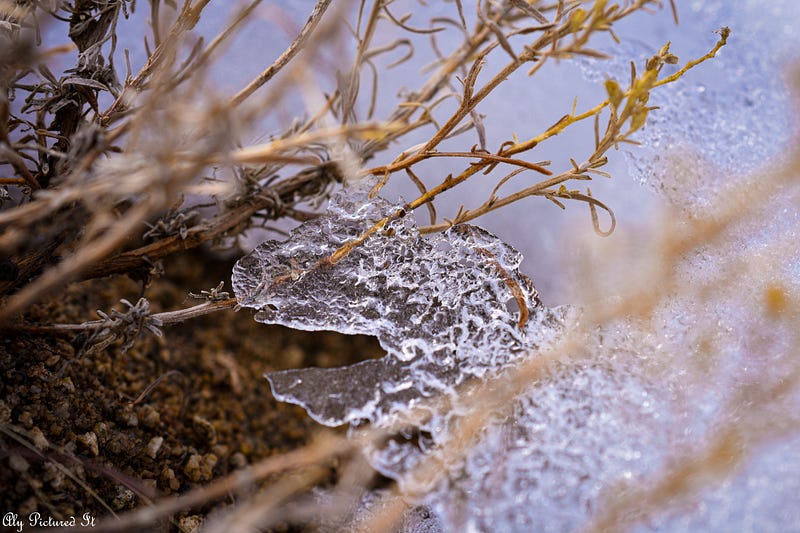
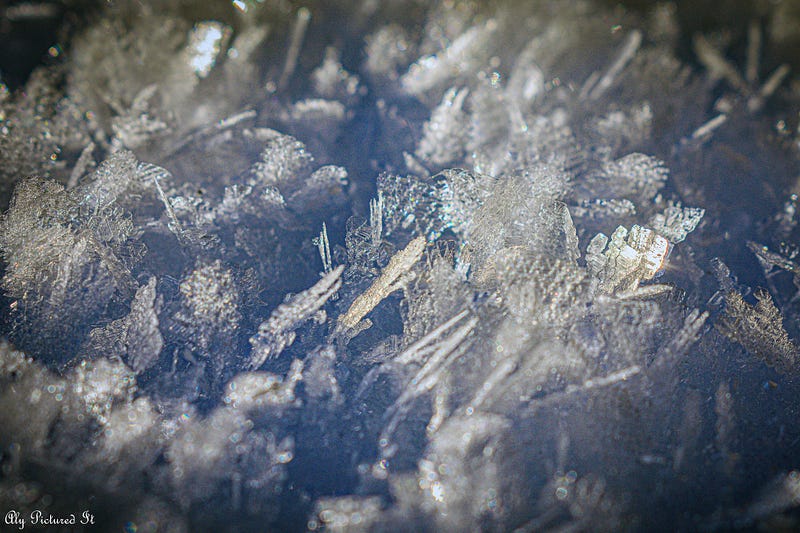
In the winter, dried foliage breaks through its icy covering. It’s too cold for growth just yet, but it’s also too warm for snow. It doesn’t last long in the valleys. It’s melting.
Getting closer, I see the intricate detail of the snowflakes, shining and fragile. The hexagonal flakes appear white because of their minuscule surface; light scatters in all directions and can’t be reflected or absorbed.
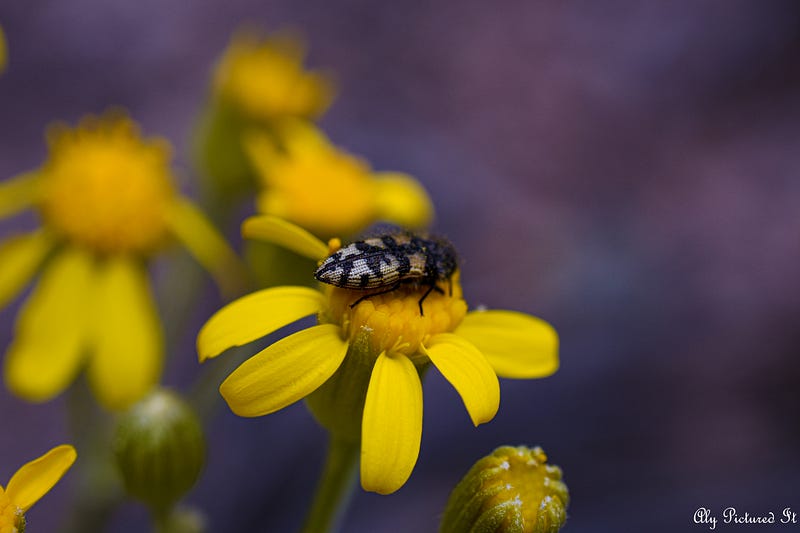
In spring, a luminescent jewel beetle makes its way to the top of a yellow flower. Its exoskeleton exemplifies “structural coloration.” Like, a CD, Its microscopic structure is textured and reflects light in specific frequencies. It glitters.
Their larva feed on dead or dying trees, and some species cause significant damage to plant life. Adult beetles prefer nectar, leaves, and other plant matter. It’s not afraid as I approach its floral throne. I watch quietly as it moves from blossom to blossom.
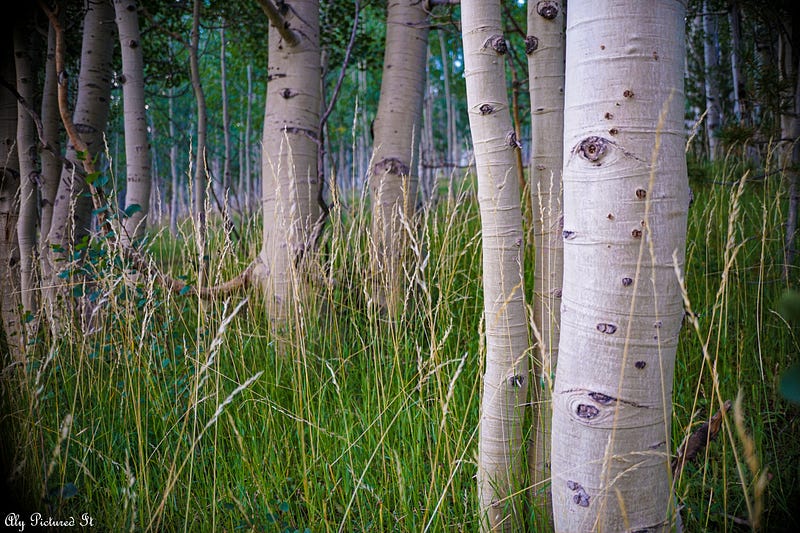
When the warm winds of summer blow through the mountains, tall grasses sway between the trunks of quaking aspens. Mysterious eyes watch me from mottled bark. Vigilant and perceptive.
The towering trees are one, as many clones sprout from a single root system. A trembling giant. A singular entity — older than history. Ancient.
True to their name, their leaves quiver, and quake in the breeze. Their leaves have a broad shape and long, delicate stems, and thus, are dramatically noisy. Fluttering.
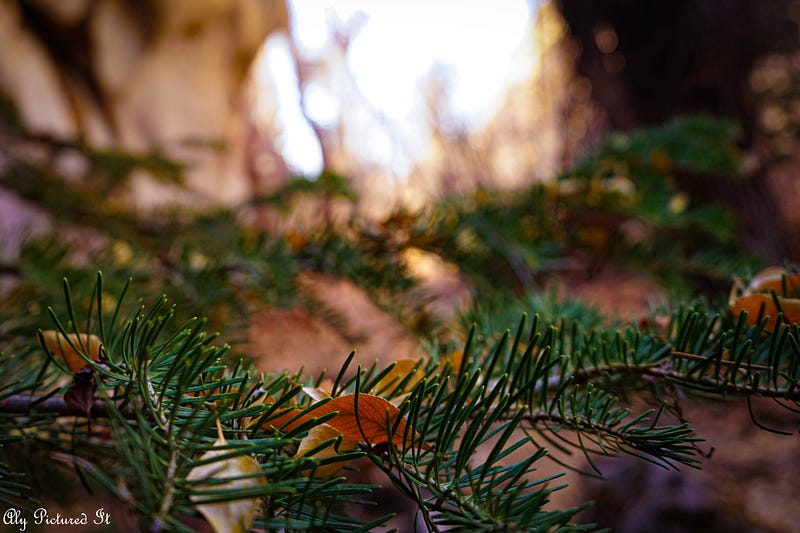
As temperatures cool, the leaves change from green to crimson, orange, and yellow; they fall from their branches. Under golden sunlight and shivering trees, I watch them. An evergreen catches the leaves in its bough. Like a cradle. So gentle.
Standing in a gulch of carved and patterned walls, hidden in expansive high desert terrain, I gaze at the small wonders before me. It is a pleasure to get to know you, Utah. Up close and personal.
Thanks for reading! If you’ve enjoyed this piece, you might also like:
Get yourself a Medium membership here to support me and read more from other writers! You can also buy me a coffee.