
Using extreme research to predict extreme outcomes
TLDR: The world is changing and the successful companies of tomorrow will look very different to those of a month ago. In this post I use “extreme user research” with artists around the world to show what we can learn about the full time live/work existence in a world that is not (yet) set up for it, and what opportunities it might bring for Experience Designers.
*******
Right now we are experiencing an existential threat, and most of us can only watch with great sadness the increasing illness and death rates from Covid-19 around the world.
Simultaneously we have to live with the more mundane reality; that those of us lucky enough to still be well, and to still be in work, have to work — albeit from the “comfort” of our home environments.
For the moment, this is a novelty. Zoom meeting games, fake backgrounds, top tips on working from home and trying not to read Twitter too often because frankly it is terrifying (how can one possibly finish a UX strategy or prototype when the world is falling apart?).
But at some point, possibly in the next 2 weeks, this is going to become the status quo and what seems like a temporary situation of housebound existence becomes reality. And if you read the latest reports, we’ll be living this way for some time to come — or at least the rate of home working will increase to a level where it’s a viable “normal” option for all.
So, what if we apply our Experience Design chops to the new working-from-home-all-the-time world order, what could become our new priorities as users of the home environment?
Extreme users: let the artists lead the way
One of my favourite research methods involves working with extreme users.
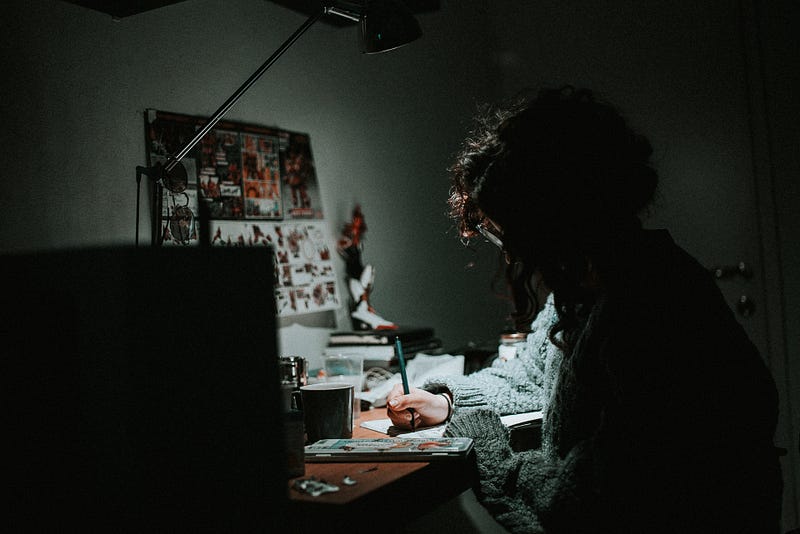
So for now, I’m taking a lead from those people whose live/work lives are already outside of the traditionally accepted “norm”. Those who until very recently would have been considered extreme users of the live/work space.
Let’s talk about artists. And let’s talk to them.
Disclosure: Luckily I already live in the half-world between artists and corporate bods, so I have access to both sides. Often in conversations, I find neither of them can quite believe how the other has chosen to live, or that it is considered “normal”.
Some “extreme user” research findings
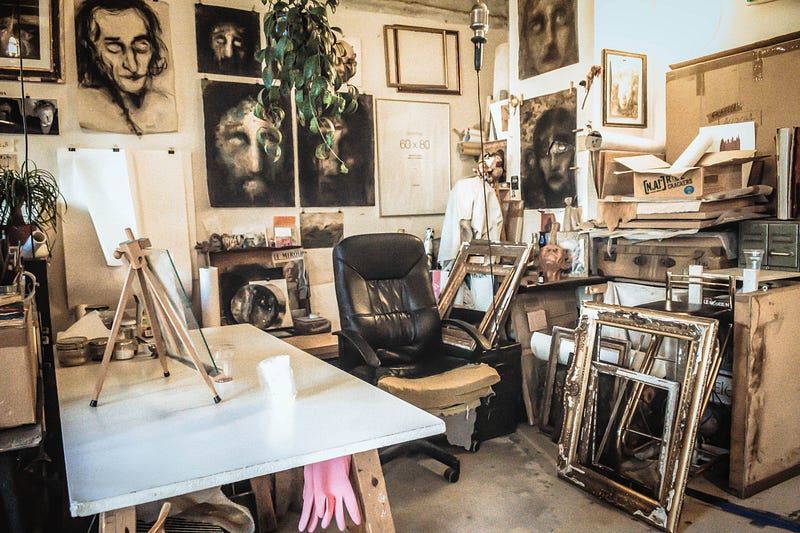
Over the last few years many artists have been priced out of rented studios, and moved their studio spaces into their home or living space on a full time basis.
They experience many scenarios which are rapidly becoming familiar to those of us who have recently taken up enforced home working.
- They are based primarily at home for both general life (sleep, eat, bathe, relax) and their work (art practice)
- They have two different sets of needs for those two modes of being
- They work hard on many projects simultaneously and can’t “put everything away” to work on something else
- They work both independently and with others, but often don’t see the same group of people every day
- They often have family around them who need Things
- They are time-poor
- They would rather spend more time doing work than doing admin or meetings.

I’ve spoken to artists around the world for many years and more recently I have focused those conversations around the parallels between their usual day-to-day reality, and what the rest of society is facing into now.
Here are the things that these chaps think about and prioritise day-to-day.
1. Housing
- How much space can I afford to rent/buy within my income?
- How can I best carve up that space to fit X number of art studios or working areas as well as sleeping, food and relaxation?
- How can I adapt or convert this space to meet my needs (and in the case of renting, convert it back)?
- How much storage, light and ventilation can I get?
- How can I get the feeling of the outside, inside, when you don’t have a garden?
2. Furniture
- What can I buy, borrow or upcycle that fits my needs?
- How can I use furniture to improve or increase the storage and utility of my space?
- Can I get anything from IKEA that I can carve apart and reconstruct to meet my unique needs?
- How can I have different areas for different types of work — laptop vs drawing vs a wall to hang things on?
3. Clothing
- How can I maintain a wardrobe that is the minimum fuss, as I don’t go into an office every day?
- How can I buy things without having to spend lots of time in shops?
- What can I get that I can use for working and being on video chat?
4. Wifi & tech
- What kind of wifi do I need for video calls without paying for a super-fast expensive connection?
- Can I work on wifi while someone else is watching Netflix?
- What kind of laptop/computer do I need to run
? - What kind of space will I need for my computer-based desk set up?
5. Utilities
- How can I keep fuel costs down when I’m home all the time?
6. Food
- What is the easiest, cheapest, healthiest food to keep and store?
- What are the shops in the local area that I can get to in the shortest time?
- What services will deliver food to me at home and actually be reliable?
7. Exercise
- How can I find time for exercise at home or in my immediate area?
- If I do take time out, how can I maximise that time? (for myself and for others I live with)
- How can I keep my diet healthy as well as convenient?
8. Brain & Soul
- How can I remain engaged in the world when I don’t have a team or a company of people?
- Where can I get my inspiration?
- How do I navigate the differences between my inner and outer world, and the world and people outside of my space?
- How can I best manage my own and my family’s time?
- How do I stop myself becoming.. a bit weird?
Many of these things that I’ve heard about as “normal” concerns among artists for years are now becoming a focus for people whose reality been a traditional home/work split.
In fact, over the years I’ve had conversations with people who work in offices who can’t begin to contemplate the reality of someone who lives and works in the same space, maximising every inch as storage or working area and who doesn’t own any clothes that aren’t spattered in paint or ink.
I think this is a direction of travel worth considering as a thought experiment, in case it’s where we’re all heading. And what will become of the companies, services and products that served us in our old life?

Human behaviour drives commercial success
Long gone are the days where the brand tells the consumer what they want, and they are not coming back any time soon. Hurrah.
Now the brands have to work out what the users need, and how best to service their needs — or they (the users) will crack on and do it for themselves. From the comfort of their own homes.
So let’s consider how different the commercial and service landscape and the opportunities that could emerge as a result of the priorities outlined above.
1. Housing
- Live/work spaces that are marketed and described for live/work lifestyles
- Fewer descriptions of square metres, more focus on cubic.
2. Furniture
- Special home/office furniture ranges
- An increase in specialist as well as user-generated websites like ikeahackers.net
3. Clothing
- An increase in low-fuss clothing subscription services
- An opportunity to redefine the meaning of personal style
4. Wifi & tech
- Home/office broadband packages that might include separate networks for work and home
5. Utilities
- Home/office fuel packages
- Sustainable solutions that require minimal user effort
- Connected homes that allow users to move intuitively between “live” needs and “work” needs and spaces
6. Food
- An increase in demand for food delivery services (which we saw immediately, perfectly in line with Maslow’s hierarchy of needs)
- More convenience-based meal services
7. Exercise
- Increased competition between fitness apps
- Opportunities for brands who offer performance, data or equipment-based subscriptions with real added value
8. Brain & Soul
- More opportunities for diversity or unity of wellness apps
- Increased tracking of health behaviours
- More ways to automate the mundane, thus enabling people to focus on their human connections
- Opportunities for alternatives to either online training, news reports or social media as mental stimulation
A new world order (of experience design)
And none of the above take into account the additional scenario of not actually being able to leave the house while working from home, which takes us into a whole new territory!
There are so many more possibilities that I could imagine now and still miss the millions of both large and small changes and opportunities that are coming our way. Truly we live in interesting times.
However all of these, and no doubt more I’ve not even thought of will be either new businesses and start ups born out of peoples’ previous careers, or potentially a few brave bigger brands who are ready and able to adapt more quickly.
Either way, digital platforms and multi channel connected journeys will be central to the delivery of these services.
The future will be different, but it will be an experience that needs to be designed. How will our methods and practices have to evolve to support this?
If you found this useful, consider subscribing for free to get email alerts when I post new articles, or you can join Medium for full access to my article archive, plus everything else on Medium.