
Using CRUD for User Story Composition
How the CRUD method can kick start the process of creating user stories
This article is a follow up from the Writing Better User Stories article I wrote. As a result, I wanted to share the idea of using a simple technique to kick start the process of writing user stories.
What is the CRUD method?
CRUD stands for Create, Read, Update and Delete. These are typical functional operations users can perform in a software system.
The CRUD method can be a useful reminder on what you need to cover when writing user stories.
As with all things Agile related, it is all about the user. The CRUD method helps simplify the challenge of capturing requirements and conveying them in the user story format.
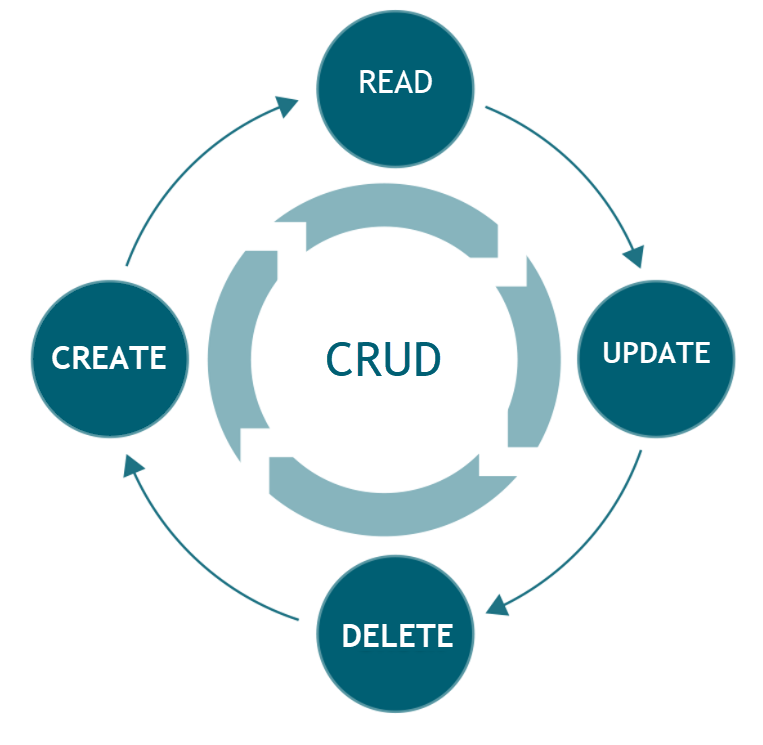
The CRUD method covers most of the user story requirements users do to perform management-based tasks in a software system.
When can I use the CRUD method?
CRUD is a go-to technique if you are stuck writing a user story, or when writing from scratch.
You may have some idea of what user stories you are going to use, or you may have some captured already but need to be broken down further. For instance, a list of tasks that have the term ‘manage’ to cover what the user or operator needs to do in your product or software system.
This could be as simple as completing a transaction, creating and saving data. Something to describe a list of tasks or operations the user needs to do.
Using the CRUD method can break these tasks down into something more meaningful.
CRUD examples
So, what would that look like in a typical scenario? As I mentioned earlier, you may have an original story already:
“As an online shopper, I want to manage my user profile so that I can view and update my account details and settings”
Or it could be some notes gathered:
Online shoppers need to be able to manage their own user profiles (view, update account details, settings etc.).
Using the CRUD method, you can break down user requirements into four different user stories by considering the Create, Read, Update and Delete operations. This example could look like this after you have used the CRUD method:
- As an online shopper, I want to create an account so that I can make online purchases.
- As an online shopper, I want to view my account details.
- As an online shopper, I want to update my account details so that I can stay relevant and ensure my order is delivered to the right location.
- As an online shopper, I want to cancel my account so that I…
And so on, you now have four more user stories than you did before.
Benefits of using the CRUD method
The CRUD method is very useful to kick start gathering user story requirements. For instance, if your project has no product owner, or they are simply not available, other team members in the project can kick start with confidence using the CRUD method.

Anyone can do it, no matter if you are a developer, scrum master or stakeholder. It is a great way to start composing and decomposing user stories to get coverage and gain insights of what the project will look like.
It also complements other aspects such as working with the product owner to gather business requirements and breaking down the actual workflow for further user story analysis.
CRUD is just a start
As I mentioned above, product owners will still have more refined and business-focused requirements to capture and consider.
This is because a story represents a complete piece of value, chances are that multiple people will need to do a variety of tasks to complete it. However, the CRUD method will kick start the process because it is a great way to get everyone involved.
Other variants of the CRUD method
To increase coverage, you can also consider other simple and useful variants of the CRUD method, such as:
- BREAD (Browse, Read, Edit, Add, Delete)
- DAVE (Delete, Add, View, Edit)
- CRAP (Create, Replicate, Append, Process)
You can use any of these variants in the same way as the CRUD method example. All these CRUD variants provide an effective kick-start to ensure your project has the scope and requirements captured in a meaningful way.
Something that anyone can quickly pick up and contribute collaboratively, and after all that is what Agile is all about.
See also…
If you are a Scrum master wanting more audio content, check out my special audio talks:
Interested in more of my content?
I have some new books out for you to read. Click below to find out more:
Or check out more of my blog articles here on Agile | Adapt.


