
CHATGPT | CONTENT CREATION | DANGERS
Using ChatGPT To Write Your Articles Requires Bad Taste, Lack Of Talent And Treachery.
Your growth as a writer stops the moment you copy-paste content from ChatGPT as your own.
Good writers have three Ts in their content: taste, talent and truthfulness.
And these Ts can go wrong — horribly or just boringly.
You can read a dull article that you forget the moment you have read it, but it can tick all grammar, punctuation and spelling boxes.
You can also read a story by a talented and skilful writer whose content is so all over the place that you don’t understand where it is going or where it came from, but it is fun to read and pleasant to forget.
And then there are writers with excellent taste, talent, and skill but who you cannot trust. Their writing is annoyingly brilliant but in a dangerous way. Joseph Göbbels is the godfather of these writers.
In this article, I add to the mix ChatGPT and give my view based on these three Ts and their relationship to AI-generated content.
Taste
Good taste is subjective, but even if you don’t like J.K. Rowling’s style, you cannot deny her excellent taste. Whether you like Harry Potter or not, you still must agree that she has written a consistent and coherent story using her sentences with rich vocabulary and good grammar.
The dictionary says about taste:
Taste [mass noun] is the ability to discern what is of good quality or of a high aesthetic standard.
It can be subjective, but quality and aesthetic standards are the key. Quality comes from writing sentences that carry meaning in a clear, consistent and comprehensive way. Aesthetics are personal choices and style decisions — the writer’s voice if you like.
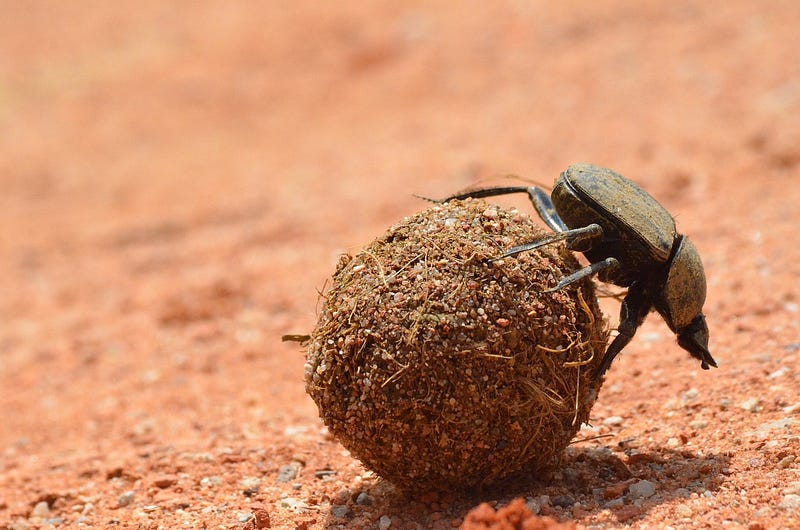
If you are clever but lack taste, you jump to ChatGPT, and voila, you have a story written consistently and comprehensively with good grammar, spelling and punctuation. But because you don’t have more taste than a Dung beetle, you just push forward a ball of shit that comes from the algorithmic arse.
I have not seen any ChatGPT-generated original stories with a personal touch, i.e. with the mystical writer’s voice. Instead, I have read dozens of half-baked blah-blah that look at first glance OK, but when you read, you smell the rat — or that proverbial rear of the algorithm.
Every aspirational self-help writer and pseudo-scientist seems to have dug themself into the ChatGPT rabbit hole.
Takeaway: Don’t be one of those tasteless charlatans. Write from your heart, use your brain, edit your story — and then use Grammarly to iron out the shit.
Talent
In the excellent animated Pixar movie, Ratatouille, the ghost of the deceased master chef says to the talented rat, Remy, “everybody can cook, but only the fearless can be great”.
Online writing does not require talent but some writing skills.
There are dozens of successful online writers who have this basic level of writing skills but still make money. And rightfully so. You only need to have a decent vocabulary and some understanding of the grammar and spelling, and off you go.
And to develop your talent, you must first learn the skill, the craft of writing. Everybody can do that.
And if you consciously refine your talent, it makes the journey fun for the readers because they can identify your style, peculiarities and thinking behind the sentences. They see growth in you and deeper meaning in your stories — they see the true you lurking in between the lines with messages, meaning and magnificent potential.
Talent only grows if you are unafraid to hunt your blind spots and false assumptions and constantly doubt every sentence you write. It is the work of a masochist, but orgastic all the same. It’s like swimming in a river of flames until you burn, and the moment you think you cannot do it anymore but burn to death, the flow takes you to heaven.
In the musical Hamilton, George Washington raps to the young, scrappy and hungry Hamilton, “dying is easy, living is harder”.
Being talented is easy, and making it mean something to others is harder. If you are honest with yourself, the moment your fingers hit the keyboard, your talent dies and the hard work of making your meaning alive starts. You write to somebody now — and don’t masturbate with the keyboard anymore.
Your talent grows by rebirth. Every story you write kills it, and you are reborn as a writer whenever you press the ‘publish’ button. Phoenix starts to sing every time your story flies to catch some eyeballs.
ChatGPT writers deny this transformation, and their talent never grows, takes off and soars. The only talent in ChatGPT is the developers’ talent, but it is just harvesting something already there from the billions of bytes. It will not bring your talent to the surface because ChatGPT cannot scan your lived life experience and thoughts about them.
Takeaway: Don’t let ChatGPT (or any AI) block your growth, even if it is tempting to think it gives you an upper hand and a shortcut to money, fame and fabulous life. It won’t do that. It gives you a short dopamine kick, but it’s like a drug: it kills your talent, creativity and potential — you become addicted to it, and when you need to create something on your own, nothing comes out. Hollow life and shallow thinking are the results of the whole ChatGPT. After a few stories, people see through and don’t find you lurking between the lines because there is nothing. ChatGPT has made you a nobody.
Treachery
Honesty is the path to good writing. Honesty means you don’t want bullshit readers with irrelevant information, no factual base, or misleading messages.
Honesty also means that you don’t fool yourself.
You need to be able to stand for your sentences. It is a life sentence (pun intended, but lame).
James Owen said in an article by Verdict:
“The main concern is that, due to their reliance on large, often biased datasets, chatbots can often give inaccurate or even dangerous answers to questions, and as AI continues to become more advanced and widely used this risk increases.”
It is dangerous if a writer copies content from ChatGPT and is not fully informed of where the sources of that content really are. We have already seen examples of fake or non-existing research reports that ChatGPT has parsed together (maybe in good algorithmic faith).
In the Verdict’s article, Google’s vice president Prabhakar Raghavan says, “This kind of artificial intelligence we’re talking about right now can sometimes lead to something we call hallucination. This then expresses itself in such a way that a machine provides a convincing but completely made-up answer”.
Hallucination is a good metaphor for the treachery that is implicit in any AI-generated content. Stretching the metaphor, we could say that if Google is to the content, like a shovel to dirt, AI is to the truth like the rope is to the hangman. Who is the judge, and where did the verdict come? Nobody knows, but the artificial Albert Pierrepoint does his job well. Soon we are all hallucinating, and nobody asks, “is this really so?”
Takeaway: Don’t hallucinate with the ChatGPT. It might be the LSD of the internet, but don’t let it ruin your judgement. Check and double-check your sources, whatever ChatGPT spits at you. What you see as a gem from the Edge might be a cyanide capsule from the authoritarian government. Lucy in the sky might be with the diamonds, but your readers deserve stories they can trust, not mental cyanide.
Where to use ChatGPT — or not use it at all?
I am not against AI or ChatGPT. I use them all the time. But I use them based on my judgement, creative thinking and the messages I want to convey.
Think first, source material, then create content without copy-pasting anything you have not checked.
It is easy to use uncle-Google to search, and it is even easier to do it with ChatGPT, but after the harvest of some resources, double-checking the sources and organising your thoughts, you need to be the creator, not the ChatGPT.
With the creator, I mean someone using their taste, talent and truth to create something ChatGPT cannot do: imagining a new view or perspective using reliable information and personal wisdom, creativity and intelligence.
Grow your talent, develop your taste and be truthful. On that journey, AI can assist, but it is like fire: only a good servant but a very dangerous master. So, don’t burn your reputation by becoming a Dung beetle of AI shit.
Join my newsletter below and get a complimentary copy of my book Content Carousel for better digital communication. It’s about digital media and how to communicate with different media elements.