avatarBen Callif

Free AI web copilot to create summaries, insights and extended knowledge, download it at here

5698

Abstract

eurons quickly <a href="https://www.nature.com/articles/nature02661">lose the expression of genes related to synaptic plasticity</a>. This means that brain cells become less flexible over time, which is why neural connections are more easily rewired early in life. Learning a second language is probably the most famous example of these diminishing cognitive returns — a 5-year-old can learn a new language with barely any effort, while a 30-year-old can spend years of dedicated study without achieving fluency (which is how I justify my lack of motivation for becoming bilingual). The older we get, the harder it becomes for our neurons to adjust to change, and this principle applies broadly to all kinds of learning. My favorite example of this is the <a href="https://www.youtube.com/watch?v=MFzDaBzBlL0">backwards bicycle</a>, a video well worth watching.</p><figure id="1407"><img src="https://cdn-images-1.readmedium.com/v2/resize:fit:800/0*q3HuiD46OI-Fp3M4.jpg"><figcaption>Ease of language acquisition falls off a steep cliff right before puberty. This increasing difficulty shows how quickly our brains lose plasticity as we age. Image Credit: <a href="https://www.ncbi.nlm.nih.gov/pmc/articles/PMC2947444/">Brain Mechanisms in Early Language Acquisition</a></figcaption></figure><p id="4161">It may seem inconvenient, but it’s a good thing that our brains lose plasticity over time. There’s a maxim in biology that structure=function and brain cells are no exception — they process and store information through the creation and maintenance of <a href="https://readmedium.com/youve-been-misled-about-action-potentials-4229a1fe956d">physical structure</a> like all cells. This means that serious problems occur when said structure is disrupted. Traumatic brain injury is an obvious example of this, and the effects can be devastating. Although our brains need to change for us to learn and grow, we don’t want them to change <i>too </i>much — everything from <a href="https://www.sciencedirect.com/science/article/abs/pii/S0149763402000039">dexterity</a> to <a href="https://journals.plos.org/plosone/article/file?type=printable&amp;id=10.1371/journal.pone.0096485">memory</a> to <a href="https://www.archives-pmr.org/article/S0003-9993(14)01014-4/pdf">personality</a> is wrapped up in the specific folds and grooves of the brain.</p><p id="7000">Stability in the structure of the brain has its advantages, but it also restricts the possibility of rewiring after an injury occurs. This means that nerve cells in the spine cannot repair themselves if they are severed completely, and this makes severe spinal cord injuries incurable. However, spinal cord injury survivors can fully recovery if the damage is mild. This may occur partly because any remaining nerves can take over the lost functions. But, it also seems like the nerves in the spinal cord retain some of the growth ability that they had during development.</p><figure id="0f93"><img src="https://cdn-images-1.readmedium.com/v2/resize:fit:800/1*pXDKqzZ_qSGQ2zcpX_L56Q.png"><figcaption>The graph (left) shows how far individual neurons of different ages can grow, from embryonic day 17 (E17) to postnatal day 11 (P11). The images (right) show two different neurons, one older (P8) and one younger (E20). Notice how much longer the young cell gets over the same period of time. Source: <a href="https://science.sciencemag.org/content/296/5574/1860">Goldberg et al., 2002</a></figcaption></figure><p id="ed81">To frame this another way, our spinal nerves never completely lose the capacity for regeneration. Like many bodily functions, their ability to grow simply diminishes as we age. This is observable in the correlation between age and <a href="https://content.iospress.com/articles/neurorehabilitation/nre00018">spinal cord injury recovery rates</a> — the older we get, the less likely we are to recover from a spinal cord injury. And this idea is borne out through <i>in vitro</i> experiments that show a decline in growth ability as neurons develop. The promise of regaining our regenerative abilities drove my mentor to formulate a hypothesis: if we could use genetic engineering to revert spinal cord neurons to a more youthful state, then perhaps they could regrow following a spinal cord injury.</p><h1 id="3264">Reactivating Regeneration</h1><p id="b78b">Regrowing severed nerves is a very straightforward cure for spinal cord injury. But there’s just one complication: the genetic expression networks that drive development and cellular function are incredibly complex and multifaceted. How can we know which genes to turn off and on to achieve the desired outcome? It’s like we’re in a room with 10,000 dimmer switches and only a handful affect the lights, while the rest control all sorts of unknown functions. It’s clearly better to gather some clues before we start flipping switches willy-nilly… But where to start?</p><p id="fc62">Being a rigorous and efficient scientist, my mentor decided to go as big and broad as he possibly could through a process known as high content screening. To start, he created a list of every gene that changes expression over the course of a neuron’s development. Then, he used genetic editing techniques to overexpress each of these genes in millions of individual neurons. Using a specialized microscope and imaging algorithms, he measured how the expression of each gene affected the growth of the neuronal processes (known as neurites).</p><figure id="c52f"><img src="https://cdn-images-1.readmedium.com/v2/resize:fit:800/1*yapqzuY3CsZ6sD-kcZgS-g.png"><figcaption>The results of a high content neurite outgrowth screen in which hundreds of genes were overexpressed in cultu

Options

red neurons. The upper bar graph shows genes that are downregulated as the neurons grow older, and you can see that several of them enhance growth when overexpressed. The lower bar graph shows genes that are upregulated as the neurons grow older, and you can see that quite a few of them inhibit growth when overexpressed. In the upper right corner, you can see the imaging view that the algorithm uses to traces the neurites through the microscope.</figcaption></figure><p id="23ba">The results of this experiment showed two distinct and interesting things: 1) genes that decrease their expression during development tend to enhance neuron growth when overexpressed, and 2) genes that increase their expression during development tend to inhibit neuron growth when overexpressed. In other words, as neurons age they turn off genes that make them grow and simultaneously turn on genes that make them stop growing. I liken this process to taking your foot off the gas and putting it on the brake. This in of itself is not surprising, but it does provide a starting point to validate the hypothesis; perhaps spinal cord nerves could regenerate if they reactivate the growth genes that turn off naturally as they age, like the molecular biology version of the fountain of youth.</p><h1 id="3751">Causing Cancer On Purpose</h1><p id="f7b4">Unfortunately, the fountain of youth doesn’t work in reality. The genes from the high content screen had very little effect when transferred from cell culture to an animal model. The theory was sound, but biology is far more complex than we give it credit for (side note: this is why clinical trials are absolutely vital for vaccine development). So he was back to the drawing board. This was right around the time that I joined the lab, and my first order of business was to start from square one with a new high content screen. This time, we took a different approach. Instead of trying to dip the neurons in a proverbial fountain of youth, we decided to try and give them cancer.</p><p id="ec60">This might sound crazy at first glance, but neurons can’t actually become malignant cancers like other cell types. Although brain tumors are incredibly deadly and serious they are caused by <a href="https://readmedium.com/youve-been-misled-about-myelin-d6238691704b">glial cells</a>, not neurons. As discussed above, cancerous tumors form when mutations cause runaway cell division. But neurons are special kinds of cells that don’t divide because they are postmitotic, also known as terminally differentiated. Therefore, <b>a neuron cannot technically be the cause of a cancerous tumor.</b></p><figure id="0c16"><img src="https://cdn-images-1.readmedium.com/v2/resize:fit:800/1*BtrB16pDxI5eKOKmRqdaYw.png"><figcaption>Genetic mutations can cause mitotic cells to continue dividing pathologically until they form a tumor. However, the same mutations in postmitotic neurons don’t cause cancer, because neurons don’t divide. Instead, we theorized that these cancer-causing mutations would enhance neuron regeneration.</figcaption></figure><p id="adb5">So, we theorized that cancer-related genes might affect neuronal growth in the same way as developmentally regulated genes. Specifically, that inducing a cancer-like state in a neuron might give it the capacity to regenerate. As I stated earlier in this article,<b> </b>strong regenerative ability and a high risk of cancer are tightly linked — more regeneration means more cancer. Perhaps the reverse correlation holds true as well, that <b>cancer can be leveraged to enhance regeneration.</b></p><p id="02dc">Based on this theory, I performed my own high content screen with genes that are often mutated in cancers. As predicted, this screen turned up nearly a dozen possible leads — a promising hit rate. But with every success comes a new challenge. In this case, we lacked the tools to thoroughly test these cancer-inducing genes for their impact on neuronal growth. Our screens relied on <i>overexpression</i>, but cancer-related genes are often <i>underexpressed </i>(or<i> </i>undergo loss-of-function mutations)<i> </i>in tumors cells. We needed a way to disrupt the expression of many of these genes, which is a much more difficult task than simply adding more of a gene. This led me to write my thesis about the use of CRISPR for knockout screening in neurons. But that may be the topic of another article…</p><h1 id="f7c0">From Cancer To The Future</h1><p id="277c">It remains to be seen if cancer-like gene expression can induce the kind of regeneration necessary to cure spinal cord injury. There are some <a href="https://www.biorxiv.org/content/10.1101/546374v1.abstract">encouraging initial results</a> that suggest it could be useful in coordination with other techniques. To me, the more fascinating applications arise from thinking about the far future of this technology. As a disclaimer, I don’t think that genetic editing (particularly CRISPR) is ready for use in humans. But I like to imagine a time when cancer-related <a href="https://readmedium.com/epigenetics-a31319dc10a8">epigenetics</a> could be manipulated to improve our bodies’ capacity for regeneration or to induce synaptic plasticity that enhances our learning abilities.</p><p id="20db">There isn’t any real closure to the story at this point in time, but it gives me hope to know that there are dedicated, brilliant people working to solve some of the world’s toughest problems. Although my mentor’s mom died before he could help her, he continues to work towards his goal. And so many people who suffer from this lifelong disability stand to benefit from his results. I know that his mom would be proud.</p></article></body>

Using Cancer To Cure Spinal Cord Injury

Can unrestricted cell growth help our neurons regenerate after traumatic damage?

Image Credit: pxfuel

As a graduate student, I chose a mentor who was very passionate about curing spinal cord injury. He had been in a terrible car accident when he was a kid in which he was thrown from the car, miraculously unharmed. The rest of his family wasn’t so lucky — his sister was killed and his mom was permanently crippled. From that day forward he made it his life’s mission to cure his mother’s impairment. He became a world-class researcher, dedicated to understanding the molecular mechanisms of spinal cord regeneration.

He wanted to discover everything about the way that brain cells grow because he thought that this knowledge could help to reverse the damage that occurs when nerves are injured. His mother died years before I met him, but that did not dull his drive to help others like her. I chose to join his lab even though I had never thought twice about spinal cord injury before. I wanted to work with him partly because of his passion and dedication, but mostly, because he has fascinating and unique ideas. One of his working theories is that cancer can cure spinal cord injury. Let me explain.

Regeneration to Cancer

When grabbed by a predator lizards have a strange a defense mechanism: their tail pops off while the rest of the lizard runs off safe and (mostly) sound. Later, the lizard will regrow its tail like nothing ever happened. Image PetMD

Human bodies have some self-healing capabilities, but we aren’t very good at regenerating our tissues. For this reason, scientists have started to look at the genetics of other animals to see if we can enhance our healing abilities by mimicking the evolutionary designs found in nature — if we were more like lizards we could regenerate amputated limbs, and if we were more like zebrafish we could heal a broken heart (literally).

Unfortunately, our body’s molecular genetics aren’t up to the task of repairing vital damage. When we lose a limb it’s gone for good, and when we damage our heart not much can be done to fix it (RIP Steve Irwin). We’re not hopelessly fragile though — some of our tissues are capable of recovering from injuries. For example, a cut on your skin will fix itself in a timely fashion, because skin cells are constantly being replenished through mitosis (cellular division). But this constant replenishment comes with a cost: a high risk of cancer.

Indeed, skin cancer accounts for ~40% of all tumors, making it the most common form of cancer in the world. This is because cancer is a form of unrestricted cell division, and skin cells divide a lot. Cancer occurs when a cell cannot stop dividing because the quality control mechanisms of mitosis have gone awry. Major errors in mitosis are relatively rare, occurring only 2% of the time. It might not sound so bad for a cell to have a 2% chance of failing at mitosis, but let’s consider that skin cells divide approximately once a day.

One of the most powerful principles my mentor taught me is that small error rates add up quickly through repeated iteration. If a skin cell has a 2% chance of failure each day, that error rate will compound with each day that passes (over n trials, the chances of every mitosis event being successful is represented by this equation: (1–0.02)^n). Statistically speaking, there’s a 13% chance that a cell will make an error during one of its seven mitotic cycles during a week. Over the course of a year, the probability of an error rises to 99.9%. It’s a good thing that mistakes in mitosis don’t necessarily lead to tumors and tumors don’t necessarily lead to cancer, because we’d probably all be dead by now.

The upshot is that strong regenerative ability and a high risk of cancer are tightly linked — more regeneration means more cancer. We can see this in certain lizards that have evolved specialized anti-cancer mechanisms to offset the risks of their extreme regenerative capacity. Apparently, the evolutionary trade-off wasn’t worth it for our species, so we can’t regenerate whole limbs or heal a broken heart. At least, not with the genetic mechanisms we were born with…

Regeneration in the Brain

Our relative lack of biological regeneration shows up most acutely in the brain. As we age, our neurons quickly lose the expression of genes related to synaptic plasticity. This means that brain cells become less flexible over time, which is why neural connections are more easily rewired early in life. Learning a second language is probably the most famous example of these diminishing cognitive returns — a 5-year-old can learn a new language with barely any effort, while a 30-year-old can spend years of dedicated study without achieving fluency (which is how I justify my lack of motivation for becoming bilingual). The older we get, the harder it becomes for our neurons to adjust to change, and this principle applies broadly to all kinds of learning. My favorite example of this is the backwards bicycle, a video well worth watching.
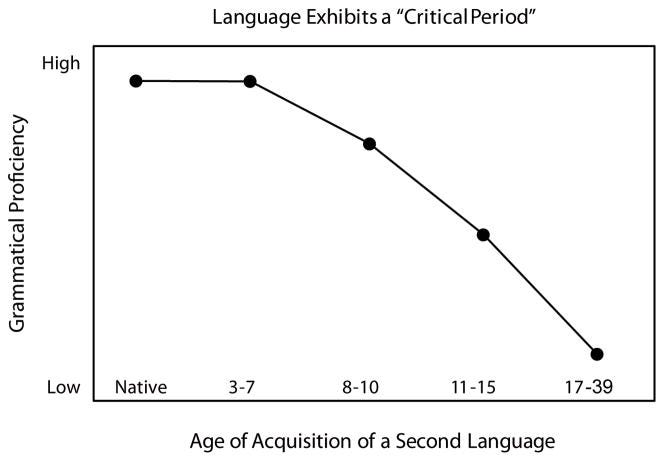
Ease of language acquisition falls off a steep cliff right before puberty. This increasing difficulty shows how quickly our brains lose plasticity as we age. Image Credit: Brain Mechanisms in Early Language Acquisition

It may seem inconvenient, but it’s a good thing that our brains lose plasticity over time. There’s a maxim in biology that structure=function and brain cells are no exception — they process and store information through the creation and maintenance of physical structure like all cells. This means that serious problems occur when said structure is disrupted. Traumatic brain injury is an obvious example of this, and the effects can be devastating. Although our brains need to change for us to learn and grow, we don’t want them to change too much — everything from dexterity to memory to personality is wrapped up in the specific folds and grooves of the brain.

Stability in the structure of the brain has its advantages, but it also restricts the possibility of rewiring after an injury occurs. This means that nerve cells in the spine cannot repair themselves if they are severed completely, and this makes severe spinal cord injuries incurable. However, spinal cord injury survivors can fully recovery if the damage is mild. This may occur partly because any remaining nerves can take over the lost functions. But, it also seems like the nerves in the spinal cord retain some of the growth ability that they had during development.
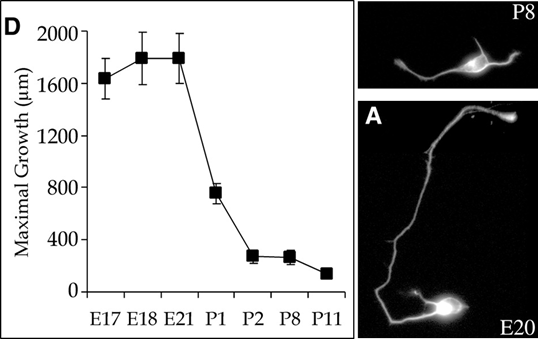
The graph (left) shows how far individual neurons of different ages can grow, from embryonic day 17 (E17) to postnatal day 11 (P11). The images (right) show two different neurons, one older (P8) and one younger (E20). Notice how much longer the young cell gets over the same period of time. Source: Goldberg et al., 2002

To frame this another way, our spinal nerves never completely lose the capacity for regeneration. Like many bodily functions, their ability to grow simply diminishes as we age. This is observable in the correlation between age and spinal cord injury recovery rates — the older we get, the less likely we are to recover from a spinal cord injury. And this idea is borne out through in vitro experiments that show a decline in growth ability as neurons develop. The promise of regaining our regenerative abilities drove my mentor to formulate a hypothesis: if we could use genetic engineering to revert spinal cord neurons to a more youthful state, then perhaps they could regrow following a spinal cord injury.

Reactivating Regeneration

Regrowing severed nerves is a very straightforward cure for spinal cord injury. But there’s just one complication: the genetic expression networks that drive development and cellular function are incredibly complex and multifaceted. How can we know which genes to turn off and on to achieve the desired outcome? It’s like we’re in a room with 10,000 dimmer switches and only a handful affect the lights, while the rest control all sorts of unknown functions. It’s clearly better to gather some clues before we start flipping switches willy-nilly… But where to start?

Being a rigorous and efficient scientist, my mentor decided to go as big and broad as he possibly could through a process known as high content screening. To start, he created a list of every gene that changes expression over the course of a neuron’s development. Then, he used genetic editing techniques to overexpress each of these genes in millions of individual neurons. Using a specialized microscope and imaging algorithms, he measured how the expression of each gene affected the growth of the neuronal processes (known as neurites).
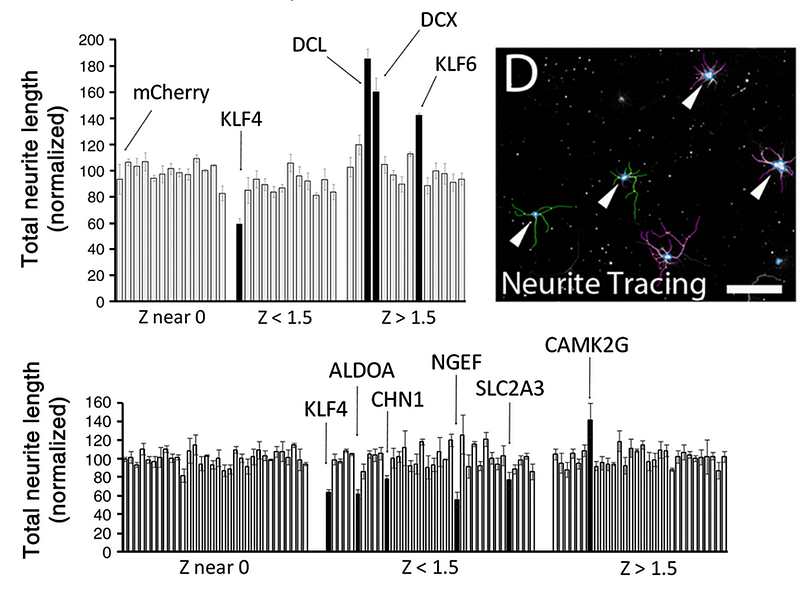
The results of a high content neurite outgrowth screen in which hundreds of genes were overexpressed in cultured neurons. The upper bar graph shows genes that are downregulated as the neurons grow older, and you can see that several of them enhance growth when overexpressed. The lower bar graph shows genes that are upregulated as the neurons grow older, and you can see that quite a few of them inhibit growth when overexpressed. In the upper right corner, you can see the imaging view that the algorithm uses to traces the neurites through the microscope.

The results of this experiment showed two distinct and interesting things: 1) genes that decrease their expression during development tend to enhance neuron growth when overexpressed, and 2) genes that increase their expression during development tend to inhibit neuron growth when overexpressed. In other words, as neurons age they turn off genes that make them grow and simultaneously turn on genes that make them stop growing. I liken this process to taking your foot off the gas and putting it on the brake. This in of itself is not surprising, but it does provide a starting point to validate the hypothesis; perhaps spinal cord nerves could regenerate if they reactivate the growth genes that turn off naturally as they age, like the molecular biology version of the fountain of youth.

Causing Cancer On Purpose

Unfortunately, the fountain of youth doesn’t work in reality. The genes from the high content screen had very little effect when transferred from cell culture to an animal model. The theory was sound, but biology is far more complex than we give it credit for (side note: this is why clinical trials are absolutely vital for vaccine development). So he was back to the drawing board. This was right around the time that I joined the lab, and my first order of business was to start from square one with a new high content screen. This time, we took a different approach. Instead of trying to dip the neurons in a proverbial fountain of youth, we decided to try and give them cancer.

This might sound crazy at first glance, but neurons can’t actually become malignant cancers like other cell types. Although brain tumors are incredibly deadly and serious they are caused by glial cells, not neurons. As discussed above, cancerous tumors form when mutations cause runaway cell division. But neurons are special kinds of cells that don’t divide because they are postmitotic, also known as terminally differentiated. Therefore, a neuron cannot technically be the cause of a cancerous tumor.
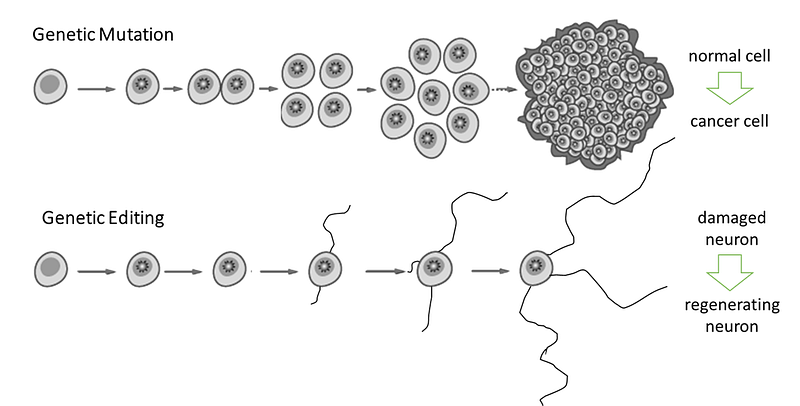
Genetic mutations can cause mitotic cells to continue dividing pathologically until they form a tumor. However, the same mutations in postmitotic neurons don’t cause cancer, because neurons don’t divide. Instead, we theorized that these cancer-causing mutations would enhance neuron regeneration.

So, we theorized that cancer-related genes might affect neuronal growth in the same way as developmentally regulated genes. Specifically, that inducing a cancer-like state in a neuron might give it the capacity to regenerate. As I stated earlier in this article, strong regenerative ability and a high risk of cancer are tightly linked — more regeneration means more cancer. Perhaps the reverse correlation holds true as well, that cancer can be leveraged to enhance regeneration.

Based on this theory, I performed my own high content screen with genes that are often mutated in cancers. As predicted, this screen turned up nearly a dozen possible leads — a promising hit rate. But with every success comes a new challenge. In this case, we lacked the tools to thoroughly test these cancer-inducing genes for their impact on neuronal growth. Our screens relied on overexpression, but cancer-related genes are often underexpressed (or undergo loss-of-function mutations) in tumors cells. We needed a way to disrupt the expression of many of these genes, which is a much more difficult task than simply adding more of a gene. This led me to write my thesis about the use of CRISPR for knockout screening in neurons. But that may be the topic of another article…

From Cancer To The Future

It remains to be seen if cancer-like gene expression can induce the kind of regeneration necessary to cure spinal cord injury. There are some encouraging initial results that suggest it could be useful in coordination with other techniques. To me, the more fascinating applications arise from thinking about the far future of this technology. As a disclaimer, I don’t think that genetic editing (particularly CRISPR) is ready for use in humans. But I like to imagine a time when cancer-related epigenetics could be manipulated to improve our bodies’ capacity for regeneration or to induce synaptic plasticity that enhances our learning abilities.

There isn’t any real closure to the story at this point in time, but it gives me hope to know that there are dedicated, brilliant people working to solve some of the world’s toughest problems. Although my mentor’s mom died before he could help her, he continues to work towards his goal. And so many people who suffer from this lifelong disability stand to benefit from his results. I know that his mom would be proud.

Neuroscience
Spinal Cord Injury
Science
Cancer
Biology
Recommended from ReadMedium