
Using a Rubik’s Cube for Mindfulness and Destressing
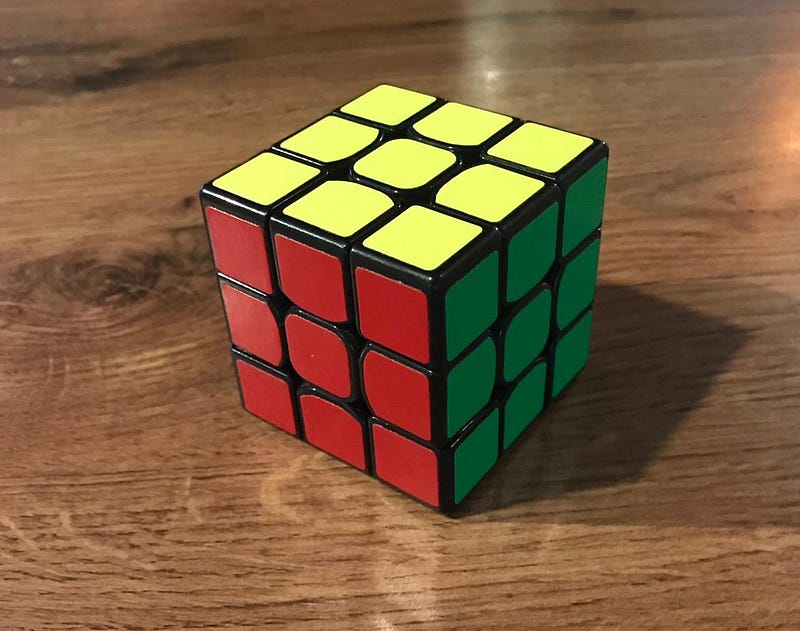
I use a Rubik’s cube throughout the day for only 5 minutes at a time to relax and refresh my mind.
When most people think about mindfulness, they immediately jump to the idea of having to do yoga or sitting down and meditating for an hour every day.
I’m glad to share with you that there are many other ways to be mindful if that’s truly something you’d like to pursue.
And there are many reasons why you should practice mindfulness mediation every day!
- Mindfulness helps our overall well-being
- It boosts our immune system
- It helps boost our mental health
- It improves our general physical health
- It increases our ability to focus
- It’s been proven to decrease stress
- It reduces levels of anxiety and depression
- Increases the ability to regulate emotions
- It lets us look outside the box at our life’s problems
Using mindfulness to focus on the present
If you’ve perused the above article or already know a lot about the practice of mindfulness, the main idea is to slowly retrain your brain to focus more on the present.
Many of us already practice it without even knowing. It’s usually calming habits or hobbies that relax us and wash the stress of the day away.
The main ways I have been (unknowingly) practicing mindfulness the past few years has been through walking and, more recently, with a Rubik’s cube.
Why a Rubik’s cube?
Because it requires you to learn a series of processes to solve it. But it’s not a simple read-all-the-instructions-once and be able to solve it.
It’s a form of memorizing that requires repetition and patience.
Patience is one of the things that mindfulness can help us improve with.
When you first set out to learn how to solve a Rubik’s cube, the prospect can be a bit daunting, as each step in a guide like this requires repeating each step multiple times until that stage is solved.
It’s not your typical Ikea instruction manual where you place screw A in hole B and then move on to the next step. You have to be mindful to realize where each color square goes in that step.
It requires concentration, practice, and mindfulness.
How to solve a Rubik’s cube?
If I remember correctly from a year ago, it only took me about one week of playing with a Rubik’s cube to memorize all the steps.
I used a few websites and a video like this one to memorize the steps:
And that was only 10 to 20 minutes each day.
I simply set out the goal to solve it at least twice every day in the office. Once before I started working, and once after lunch.
After a few weeks, it became more of a challenge to speed up my time (they actually have international tournaments for this, oddly enough).
Slowly over the months, I found myself solving the cube more and more throughout the day. When I needed a break from clacking away on my computer after an hour or two, I’d solve it.
If I was feeling tired and drained out, I’d take a moment and solve it.
If I was feeling a bit stressed, I’d pick it up and solve it.
I was practicing mindfulness without even knowing it.
Benefits of the Rubik’s cube
I eventually got my time down to just under two minutes, not bad for a noobie!
More importantly, I found a new outlet to relax and think about the day from another point of view.
And hey, it never hurts to show your co-workers that you’re smart enough to solve a Rubik’s cube!
…Even if they don’t know its actually not that hard to learn 😜
If you enjoy deep dives, guides, and interesting topics, please check out my free newsletter!
This article contains affiliate links. If you purchase something through a link, I may receive a small commission at no cost to you. Thanks for any support!


