
Using a Pinch of MSG Doesn’t Make You an Evil Person
It’s okay to be unpopular as long as your food tastes good.

When I was a kid, my Grandfather used to tell us the story of when monosodium glutamate (MSG) became available to his Chinese restaurant.
At the time, restaurateurs heralded the arrival of MSG as a sort of culinary Gold Rush. A back-alley dealer would come through the restaurant and sell it to my grandfather by the ice cream bucket. That was until it became widely unpopular to use MSG in cooking.
MSG has gained a reputation for being unhealthy. Some people have reported that they experienced symptoms like headaches, sweats, and nausea when they eat foods containing MSG.
I say MSG is misunderstood. I believe that it can add umami (savory) kick to your food — when used in proper amounts. Let’s look at the facts about MSG, and you can decide for yourself.
Why you might be wrong about MSG.
It’s long been thought that chefs who use MSG are cheaters — they are described as shady or downright evil. Because real chefs don’t use MSG.
MSG is a naturally occurring substance and is found in cheese, tomatoes, and broths. While it is considered a kind of salt, it is not merely a replacement for salt. It is a flavor enhancer.
If you search “What is MSG?” on Google, you’ll see that MSG has earned a bad rap. But does its bad reputation hold up to scrutiny?
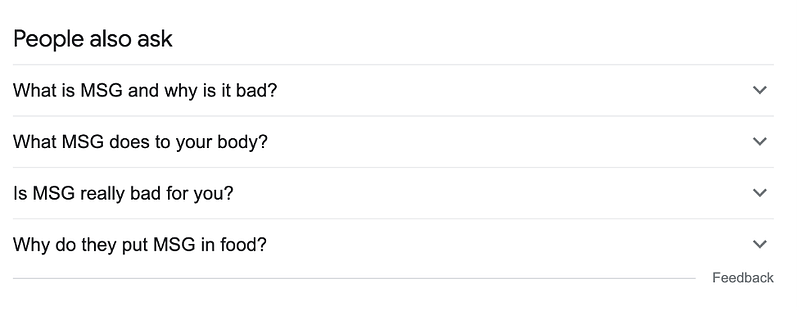
The U.S. Food and Drug Administration (FDA) has labeled MSG as “generally recognized as safe.” Here’s what the FDA reports,
“Although many people identify themselves as sensitive to MSG, in studies with such individuals given MSG or a placebo, scientists have not been able to consistently trigger reactions.”
Despite all of the negative press, there isn’t sufficient scientific proof to show that MSG is harmful to your health when ingested in small amounts. One study indicates that a daily intake of MSG is not associated with being overweight.
I think about it this way: if it’s harmful to ingest large amounts of MSG at once, does it mean that small amounts are dangerous too? I would submit that eating a large amount of cayenne pepper could be bad for your health. However, a few teaspoons in your chili will give it the added kick that you need.
It’s all about moderation.
Yes, some unhealthy foods list MSG as an ingredient — I’m looking at you Sweet Chili Heat Doritos. But that doesn’t mean that MSG should be off-limits for home cooks.
Here’s how to hit your food with an umami-bomb.
So, if you’re still with me, let’s talk about how to source and use MSG.
You can find MSG in the spice aisle of many stores in the U.S., but I think the most convenient place to find it is on Amazon.com.
Once you get your hands on some MSG, how do you use it?
MSG is a flavor enhancer. Adding it at the same time you add other spices will give your food a deeper, more savory flavor. Try adding ¼ tsp per pound of meat at the start and dial it up to ½ tsp when you feel more comfortable using it as an ingredient. You can also try swapping out 1-part salt with MSG in other recipes like gravy or sauces.
The key with MSG is to not overdo it. If your food tastes terrible already, it won’t save your dish.
Try adding some MSG to:
Burger meat Mac and Cheese Seafood Broths Poultry Vegetables Eggs Spice rubs
MSG is present in many of the foods we eat every day, and using it in small amounts can definitely enhance the taste of your food.
You don’t have to take my word for it — but I think using MSG is perfectly acceptable in the kitchen. Try a pinch in your next meal. You won’t regret it.
People might look at you funny when you tell them you use MSG in your cooking, but I say it’s okay to be unpopular as long as your food tastes good.


