avatarMatthew B. Johnson

Free AI web copilot to create summaries, insights and extended knowledge, download it at here

4751

Abstract

Moreover, “I don’t know” is better than pretending you do know, and giving someone inaccurate or possibly dangerous information.</p><p id="d8e9">For example, one of the people I worked with was asked by a customer how they could treat an overgrowth of algae in their freshwater fish tank.</p><figure id="58fc"><img src="https://cdn-images-1.readmedium.com/v2/resize:fit:800/1*3FyLJLB1vaBPlSJbwbMPog.jpeg"><figcaption>Photo by <a href="https://unsplash.com/@dpagayona?utm_source=unsplash&amp;utm_medium=referral&amp;utm_content=creditCopyText">Delbert Pagayona</a> on <a href="https://unsplash.com/s/photos/fish-tank?utm_source=unsplash&amp;utm_medium=referral&amp;utm_content=creditCopyText">Unsplash</a></figcaption></figure><p id="911c">Rather than admit they didn’t know, my coworker recommended the customer put bleach in their tank, that doing so would kill the algae.</p><p id="41a8">Which it did…along with all of their fish.</p><p id="ad27">Naturally, the customer was extremely upset. They called and chewed out one of our assistant managers, who, in turn, became a one-woman Spanish Inquisition in search of the incompetent boob who recommended putting bleach in a fish tank.</p><p id="db47">All of that unpleasantness could have been avoided had Jimmy, the guilty party, said “I don’t know, but let me find out.”</p><p id="212e"><b>“Let me get back to you.”</b></p><p id="0785">Along the lines of “I don’t know,” “Let me get back to you” is a valuable phrase because it affords us time to make informed decisions, learn about something we’re less familiar with, and/or find an answer we don’t yet have.</p><p id="11f4">It can also keep us from making impulsive decisions when we feel pressured to decide something quickly.</p><p id="b4da">The difficult aspect of this phrase is we live in a world where no one seems to have a shred of patience. We all want what we want, and we want it right now! Telling someone you’ll get back to them about something is likely to be met with impatience, especially in a work environment.</p><p id="bb8c">For example, I recently worked as a grant writer for a small business owner who was looking for relief funding during the pandemic. She’s a brilliant businesswoman and someone I really like and respect, but she has zero patience. Many of our phone conversations were her calling to ask me questions, then her talking a mile a minute and confirming for herself the answers she wanted to hear without me saying much more than “hello” or “goodbye.”</p><p id="76e7">On one of the occasions we actually had a back and forth dialogue, she asked about whether or not her business qualified for a specific grant. I was pretty sure it did, but I didn’t want to confirm that before I was 100% positive. So I said, “Let me get back to you after I confirm that.”</p><p id="43ee">Her response was, “Well either we qualify or we don’t. Which is it?”</p><p id="11e7">To which I said, “I don’t know, but let me find out.”</p><p id="c492">See what I did there?</p><p id="73a2">This was less than acceptable, as she wanted to secure those funds as quickly as possible because she had employees to pay and rent due on the business space.</p><p id="2710">However, she would have been much more upset had I told her without being sure that her business qualified for those grant funds, then later discovered it didn’t.</p><figure id="db62"><img src="https://cdn-images-1.readmedium.com/v2/resize:fit:800/1*Qzkv3lYUU_M_bJe59o_1eQ.jpeg"><figcaption>Photo by <a href="https://unsplash.com/@julienlphoto?utm_source=unsplash&amp;utm_medium=referral&amp;utm_content=creditCopyText">Julien L</a> on <a href="https://unsplash.com/s/photos/angry-boss?utm_source=unsplash&amp;utm_medium=referral&amp;utm_content=creditCopyText">Unsplash</a></figcaption></figure><p id="e0c2"><b>“No.”</b></p><p id="12e7">The older I get, the more I come to appreciate the value in saying “no.”</p><p id="9f96">Admittedly, this is something I struggle with as I’m bad at setting boundaries and I have some <a href="https://readmedium.com/why-do-we-become-people-pleasers-2b8ec84d0d40">people-pleasing tendencies</a>.</p><p id="80f5">I don’t like disappointing people, nor do I like the idea that I might miss out on something because I said “no” to it.</p><p id="f021">However, the older I get, the more I want to stay home, write, suck down as much coffee as possible, and work my way through my ever-growing “to-read” pile. Moreover, I have friends who are constantly traveling and going to events or social gatherings. When they tell me about the places they go, things they do, and what they have planned, my first thought is “Wow, that sounds <i>exhausting</i>!”</p><figure id="417b"><img src="https://cdn-images-1.readmedium.com/v2/resize:fit:

Options

800/1*MMlJ2FQxCusV4qKWS0ptKA.jpeg"><figcaption>Photo by <a href="https://unsplash.com/@susserpepa?utm_source=unsplash&amp;utm_medium=referral&amp;utm_content=creditCopyText">Chroki Chi</a> on <a href="https://unsplash.com/s/photos/exhausted?utm_source=unsplash&amp;utm_medium=referral&amp;utm_content=creditCopyText">Unsplash</a></figcaption></figure><p id="96d5">My second thought is, “Please don’t invite me to do something I don’t want to do,” because I have a hard time saying “no.” One of the reasons for this is many people will ask the follow-up question of “Why not?”</p><p id="d228">And “Because I don’t want to” isn’t an answer that is usually well-received. Often, it’s taken as an attack on that activity, destination, or that person.</p><p id="a0ec">Because of this, what do many of us do when we’re invited somewhere we don’t want to go?</p><p id="0066">We lie.</p><p id="22ab">We come up with some bullshit excuse that’s just believable enough that it could be true and not warrant any follow-up questions. And we do it because we don’t want to hurt the other person’s feelings or trigger a needless argument.</p><p id="e58c">The risk here is getting caught in that lie. If that person finds out you lied to them, it’ll hurt their feelings more and result in a fight in which they have the moral high ground.</p><p id="3e3b">Saying “no” is also a good way to maintain boundaries.</p><p id="8ea5">Again, it’s not always easy, but it is helpful.</p><p id="90e5">When I was doing my student teaching, I was required to meet with each of my students once a week for half an hour. It was their time to get help with anything they were struggling with and for me to check in with how they were doing in the class and offer whatever guidance I could. The faculty director of student teaching told my cohort of fellow student teachers that we were to say “no” to any requests by our students to move/reschedule their meeting day and time once it was established.</p><p id="95a4">With 20 students a piece, and a full load of graduate classes on top of that, all of us had strict time constraints under which we were operating. Disallowing our students to adjust their set schedules served to hold them accountable for showing up when and where they were supposed to, but also to protect our limited time outside of class and teaching obligations.</p><p id="51d4">Yet, I still found it difficult to say “no” when students inevitably asked to reschedule. Having an established boundary to fall back on helped, especially when they got upset that they weren’t allowed to reschedule.</p><figure id="9313"><img src="https://cdn-images-1.readmedium.com/v2/resize:fit:800/1*NmyHqCKQeS11mx2N0PJm9w.jpeg"><figcaption>Photo by <a href="https://unsplash.com/@erinlarsonphotography?utm_source=unsplash&amp;utm_medium=referral&amp;utm_content=creditCopyText">Erin Larson</a> on <a href="https://unsplash.com/s/photos/boundaries?utm_source=unsplash&amp;utm_medium=referral&amp;utm_content=creditCopyText">Unsplash</a></figcaption></figure><p id="8aed">Establishing boundaries can be difficult. But saying “no” can help and is often the first step toward doing so.</p><p id="a5a6">I doubt any of these phases are revelatory to anyone. They weren’t to me.</p><p id="8822">What was new and sometimes challenging was overcoming my internal urges to criticize without thought, to agree too quickly, and to cave in to requests from others at my own discomfort.</p><p id="3a3c">These phrases helped and continue to help me set and maintain boundaries. To think before I speak or act. To admit when I don’t know something.</p><p id="6e6c">They’re not always easy to put into practice. It requires work to be able to employ them with any regularity.</p><p id="d386">But it’s work worth doing. And the benefits reaped are well-worth the effort.</p><p id="075c"><i>If you liked this story and/or my writing, <a href="https://lp.constantcontactpages.com/su/vuxaWTQ">sign up for my email list</a> to stay up to date on new stories, upcoming features, and cool news. “I’ll subscribe to that” is another helpful phrase I’ve learned. Just saying.</i></p><p id="3da1"><i>Do you enjoy the content but you aren’t a Medium member? <a href="https://mbjohnsonauthor54.medium.com/membership">Sign up here to become a member</a> and get unlimited access to all of my stories as well as other writers who might tickle your reading fancy.</i></p><p id="3bff"><i>You can also follow me on <a href="https://twitter.com/PalladiumKnight">Twitter</a>, <a href="https://www.instagram.com/matt54johnson/">Instagram</a></i>, <a href="https://vocal.media/authors/matthew-b-johnson"><i>Vocal</i></a>, <i>and <a href="https://bitclout.com/u/Matthew_B_Johnson">BitClout</a></i></p></article></body>

Useful Phrases I’ve Learned as an Adult
Photo by Frame Harirak on Unsplash

Live and learn, the old adage goes.

And the longer I’ve lived, the more I’ve realized I have left to learn.

Some things I learn though seeking them out. Others are lessons forced upon me. While none of us like it, the hard way is a harsh, but effective teacher.

Regardless of how we learn, that we learn is the important thing.

Some of the most helpful lessons I’ve learned as an adult are phrases that make me stop and think before I respond and/or help me correctly contextualize whatever it is I’m faced with. They help me set and maintain boundaries. They sometimes even keep me from saying or doing stupid things I’ll later regret.

The following are a handful of phrases I’ve found immensely useful. Hopefully you’ll find them useful as well.

“That’s just not for me.”

I survived the massive influx in “boy bands” of the late 90’s/early 2000’s. The music of The Backstreet Boys, N’Sync, 98 Degrees, and several others was inescapable.

Photo by nmoodley on Pixabay

It was a difficult time to be a fan of punk rock and metal.

My default criticism was, “They don’t write their own songs or play any instruments. These bands suck! They’re just manufactured bullshit.”

When I was 18, no one could have convinced me these bands had any redeemable qualities. Not any statistics on the millions of albums they sold, not information on any awards they may have won, not even people’s arguments that some of these bands’ songs held personal significance to them.

Nope. Bolstered by the arrogance of youth, I knew better, I was right, and everyone else was wrong.

What I was blind to, perhaps willfully so, was the subjectivity and individual uniqueness of people’s tastes in music. I was guilty of being a troll before the concept of the “internet troll” had entered the collective consciousness.

Photo by Mark König on Unsplash

Anyone who disagreed with my individual views could fuck right off.

Ah, youth…

What I was really saying was, the music produced by boy bands wasn’t to my taste. I was in my early 30’s when I discovered that phrase and the concept that someone else’s enjoyment of something I didn’t for didn’t invalidate my dislike of whatever it is they enjoyed. Moreover, that didn’t detract from my enjoyment of the things I liked.

Or, maybe a simpler way of putting it is the phrase “that’s just not for me” has helped me be less of an asshole about the things I don’t connect with.

“I don’t know.”

It seems in today’s world, we’re expected to have all the answers to whatever questions we’re asked. This seems especially true in the professional world, in which not having an answer right away is seen as weakness or incompetence.

Sadly, this lesson was frequently reinforced when I worked retail at a shit-hole corporately-owned chain of pet supply stores. If a customer asked me a question to which I didn’t have an answer, they were vocal, and sometimes profane, about what a horrible, useless employee I was, how the customer service sucked, and how they would go to the other corporately-owned pet supply chain.

They said it every time they came back to the store I worked at.

Here’s the thing.

“I don’t know” is a valid response. It’s honest. And it can lead to “let me find out,” or, even better, “let’s find out together.”

Moreover, “I don’t know” is better than pretending you do know, and giving someone inaccurate or possibly dangerous information.

For example, one of the people I worked with was asked by a customer how they could treat an overgrowth of algae in their freshwater fish tank.

Photo by Delbert Pagayona on Unsplash

Rather than admit they didn’t know, my coworker recommended the customer put bleach in their tank, that doing so would kill the algae.

Which it did…along with all of their fish.

Naturally, the customer was extremely upset. They called and chewed out one of our assistant managers, who, in turn, became a one-woman Spanish Inquisition in search of the incompetent boob who recommended putting bleach in a fish tank.

All of that unpleasantness could have been avoided had Jimmy, the guilty party, said “I don’t know, but let me find out.”

“Let me get back to you.”

Along the lines of “I don’t know,” “Let me get back to you” is a valuable phrase because it affords us time to make informed decisions, learn about something we’re less familiar with, and/or find an answer we don’t yet have.

It can also keep us from making impulsive decisions when we feel pressured to decide something quickly.

The difficult aspect of this phrase is we live in a world where no one seems to have a shred of patience. We all want what we want, and we want it right now! Telling someone you’ll get back to them about something is likely to be met with impatience, especially in a work environment.

For example, I recently worked as a grant writer for a small business owner who was looking for relief funding during the pandemic. She’s a brilliant businesswoman and someone I really like and respect, but she has zero patience. Many of our phone conversations were her calling to ask me questions, then her talking a mile a minute and confirming for herself the answers she wanted to hear without me saying much more than “hello” or “goodbye.”

On one of the occasions we actually had a back and forth dialogue, she asked about whether or not her business qualified for a specific grant. I was pretty sure it did, but I didn’t want to confirm that before I was 100% positive. So I said, “Let me get back to you after I confirm that.”

Her response was, “Well either we qualify or we don’t. Which is it?”

To which I said, “I don’t know, but let me find out.”

See what I did there?

This was less than acceptable, as she wanted to secure those funds as quickly as possible because she had employees to pay and rent due on the business space.

However, she would have been much more upset had I told her without being sure that her business qualified for those grant funds, then later discovered it didn’t.

Photo by Julien L on Unsplash

“No.”

The older I get, the more I come to appreciate the value in saying “no.”

Admittedly, this is something I struggle with as I’m bad at setting boundaries and I have some people-pleasing tendencies.

I don’t like disappointing people, nor do I like the idea that I might miss out on something because I said “no” to it.

However, the older I get, the more I want to stay home, write, suck down as much coffee as possible, and work my way through my ever-growing “to-read” pile. Moreover, I have friends who are constantly traveling and going to events or social gatherings. When they tell me about the places they go, things they do, and what they have planned, my first thought is “Wow, that sounds exhausting!”

Photo by Chroki Chi on Unsplash

My second thought is, “Please don’t invite me to do something I don’t want to do,” because I have a hard time saying “no.” One of the reasons for this is many people will ask the follow-up question of “Why not?”

And “Because I don’t want to” isn’t an answer that is usually well-received. Often, it’s taken as an attack on that activity, destination, or that person.

Because of this, what do many of us do when we’re invited somewhere we don’t want to go?

We lie.

We come up with some bullshit excuse that’s just believable enough that it could be true and not warrant any follow-up questions. And we do it because we don’t want to hurt the other person’s feelings or trigger a needless argument.

The risk here is getting caught in that lie. If that person finds out you lied to them, it’ll hurt their feelings more and result in a fight in which they have the moral high ground.

Saying “no” is also a good way to maintain boundaries.

Again, it’s not always easy, but it is helpful.

When I was doing my student teaching, I was required to meet with each of my students once a week for half an hour. It was their time to get help with anything they were struggling with and for me to check in with how they were doing in the class and offer whatever guidance I could. The faculty director of student teaching told my cohort of fellow student teachers that we were to say “no” to any requests by our students to move/reschedule their meeting day and time once it was established.

With 20 students a piece, and a full load of graduate classes on top of that, all of us had strict time constraints under which we were operating. Disallowing our students to adjust their set schedules served to hold them accountable for showing up when and where they were supposed to, but also to protect our limited time outside of class and teaching obligations.

Yet, I still found it difficult to say “no” when students inevitably asked to reschedule. Having an established boundary to fall back on helped, especially when they got upset that they weren’t allowed to reschedule.
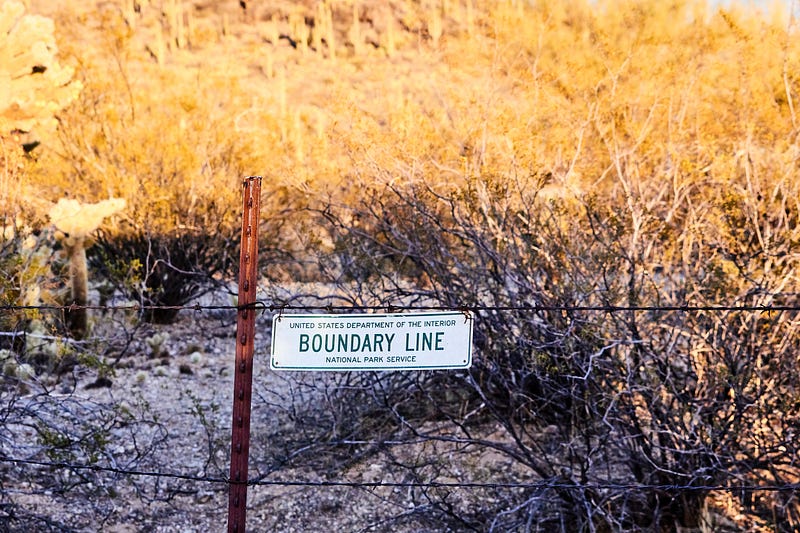
Photo by Erin Larson on Unsplash

Establishing boundaries can be difficult. But saying “no” can help and is often the first step toward doing so.

I doubt any of these phases are revelatory to anyone. They weren’t to me.

What was new and sometimes challenging was overcoming my internal urges to criticize without thought, to agree too quickly, and to cave in to requests from others at my own discomfort.

These phrases helped and continue to help me set and maintain boundaries. To think before I speak or act. To admit when I don’t know something.

They’re not always easy to put into practice. It requires work to be able to employ them with any regularity.

But it’s work worth doing. And the benefits reaped are well-worth the effort.

If you liked this story and/or my writing, sign up for my email list to stay up to date on new stories, upcoming features, and cool news. “I’ll subscribe to that” is another helpful phrase I’ve learned. Just saying.

Do you enjoy the content but you aren’t a Medium member? Sign up here to become a member and get unlimited access to all of my stories as well as other writers who might tickle your reading fancy.

You can also follow me on Twitter, Instagram, Vocal, and BitClout

This Happened To Me
Mental Health
Psychology
Mindfulness
Life Lessons
Recommended from ReadMedium