
Use This 5-Step Process To Be a Solopreneur in 2023
This is the only step-by-step guide you need.

If you’re looking to be a solopreneur, doesn’t matter if you’re reading this at the beginning, middle, or end of the year — this should be the only guide you need.
I hope I can put insights I wish I knew when I started.
But maybe I went through that journey so I could share all this with you.
If you think you don’t have what it takes, hear me out — I was in your place a year and a half ago. Feeling lost in a corporate job because deep inside I was unhappy and felt I didn’t belong there, but also disturbed as I didn’t know what else to do, if not this.
So you’re not alone. We got this.
Step 1: Start Writing Online
I know you probably don't want to read this. But give me a minute, will you?
Writing online will help you build in public, connect you to similar folks and, most importantly, you’ll clear your thoughts.
In professional terms, it’ll help you create a personal brand and build an audience.
Just write on one platform, and then repurpose that content (copy-paste sentences or summarise) on Twitter.
Here’s what doesn’t matter here:
- your niche
- frequency
- day and time to post
Here’s what does:
- engaging with others
- replying to all comments
- learning
Here’s what will help as a bonus: also creating a newsletter on Substack and putting that link on your Twitter bio, LinkedIn profile, your blogs, etc.
Book Recommendations
War of Art by Stephen Pressfield, Ego is the Enemy by Ryan Holiday
Step 2: Get a Feel of Your Audience
Here are the things I’ve done that I had zero intention of doing when I quit my job:
- having a successful cohort-based course
- a self-paced course (under construction)
- creating digital products
Don’t worry, I won’t add any links because I’m not selling to you here.
Now, they’re the biggest chunks of my income. They’re the reason I don’t have to sell my soul and time to freelancing by writing about things that I don’t like.
Here’s a crux of how it happened:
- tweeting
- being in conversations and understanding problems
- figuring out if I can use my strengths to solve any problems
- tweeting again with the solution
Your ‘niche’ is the subtle interception between what you enjoy and what they enjoy.
This doesn’t happen by sitting around and blatantly imitating somebody’s product or ideas. It happens by putting out, observing, and interacting.
After a few weeks of doing this, answer:
- what does the audience enjoy more?
- what do you enjoy talking about?
- what do they interact with?
Your ‘niche’ is the subtle interception between what you enjoy and what they enjoy.
Book Recommendations
The Practice: Shipping Creative Work by Seth Godin, The Minimalist Entrepreneur by Sahil Lavingia
Step 3: Give It at Least 100 Days
When I started writing online seriously, I made peace with the fact that my first 50 articles will be terrible
Along with 100 days, also give yourself 100 pieces on your blogs, LinkedIn posts, YouTube videos, or wherever it is you’re trying to create.
When I started writing online seriously, I made peace with the fact that my first 50 articles will be terrible and I’ll only get better after the first 100. It helped me detach from the outcomes and focus on the process.
100 days is also a sweet spot to figure out if you’re really meant for this or not.
Don’t get me wrong, but being a solopreneur just because people market it to be cool isn’t true. Just like not everyone is a fit to be a lawyer, entrepreneur, or athlete, the same goes for being a solopreneur.
Book Recommendations
Grit by Angela Duckworth, Mindset by Carol Dweck
Step 4: Have a Lead Magnet
Only if people gain in your freebie will they be willing to ever pay you.
I created my first ebook by shortlisting my side-hustle-related articles. Then, out of 35 articles I copy-pasted 13 and formatted them into an ebook on Apple pages.
My mistake — using Mailchimp.
It may be a decent software to have a mailing list but definitely not for eCommerce. Plus, I couldn’t earn from a product, even though it's free.
Your lead magnet could be anything like
- a simple checklist
- email course
- video course
- ebook
You don’t need fancy software or equipment. My biggest products are written on Google docs and beautified on Canva.
Meanwhile, I released a free checklist a year ago on Gumroad and put on ‘pay what you want’, here’s what that looks like:
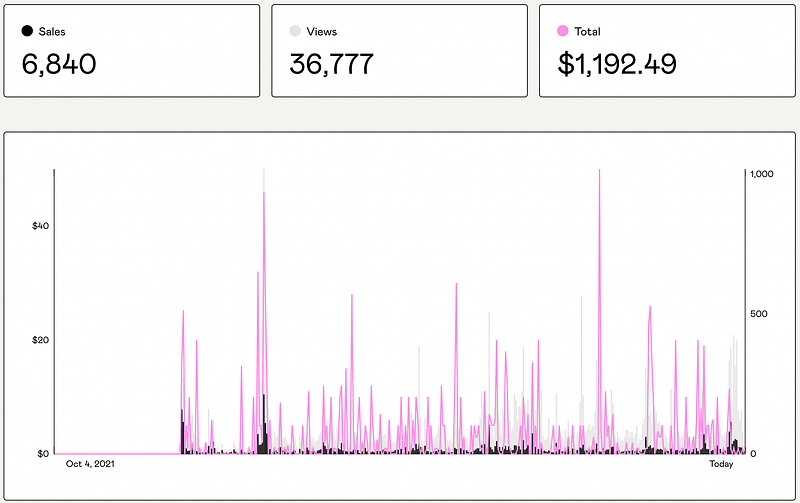
It’s earned 4-digits only because a few people chose to pay anywhere between $1-$25.
Have a lead magnet to:
- give value for free: only if people gain in your freebie will they be willing to ever pay you
- build an email list: because you own the list and it will help you drive sales
Personally, having an email list helps me connect better with my audience. It’s where I get to know what's helping them and what can I do better.
Also, scheduling your tweets using a software like Hypefury helps you keep your content wheel running even while you sleep and also helps you run auto-DMs.
Here’s what my recent auto-DM campaign looked like:
Via Hypefury, 357 people got the details in their inboxes automatically without me individually messaging them.
As a result, I gained over 300 subscribers in my list in a few hours.
The internet is amazing, isn’t it?
Book Recommendations
$100M Offers by Alex Hormozi
Step 5: Solve a Problem for Your Audience
Make monetisation the last step.
While this is step five, it could happen a year or maybe three years later. Give it time.
Make monetisation the last step. I say that because once you’re credible, you’ll create valuable products and services that people will pay for. But if you’re just starting out with zero credibility or authority in your niche, this may not work and you’ll be demotivated.
Have fun in the process, so you can do this on the side.
I had monetary goals when I started, but I did it with my full-time job on the side until my side-hustle paychecks were triple my corporate salary for at least three months.
A little back story — I started my course Summit 21 with one tweet.
I then chose 40 people and conducted this for free.
Once I saw that what I teach really works, I collected testimonials and conducted it into a course.
See where random experiments can lead you!
Money will come to you once you focus on your expertise and add value to others.
Similarly, solve a problem by packaging a solution. This could be
- a community membership
- selling ebooks or guides
- a paid newsletter
- selling templates
- a video course
Use your unique strength to have a solution. Solutions need lesser selling as you’re not selling fluff.
Also, be mindful of your pricing. How I take it is that I want to prioritise my learning right now so I can solve bigger problems later.
As I mentioned earlier, money will come to you once you focus on your expertise and add value to others.
Book Recommendations
This is Marketing by Seth Godin
Lastly
Being a solopreneur completely changed my life and improved it to a dimension I didn’t know existed
After this, you’d be repeating Step 1 (writing online) and Step 5 (creating solutions) frequently.
If you can follow through with these steps and give the process and yourself enough time, I don’t see why it won’t work out.
Here’s what we discussed:
- Writing online
- Get a pulse of your audience
- Give it at least 100 days (and 100 content pieces)
- Have a lead magnet
- Monetise by presenting a solution
If you can follow through with these steps and give the process and yourself enough time, I don’t see why it won’t work out
I hope this helps you.
Being a solopreneur completely changed my life and improved it to a dimension I didn’t know existed. But 6 months ago, I couldn’t imagine how different today would be even though I started side-hustling two years ago.
It’s a journey, and give it time so you can enjoy the process.
You’ll look back later not at how much money you made a certain month but at what you learnt, the friends you made, and how much fun you had.
All the best!


