
Use case: AWS Inspector vs GuardDuty
inb4: The official names are Amazon Inspector and Amazon GuardDuty, but I know a lot of you will be searching via the AWS name, hence the title.
So what’s the difference between AWS Inspector and GuardDuty? This is a Quick & Simple post.
First, let’s talk about what they share in common. After that, I’ll describe how they are different.
How Amazon Inspector and Amazon GuardDuty are similar
Both Amazon Inspector and Amazon GuardDuty are services that enhance your security posture. Both serves you through some form of automation — GuardDuty goes beyond automation and incorporates machine learning.
So what’s the difference?
The sweet and simple sentence would be: Amazon Inspector provides you with security assessments of your applications’ settings and configurations while Amazon GuardDuty helps with analysing the entirety of your AWS accounts for potential threats.
If we try to describe it in a chronological fashion, you can have Inspector set up at the start when you deploy your applications, and then GuardDuty immediately after that in order to receive alerts on potential threats.
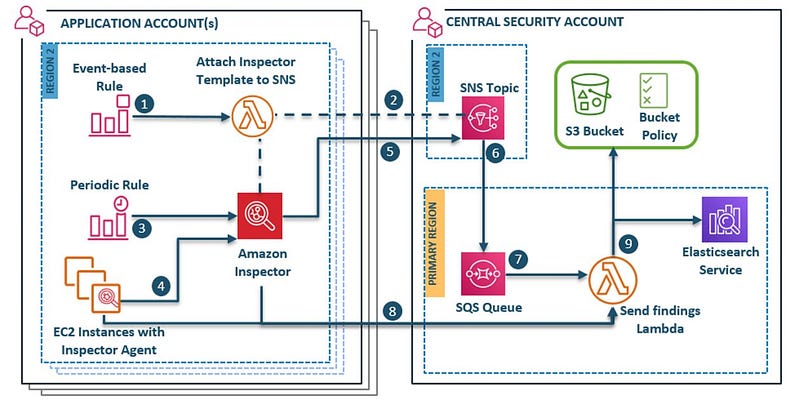
For Inspector, it’s worth noting that when we speak of ‘applications’ it only covers EC2 at the moment. There is an agent that you can install in order to have it assess a wider set of configurations. For Inspector, the assessments are done based on ‘rules’ that help you to identify whether you are adhering to security best practices.
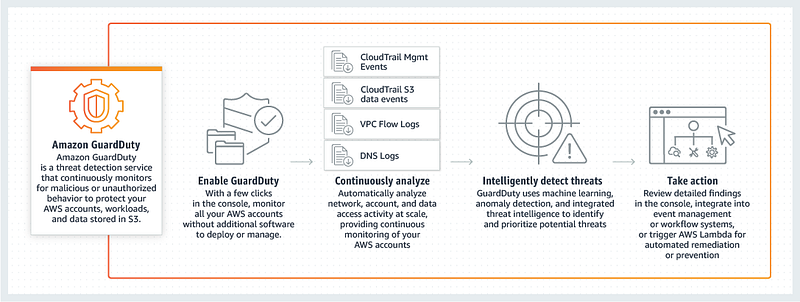
GuardDuty, on the other hand, will continuously monitor your “AWS accounts, workloads, and data stored in Amazon S3” and alert you when there is a potential threat. You have the option to also set up automated preventative actions whenever there is a “security finding”. GuardDuty is different than Amazon Macie — the latter only looks at S3 and intelligently classifies data to help you ensure the proper access controls are applied to those data.
That’s it. I hope this Quick & Simple post was useful to you.
Also check out:


