
USA VS China — Who Will Become The Number One Economy in 2030
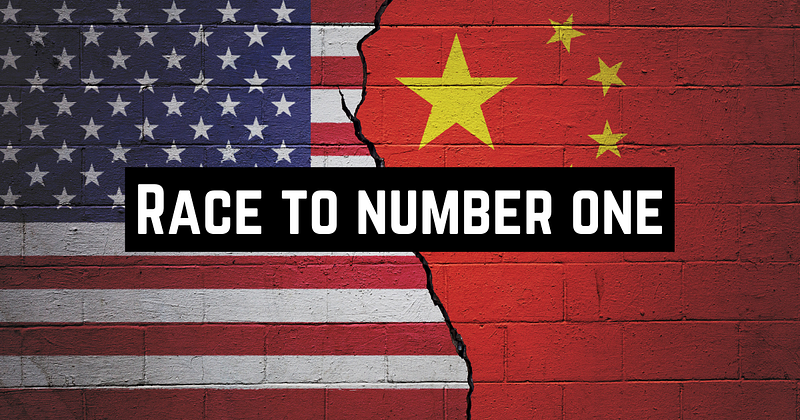
The rivalry between the USA and China is at the forefront of the change in the global economic landscape. It is anticipated that China would soon surpass the United States as the world’s largest economy as a result of its rise as an economic superpower. Is that actually the case, though? Will China be able to overtake the United States as the world’s leading economy, or will it stay in second place?
In this article, I’ll look at the causes of both countries’ economic success as well as the difficulties they face in holding on to their top economic positions. To clearly comprehend where the two nations stand in terms of their economic might, I’ll examine the data and statistics from recent years. Buckle in and get ready for a detailed analysis of the economic rivalry between the United States and China as well as the prospects for the world economy.
I. Historical Background
Although the United States and China have had a long-standing relationship, diplomatic ties between the two nations weren’t formally established until the early 1970s. Since that time, the two countries’ economic ties have greatly improved, with China becoming one of the US’s main trading partners.
In recent years, however, this relationship has become increasingly strained due to many concerns, including trade disparities, intellectual property theft, and human rights violations in China. These tensions were only exacerbated by the Trump administration’s levies on Chinese products and tech firms like Huawei. These variables have had a big impact on the economic relationship between the two nations, and many experts think that the trade war between the US and China has caused the two biggest economies in the world to become less interconnected.
Since the end of World War II, the United States has had the greatest economy in the world when comparing the development and expansion of the two countries’ economies. China has been quickly catching up in recent years, though. According to the International Monetary Fund, China’s GDP was $18.321 trillion in 2022, while the United States’ GDP was $25.46 trillion.
China’s industrial sector, which has been growing quickly since the 1980s, as well as its investments in infrastructure and technology, is to blame for the country’s economic success. The US economy, on the other hand, is more diverse and has strengths in sectors like technology, finance, and healthcare.
China’s economic expansion has been powered by debt, which has raised questions about the viability of its financial system. The nation also has problems with an aging population and environmental problems. The US has been battling with the loss of industrial jobs and income inequality.
Overall, the economic position between the US and China is complicated, with both nations having their own advantages and disadvantages. It has only become more difficult as a result of the continuous tensions between the two countries, and it is unclear how this will ultimately affect the world economy.
II. Current Status
With a GDP of $25.46 trillion as of 2022, the United States’ economy continues to be the greatest in the world. China is a close second, with a GDP of $18.321 trillion. Because of many variables, including high federal interest rates, China’s economy has been expanding more quickly than the US economy, with a forecast growth rate of 5.2% in 2023 compared to just 1.4% for the US.
In terms of debt, both nations are heavily indebted. China’s debt is thought to be around $15.166 trillion, compared to the United States’ estimated total of $31.46 trillion. Economic stability can also be measured by looking at inflation rates, which are currently greater in the United States than in China (0.8% vs. 6.4%).
The United States has a highly trained labor force, cutting-edge technical innovation, and an abundance of natural resources, which are the strengths and disadvantages of each nation’s economy. Nonetheless, the nation also suffers from a huge trade imbalance and considerable income inequality.
Contrarily, China has a sizable worker force, low labor costs, and a robust manufacturing industry. Yet, the nation faces concerns with aging citizens, the ecology, and intellectual property protection.
The epidemic also had an effect on China’s economy, although China’s efforts to recover have fared better. To contain the virus and sustain the economy, the Chinese government implemented a number of steps, including lockdowns and mass testing. Over $500 billion worth of stimulus programs were implemented in China, with a focus on infrastructure development and initiatives to help small and medium-sized firms.
III. Future Predictions
There are numerous scenarios and models that could come to pass for the economies of the United States and China as I look into the future. I’ll talk about some of the possible outcomes and the variables that might affect them in this section of the article.
The relative growth rates of the US and Chinese economies are one aspect that will probably have a big impact on how those economies will develop in the future. China has regularly outperformed the US in recent years when it comes to GDP growth, with an average yearly growth rate of about 5–6% versus the US’s average of about 1–2%. If these patterns continue, China may surpass the US as the world’s largest economy within the next ten to twenty years.
There are, however, a number of elements that might impede China’s expansion and give the US an opportunity to catch up. For instance, China’s potential for future economic growth may be constrained by its elderly population and dropping birth rate. Moreover, China’s largely dependent on state intervention and regulation economic model might not be long-term viable.
The US, on the other hand, possesses a variety of advantages that may enable it to continue holding the title of having the greatest economy in the world. For instance, the US economy is highly innovative and varied, with a focus on technology and entrepreneurship. In comparison to many other developed nations, the US has a comparatively high birth rate and a sizable and expanding population.
The economic strategies of the US and China should also be taken into account. China has recently been pursuing a “economic nationalism” policy in an effort to strengthen domestic sectors and lessen its dependency on imports from other countries. This strategy has been accompanied by a number of policies, such as tariffs, subsidies, and limitations on foreign investment. By focusing on deregulation, tax cuts, and other policies meant to promote economic growth, the US has adopted a more free-market strategy.
Both of these strategies have benefits and drawbacks, and how well they work will depend on a variety of variables. For instance, China’s economic nationalism might minimize reliance on imports from abroad and preserve domestic companies, but it might also result in inefficiencies and market distortions. Similar to this, the US’s free-market philosophy might promote entrepreneurship and innovation but it could also aggravate wealth disparity and cause social instability.
There are numerous arguments and pieces of evidence to take into account when estimating the future of the US and Chinese economies. Some analysts predict that China will keep expanding quickly and eventually surpass the US as the greatest economy in the world, while others predict that the US will continue to hold the top spot because of its strong economy and foreign policy.
The enormous population and fast growing middle class in China are two arguments in support of the country’s ongoing expansion. As more and more Chinese people enter the middle class, the demand for goods and services will rise as a result of their growing spending power. This will support economic growth. Furthermore, China’s “Belt and Road” programme, which aims to develop infrastructure and expand trade with nations throughout Asia, Africa, and Europe, may contribute to an increase in its economic clout.
Yet, some experts contend that China’s economic growth might not be long-term due to worries about the country’s high levels of debt, aging population, and economic model that is dominated by the government. They also highlight the US’s advantages in technology and innovation, as well as its status as the world’s reserve currency, as elements that will support it in maintaining its economic hegemony.
Whatever happens, it will have a significant impact on how the US and Chinese economies develop in the future. If China keeps expanding quickly, it might challenge the US as the only superpower in the world by becoming an even more powerful economic and political force. On the other hand, if the US manages to keep its position as the largest economy, it will certainly continue to exercise enormous influence on the world arena.
It’s also crucial to think about how these possibilities might affect the rest of the world. While a decreasing US could result in a change in power relations and possibly cause instability in the global economy, a developing China could offer major chances for other nations to enhance trade and investment.
A stagnating or decreasing China might trigger economic slowdowns in other regions, while a robust and stable US economy could serve to foster a sense of stability and confidence for other nations.
In the end, predicting the future of the US and Chinese economies is a difficult assignment with many different aspects and variables to take into account. Although each nation has its advantages and disadvantages, it seems likely that these two global superpowers will continue to compete with one another for economic supremacy in the next decades.
IV. Conclusion
In conclusion, the issue of which country’s economy will grow to be the largest in the future is complicated and hotly contested. I looked into a number of variables, including GDP, economic policies, and global influence that may have an effect on the future course of these economies.
Even though there are reasons and supporting data on both sides, it is difficult to predict with certainty which nation will prevail in the end. The US and China will both undoubtedly remain significant forces in the global economy, and their rivalry will probably have a significant impact on how that economy develops in the future.
The two economies’ and their separate policies’ evolution should be closely watched, in my opinion, as they will have a big impact on the rest of the world.


