
Urban Gardening Success: How We Grew a Bountiful Harvest on a 27th-Floor Balcony
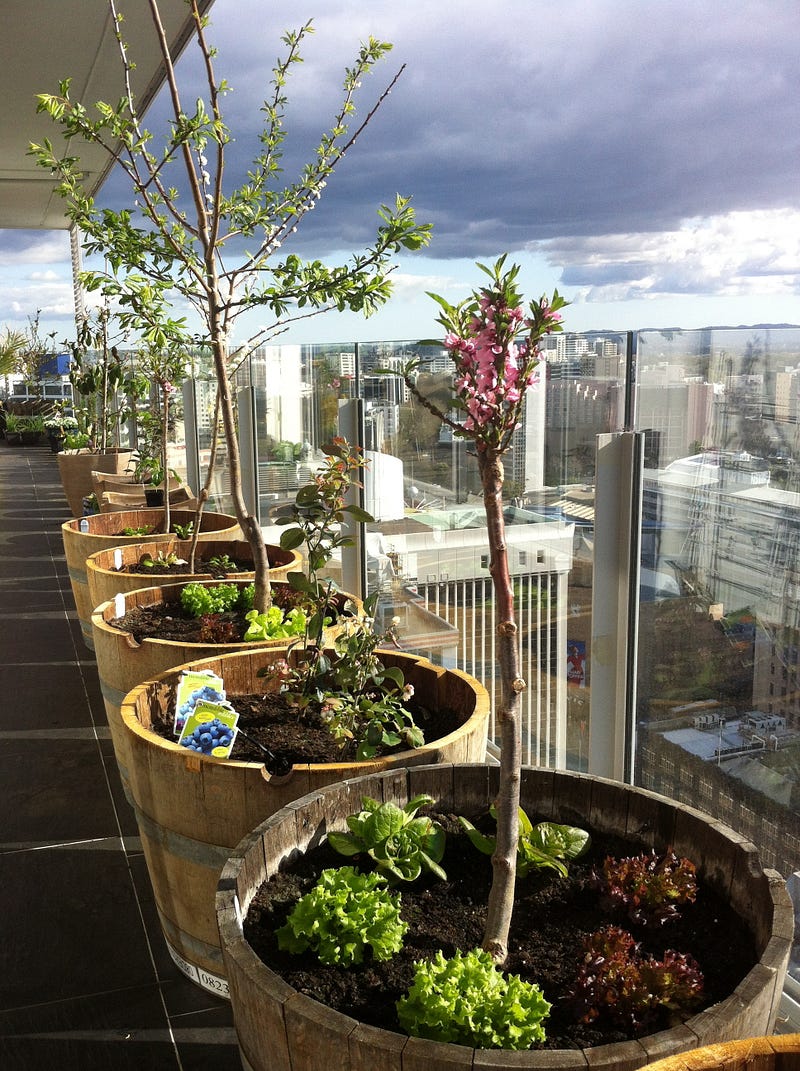
The above was my first attempt at growing my own food.
This was a journey begun more than a dozen years ago now, with many different variations on the theme since. But I still look back on those early days with nostalgia too.
We were living in an inner city apartment on the 27th floor, with a spectacularly expansive sun-filled balcony — narrow, but running the length of the apartment. And I’d just been inspired on a recent trip, following a visit to some absolutely beautiful vege markets.
Time to have a go was what I thought, not knowing a thing about gardening!
My timing was good too. Vineyards that had weathered the 2008 recession had then began failing around 2011 (when I began gardening), providing a glut of unused wine barrels, that meant a (relatively) inexpensive medium for me to snap up for this project. (You can grow in pretty much any kind of container though — more on that shortly).
My poor husband was of course less than keen about dragging 20kg bags of soil up the apartment building elevators!
Having done horticulture in school though, he was able to teach me the basics I needed to get started.
And thus my container food growing journey was born!
Balcony Container Gardening
One of the key benefits of balcony container gardening is its flexibility.
You can start small with just a few pots or go all out and create a full-fledged container garden.
You can also choose from a wide variety of plants, including herbs, vegetables, annuals, perennials, and even small trees.
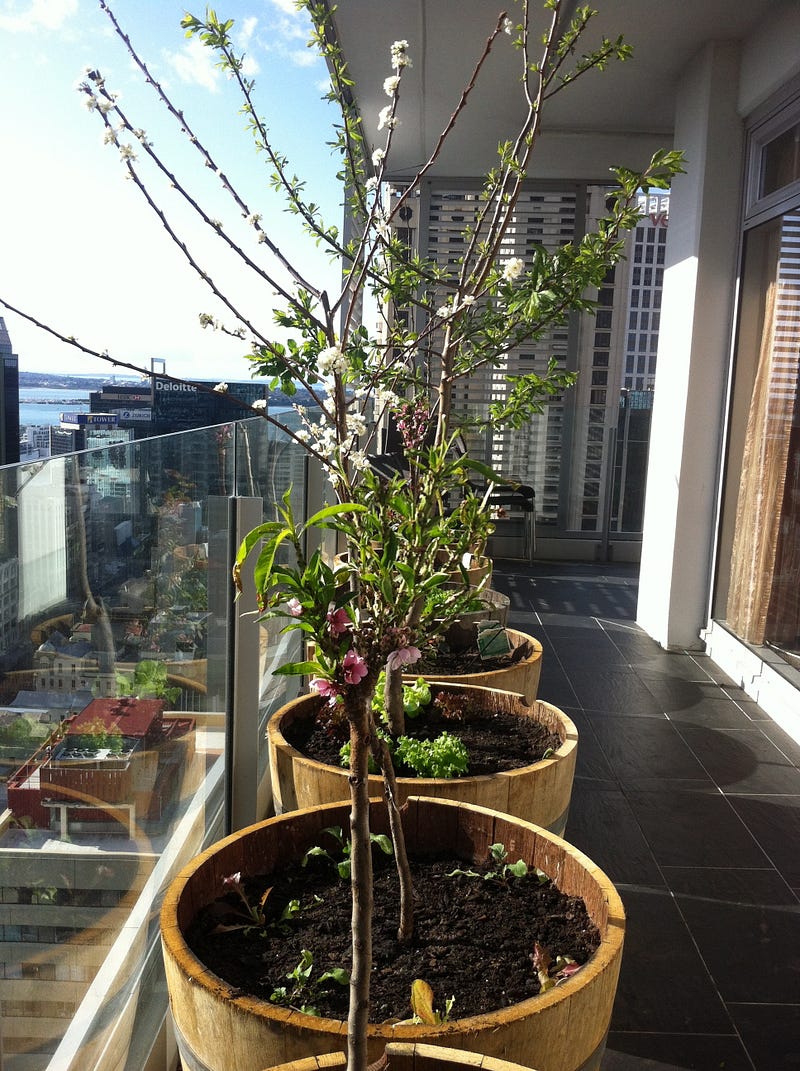
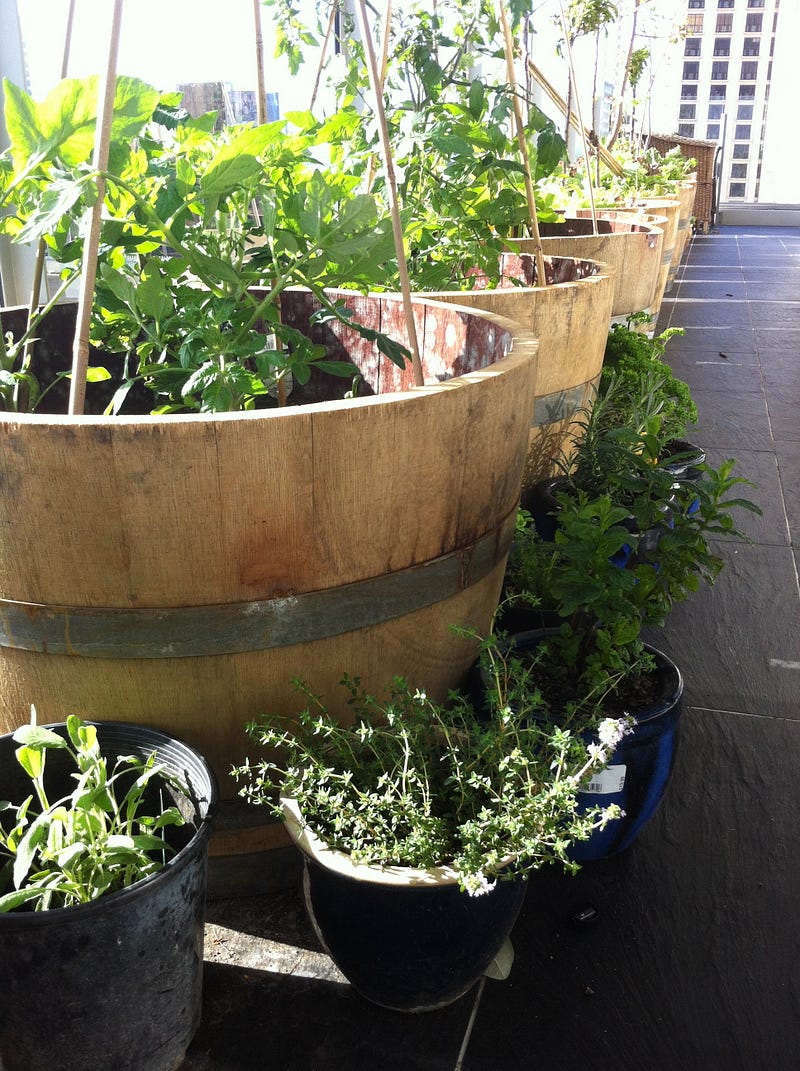
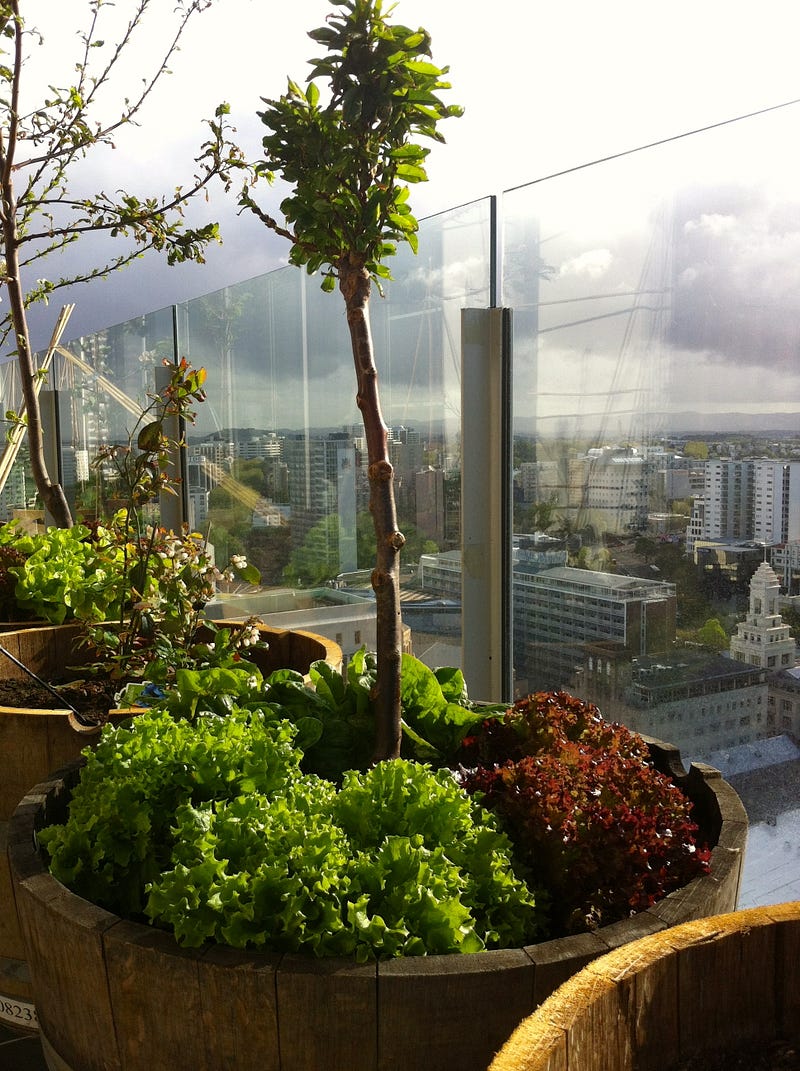
I went for the all out container garden, mixing fruit trees with salads and herbs. Above ground veges like tomatoes, zucchini and cucumber, were slotted in next to root vege planter bags, holding carrots, beetroot and potatoes.
It was exciting times! I didn’t know anything about growing when I began and made plenty of mistakes. But harvesting for the first time that spring and summer, was an incredibly exciting experience.
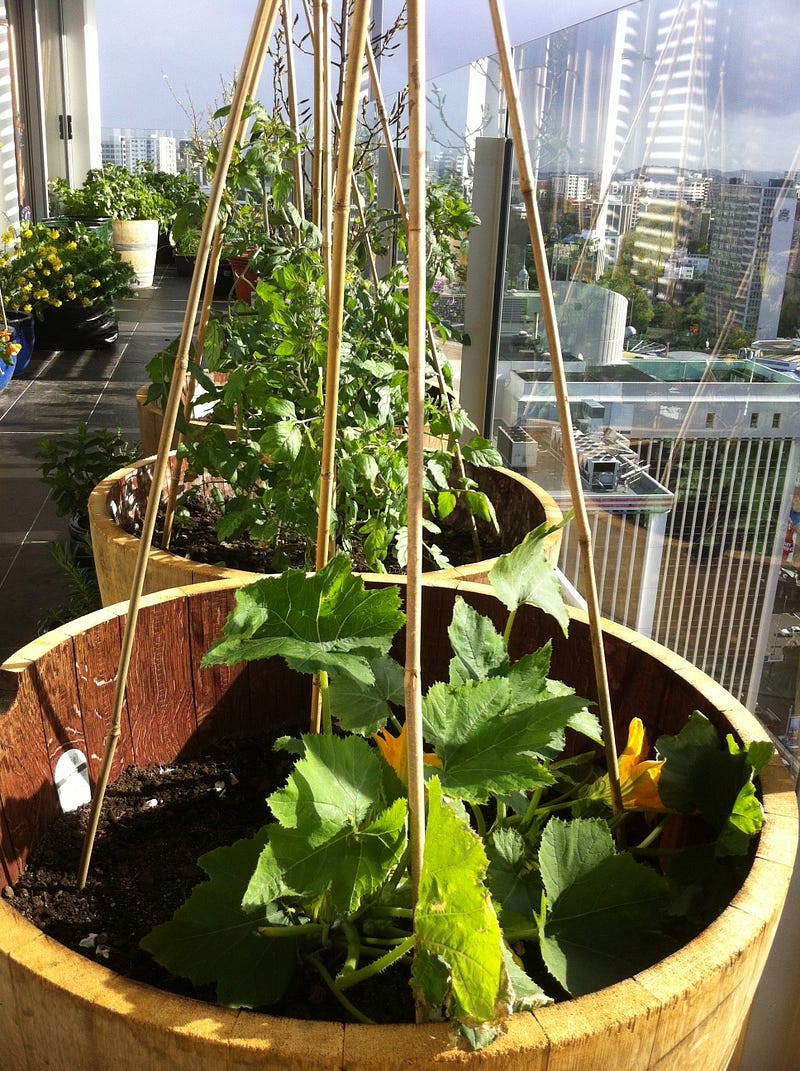
When it comes to balcony container gardening, there are a few important things to keep in mind.
First and foremost, you’ll want to choose the right containers for your plants. They need to be large enough to accommodate the root systems of your plants and have proper drainage.
Larger pots are also good for weathering drought or neglectful watering — if you forget for whatever reason, the more soil you have, the more easily your plants will endure! Container plants can dry out quickly, especially during hot summer months, so be sure to water your plants regularly.
You’ll also want to pay attention to the amount of sunlight your balcony or patio receives. Most plants need at least six hours of direct sunlight per day, so be sure to choose plants that are well-suited to the light conditions in your space.
Finally, don’t forget about soil! A high-quality potting soil that will provide the right nutrients and drainage is what you should be going for if you can afford it.
For me — always on a tight budget — I have made do with basic premium potting mixes for the most part, but always been sure to be careful with my feeding and building the quality of the soil up over time with good compost at the end of each growing season.
Growing Salad & Herbs Under Potted Fruit Trees
Growing salad and herbs under potted fruit trees can be a great way to maximise space and create a diverse and productive garden.
By planting shallow-rooted crops like lettuce and herbs under the canopy of a potted fruit tree, you can create a microclimate that helps keep the soil moist and shaded, while also providing protection from harsh sun and wind.
That said, if your pot is on the smaller side, paying attention to watering is all the more important when you have more plants needing a drink!
When selecting plants to grow under your fruit tree, look for varieties that thrive in partial shade and have shallow root systems. Good options include lettuces, spinach, arugula, and herbs like parsley, mint, and cilantro.
Fruit trees can also be heavy feeders, so be sure to use a rich, well-draining soil and add compost or organic fertiliser as needed to keep your salad and herbs growing strong.
Growing Root Veges On A Balcony!
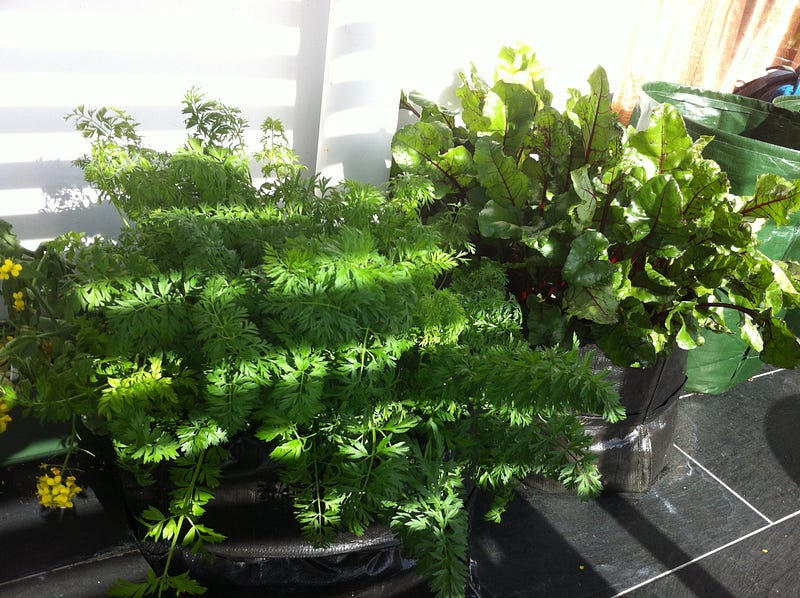
Growing root vegetables on a balcony is possible with some careful planning and attention to the needs of the plants.
While many root vegetables like carrots and beets prefer deep, loose soil to grow properly, there are some varieties that are well-suited for growing in containers.
My first attempts at carrots and beets produced a fine crop of leaves and not a lot beneath the ground!
As the years have passed though, and I’ve become more knowledgable in the garden, I’ve learnt that root veges — particularly potatoes and kumara (sweet potato) — do fabulously in pots too.
The keys are the right containers, good and appropriate soil, good sun and regular feeding and watering.
You’ll want a container that is at least 12–14 inches deep to accommodate their root systems. Look for containers that are wider than they are deep to maximize growing space.
Use a high-quality potting soil: Root vegetables require soil that is loose and well-draining. Ideally, you want to mix a high-quality potting soil with vermiculite or perlite to improve drainage and aeration.
Root veges are also heavy feeders and will benefit from regular fertilisation. Use a balanced organic fertiliser (I love my worm casings and worm juice — which I’ll write on shortly!) or compost to provide the necessary nutrients.
Root veges need at least 6 hours of direct sunlight per day to grow properly, so choose a sunny spot on your balcony or use grow lights to provide enough light.
And of course, root veges also require consistent moisture to grow properly, so be sure to water your plants regularly, keeping the soil moist but not waterlogged.
Some root veges are also just better suited for container gardening than others. Good options (aside from the potatoes!) include radishes, turnips, and small varieties of carrots and beets.
Teaching My Kids To Grow Their Own Food
Connecting my kids to the food they eat has been one of the great joys of this life.
The young ones pictured below are mostly grown now, with the big one now 20!
I adore her adult commitment to nutrition particularly and love that all my children know and understand where their food comes from, how to grow it themselves, and their ability to make connections between the food they eat, sustainability and their environments
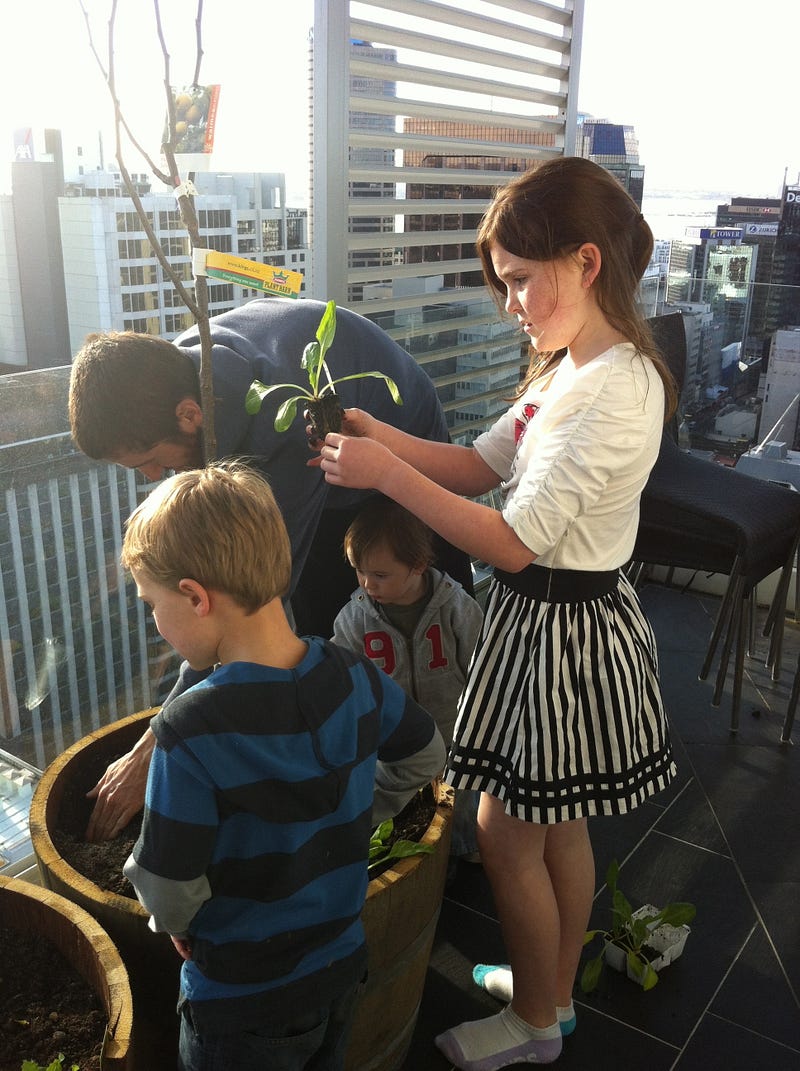
Teaching kids to grow their own food is a great way to introduce them to the joys of gardening, help them develop important life skills, and encourage healthy eating habits. Here are some tips to get started:
- Start with easy-to-grow plants: Choose plants that are easy to grow and maintain, like cherry tomatoes, lettuce, peas, or herbs such as basil, mint or parsley. These plants will help build confidence and excitement for growing their own food.
- Involve kids in the planning process: Encourage your kids to help plan the garden, including what to plant and where to plant it. This will help them feel a sense of ownership over the project and develop important decision-making skills.
- Make it fun and interactive: Gardening doesn’t have to be a chore. Make it a fun and interactive experience by encouraging your kids to get their hands dirty and participate in all aspects of the process, from planting to harvesting.
- Teach important skills: Gardening can teach kids important skills such as responsibility, patience, and problem-solving. Use the garden as an opportunity to talk about the importance of taking care of living things, the role of pollinators, and how to manage pests and diseases in an eco-friendly way.
- Get creative with recipes: Once your kids have harvested their first crop, encourage them to get creative in the kitchen by making healthy snacks or meals with their homegrown produce. This will help them appreciate the value of fresh, healthy food and develop important cooking skills.
My experiment of growing food on my 27th-floor balcony was a wild success, proving that even in the heart of the city, it’s possible to grow your own food and live a more sustainable lifestyle.
Creatively using vertical space, and careful attention to the needs of your plants can leave you with a thriving garden.
My first seasons produce was decent, but it only got better from there!
Physically, psychologically, nutritionally — there are so many benefits to growing your own food. And you can grow pretty much anywhere that there’s some sun.
Thinking about becoming a Medium member? When you register through my referral link, you’ll be granting me a small commission without any added cost to you! You’ll also unlock unlimited access to all stories on Medium.


