
Unveiling the Enchanting Wonders of Glendalough, Ireland
My captivating journey to this fascinating place
I just returned from an exciting journey to the UK and Ireland. I feel that I have had some ties to England and Ireland, even though my DNA says otherwise.
I visited many places in Ireland, including Dublin, which I loved, and Waterford, Kilkenny, Kildare, and Glendalough.
You Will Want to Add Glendalough to Your Bucket List
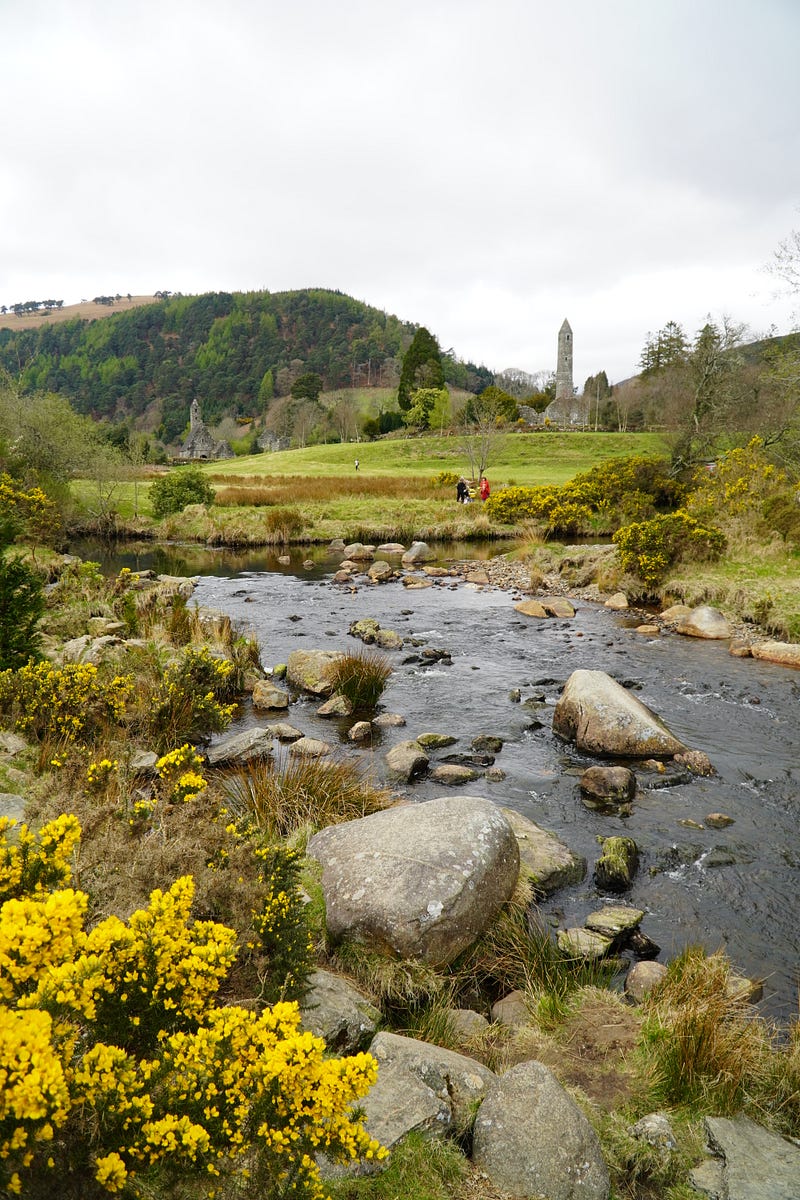
Glendalough, known as Gleann Dá Loch in Irish, is an ancient monastic site in County Wicklow, Ireland. This place is famous for its natural beauty, archaeological remains, and historical significance.
St. Kevin, an early Christian hermit and respected saint founded Glendalough. He arrived in the area in the 6th century and selected the valley of Glendalough as a site for prayer and solitude.
The secluded location in the Wicklow Mountains was perfect for monastic life and spiritual contemplation, as this happened before St. Patrick’s arrival. Although St. Kevin was a contemporary of St. Patrick, there is no historical evidence that they directly interacted.
For centuries, the monastic settlement at Glendalough was a thriving center for religion and education in Ireland. It was highly regarded for its cultural and spiritual importance, drawing in many monks, scholars, and pilgrims.
The monastic site consists of various structures and features that are easily visible. One of the most critical elements is the Round Tower, which stands approximately 30 meters or 98 feet tall.
It had several functions, including a bell tower, a lookout point, and a safe place to store valuable manuscripts and religious relics during attacks.
At Glendalough, you can find St. Kevin’s Church, a stone church also known as St. Kevin’s Kitchen. It’s one of the oldest structures there and has a unique barrel-vaulted roof and a small bell tower.
Also nearby is St. Mary’s Church, which dates back to the 11th century and displays Romanesque architectural features. It is conveniently located near the entrance of the site.
The site features the Cathedral, the largest church built in the 10th or 11th century. Visitors can see the remains of a stone arch and various intricately carved crosses.
Lastly, there is St. Kevin’s Cross, a high Celtic cross made of granite close to St. Kevin’s Church. The cross is adorned with intricate carvings and religious symbolism.
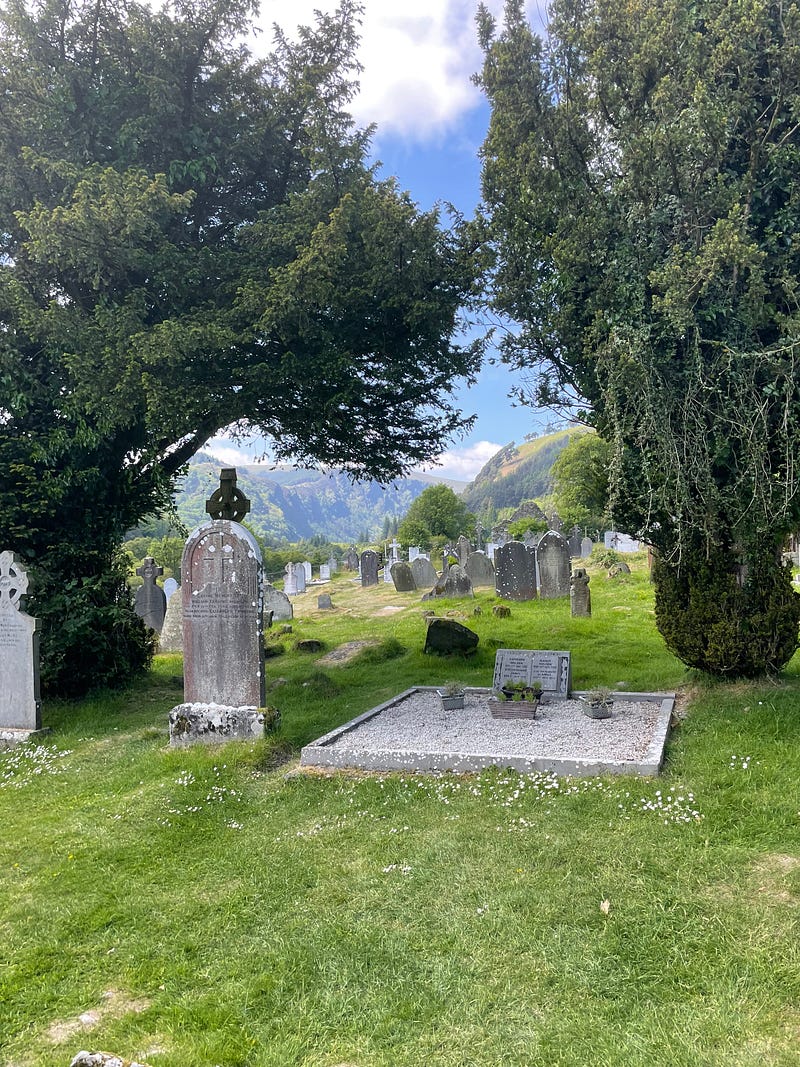
In addition to the structures, Glendalough includes numerous other features, such as churches, crosses, graveyards, and both artificial and natural lakes.
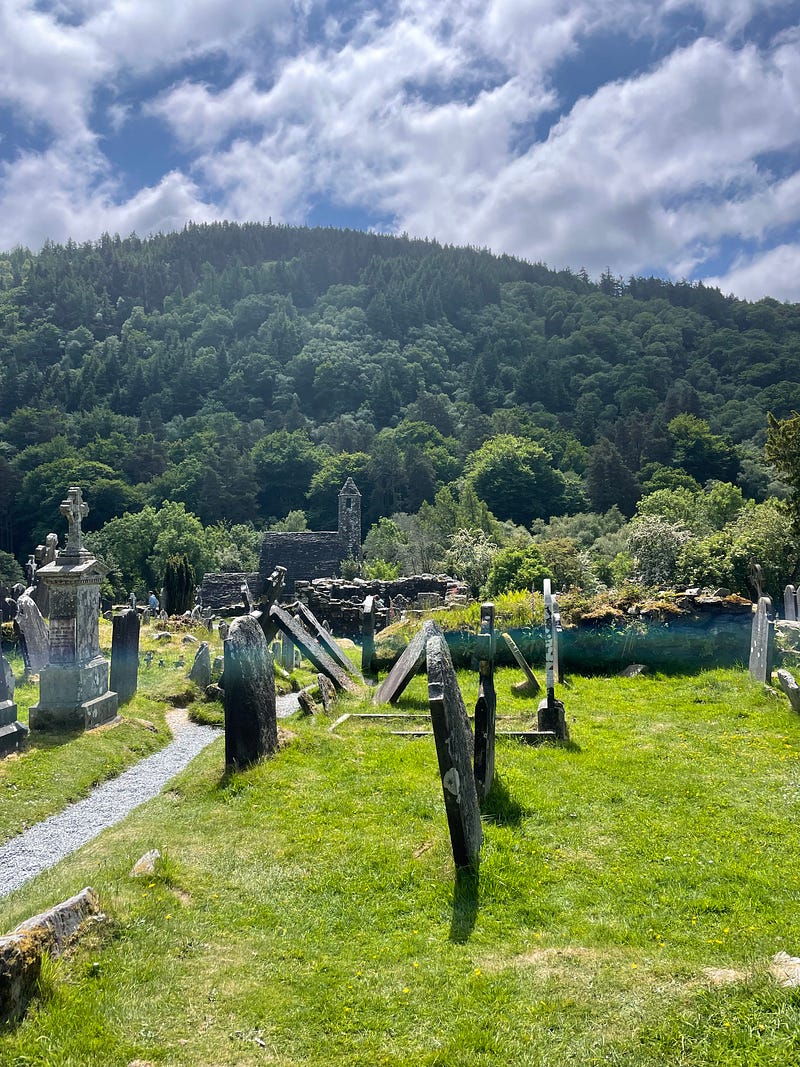
You can enjoy the beautiful scenery by walking along the picturesque trails, which include the well-known Glendalough Upper and Lower Lakes.
Glendalough is now under the management of the Office of Public Works, or OPW, as a heritage site.
It remains a popular destination due to its rich history and spiritual significance, as well as its serene and breathtaking environment, which allows visitors to connect with Ireland’s ancient past and natural beauty.
I felt a strong sense of deja vu when I went to Glendalough. It is not necessarily that I have been there, even in a previous life. However, I always thought I had some tie to Ireland, and I also felt that my interest in paganism in this lifetime was tied to that.
Was I an Irish pagan many, many centuries ago? The more I think about it, I likely was, and I know that getting a past-life regression is something that I am adding to my to-do list for the summer.
It fits when I think of that potentially being the case. Now, let’s talk about paganism in Ireland before St. Patrick arrived.
Irish Paganism From Centuries Ago
Before St. Patrick arrived, the Irish pagans followed a diverse and rich religious tradition called Celtic paganism. This belief system was prevalent in Ireland and other regions of Europe before Christianity became widespread.
Celtic paganism worshipped many gods and goddesses, known as a polytheistic religion. These deities were associated with different parts of nature, like the sun, moon, rivers, and mountains, and had specific traits like fertility, war, and wisdom.
The pantheon included significant figures, such as Dagda, the father god who protected the land, and Brigid, the goddess of poetry, healing, and craftsmanship.
The Irish pagans had a deep connection to nature and showed respect to their deities and spirits through ceremonies and rituals.
They acknowledged the existence of supernatural beings called the Sidhe, also known as fairies or the Good Folk, believed to reside in ancient mounds. These entities were regarded as potent, but their behavior was sometimes unpredictable.
Druidism was important in Celtic paganism, as the druids were the community’s religious leaders, scholars, and advisors.
They conducted ceremonies, performed rituals, and acted as intermediaries between the human and divine realms. The druids held a position of high respect and wielded a significant influence in Celtic society.
Celtic paganism was notable for its focus on oral tradition and storytelling. The bards, called filí, were highly respected poets who held and passed on historical and mythological knowledge.
They played a vital part in safeguarding cultural heritage by transmitting stories of gods, heroes, and legendary events from one generation to the next.
However, that all changed when St. Patrick arrived.
The Arrival of St. Patrick
St. Patrick, a Christian missionary, is recognized for bringing Christianity to Ireland during the fifth century. He worked hard to bring Christianity to Ireland, which obviously resulted in Christianization.
Therefore, the impact of Celtic paganism gradually decreased. Nevertheless, some customs, legends, and folklore persisted after the country transitioned to Christianity.
To understand Irish paganism, you must rely on historical accounts, mythology, and archaeological evidence.
However, due to the nature of ancient religions, there are still some gaps in knowledge, and different sources may provide differing interpretations. It’s essential to keep this in mind.
To learn more about me, go to:


