n, elegant design, and hidden narrative will draw you in, tantalizing your curiosity and urging you to delve deeper. But be prepared — what you find might shake up everything you thought you understood about this seemingly innocuous toy.</p><figure id="467c"><img src="https://cdn-images-1.readmedium.com/v2/resize:fit:800/1*JxKx4pzMybFtM1Q1NpeclQ.jpeg"><figcaption>Photo Credit: <a href="https://arstechnica.com/gaming/2024/03/sixty-four-is-an-idle-clicker-a-factory-sim-and-a-dark-extractive-journey/">https://arstechnica.com/gaming/2024/03/sixty-four-is-an-idle-clicker-a-factory-sim-and-a-dark-extractive-journey/</a></figcaption></figure><h1 id="467e">Problem-solving and Quick Feedback: Games versus Programming</h1><p id="88cf">When it comes to hobby programming and gaming, in particular games like Sixty Four, a couple of factors come across as key points of enjoyment and engagement. For one, gaming allows for quick feedback loops. This is the immediate feeling of success, accomplishment, or progression that a gamer experiences. Isn’t it thrilling, for instance, when your Extracting Channel yields the first machine?</p><p id="d08a">In contrast, hobby programming projects might not provide this level of instant gratification. Often, programming is a marathon, not a sprint, where fruitfulness of one’s effort only becomes apparent over a longer period.</p><figure id="8ab2"><img src="https://cdn-images-1.readmedium.com/v2/resize:fit:800/1*t4yLe8YvbFgDMH2niUcUaA.jpeg"><figcaption>Photo Credit: <a href="https://arstechnica.com/gaming/2024/03/sixty-four-is-an-idle-clicker-a-factory-sim-and-a-dark-extractive-journey/">https://arstechnica.com/gaming/2024/03/sixty-four-is-an-idle-clicker-a-factory-sim-and-a-dark-extractive-journey/</a></figcaption></figure><h1 id="dc6f">A Deeper Look at Sixty Four’s Dark Revelation</h1><p id="a48e">Behind the fun and engaging gameplay of Sixty Four lies a rather unsettling revelation that might leave players in a reflective mood. After spending a seemingly innocent seven plus hours on this game, you might find yourself wondering about the nature of humanity. This realization that arises subtly over the course of gameplay subtly points out some disquieting aspects of our existence.</p><p id="8ea2">Yet, isn’t it similar to the way real-life scenarios often work? Sometimes, we’re so engrossed in trying to solve problems, manage resources, or achieve any set targets that we might forget to look at the larger picture, potentially missing out on recognizing deeper, darker truths.</p><p id="0d45">In Summary, Sixty Four is a sublime blend of fun, challenge, and thought-provocation. This system design toy certainly offers more than what meets the eye. It’s not just about gameplay; it’s also about eliciting some introspection in the midst of the simulation. So keep playing, keep building, but also remember to keep reflecting!</p><figure id="d97e"><img src="https://cdn-images-1.readmedium.com/v2/resize:fit:800/1*RE_HUAPIb8-wowKMRRecRg.jpeg"><figcaption></figcaption></figure><p id="6902">In closing, it’s fascinating to observe how different styles of gameplay stimulate cognitive engagement. From real-time strategy games like Factorio, where resource management parallels real-world programming tasks, to continuous incremental games such as Cookie Clicker
Options
that keep your interest piqued through persistent progression. Falling under a unique blend of system design and management simulation, Sixty Four presents an intriguing test of strategy and optimization.</p><p id="8664">This game strips down the scenario to bare essentials — you, a blank white space, and an Extracting Channel. As you progress in constructing and optimizing machines to extract resources, the riveting process gives you firsthand experience of the alluring appeal of pseudo-programming. Without the burdensome specificities of real-world coding tasks, games like these captivate players with fun problem-solving aspects.</p><p id="36bd">Ultimately, whether it is the lure of quick feedback loops or the design success of conquering computational challenges in the form of a game, Sixty Four is compelling proof that our inclination towards gaming can reveal something profound about our motivations and cognitive abilities. Games like Sixty Four can act as a mirror, reflecting our deeply ingrained desire for accomplishment and continual improvement, albeit in a darker and rather unexpected manner.</p><h1 id="ecbb">Personal retrospective with Jason</h1><figure id="df7b"><img src="https://cdn-images-1.readmedium.com/v2/resize:fit:800/1*qhfjUYK-XwW4PScPSIJivA.jpeg"><figcaption></figcaption></figure><blockquote id="d884"><p>As a long-time fan of both playful creativity and meticulous system designs, I find that ‘Sixty Four’ strikes a unique balance. Its strategic gameplay entails a charm and simplicity that is at once enticing and profound, offering hours of brain-teasing excitement — a testament to its meticulous craftsmanship.</p></blockquote><blockquote id="8bf3"><p>However, it would be incomplete to talk about ‘Sixty Four’ without acknowledging its darker undertones. The game masterfully reveals the complexities and often devastating consequences of seemingly straightforward decisions.</p></blockquote><blockquote id="7e40"><p>‘Sixty Four’ is not just a game, it’s an exploration into the depths of decision-making and its never-ending ripple effects. It reflects our societal structure, and subtly nudges us to question — ‘Are our choices truly our own, or are we just playing along set rules and systems?’</p></blockquote><blockquote id="cf34"><p>Engaging: ‘Sixty Four’s strategic gameplay easily intrigues and engages players, keep them coming back for more.</p></blockquote><blockquote id="9103"><p>Challenging: Despite its simplified format, the tactical depth involved can create a challenging atmosphere, pushing players to constantly evolve their strategies and think on their feet.</p></blockquote><blockquote id="9d9f"><p>Insightful: While it is a game, ‘Sixty Four’ also serves as a social commentary, urging players to questioning their choices and assumptions.</p></blockquote><blockquote id="2b70"><p>In retrospective, ‘Sixty Four’, a seemingly simple system design toy, is far from superficial. It’s a catalyst causing us to question and probe deeper into the nature of choice and control, revealing a subtle darkness lurking beneath the fun, that arguably makes it even more fascinating.</p></blockquote><figure id="0dad"><img src="https://cdn-images-1.readmedium.com/v2/resize:fit:800/1*QCQqlZr6doDP-cszzpaSpw.png"><figcaption></figcaption></figure></article></body>
Hidden Layers Unveiled: The Sinister Truth Behind the Sixty Four Toy
Unveiling the Dark Secrets: The Intriguing World of the System Design Toy, Sixty Four
Decoding Sixty Four: A Close Look at the Dark Side of the System Design Toy
Problem-solving and Quick Feedback: Games versus Programming
A Deeper Look at Sixty Four’s Dark Revelation
Conclusion
Personal Retrospective with Jason
Introduction to Sixty Four
If you’re a fan of thoughtful design and mind-bending puzzles, have you heard of Sixty Four? This intriguing little system design toy is just the item that will keep you engaged for hours. It’s more than just a toy; it’s a container of something thrilling. Yet, as you peel back its layers, you might discover a slightly unsettling truth hiding beneath its polished exterior.
Despite its apparent simplicity, Sixty Four is designed to go much deeper than being just a plaything. Every detail, every twist and turn of this design toy holds a multitude of hidden layers underneath, each telling a story that is as captivating as it is dark. A myriad of infinite possibilities unfolds with each interaction, bringing a new perspective every time you touch its surface.
Construction and Management Simulation Aspect
Sixty Four is a perfect example that sometimes the most uncomplicated things can create the most profound impacts. Its smooth operation, elegant design, and hidden narrative will draw you in, tantalizing your curiosity and urging you to delve deeper. But be prepared — what you find might shake up everything you thought you understood about this seemingly innocuous toy.
Problem-solving and Quick Feedback: Games versus Programming
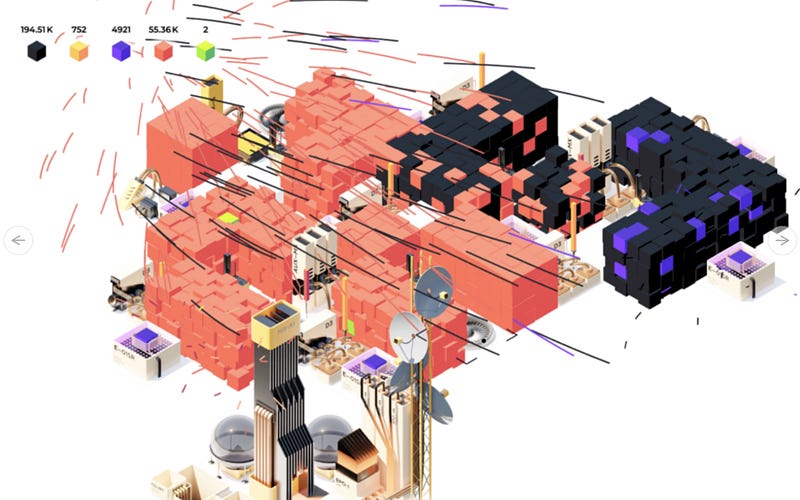
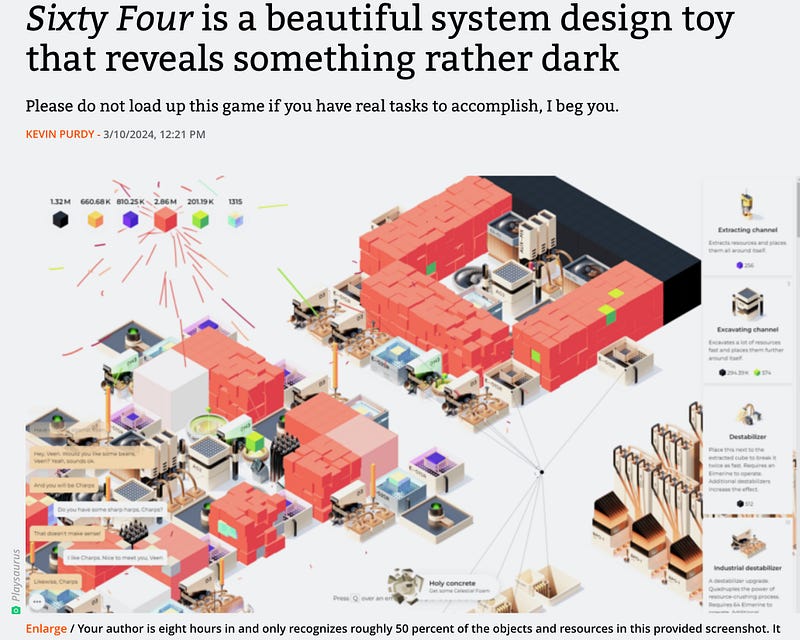
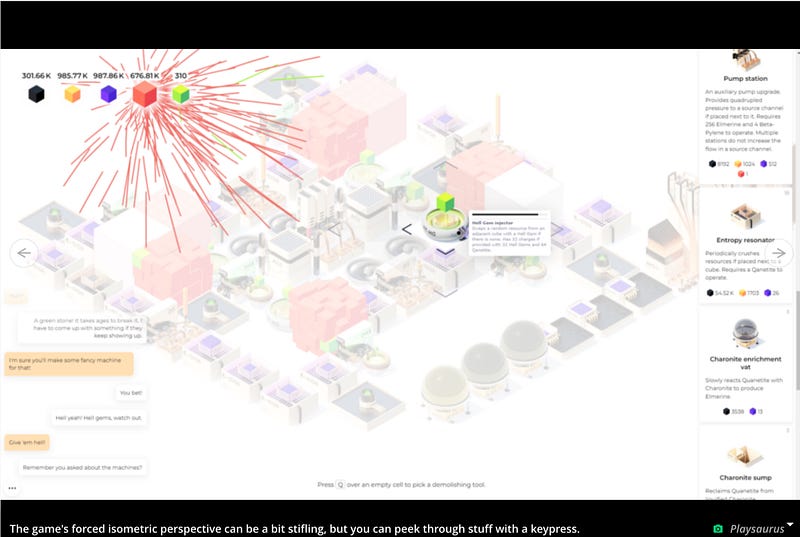
When it comes to hobby programming and gaming, in particular games like Sixty Four, a couple of factors come across as key points of enjoyment and engagement. For one, gaming allows for quick feedback loops. This is the immediate feeling of success, accomplishment, or progression that a gamer experiences. Isn’t it thrilling, for instance, when your Extracting Channel yields the first machine?
In contrast, hobby programming projects might not provide this level of instant gratification. Often, programming is a marathon, not a sprint, where fruitfulness of one’s effort only becomes apparent over a longer period.
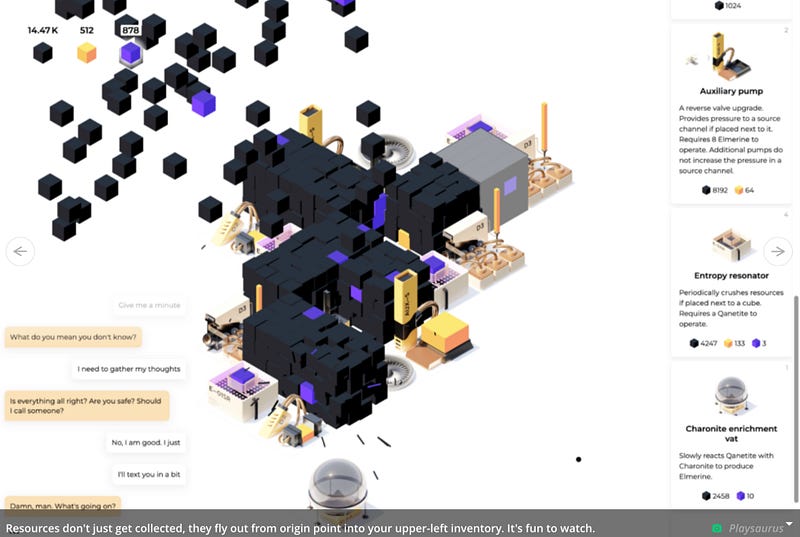
Behind the fun and engaging gameplay of Sixty Four lies a rather unsettling revelation that might leave players in a reflective mood. After spending a seemingly innocent seven plus hours on this game, you might find yourself wondering about the nature of humanity. This realization that arises subtly over the course of gameplay subtly points out some disquieting aspects of our existence.
Yet, isn’t it similar to the way real-life scenarios often work? Sometimes, we’re so engrossed in trying to solve problems, manage resources, or achieve any set targets that we might forget to look at the larger picture, potentially missing out on recognizing deeper, darker truths.
In Summary, Sixty Four is a sublime blend of fun, challenge, and thought-provocation. This system design toy certainly offers more than what meets the eye. It’s not just about gameplay; it’s also about eliciting some introspection in the midst of the simulation. So keep playing, keep building, but also remember to keep reflecting!
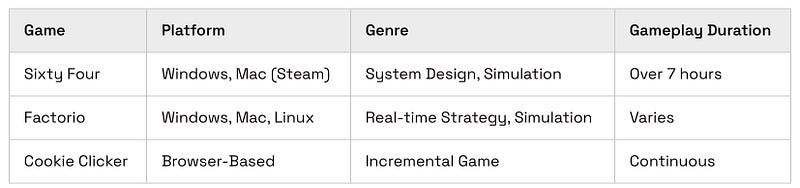
In closing, it’s fascinating to observe how different styles of gameplay stimulate cognitive engagement. From real-time strategy games like Factorio, where resource management parallels real-world programming tasks, to continuous incremental games such as Cookie Clicker that keep your interest piqued through persistent progression. Falling under a unique blend of system design and management simulation, Sixty Four presents an intriguing test of strategy and optimization.
This game strips down the scenario to bare essentials — you, a blank white space, and an Extracting Channel. As you progress in constructing and optimizing machines to extract resources, the riveting process gives you firsthand experience of the alluring appeal of pseudo-programming. Without the burdensome specificities of real-world coding tasks, games like these captivate players with fun problem-solving aspects.
Ultimately, whether it is the lure of quick feedback loops or the design success of conquering computational challenges in the form of a game, Sixty Four is compelling proof that our inclination towards gaming can reveal something profound about our motivations and cognitive abilities. Games like Sixty Four can act as a mirror, reflecting our deeply ingrained desire for accomplishment and continual improvement, albeit in a darker and rather unexpected manner.
Personal retrospective with Jason

As a long-time fan of both playful creativity and meticulous system designs, I find that ‘Sixty Four’ strikes a unique balance. Its strategic gameplay entails a charm and simplicity that is at once enticing and profound, offering hours of brain-teasing excitement — a testament to its meticulous craftsmanship.
However, it would be incomplete to talk about ‘Sixty Four’ without acknowledging its darker undertones. The game masterfully reveals the complexities and often devastating consequences of seemingly straightforward decisions.
‘Sixty Four’ is not just a game, it’s an exploration into the depths of decision-making and its never-ending ripple effects. It reflects our societal structure, and subtly nudges us to question — ‘Are our choices truly our own, or are we just playing along set rules and systems?’
Engaging: ‘Sixty Four’s strategic gameplay easily intrigues and engages players, keep them coming back for more.
Challenging: Despite its simplified format, the tactical depth involved can create a challenging atmosphere, pushing players to constantly evolve their strategies and think on their feet.
Insightful: While it is a game, ‘Sixty Four’ also serves as a social commentary, urging players to questioning their choices and assumptions.
In retrospective, ‘Sixty Four’, a seemingly simple system design toy, is far from superficial. It’s a catalyst causing us to question and probe deeper into the nature of choice and control, revealing a subtle darkness lurking beneath the fun, that arguably makes it even more fascinating.