
Unusual December celebrations
… tropical and atypical ways to celebrate
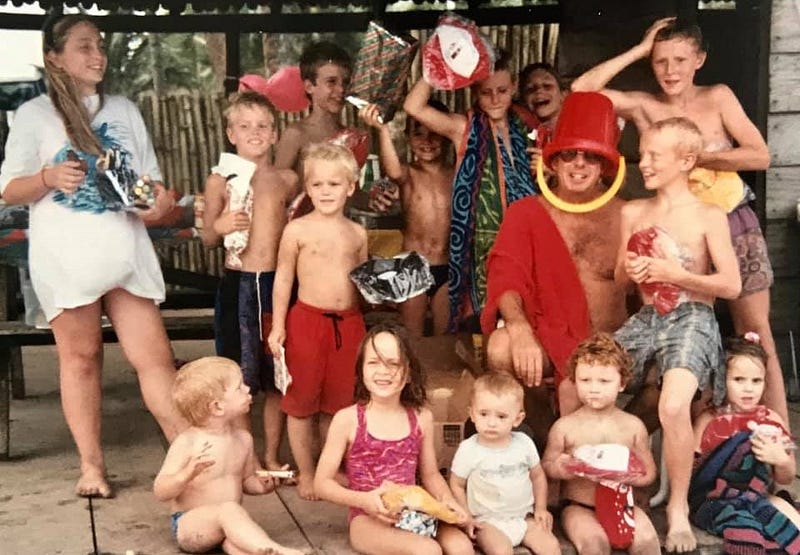
As many of you will know by now, I exist in a world of confused heritage, with roots from The Netherlands, but planted in African soil. Which means that, during December, our celebrations are not … typical.
It’s also the month in which I issued forth into the world, but as you get older that becomes less of a celebration than it did years ago. Anyway, let’s focus on the more fun, positive celebrations in our December months over the years:
On the 5th of December, Dutchmen and -women (and certainly the kids!) celebrate Sinterklaas (or Saint Nicholas). It’s the day on which a red-robed bishop arrives in The Netherlands on a steamer from Spain, seated on a white horse. (He used to be accompanied by black-faced zwarte pieten (“black petes”) but in our very politically-correct world, these days they have been replaced by pieten who have rainbow faces or faces dirtied by streaks of chimney soot. However, let’s keep the semi-political stuff for another conversation. There is an old tradition (with various differing origins) that a Spanish bishop travelled to the Netherlands to bring presents to children who had been good, and to scold kids who hadn’t. (Or even to take them back to Spain in a big brown bag.)
Kids put out their shoes the night before, in front of the chimney in their house, containing at least a carrot for Sinterklaas’ horse. Gifts are somehow magically deposited into those shoes by the pieten who clamber down (and presumably back up) the chimney while Sinterklaas and his horse trot along the rooftops.
It’s a special type of magic that allows all this to happen during the same evening all over the Netherlands and even in homes inhabited by Dutch people in other parts of the world. Sinterklaas even comes into some homes to chat with the kids (and sometimes with the adults) referring to a huge book where their behaviour and notable activities over the past year have been recorded.
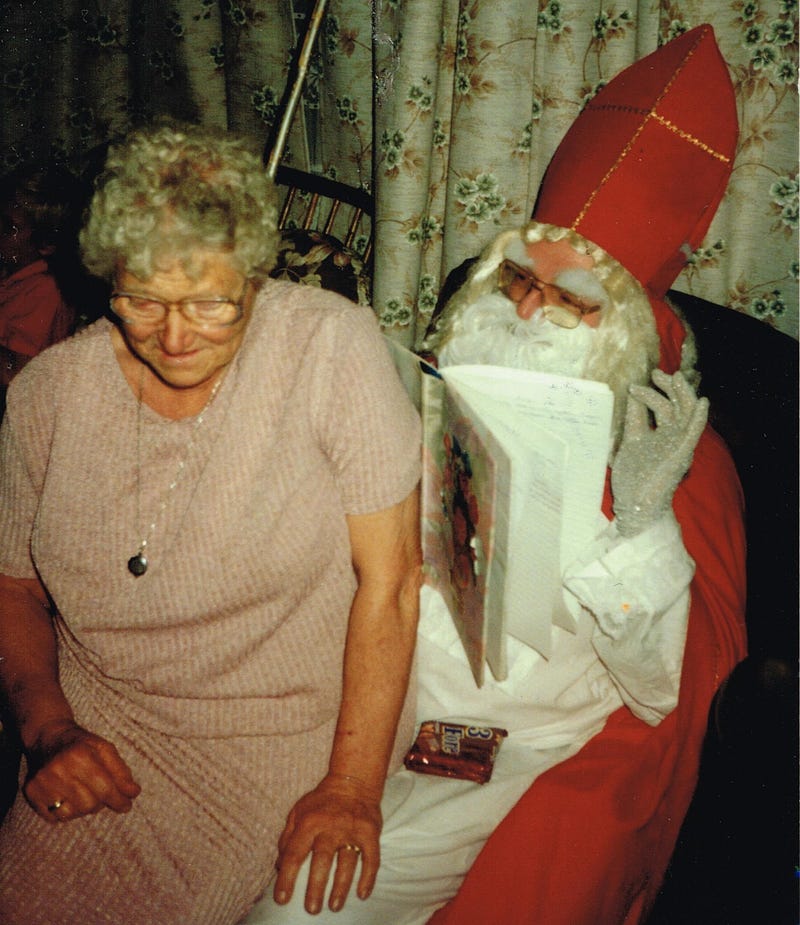
It’s an interesting fact that Sinterklaas, when he visits a home, often has an uncanny resemblance to someone’s grandpa or uncle. And they wear similar shoes. The zwarte piet who accompanies him, wearing dark make-up and colourful clothes, often sounds similar to another family member who was unfortunately unable to come to the festivities that evening.
In the Netherlands, these events happen in winter, of course. When one lives in the tropics, the weather in December tends to be — well, tropical. One notices that Sinterklaas tends to be annoyed by the massive white beard covering his face and tickling his throat, while the zwarte pieten tend to sweat profusely, causing the colours on their face to get a bit .. runny.
Anyway, for kids of the Dutch persuasion, even if they are only half-Dutch and half-something else, it’s a major event.
For the adults, too. There’s another tradition that we give each other little “presents” (we call them surprises, with a French pronunciation) which reflect something silly or downright stupid that happened to that person during the year. Accompanied by a long poem to provide the reasoning or description, and very thoroughly wrapped.
I use that term “wrapped” loosely. I have been on the receiving end of “gifts” nailed between two planks, cast into a block of concrete or into a pot of cooled tar, buried in a tin filled with grease, etc. My in-laws are masters at this art — I can remember raucous evenings where crowbars, sledgehammers, and even angle grinders had to be used to access “gifts”.
You can imagine that unwrapping the gifts is a noisy and messy affair, very much enjoyed by the adults, with lots of laughter. Perhaps I should use that term “adults” loosely, too.
Therefore Dutch communities around the world (who tend to be more Dutch than in the Netherlands, actually) go to great efforts to arrange the event, wherever they may be that year. We arrange for the holy man and his helpers to visit, we get together to watch the kids being praised and scolded, and then we have our own fun unwrapping and discussing gifts and the events that they are based on.
If you are interested, there’s a nice description of the tradition, linked below:
Now, even if you’re not Dutch, all this may sound strangely familiar…
Quite a bit has been written about the origin of Santa Claus and his character being derived from Sinterklaas, so I will not repeat any of that.
You really want to know? Go Google.
Christmas is of course a religious celebration and even if you are not particularly religious, it is an opportunity for families to come together.
In our own family, spread out across the globe as we are, we make great efforts to get together during December. Depending on travel dates, we have at times had to celebrate Sinterklaas and Christmas together, on the same day.
The most recent celebration together with (a part of) our own family, was in pre-covid times.
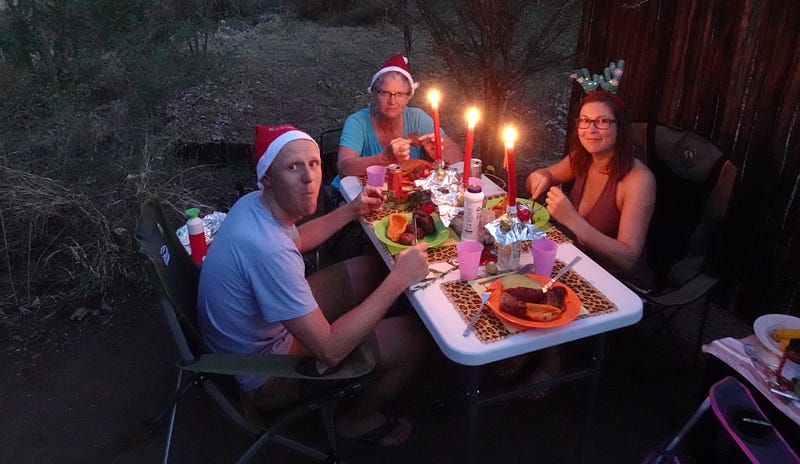
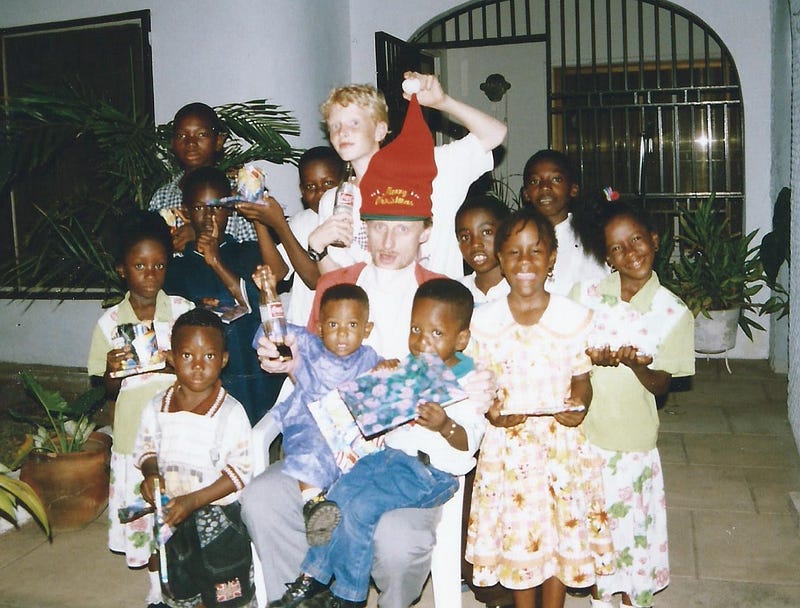
So there you have a little view into our family’s unconventional celebrations in December. This year, our youngest son is visiting from Hong Kong, and together with our middle son and his wife, we’ll be travelling down to the Zambezi River and Victoria Falls over Christmas.
I’m not expecting Santa Claus to be there, but who knows?