
Untreated or Undertreated People With HIV May Be Incubators for Omicron and Other Dangerous COVID-19 Variants
The compromised immune systems of untreated or undertreated people with HIV are providing fertile ground for COVID-19 to replicate and mutate
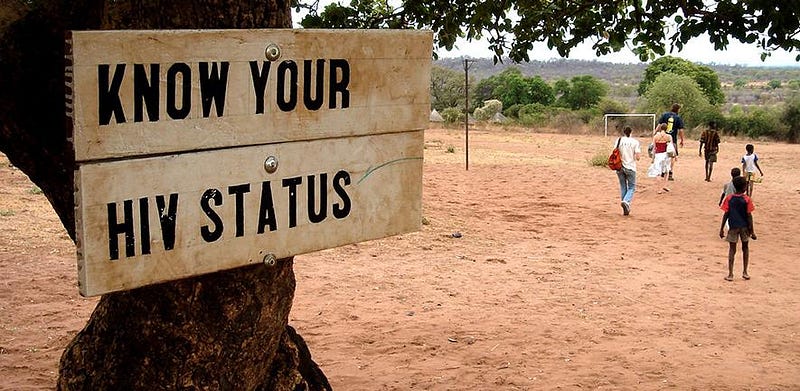
It’s likely not a coincidence that at least three COVID-19 variants may have originated in South Africa. In addition to the recent omicron variant, the beta variant and the C.1.2. are also thought to have emerged in the southern area of the continent.
In wealthy countries, as each new variant was recognized, the reaction was to increase vaccination efforts and add doses or boosters. Third shots have been provided to people undergoing medical procedures which impact the immune system.
One reason there has been such a push in richer nations to work towards helping immunosuppressed individuals reach levels of healthy individuals is the understanding that some of the COVID-19 variants have likely developed in individuals with cancer or other medical conditions. There are indications that the alpha variant that infected so many people in the UK last winter arose in immunosuppressed individuals such as those being treated for lymphoma.
The costly treatments that keep many patients with immunocompromised conditions alive aren’t available for many in poorer countries. This means that advanced-stage cancer patients for example, in these countries aren’t likely to survive long enough for the coronavirus to evolve and mutate should they catch it.
However, this is not the case for the millions of people infected with HIV who are untreated. Although there are very effective and inexpensive treatments available for HIV as well as preventative drugs that can completely block infection, there are still many who don’t have access to these medications, or who choose not to take them, especially in sub-Saharan Africa.
In poorer countries where access to HIV testing and treatment was already limited before the emergence of COVID-19, the pandemic caused further restrictions on personnel and supplies. While many more people are getting screened and treated for HIV, there are still at least 10 million who don’t know they are infected or refuse to get treatment because of the stigma still associated with the disease.
There are millions more who seek treatment but it is interrupted periodically due to a shortage or the inability to get to the clinic or pharmacy because of lack of transportation. Lockdowns, closures, and problems with supply chains related to the COVID-19 pandemic greatly increased these problems. It’s been estimated that close to 300,000 people in sub-Saharan Africa being treated for HIV could die due to the combination of HIV treatment interruptions and exposure to COVID-19.
With treatment, the immune systems of those with HIV can tolerate COVID-19 vaccines and infections as well as healthy individuals can. In under-treated or untreated HIV-positive individuals, COVID-19 invades the lungs, lining of the blood vessels, and the brain where it takes up residence and replicates. Scientists in South Africa have said, “There is growing evidence that the beta SARS-CoV-2 variant first identified in South Africa is leading to more severe disease in people living with HIV, and that failure to clear SARS-CoV-2 infection in a patient with advanced HIV creates conditions that can lead to the evolution of dangerous mutations in SARS-CoV-2.”
Renowned bioinformatician Tulio de Oliveira who identified a new COVID-19 variant in South Africa in 2020, suggested that the possibility that the Omicron variant emerged in someone with the COVID-19 virus in their system for a long period due to a suppressed immune system is “the most plausible origin story” for the development of the variant.
One case used to suggest that failure to clear the coronavirus may lead to mutations and new variants was a woman treated for HIV for fifteen years who was hospitalized for COVID-19. Although her symptoms cleared after 8 days repeated testing showed that the coronavirus continued to survive in her system, mutating repeated, for 216 days. Thirty-two genetic changes in the virus were documented including some known to strengthen the virus’ ability to resist the vaccines and medications that prevent or treat COVID-19.
A concerning part of this case is that, surprisingly, the mutations were not the result of the virus adapting to survive when attacked with medications. The patient was only treated with oxygen so the mutations occurred spontaneously and due to the virus needing to adapt or die. What is even more frightening about this case is that if this patient had not been one of 300 people with COVID-19 and HIV or Tuberculosis who were enrolled in a study, no one would have been aware that she could be spreading countless variants to others for seven months or longer.
Researchers in Europe and the U.S. have observed frightening mutations occurring in COVID-19 patients whose immune systems have been suppressed by medications for cancer, autoimmune disorders like rheumatoid arthritis, or which are prescribed to prevent organ rejection in transplant patients.
De Oliveira has said that the population most likely to generate such mutations are those in sub-Saharan Africa with unknown, untreated or poorly treated HIV. These individuals who are primarily young, with seriously weakened immune systems, who haven’t been vaccinated for COVID-19 could “become a factory of variants for the whole world,” he warned. “Expanding testing and treatment for those with undetected HIV would reduce mortality from HIV, reduce transmission of HIV, and also reduce the chance of generating new COVID variants that could cause other waves of infections.”
Dr. Jonathan Li, Director of the Harvard/Brigham Virology Specialty Laboratory, and Director of the Harvard University Center for AIDS Research Clinical Core, has called this a “syndemic.” This term refers to the confluence of two epidemics or pandemics with the potential for outcomes to worsen for both.
Of over 8 billion doses of COVID-19 vaccines that have been administered worldwide, only 26 million, or 0.3 percent, have been dispensed to those in South Africa. To date, about 55 percent of the world population has received at least one dose although only 6 percent of those in poor countries have received the same.
Twenty-four percent of those in South Africa, one of the wealthiest nations in sub-Saharan Africa, have been fully vaccinated. However, other countries with large HIV-positive populations have been much less successful. Namibia has fully vaccinated about 12 percent of its population; Kenya 5 percent; Zambia, 4 percent; Malawi 3 percent and Nigeria, less than 2 percent.
As the spread of omicron, classified as a variant of concern, increases due to its high transmission rate which is twice that of the delta variant, wealthy nations want to isolate southern African countries when they need the most help. As the head of the World Health Organization points out, this policy is not just immoral, it is medically self-defeating, and unless it changes it could lead to the development of variants that are transmitted even faster and are not impacted by our vaccines.
Researchers Nokukhanya Msomi, Richard Lessells, Koleka Mlisana, and Tulio de Oliveira wrote about the intersection of HIV and COVID-19 in an article published in Nature this week. “Both diseases could be curbed more effectively if they are tackled simultaneously, with public-health responses strengthened by the lessons learnt from both,” they said.
These scientists did note a risk in drawing increased attention to the relationship between COVID-19 and HIV could be worsening the stigma of living with HIV. They argued, “The best way for governments to protect their citizens is not by further stigmatizing those infected with HIV. It is by quickly providing vaccines to protect the world’s most vulnerable.”

If you enjoyed reading this article, you might also like these:
You can find links to my other work on Medium and follow me here. Thanks for reading!
Enjoy Medium to the fullest. Become a member and part of your membership fee will go to support the writers whose stories you read.