
Unstoppable Power: Martyrs and Lovable Bad Boys
Kill them — they bounce back? We’re drawn to martyrs who won’t surrender…

GALIVANTS FERRY, S.C. — Humbled, humiliated and fresh out of prison, everyone wanted to get close to John Jenrette.
Normal politicians and business people “work a room,’’ eyeing everyone, zeroing in on the best targets, shaking hands, offering business cards, trying to grab your attention.
John Jenrette was totally different: he stood still in the back of the room. And people kept coming up to him, trying to get his attention.
It was 1988 and I was a 23-year-old newspaper reporter. I’d never seen anything like it. People were drawn to him. Something was irresistible about this man and his storytelling.
It was a classic “local boy’’ with nothing, rises to the top story…
Elected to Congress in the post-Watergate wave, the native of little Loris, S.C., was voted “whip’’ of the new majority freshman class of 1975, meaning his large class of 49 Democrats from across America considered him their leader.
He represented the northeastern corner of South Carolina known as “the Pee Dee’’ including the “Independent Republic of Horry,’’ aka a booming little resort region called the Grand Strand, anchored by a golden town called Myrtle Beach. But his appeal was universal.
Long before the establishment went after Bill Clinton and Donald Trump, John Jenrette was one of those “lovable bad boys’’ who enraged his enemies while earning the awe and devotion of his many followers.
“In his day, John Jenrette of the the Pee Dee was a walking god,’’ writes South Carolina veteran journalist John Monk. “Before and after he married Rita, countless women threw themselves at him. He was assured of a lifetime congressional seat in his district, which stretched from west of Florence to Myrtle Beach. Power, money, sex — all were his.’’
In a 2017 biography, his former aide, John Clark wrote:
“When congressional aide John F. Clark met his future boss, South Carolina Congressman John Jenrette, in 1975, he was awestruck. Jenrette seemed to be everything Clark was looking for in a leader. With intense charisma and uncanny knowledge of how Washington worked, Jenrette seemed poised to lead a New South and destroy the common stereotype of white southerners as narrow-minded racists.’’
The Democrats won so many seats in 1974 that they controlled more than two-thirds of the House of Representatives in 1975. Speaker Tip O’Neal said Jenrette could be a future speaker or even run on a national ticket. He lasted a little more than five years.

The great ambition that drove Jenrette to the top politically also included a thirst for alcohol, beautiful women and money. He was arrested in the FBI’s Abscam sting, caught on tape saying he had “larceny in my blood.’’
He was convicted of accepting a $50,000 bribe from the disguised FBI agents, money that he denied taking. His wife Rita divorced him, posed nude in Playboy and wrote a “tell all’’ book describing how she and her husband made love on the Capitol steps. They were the talk of the nation in the early 1980s. The Capitol Steps comedy troupe was inspired by their story.
In retrospect, Jenrette told me his biggest mistake was stretching out the appeals process so long: He served just 13 months in prison but because of all those appeals, nearly eight years passed between his leaving Congress and becoming a free man eligible to return to D.C.
People were literally begging him to run again to reclaim his old seat in 1988. He had that “it’’ factor that made people want to support him.
“I don’t measure a man’s success by how high he climbs but how high he bounces when he hits bottom” — General George S. Patton
Jenrette never ran again. He saw how politics had changed in South Carolina and in Washington between 1980–88, the years he was out of power. But he always remained one of those hidden influencers. People still love him.
He got in trouble again (including a shop lifting charge) but people loved him any way and kept doing business with him. Retired, he now lives on the ocean just north of Myrtle Beach quite content.
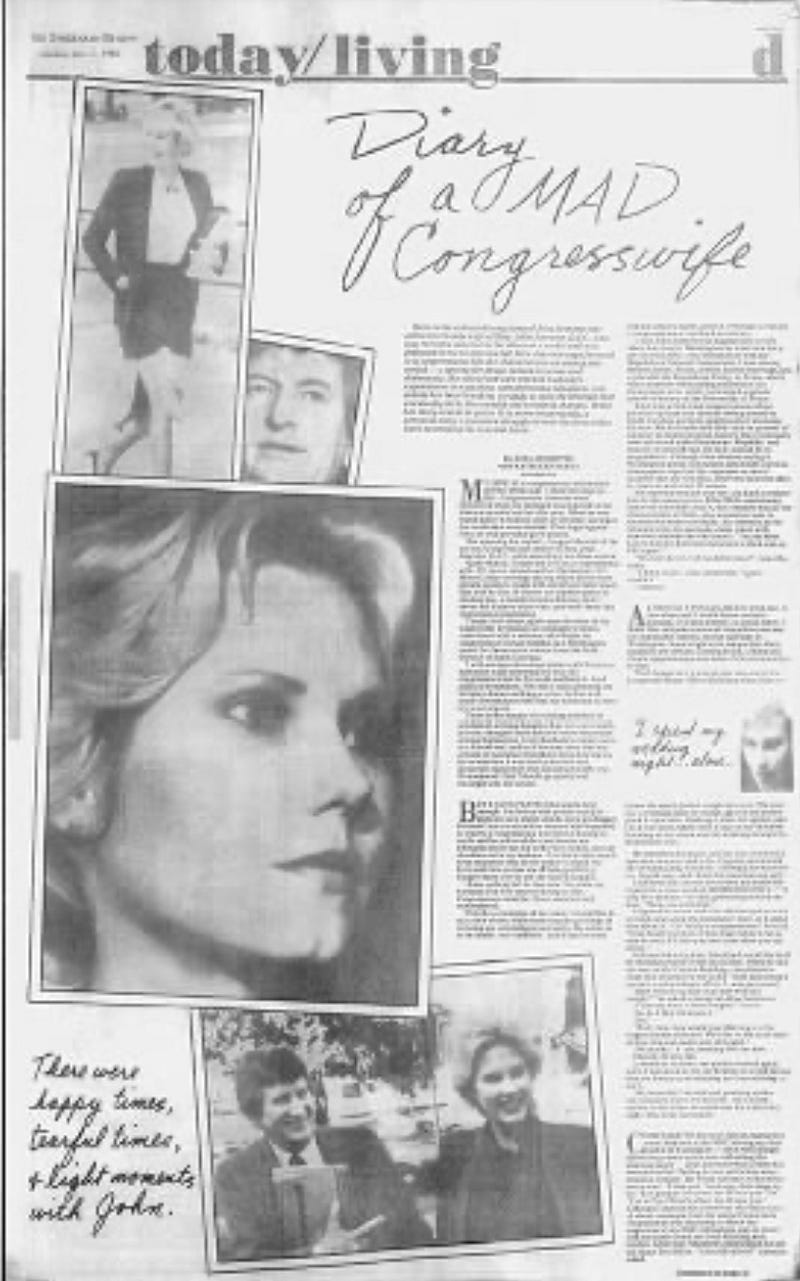
Like Andrew Johnson, Bill Clinton and Donald Trump, he had a “bad boy’’ image from irritating his adversaries, saying and doing things others were afraid to say but still somehow managing to come back.
Negative press coverage and attacks from the Establishment made them political martyrs, more beloved than ever with their people. Or as today’s chattering class class calls them: “the base.”
Each got in trouble, stirred up embarrassing headlines but kept fighting, moving forward.
Again and again.
Clinton, the only president in recent memory to lose both Iowa and New Hampshire and still win, proudly called himself “the comeback kid.’’ His biographer, David Maraniss, identified him as “the hero child’’ in an alcoholic family, the one who was addicted to the spotlight, the glory, the attention from trying to redeem the entire family by doing good.
The key difference: Normal pols try to win over a majority.
When Bill Clinton speaks, he looks to the person who likes him least in the room and trys to win over “that one.’’ It’s a need to seduce, love and be loved. And we all want to be loved so it usually works.
You see some of that same need for redemption in other martyr heroes as well.
The old public relations adage (and Trump especially is a master of PR) is that all news (good and bad) is still good because it gets you more attention, helping you seize the agenda while your opponents quietly stand in the corner hoping someone might notice them.
Martyr means “witness to the faith,’’ someone who was destroyed because of what they believed in…
St. Justin Martyr is where the term “martyr’’ comes from. One of the original rebels speaking truth to power, Martyr spoke the Word in the Roman Empire when his religion was outlawed.
Martyrs are beloved by their followers and hated by their adversaries because they deny the power of one ruling Establishment while following a different higher order, Note how Martyr scoffed at the emperor’s government because he followed a higher authority:
“God called Abraham and commanded him to go out from the country where he was living,’’ Martyr said. “With this call, God has roused us all, and now we have left the state. We have renounced all the things the world offers…. The gods of the nations are demons.’’
In the life of John Jenrette, Jenrette was a civil right pioneer starting his career as a state lawmaker in 1964–72, defying the old “Jim Crowe’’ norms that still existed in South Carolina at that time. Taking on one establishment while building up a new group of followers propelled him upward through the 1960s and 1970s.
It all crashed in 1980 with Abscam.
Martyr told his accusers:
“That is our desire, to be tortured for Our Lord, Jesus Christ, and so to be saved, for that will give us salvation and firm confidence at the more terrible universal tribunal of Our Lord and Savior. And all the martyrs said: Do as you wish; for we are Christians, and we do not sacrifice to idols.’’
We see martyrs throughout the history of the Church and in our broader culture. Political martyrs like Jenrette are beloved by “their people’’ and hounded by the ruling Establishment.
Culturally, this is ingrained in Robin Hood (robbing from the rich to give to the poor) and “All the King’s Men,’’ the classic book and films about the life of Willie Stark, based on Louisiana governor and Senator Huey Long.
The “All the King’s Men’’ title (which inspired the “All the President’s Men’’ story of the fall of Richard Nixon) is dervived from Long’s motto, “Every Man a King,’’ where every character has a great fall and from the Humpty Dumpty poem dating back to 1797:
“Humpty Dumpty sat on a wall, Humpty Dumpty had a great fall. All the King’s horses and all the King’s men, couldn’t put Humpty together again.’’
In “Patton,’’ audiences and critics alike loved the general who won great battles, then said things he shouldn’t and got himself into trouble (repeatedly) and managed to come back.
In “The Godfather’’ and “Goodfellas,’’ films, the “bad guys’’ are the good guys because they are fighting for another cause portrayed as more moral than the law: their families, their people, their cause as opposed to the rules of government.
“You got to make good out of bad,” Willie Stark tells his aides, justifying “bad’’ behavior leading to a greater good or higher moral authority.
In each case, when people feel that a certain “bad boy’’ or troublemaker is challenging their adversary, particularly an establishment others are afraid to challenge, they overlook or forgive the bad behavior, remaining loyal to the leader (or memory of that leader) who was loyal to them.
In “Us against Them” battles, we tend to blame the sinners who wrong us and more easily forgive the sinner who we see as fighting for us.
“John Jenrette irritated a lot of people over a lot of years down there because of his political positions on behalf of the little people,’’ his attorney, Kenneth Robinson, said at a December 1980 congressional hearing. “He was tarred and feathered many a time in the press. They set out to destroy him over and over until finally through the Abscam effort they appeared to be successful… There has been much John Jenrette has done that has been beneficial to all mankind… He stood tall and has had courage. He has spoken for what he believes in.’’


