
A Dark Story of Bangladeshi Immigrants in Qatar
Many culprits are walking freely. Who will punish them?
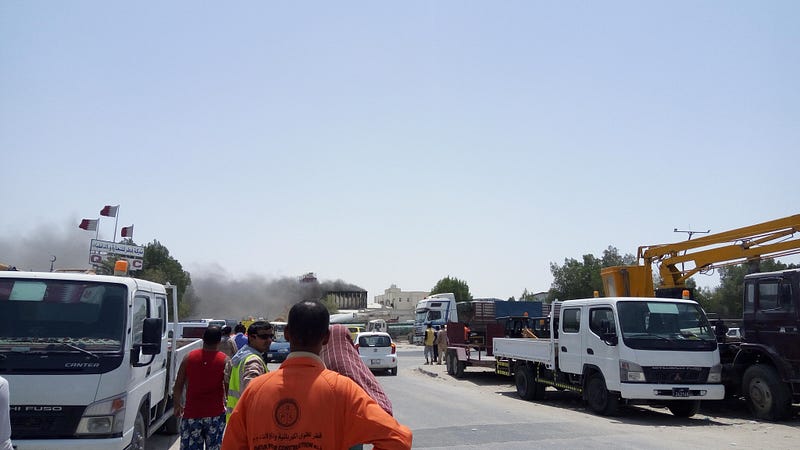
Disclaimer:- Based on my stay in Qatar in 2016–2017, I wrote this article in July 2019. Many data of this article, especially minimum wages and working conditions may have changed in Qatar.
One Bangladeshi worker has to pay anything from 15k to 20k Riyal (4k to 6k US$) to reach Qatar.
From HR Desk:-
I worked as a Human Resources Personal in Qatar Power Construction in Qatar in 2016. During that tenure, many Bangladeshi immigrants working in the same company approached me requesting to be a mediator or broker for a visa new for their friends and relatives. They wanted me to talk to the manager. They had a fair offer for me, 3 to 4 thousand Qatari Riyal (about 1000 US$) for each unskilled and semi-skilled visa.
Most didn't ask because they were generous and kind; they asked because they wanted to earn a massive commission by reselling this visa.
I had never prioritized such a way of earning. More notably, I always disagreed with such selling and reselling visas.
The main reason is that a mouthwatering commission is given to a human resources person for a visa. They sell it through different channels from Qatar to Bangladesh, costing prospective workers about 15 to 20K Riyal (4100 to 5500 US$) depending upon the company and the position.
An Employer and Company may be good and generous. Still, when a visa offer reaches the hands of an individual or any local human resource agency, Its value in the market is beyond imagination. Even though the company provides it for free, there is always a commission game.
The Journey of Repayment
How will immigrant workers be able to manage that money? He takes a loan from his friends and family, unsure what the interest rate would be. The 15000 to 20000 Qatari Riyal (4100 to 5500 US$) for that visa is earned slower than expected. A Bangladeshi immigrant might require a minimum of two years to pay that loan. A monthly saving of 1000 Qatari riyals (though highly unlikely) is needed. They sell a free visa and a company's free ticket for two years of any worker's equivalent cost. Immigrants spend two years of their life repaying a visa commission. A worker and his family benefit nothing from his earnings.
One Such Incident: 12 Employees of Naseer
I remember a particular case of twelve Bangladeshi people working in my company. An individual named Naseer was a Bangladeshi who had a small construction company. It was more about the supplier company supplying workers to different companies whenever needed. As it was his own company, he had immigrated many workers with no purpose but to collect the initial sum of 12 to 15 thousand Riyal from every individual.
His evil deeds didn't stop there. He used to supply them to different construction companies. They would pay him 100 Riyal per day per worker from a company (This also has another commission game to be discussed another day). He used to pay workers less than 30 Riyal per day. They would only be paid for a day if they had work. Even for this small payment, he wouldn't be honest. He was supposed to pay monthly but needed to produce it more regularly. A month of salary after three to four months.
With all these hectics, they were allotted to work regularly in the company I work for. Things needed to fall for good as they needed to be adequately paid.
The time came when they had to renew their visa. In Qatar, visas are re-validated every year. So this man Naseer demanded 3500 to 5000 (1k to 1.4k US$) Riyal for every one of his twelve workers working with us. His arguments were because they were not working with his company, they had to pay themselves for their visa processing. A worker working for 700 +200 Riyal has to pay 3500 Riyal ( another half-year of his salary) to renew the visa. His worker didn't have any other option. He had frightened them, saying the one who wouldn't pay him has to sit unemployed, or they may even have to return to their home country. He was successful in this attempt.
Blocklisted Naseer didn't stop.
A few months later, Naseer company was blocklisted by the Qatar Government for violating many immigrant policies. So, it was a time when Our company had to transfer the visa of those 12 workers in the name of Qatar Power Construction. As he saw his commission from the company going out of his hands, he again demanded 3000 each from every worker for transfer charges.
Workers reported this incident to me, and I discussed it with the HR Manager. Their reporting backfired, and a new threat reached those workers. I don’t know what went wrong.
They had no option other than to pay what he demanded. After some hurdles (and payment through the third party, of course), we successfully transferred ten of them to our company. Despite the unwillingness of the eleventh man, he had to return to his old owner. I had contact with him for months, but our contact stopped after leaving that company.
The twelfth man returned to Bangladesh in 2016.
Naseer is just an example.
Naseer is not just a single person who has taken advantage of owning a company. Even though his company was blocklisted, I never heard of him going to jail in Qatar (and maybe never in Bangladesh). I found no faith in the Embassy of Bangladesh, Doha, in the eyes of workers.
Those brokers who take a Bangladeshi visa for nuts and sell them for diamonds were everywhere. They were where I worked too.
They are still everywhere in search of victims and new prey.
Beyond Naseer:- Other Problems faced by Bangladeshi immigrants.
One of the critical problems unskilled and low-skilled employees face is having their monthly salary reconsidered. Asking for a pay raise is a crime in most companies for unskilled workers. Paying back their debt of initial visa payment doesn't mean their hard days are over.
This is one reason we used to see most of the Bangladeshi workers working in the same company in Qatar for 20 and more years. I have seen their salary structure where they work with the same owner or company for many years with no increment. I have seen them working in some individual shops with intensive work, with no pay for months and no proper rest. Many have worked in a construction company for months with no compensation and nowhere to approach.
Though the Qatar government had rules of increasing their salary annually, it is a distant dream for mostly unskilled workers. In the past few days, they were kept from changing their company. If they wanted to change their employer, their sponsor would cancel their visa and return. They were getting their visa revoked meant either permanently settling back in Bangladesh or paying another 15000 Riyal to come back again.
Abolishment of Kafala System:- Does it help?
Thanks to the Qatar Government's new rule, migrant workers can change the contract with their employer after specific years of the agreement. This contract can motivate every individual to search for better jobs. But only some of the companies want to give a transfer. Thus they need to return and come again; this rule is only beneficial to Bangladeshi workers if they have excellent contact with HR or someone who can connect them with HR. Many unskilled and semi-skilled workers are unlikely to be beneficiaries of this system.
The writer within me has witnessed many more such stories, which I shall continue to share in the coming days.
Why am I writing this?
I write about this situation because many Bangladeshi workers have suffered because of this process. Most of those stories will vanish. Most of the juvenile days workers spend abroad, far away from family, and most of them might continue to struggle in the Gulf.
Being a Nepalese, I have seen these things replicated within Nepal. The Government of Nepal implemented a free visa and ticket system for immigrant workers needing to pay no amount to agencies. But it is followed only by a few agencies; the rest charge anything from One hundred thousand local currency (almost one thousand dollars) for a salary of 700 + (200 QAR for food allowance). Even though this looks easy to return, only a few unskilled workers save beyond 600 QAR. If the initial invested amount is borrowed in a loan, one might need a minimum of 6 months to pay it ultimately. This comes at a substantial cost of separation from families.
Above the law?
Everyone knows these illegal activities have been happening, but the government made almost negligible complaints in such cases. These countries' Embassy in the Gulf seems silent in such a situation. I wish any human rights and civil society were speaking about this, but it has yet to be discussed, let alone addressed.
In Nepal, I haven't heard from anyone being punished for such a crime. Neither have I listened to the Bangladeshi government taking any steps against these modern forms of slavery (Of course Bangladesh government must be aware of this).
Making it Short:-
This aspect of Immigrant workers working in the Gulf has always been vividly known yet unspoken. As a storyteller within me longs to speak about their life, I write this post dedicated explicitly to Bangladesh people. There are also Nepalese and Indians who have suffered, but it's the Bangladeshi who has suffered the most.
Immigrant workers have been spending months and years to repay their initial investment when they struggle in the exhaustive heat. If Bangladesh's government doesn't take proper initiative, the rich will continue to become more prosperous, and the poor will continue to struggle.
And a generation will spend themselves in the form of modern-day slavery.
If you enjoyed reading this story, I would like to send you my weekly newsletter and updates. Click here to subscribe. I promise I won't spam you.


