
International Relations
Unraveling the South China Sea Saga: A Historical Tug-of-War, Diverse Claimants, High Stakes, and Elusive Solutions
Navigating the South China Sea: Historical Conflicts, Varied Stakeholders, and the Search for Resolution.
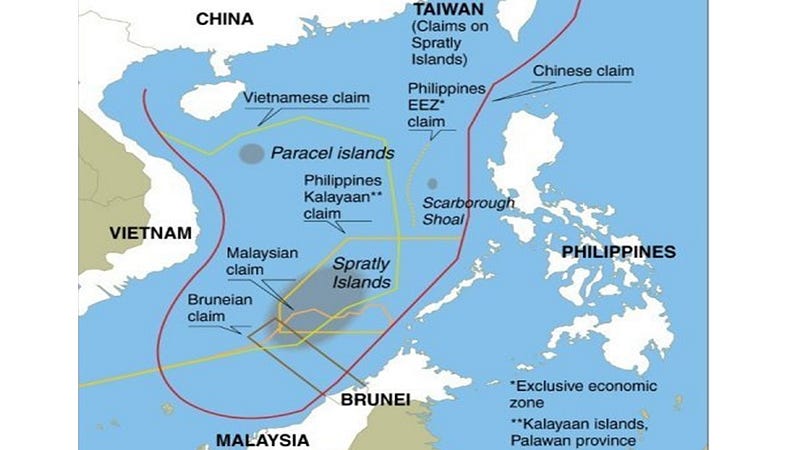
The South China Sea conflict is a protracted and complex territorial dispute over sovereignty and control of islands, reefs, shoals, and waters in the South China Sea region. It involves several countries in Southeast Asia and has become a contentious issue with significant geopolitical implications. The conflict centers around competing territorial claims, historical grievances, strategic interests, and access to valuable resources in the area.
At the heart of the dispute are the numerous islands and features located in the South China Sea, including the Paracel Islands, the Spratly Islands, Scarborough Shoal, and other smaller reefs and rocks. These contested areas are claimed by multiple countries, including China, Vietnam, the Philippines, Malaysia, Taiwan, and Brunei. Here’s an overview of its history, the claimants involved, its importance, and possible solutions.
Different Claimants and the Grounds of their claim:
The different claimants of the South China Sea disputed islands base their claims on a variety of factors, including historical, legal, geographical, and strategic considerations. Here are some of the key bases for the claims of major claimants:
- China: China asserts its claims in the South China Sea primarily based on its historical presence in the region. It refers to historical records, ancient maps, and cultural ties to support its position. China claims that the islands and surrounding waters have been under its jurisdiction since ancient times, including during the Ming and Qing dynasties. China also cites the “nine-dash line,” a demarcation line that it draws on maps, as an indication of its territorial claims.
- Vietnam: Vietnam bases its claims on historical and legal grounds. It asserts that it has historical evidence of its sovereignty over the Paracel and Spratly Islands dating back to the 17th century. Vietnam also points to international law, particularly the United Nations Convention on the Law of the Sea (UNCLOS), to support its claim. It argues that the islands are located within its exclusive economic zone (EEZ) and continental shelf.
- Philippines: The Philippines bases its claims on historical, legal, and geographical factors. It refers to historical records, including its control and presence on certain islands in the Spratly archipelago during the colonial period. The Philippines also relies on UNCLOS, particularly its provisions on territorial waters, EEZs, and continental shelves, to support its claims in the South China Sea.
- Malaysia: Malaysia’s claims are mainly based on geographical proximity, as it asserts that certain features in the South China Sea, including parts of the Spratly Islands, lie within its continental shelf and EEZ. Malaysia also refers to international law, including UNCLOS, to support its position.
- Brunei: Brunei’s claim is relatively small compared to other claimants. It is based on the principle of international law that allows countries to claim an exclusive economic zone up to 200 nautical miles from their baselines. Brunei claims an EEZ around Louisa Reef.
6. Taiwan: Taiwan’s claim largely aligns with that of China, as it considers itself the legitimate government of China. Taiwan asserts sovereignty over the entire South China Sea based on historical, geographical, and cultural reasons. However, China which is the biggest actor in the South China Sea conflict does not react harshly to what Taiwan claims in the South China Sea because China sees Taiwan as part of its territory.
Importance:
The South China Sea holds significant importance for various reasons, including:
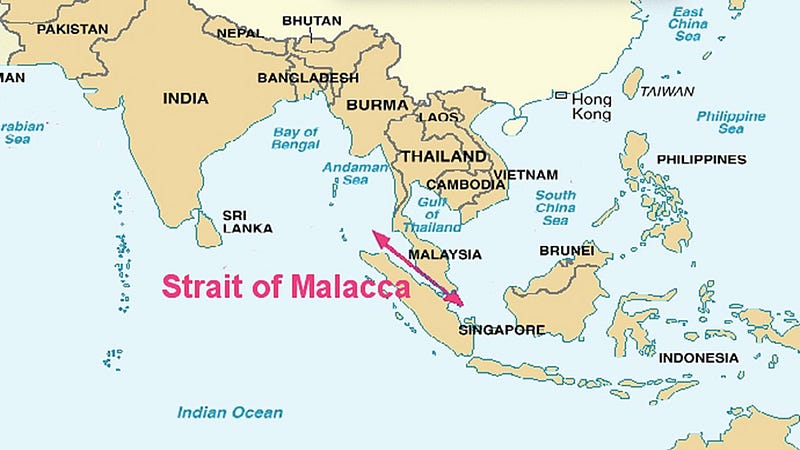
- Strategic Location: The South China Sea is strategically located, serving as a vital maritime corridor linking the Indian Ocean and the Pacific Ocean through the Strait of Malacca. It is one of the busiest shipping routes in the world, facilitating the transportation of goods, energy resources, and raw materials between East Asia, Europe, the Middle East, and Africa. The region’s stability and freedom of navigation are crucial for global trade and economic prosperity.
- Natural Resources: The South China Sea is rich in natural resources, including oil, natural gas, and fisheries. The disputed islands and reefs are believed to be sitting atop substantial hydrocarbon reserves, making them potentially valuable for energy production. The waters are also abundant in marine life, supporting important fishing industries.
- Territorial Claims and National Security: The South China Sea is a focal point for national security concerns and territorial claims among the countries in the region. Controlling the islands and features in the area allows claimant states to extend their exclusive economic zones (EEZs) and assert their sovereignty. It also provides potential military advantages and enhances their strategic influence in the region.
- Geo-Political Influence: The South China Sea is a focal point for geopolitical competition and influence among major powers. The region’s stability and control over strategic maritime routes impact the power dynamics in East Asia and the broader Indo-Pacific region. The South China Sea dispute has implications for regional security alliances, economic partnerships, and diplomatic relations.
Efforts made up till now to resolve the issue:
Several efforts have been made to address the South China Sea disputed islands and promote a peaceful resolution. Here are some notable initiatives:
- ASEAN-led Processes: The Association of Southeast Asian Nations (ASEAN) has been actively involved in facilitating discussions among claimant countries. In 2002, ASEAN and China signed the Declaration on the Conduct of Parties in the South China Sea (DOC), which aimed to promote peace, stability, and cooperation in the region. Negotiations are underway to establish a Code of Conduct (COC) in the South China Sea to provide a framework for managing disputes and preventing escalations.
- Bilateral Dialogues: Countries involved in the South China Sea dispute have engaged in bilateral talks to address their differences. For instance, China and Vietnam have held high-level consultations, known as the China-Vietnam Land Border Joint Committee, to discuss border issues, including maritime disputes. The Philippines and China have also conducted bilateral dialogues to manage tensions and explore possible solutions.
- Arbitration Case: In 2013, the Philippines initiated arbitration proceedings against China under UNCLOS. In 2016, an international tribunal ruled in favor of the Philippines, stating that China’s “nine-dash line” claim had no legal basis. Although China rejected the ruling, the case contributed to clarifying the legal aspects of the dispute and raised awareness of UNCLOS principles.
- Track Two Diplomacy: Non-governmental organizations, research institutions, and think tanks have organized Track Two diplomacy efforts to facilitate discussions and generate ideas for resolving dispute. These initiatives bring together experts and officials from various countries to engage in unofficial dialogues and explore potential solutions.
- International Diplomatic Engagement: Countries outside the region, including the United States, have been actively engaged in the South China Sea issue. The U.S. has conducted freedom of navigation operations (FONOPs) to assert its position on freedom of navigation and overflight. Other countries, such as Japan, Australia, and European nations, have also expressed concerns over the situation and emphasized the importance of upholding international law.
- Joint Development Agreements: Some claimant countries have explored the possibility of joint development agreements as a way to manage disputes and share resources. For instance, China and Vietnam have engaged in discussions on joint development in certain areas of the South China Sea, focusing on resource exploration and cooperation.
It’s important to note that the South China Sea dispute remains unresolved, and tensions continue to persist. The efforts made so far have had limited success, and finding a comprehensive and lasting solution remains a complex task requiring sustained diplomatic engagement, adherence to international law, and a commitment to peaceful dialogue and cooperation among the claimant countries. Here is the possible future course of action.
Future Possible Pragmatic Solution:
The future pragmatic solution to the South China Sea dispute would ideally involve a combination of diplomatic efforts, legal frameworks, and regional cooperation. While finding a comprehensive solution is complex, here are some potential elements that could contribute to a resolution:
- Code of Conduct (COC): The completion and implementation of a legally binding Code of Conduct between ASEAN and China would be a significant step. The COC should establish guidelines for behavior in the South China Sea, including dispute resolution mechanisms, confidence-building measures, and measures to prevent escalations. A robust COC could help manage tensions and promote stability.
- UNCLOS and International Law: Upholding and applying the principles of UNCLOS would provide a solid foundation for resolving the dispute. Countries should respect the rights and obligations enshrined in UNCLOS, such as the recognition of EEZs, the freedom of navigation, and the peaceful settlement of disputes. Encouraging adherence to international law can help create a rules-based framework for addressing the South China Sea issue.
- Bilateral Negotiations: Continued and sustained bilateral negotiations among the claimant countries are crucial. These negotiations should focus on confidence-building measures, joint development agreements, and the clarification of maritime boundaries. Regular dialogues can foster trust, promote mutual understanding, and gradually address specific aspects of the dispute.
- Regional and International Mediation: The involvement of regional and international mediators, such as ASEAN, the United Nations, or other relevant organizations, can facilitate the negotiation process. Mediation can provide a neutral platform for dialogue, offer technical expertise, and help bridge gaps between the claimant countries.
- Environmental Cooperation: The South China Sea’s environmental significance necessitates cooperation among the claimant countries to protect and sustainably manage its marine resources. Collaborative efforts to address pollution, overfishing, and coral reef degradation can build confidence and foster a spirit of cooperation.
- Track Two Diplomacy: Track Two diplomacy, involving think tanks, experts, and academics, can play a complementary role in generating creative ideas, fostering dialogue, and building trust among the claimant countries. These informal channels can explore potential solutions and contribute to shaping public opinion on the importance of resolving the dispute peacefully.
It’s worth noting that a pragmatic solution requires a long-term commitment from all parties involved, as well as a willingness to compromise and find mutually acceptable arrangements. Achieving a resolution to the South China Sea dispute will likely be a gradual and iterative process, requiring patience, sustained dialogue, and a focus on maintaining regional stability and cooperation.