
Unraveling the Mystery of Italy’s One Euro Houses: A Tale of Economic Struggle and Cultural Preservation
Abstract: Exploring Italy’s one Euro houses amid economic and demographic challenges
**Introduction:**
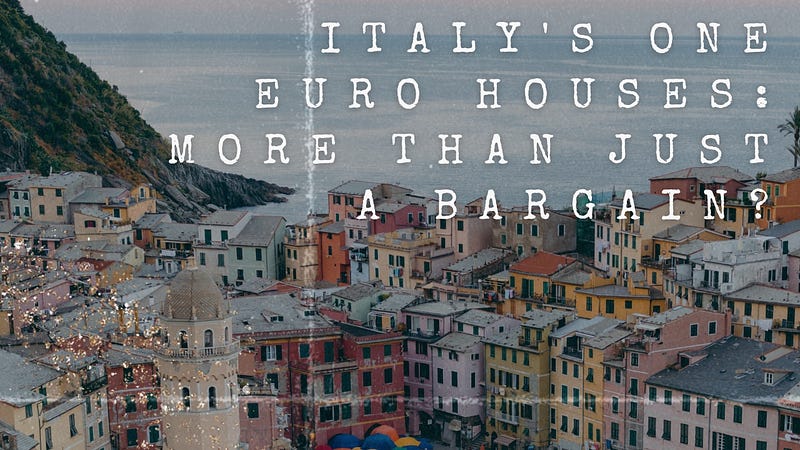
In the picturesque landscapes of Italy, a phenomenon has emerged that seems almost too surreal to believe – towns offering houses for as little as one Euro. At first glance, this appears to be a dream come true for anyone yearning for a slice of Italian paradise. However, this intriguing scenario is a window into a deeper, more complex narrative of Italy’s economic and demographic challenges.
**Chapter 1: The Alluring Facade of One Euro Deals**
The concept of one Euro houses in Italy paints an alluring picture: historic homes set in beautiful, often rural locations, available for less than the price of a coffee. This initiative, primarily aimed at reviving dwindling populations in small towns and villages, has captured global attention. But as we peel back the layers, the reality is a testament to Italy’s struggle to balance economic vitality with the preservation of its rich cultural heritage.
**Chapter 2: Italy’s Economic Stagnation and Its Impact**
Since the mid-1990s, Italy’s economy has been in a state of near-stagnation. A country renowned for its contributions to fashion, automotive, and culinary arts, Italy’s economic woes are paradoxical. The root causes are multifaceted – a business culture resistant to modern meritocratic practices, political instability, and a complex legal system. This economic stagnation has had a ripple effect, influencing various aspects of Italian life and leading to innovative yet desperate measures like the one Euro house initiative.
**Chapter 3: Demographic Dilemmas and the Youth Exodus**
Compounding Italy’s economic troubles is a significant demographic crisis. The country faces one of the world’s oldest populations coupled with a declining birth rate. Young Italians, confronted with limited job opportunities and low wages, are increasingly choosing to leave their homeland in search of better prospects. This exodus of youth has left many small towns and villages on the brink of extinction, their once-vibrant communities now characterized by empty, abandoned homes.
**Chapter 4: The Reality Behind the One Euro Dream**
The one Euro houses, while offering a glimmer of hope, are not the panacea they appear to be. These properties, often in need of significant renovation, represent a deeper malaise. They are symbols of the economic and social challenges that have led to their abandonment. The initiative, while creative, does little to address the underlying issues of job scarcity and infrastructural inadequacies in these regions.
**Chapter 5: Reflections and Future Prospects**
The story of Italy’s one Euro houses is a microcosm of the challenges faced by many countries grappling with modernization while trying to preserve their cultural and historical identity. It raises important questions about sustainable economic growth, demographic shifts, and the preservation of heritage. As Italy continues to navigate these complex challenges, the world watches and learns, seeking insights and solutions that might apply to their own unique contexts.
**Conclusion:**
Italy’s one Euro houses offer more than just a real estate opportunity; they are a poignant reminder of the country’s struggle to find its footing in a rapidly changing world. This initiative, born out of necessity, is a call to action for innovative solutions that respect and preserve cultural heritage while fostering economic and demographic vitality. As we observe Italy’s journey, there are lessons to be learned and conversations to be had about the future of our global community in the face of similar challenges.


