
Exploring the Fascinating History of the Venus of Willendorf
Unraveling the Mystery: A Comprehensive Look into the History of the Venus of Willendorf
The Venus of Willendorf: An In-Depth Journey Through Its Historical Significance
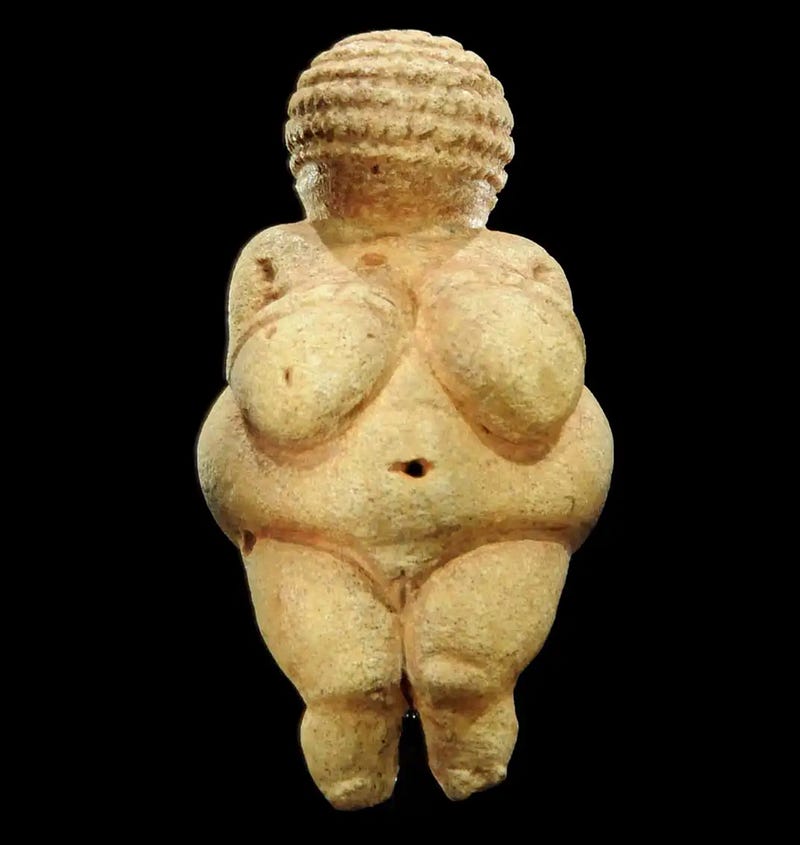
Table of Contents
- Introduction to the Venus of Willendorf
- Historical Relevance
- Artistic Characteristics
- Discovery and Preservation
- Interpretations and Modern Biases
- Conclusion
Introduction to the Venus of Willendorf
Imagine for a moment, you’re strolling through the galleries of a museum and stumble upon a small figurine, not more than 11 centimeters tall. Its tiny size shrouded with mystery and a past intriguing enough to take you by surprise. What you’ve encountered is none other than the ‘Venus of Willendorf’, a piece of history that continues to enthrall scholars and enthusiasts alike.
Historical Relevance
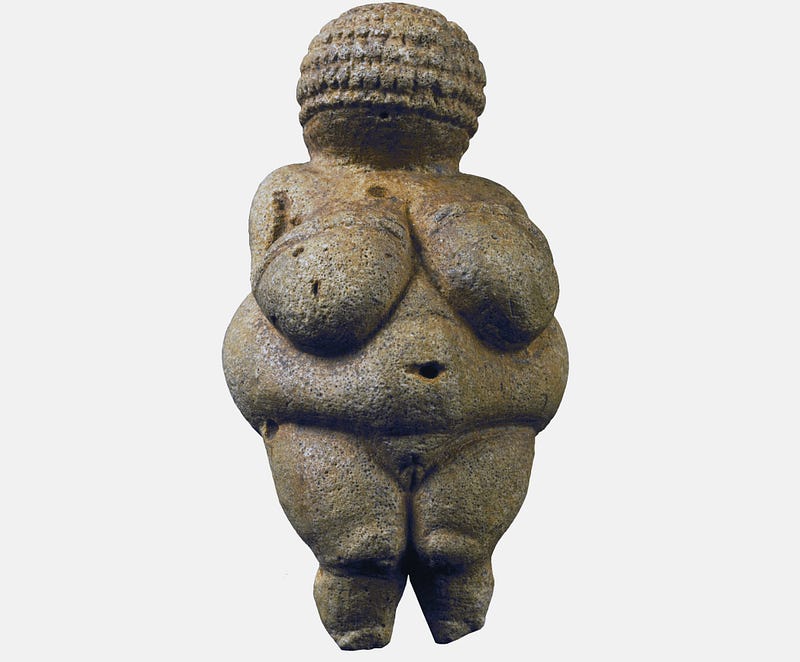
Named after the site of its discovery, the ‘Venus of Willendorf’ grabs your attention with its exaggerated physical attributes. This tiny artifact is emblematic of a time when early humans were making the challenging leap from nomadic lives to settled societies.
“The Venus of Willendorf, an enigma of the past revealing so much wrapped in such a tiny package.”
Artistic Characteristics
Unearthed in the early 20th century in Willendorf, a village in Austria, the ‘Venus of Willendorf’ is believed to be around 28,000 to 25,000 years old. Yes, you heard that right! This pint-sized figurine happens to be an artifact belonging to the Paleolithic age, that’s the prehistoric period characterized by the development of the first stone tools.
As we step back in time through this article, you will explore the history of the Venus of Willendorf, its cultural significance, and the theories that surround its purpose. Brace yourself, for you’re about to dive into the fascinating realm of prehistoric art and culture.
Discovery and Preservation
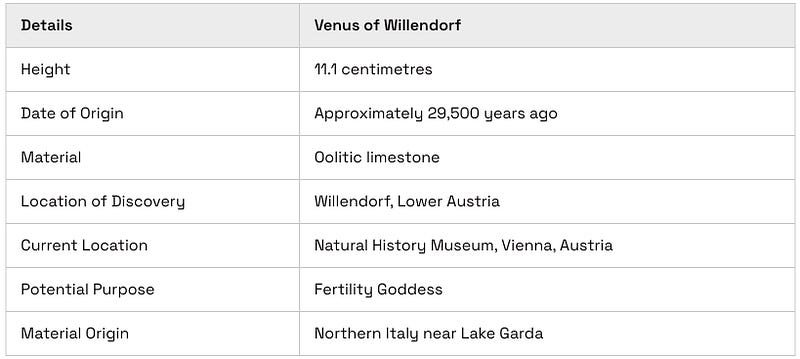
The Venus of Willendorf emerges from an era long past: an 11.1-centimeter-tall wonder, sculpted more than 29,500 years ago. This stunning artifact was discovered on a gentle summer day, the 7th of August in 1908, amidst an archaeological dig supervised by Josef Szombathy, Hugo Obermaier, and Josef Bayer. The team’s focus was a Paleolithic site tucked in the vicinity of Willendorf, a modest village in Lower Austria.
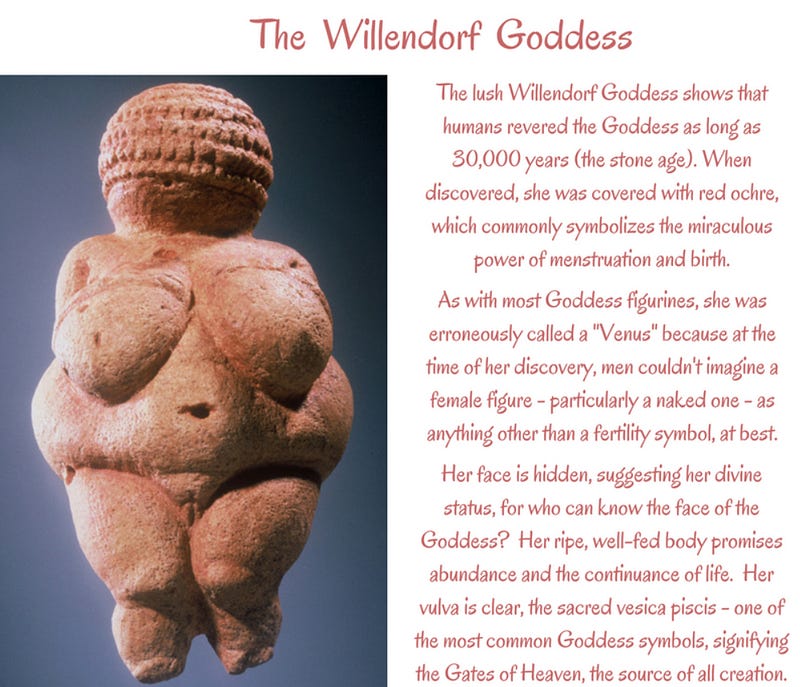
What makes this artifact intriguing is its composition. The Venus is intricately carved from oolitic limestone, an element that is not native to the excavation site’s surroundings. It’s dressed in a vibrant hue of red ochre, providing a stark contrast to its primary material. The Venus exudes a mysterious aura as its face remains hidden, its head shrouded by circular horizontal bands that could be interpreted as rows of plaited hair or some form of ancient headdress.
Interpretations and Modern Biases
Studies spearheaded by anthropologist Gerhard Weber from the University of Vienna reveal fascinating insights into the microstructure and origin of the Venus. Researchers have traced back the most probable source of the oolitic limestone used in the creation of this figurine — northern Italy, near the scenic locale of Lake Garda.
Was the Venus of Willendorf a cultural symbol of fertility? A self-portrait crafted by primitive women? Or was it an object of spiritual importance? What we do know is that it was intricately related to the Upper Paleolithic Gravettian industry, a period spanning 33,000 to 20,000 years ago. Notably, the Venus’s design emphasizes the parts of the body associated with fertility and childbearing, leading some to speculate its connection with ancient fertility goddesses.
Evidently, our understanding of the Venus’s role in her contemporaneous society is shrouded in conjecture, and perhaps tainted by our modern biases. Nonetheless, as one gazecon at ancient figurine now ens thisced at the Natural History Museum in Vienna, one cannot help but marvel at this silent witness of our cultural heritage standing tall at the intersection of archaeology, art, and myth.
Conclusion
In conclusion, the Venus of Willendorf, a figurine of significant historical relevance, stands as one of the earliest examples of artistic expression in human history. Its strategic crafting with features emphasising fertility and childbearing hints towards its potential role as a symbol of a fertility goddess.
The meticulous care given to carving the figurine from oolitic limestone — the origin traced back to northern Italy — also underlines the significance it might have held during the Paleolithic era. Today, appreciated and preserved in the Natural History Museum in Vienna, it continues to intrigue and inspire, shaping our understanding of our ancestors’ complex relation to art, symbolisms and spiritualities.


