
Unraveling the Mysteries of Grieving When Secrets Remain Unknown
Deep down the words for our wounds may have decayed into indecipherable runes or relics
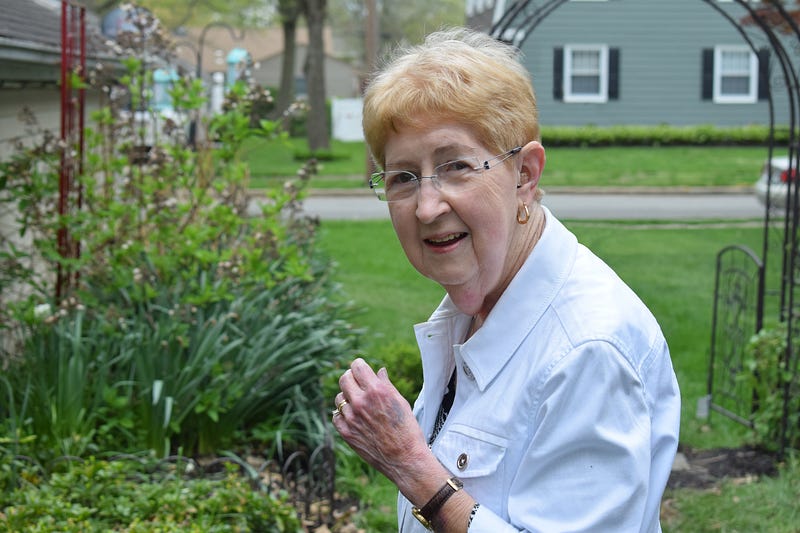
Six months after the funeral, the large collage has remained at the end of our hallway. It was one of three used at the funeral in Scranton, Pennsylvania.
Yes, there were that many pictures. Our daughters, Madeline and Nancy, Jr., just couldn’t winnow any more of the memories.
Whenever I enter my study to write or pay bills, I acknowledge this heavy collage. It’s poster-sized, 24x36, with a brushed metallic silver frame. To fit against the wall, I need to turn the collage sideways.
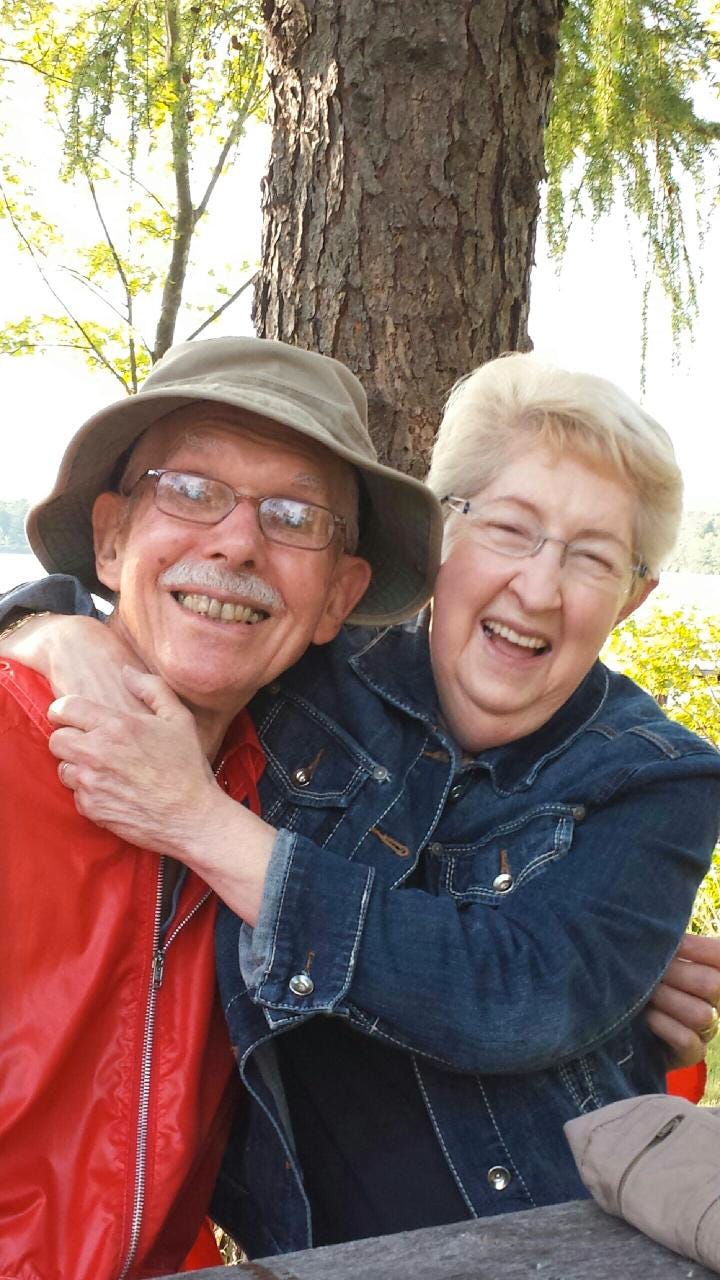
Whenever I say “Good morning” or “Good night” to her, I spot one of a hundred carefully cut-out photos — like the one with Ma and Bill laughing and hugging during one of our too-numerous-to-count outside lunches.
That picture with Bill in his goofy, light brown fisherman’s hat and Ma with a smile so wide her eyes appear closed resides forever on the top right-hand side.
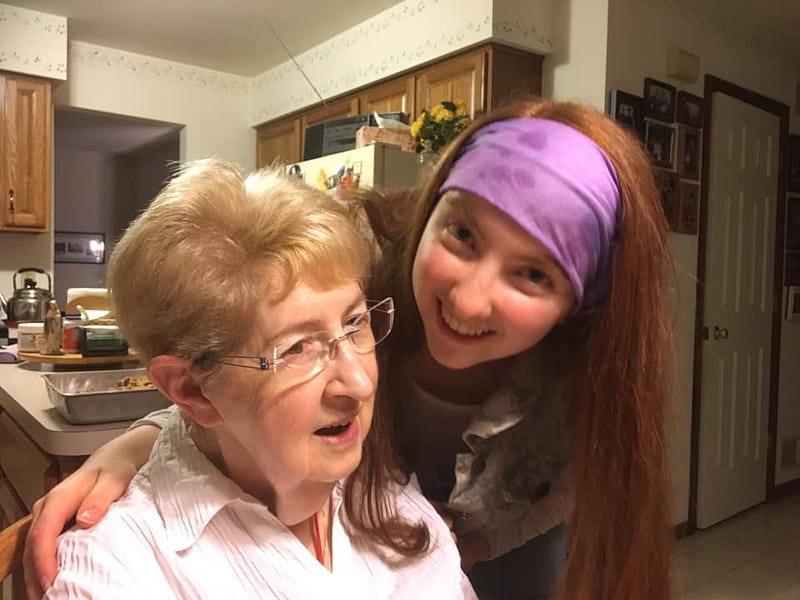
When I summoned whatever Muse was handy to write this essay, I was directed to one photo of Ma with our daughter Nancy, the Namesake, a maturing woman of seventeen, back then, with a bright purple headscarf. Nancy hugs and hovers above her grandmother with love and reassurance that anyone named Nancy must be a crackerjack.
I spoke to this picture. “Ma, you were one of my best readers,” I said. “And one of my biggest supporters. This is one essay I hope you can still hear, even though you’re here in spirit. Can it alleviate any lingering pain?”
Can my words free you— free your daughter — free your husband, now so alone, and free all who are still grieving — even six months after your death?
At least, I added, I will not have to pester you for feedback an hour after printing out story after story.
Many published stories and essays were revised under her sharp eye for grammar and plot and character. “Thank you for that, Ma.”
The frames were purchased, of course, with deep discounts from A.C. Moore. We purchased three. One rests eternally behind the other without glass. Thanks to my clumsy feet in the construction process, I cracked the glass, but for pictures to appear without a fragile barrier and protective glare are hidden glories.
Why haven’t I hung up the frame? Have I been that busy with teaching, writing, and gardening? My wife Mary Jane, I know, has been very busy. Other collages line walls of our long hallway — the one from our wedding in 1995.
Yes, my bare butt appears in one picture, but the printed words “No butts about it” cover up any cracks that could be made about my exhibitionism.
But aren’t most writers exhibitionists — writing for the world to see what boils and festers beneath our facade?
Nancy crafted a collage for Madeline when she graduated from high school in 2016. Madeline created one for Nancy when she graduated from high school in 2019. I often stop on my way downstairs. Each photo is a time portal — like a Dr. Who telephone booth or a C.S. Lewis wardrobe closet.
I could spend an hour in one picture, lost in nostalgia, wandering into empty bedrooms, again, complete with a million memories, each thing with its own taste, smell, texture — like how Princeton smelled in autumn when Nancy defended her 8th-grade video documentary thesis on John Brown for National History Day.
I want to hear their voices again — at each step in their development — even to voices bickering about who stole what from whom and didn’t ask and didn’t return.
But these three collages are about life — still life — Janus looking forward even while I borrow her eye to peer back. All of those early photos of my wife and me as children, seemingly happy, and then very happy in our developing love story — Mary Jane’s lustrous auburn hair and smiles resolved that could halt a fast-moving man who shot from one place to the next — always hard-pressed to find heaven in the distance when it was always just around him. And those photos are not the end.
What will our collage look like on our 50th wedding anniversary?
And we’re all still moving forward. Time has stopped in each photo, but time clicks forward. All four of us have dreams, even as new dreams appear and disappear and reappear, reimagined.
The problems arise, however, when unseen hands hold back feet from moving forward. Or when those invisible hands cover our mouth — afraid of what just may slip out.
That one collage from the funeral — or really two collages, remain on the floor — always fifteen minutes to the right. To view, I need to move my own minute hands by changing my perspective. Sometimes I even fall to my knees as in church to pay homage to the memories.
Again and again, the photos open windows to a long life.
And to move that collage alongside the other collages in the hallway requires taking down, measuring, and lots of effort. And time. Am I not ready to make that collage part of the permanent collection? Does such permanence have anything to do with acceptance and the stages of grief?
My mother-in-law was the math teacher. She could tell if a frame was even a fraction of a millimeter askew. For me, such precision takes an hour of pencil marks and tape measures. And for some reason, it’s all still imprecise.
Is my problem with the math or not wanting to be reminded of her death in February 2020, right before COVID-19? Do I want to protect my wife from these memories? Have I placed the collage at the far end of the hallway, in between my study and my daughter’s room, for Mary Jane not to be reminded of the happiness and the pain?
Granddaughter and grandmother relationships are generally glorious. The tension of motherhood opens to the relaxing realms of grandparenting. Even liberal, hot-tempered, sanctimonious son-in-law’s can get along well with conservative, critical, and church-going mothers-in-law.
With time, of course. After all, this is a new relationship.
What I gained from my relationship with my mother-in-law, Nancy McCarthy Mark, was a supportive reader, an appreciative fan of my fatherhood, and deep respect for the loving relationship I have with her daughter.
Even though I didn’t know it, I needed structure. I needed to see faith in action. I needed to see grit. I needed to see what clean looked like. I needed to see and acknowledge other sides or perspectives of issues — even if it meant storming out of the house for a “walk” to “cool down.”
I needed criticism because everything I wrote for my own family was met with “it’s awesome,” even when I wrote a piece called “The Dead Cat” on purpose to be horrible.
Criticism, however, should be like the tides that roll in and cleanse, and then roll out to sea, rising and falling. The problems occur when criticism only washes over — the sea too prideful or arrogant to accept the return of the water.
Such floods terrified my wife. Such “stormings” of her husband with her mother over politics and religion also terrified her. Who would dare question? Who would dare engage like that? Wouldn’t you get smacked? Wouldn’t you run away and hide underneath your bed — hoping to disappear into Narnia or drop down into Wonderland? What was there to fear anyway except Jadis, the White Witch, and the Queen of Hearts who threatened beheadings on a whim?
Terrors like this seem easily conquered when villains are easily labeled.
Such threats and confrontations didn’t make me shake. Such verbal spats and sparrings didn’t mean bloody eyes and knockouts. Such criticisms didn’t reduce me to the size of a gnat easily squished or swatted away. My own egotism and elitism I had to temper. We both did — son and mother-in-law — observing new laws to govern our growing relationship.
And, over time, we bonded over long talks at the kitchen table, long walks in nature, and long chats in my garden. She always wanted to see what was for dinner and what was growing.
In fact, after one long and difficult night at the hospital in Altoona, when we came to their home in State College, Pennsylvania, and we spotted her blood on the wall and the landing from her horrific fall from the stairs, I wanted to water her plants.
Was it the least I could do?
When asked if she wanted potatoes for dinner at the hospital, she barely whispered through all the mechanical contraptions, “Only if they’re Walter’s potatoes.”
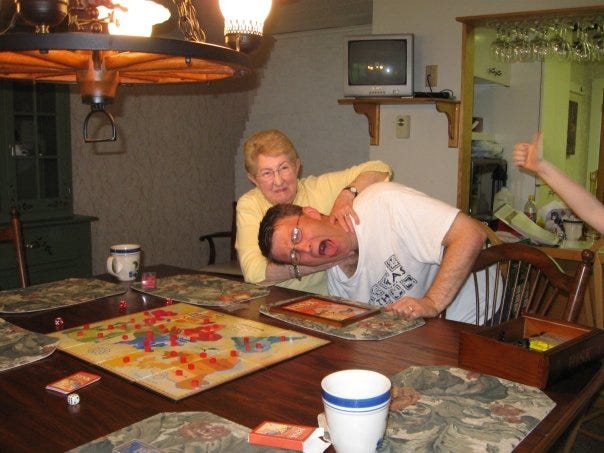
I was very much like my mother-in-law.
A new relationship as adults, 25 and 60, however, is much different from a mother or father with a son and daughter. Do mothers and fathers even know what they’re doing at such a young age? Who were their models? Was violence a part of the parenting instruction manual? Abuse?
And what options did a poor Irish Catholic woman with an illiterate coal-mining father have in the late 1950s? How could education be seen as defiance? Even daring to be educated was a risk, right? Could she risk even more?
Yes, she was the only one in her family who graduated from college. With her math brain and attention to detail and puzzles — the woman subdued New York Times crossword puzzles in pen — she could have done anything — engineer, accountant, actuary, stockbroker, college professor.
During the funeral, we also learned from her college friends that Nancy was a force in asking questions no one dared asked and for getting the job done.
After her husband left her, Nancy McCarthy started teaching math full-time. In fact, Mary Jane’s father not only abandoned his wife but also cut all contact with his three children.
Imagine the pain — and that potential coups de grâce from her father, those eight hurtful syllables still haunting Mary Jane:
“You’re a bitch just like your mother!”
Mary Jane asked her Aunt Judy, another woman of steel resolve, who should speak at the eulogy. “Well, of course,” Aunt Judy replied, “it should be Walter!”
My wife called me from the funeral arrangements. She was working side by side with Bill, her step-father, but really her only true father, actually. She served two roles — loving support and ringmaster. She appears as one person, but to support everyone around her, she magically unfolds like a Spanish fan as numerous flying buttresses.
Would it be okay if I was the one to give the eulogy at the Catholic Mass? I said, of course, “Yes!”
I was honored. Did it matter that I wasn’t Catholic? Did it matter that I’m not even a Christian? Yes, I attended church with Mary Jane, and assisted her during Sunday school, and drove the kids to CCD class. I even agreed to be remarried in the Catholic Church — eight years after our “civic” marriage in my backyard.
As soon as I hung up the phone, I started writing. I was alone. Our daughters were in college. My wife was with her family. I was in my study. I dialed The Muse Hotline again for whatever Muse was on call that night. I forget her name, but she was a great help. Actually, my step-father, Mr. Lanis Rossi, was a great help. Can I call him My Tenth Muse?
“Who are you gonna shock now that your mother-in-law has gone?” he asked.
That didn’t dawn on me. “Shocking Momma Nance” was one of the commandments I followed: I was the comedic foil, the Shakespearean fool who made the King laugh. Just like the last movie we watched together: The Big Lebowski. I was rolling with laughter, and she was laughing too — more at me than The Dude.
That’s right. It was our Thanksgiving Movie. Shocking, indeed. And fun. “This aggression will not stand, man!”
The funeral was Wednesday, February 26th.
In my eulogy, I stood at the altar and addressed the mourners:
“But I think this, me speaking here in a Catholic Church, speaking about her, for her, for all of us, that would shock her the most. In fact, no, wait….. I’m listening…. (pause). Since I have not been smacked with a wooden spoon, I think it may be safe to continue.”
The eulogy was well-received. Humor and laughs and anecdotal memories and pathos and tears. And of course, I encouraged a call for all the Irish clans to move forward. I said:
We all keep going…. Keeping our faith in God and in one another. If you need a hug, ask. If you need to talk, ask. Listen. Feel no shame.
Have no regrets. For one day, we will all be here. Before God and Great Beyond… and we all should be so happy to look as sharp as Gram. And with a mind as Sharp as well.

But moving forward has been difficult when hidden truths remain buried. Do facts even have the power to liberate? Are truths relative to individual spirits?
My wife Mary Jane dearly loved her mother. Mary Jane would even, God bless her, forgive her father if he ever appeared in the flesh again after decades of absence and letters “returned to sender.” It is far easier to forgive flesh. It is much harder to convict phantoms that prey upon us.
I guess that’s what actual Christians do — forgive, hug, love, and move on. And to heal. After all, the father — the mother — may have been that stone that had been cast aside by one’s own father and mother. And such pain reincarnates in the next generation.
Healing has been a challenge. There seemed to be something hidden, some secret, some shame — something that was impelling my mother-in-law to remain distant — emotionally distant.
Does only heaven know the secret burdens and the guilt eternal we carry every day? Does anyone know, really? Even when offering to take that world off the shoulders of Atlas, or to help carry the Cross to Calvary, the bearer of such long-festering hurt may not feel ready or able to accept help. Are they just comfortable with such weight? Or have deserved such weight?
Why be such a super fan of grandchildren but supercritical of one’s own children? Why feel more comfortable for an in-law than one’s own lawful family? What sins have we placed upon the backs of those we love?
When whacked with a wooden spoon, was it just displaced aggression? Was that spoon aimed at the wrong person? Why does no one realize that a child will always remember the pain long after the pain?
Will the child ever recall the crime? And words can be as mortal as bullets — just not as quick and bloody.
When I secretly called my mother-in-law from my study after a tearful conversation with my wife, who was feeling really low about her job as a teacher, I called Ma and Bill.
I said things now that I regret.
I thought I was helping. That’s me — the guy who fixes things. The guy who can step in and help. By then I think I had a few beers, and my lips were more lubricated than normal, but I wasn’t out of line verbally. I was just passionate about my wife. I wanted to help her.
Mary Jane had tried to get her mom to open up about things. But that was really a dead end. The woman — my mother-in-law — went to church every day. Why didn’t God hear her prayers? Why didn’t anything change? Why the hardness? The defiance? What was she praying for anyway?
Mary Jane told me many things about growing up. She had to dust fake plants. There could be nothing on her bedroom walls. Just white walls. During dinner, children rarely spoke. And in one confession, Mary Jane told me she could not tell any of her friends about her father moving out. That — she had to keep secret.
The process of moving out and then staying out and the divorce coming through lasted for years. It’s one of the reasons why they could not have friends over.
Someone would ask, “Where’s your dad?”
In this conversation late at night, I told Nancy and Bill that my wife was hurting. I told them what Mary told me about the secrecy of the divorce. And that the children “couldn’t tell anyone.” She denied it. Through tears, she called her lovely daughter and my caring wife, who never lies, a “liar.”
Since they were coming for Thanksgiving, I asked her to do one thing:
“Tell Mary Jane you love her and give her a hug.”
It seemed so easy. I would do that for anyone! I’m an overly affectionate guy! I even kissed my uncles' goodbye! But, again, she said she couldn’t do it. She should know she loves her. But why couldn’t she say the words? Why not show the love?
“It wouldn’t seem real,” she said. “It wouldn’t seem like me.”
I told Mary Jane of this late-night conversation. She was upset. She understood what motivated me, but she felt horrible. She wished I never called — opening that Pandora’s Box. To have one parent flee, and then to have another deny what seems so simple, has been such a burden on my incredible, empathetic wife who is the stereotype of Greatest Mom and Greatest Wife Ever.
Who could be sweeter than Mary Jane?
I wondered about all those walls that had been constructed around Ma to defend herself from harm. What was the harm? What was the reason Ma fled from her home after college in a rush and married Mary Jane’s father? What was the fight about with her former coal-mining father?
No one knows.
What secret needed to be protected with pointed stalactites and stalagmites from deep within the cavern of one’s inner world. Why couldn’t any light ever penetrate such a world?
Secrets are a type of sorcery — an invisible spell to control the innocents. Once mere babes in a wood, the innocents become mere adults in a forest— left alone to discover no clues or breadcrumbs.
And no “Survival Guide.”
And the great questions to the mysterious unknowns —like — why did the father abandon the family? What was the reason for the divorce? Well, many questions have no answers. At least the holy books have words. But for these secrets — only white paper over windows — over yellowing photos, a black veil, tacked tight with a staple gun.
Imagine.
Adult parents should have a responsibility to adult children to answer adult questions. Such children may still appear as children, and that, sadly, is part of the problem. Parents forget that “children should be seen and not heard” no longer applies to adult children.
Thanksgiving was tense.
Mary Jane kept waiting for her mother to say something. I wanted to say something to Bill. The girls wanted her to say something. After all, Bill was their de facto grandfather — and Nancy and Madeleine couldn’t have had a better role model or grandfather.
After their stay, I walked Ma and Bill to his blue truck. In tears, she turned to me and said, “You were right. Mary Jane was right. I did tell them to lie about the divorce.” By the curb, she wiped away tears. “I’m sorry. There was just so much shame.”
I gave her a huge hug. I told her I loved her, and that it must be really hard. What was hard? I’m not sure, but whatever it was, it was a secret so lodged in the granite that no dynamite could release it.
I lied and said it was okay. It was okay for now, but really, I wanted my hug and my love and my words to do what everyday prayer for her was not doing — release her from whatever was holding her down and allow her to open up. I am really that naive, but also that hopeful.
I believe in rebirth. To me, the phoenix is not mere myth. But the release never happened. Ash remained mute.
In February, Ma fell. Afterward, Mary Jane was with her and Bill almost all of the time. I drove out on weekends. This was no easy task. We live in New Jersey and Altoona is straight across the very long and frozen state of Pennsylvania.
Mary Jane’s sister, Jeanne, from Maryland, was there, too. And younger brother, Jack, from outside of DC, was there. By the bedside, Mary Jane had many chats with her mom. She said she was sorry about that late-night call. And that she knew she loved her. Her mother cried. I am so glad she had that time, but I still feel whatever Ma was hiding, whatever she was keeping to herself, would never come to the light of God until she herself saw that light.
So how does one find a way when all ways are not only blocked but have vanished?
In the eulogy, I said:
She was not the biggest hugger. She was not plentiful with unadulterated praise, but she felt you all very deeply. She carried that privately, and when the hugs and praise and the love did come, it was a shower from heaven.
And then:
She had high expectations, and many of us pushed further because of such expectations. She was also critical of herself, and whether the house was clean enough, or if the cookies were too overdone, and we all need to step back, and ask if it’s all just good enough.
But my wife and I knew how proud it made her when she learned that we named our second daughter after her. I called her from the hospital. She was overwhelmed with joy — that was until Nancy Jr. decided to do things in a very different manner than Nancy Sr — jump into pools — refuse the baby prison — and clamor with the Lungs of Vesuvius for her Chalice of Milk.
We have been back to the gravesite in Scranton. She’s in the last row before a rolling hillside. Much of her family resides there, too. Her own mother and father. I pulled weeds and grass from around her grave, stuck them in a cup, and brought them home to compost.
By her grave, we positioned a pot of daisies — her favorite flower. She grew daises in front of her house from the seeds we gave out at our wedding. In her way, this was one way she showed love.
By taking the weeds, I still wanted a part of her in my garden that she so loved.
It’s impossible, I think, to talk to stone. One may just as well whisper love to the wind or pray to the grass and to the soil for guidance. I don’t know. I don’t know how to assist. All I know is to try to be supportive and loving — and to grow patient as my lovely wife continues on her road of self-discovery and transformation.
After all, how does one find Voice in a home where Sound was either off or on — silent or full of shouting? When those we most love cannot provide answers, the most we can do is ponder pictures in photo collages, smile at the many good times, and ask for help.
Fashioning a bullet-proof vest retroactively may also lessen the impact of untruthful bullets from a man gone mad, too, if the mind can make that happen.
On the ride back home from visiting her grave, Mary Jane told me that she wanted to give the eulogy. I never knew this. “I’m not sure I could’ve done it,” she said, “but I wanted to.”
At the time, why didn’t she say anything? What fear was holding her back? Was it the lack of Voice and Self-Advocacy? Did Mary Jane just float along with the default currents to allow “the writer” and “the big talker” to give the eulogy?
“You could have done a better job than I did,” I told her. It’s the Voice of hers that has been silent for far too long that needs to be heard. And when you love and live with a voice as big and brash as mine, banging like a bass drum, it’s a challenge to pick out the fine, high notes of a heavenly flute. I’ve been learning to temper that drum.
The world needs to hear more flutes.

As far as the third collage, Pop-Pop Bill has that in their home in State College. COVID-19 has been so tough on everyone — and it has been so hard to visit.
When our daughters saw Gram for the last time, on a visit to Altoona, Aunt Jeanne said that was Ma’s “last good day.” Those girls — Madeline and Nancy — she loved mightily. She loved us, too, in her private way. We have pictures to prove it.
I will now step outside the study, pick one picture, and ask Nancy — or “The Cracker” after the nickname Gram Cracker — if this was a good essay. What could I add to this, Ma? What would you like the world — your family — to know? Didn’t you realize that one day would be the last day — too late to unlock those secrets? I don’t know.
Sometimes the words are just so tough. It’s as if the words while deep down have decayed into relics and runes — no longer able to decipher. Sometimes not even prayer can clamor from the lungs, climb up the windpipe, cross over the tongue, and clear its way through the lips.
And as far as sorcery and secrets, the best one can do who still feels the pulls and tugs from dark caverns, is to keep living and talking and finding within one’s self blades powerful enough to slash those invisible bonds.
May we all be so brave to harness the power to free ourselves from our cocoon.
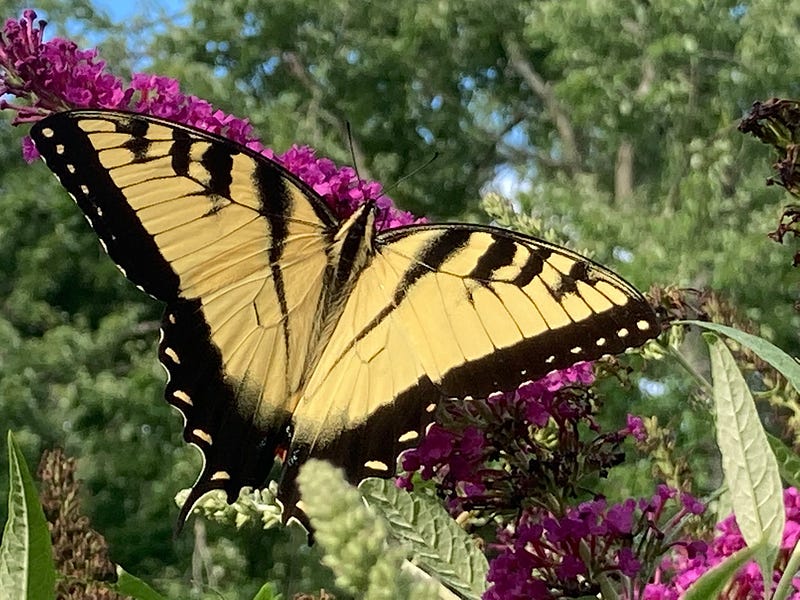
The Butterfly Upon The Sky
The Butterfly upon the Sky, That doesn’t know its Name And hasn’t any tax to pay And hasn’t any Home Is just as high as you and I, And higher, I believe, So soar away and never sigh And that’s the way to grieve – - Emily Dickinson


