
Unraveling Social Cohesion in Relation to the Decline of Network Television Viewership
Television in America from the 1950’s-2023.
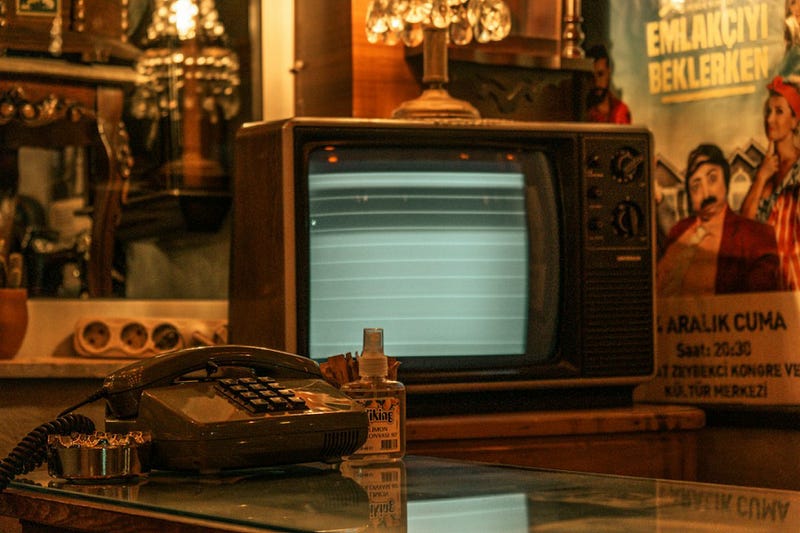
The United States has one peculiarly that isn’t found in most countries:
Our obsession with the television and other forms of visual media entertainment.
Part of the reason why society has come unglued is because where we used to have 3–5 channels to choose from, we now have much too many to count, especially when considering Netflix, YouTube, etc. This change happened within my lifetime at a fairly rapid pace. In the recent past, you could be fairly certain that nearly everyone you knew mostly watched the same shows. Most households watched their local news coverage at 5pm. Some while eating dinner together in front of the television.
That was followed by the CBS national news at 6pm. Wheel of Fortune and Jeopardy were on front 7pm to 8pm. Then prime time ran from 8pm to 11pm when Late Night with Johnny Carson came on propelling such comedians as Jerry Seinfeld to super stardom.
You could be pretty much assured that most people you knew were watching the same TV shows at the same time you were. Teenagers would often tie up the single household family phone gabbing with their friends about what they had just watched on television that night.
This lasted from the 1950s until about the early 1990s. Roughly 40 years of social cohesion. Even people on opposite ends of the political spectrum got their news from the same source.
Everyone had the same base information and collective culture from which we developed our opinions and knowledge about the world around us.
The Wonderful World of Disney was a Sunday night staple for 36 seasons from 1954 to 1991.
For nearly almost the entire year of 1980, the entire country was kept guessing, occupied by the same question, “Who shot J.R.?” The episode titled “A House Divided” aired in March of 1990. 83 million Americans tuned in to watch the ‘who done it?’ episode 9 months later in November.
In 1983, the final episode of the long running TV series MASH came to an end with the episode titled, “Goodbye, Farewell and Amen.” The final episode of MASH was watched by. 106 million viewers, holding the record for the most watched single episode of any TV series from 1983 up to the present day. While a couple of Superbowls had more viewers, no episode of any other TV series has yet to surpass the final episode of MASH despite the population of the country growing by 67%.
The decline in network TV viewership has been going on since at least 2014, probably longer. In 1948, 1% of US households owned a television set. That number peaked at just above 98% in 1997.
From around 1965 until about 2005, Saturday morning cartoons, programming produced especially for children, ensured that children across the country were exposed to the same social and cultural material as their classmates.
The proliferation of cable, streaming services and other non-network viewing options has been a major contributor to the unweaving of the fabric of social cohesion.
From the 1950s through the mid 1990s, people were comforted by the idea that, even if they had nothing in common with their neighbor, they could still engage in small talk about the latest TV shows if they ran into each other at the grocery store.
As a shared sociocultural experience, television shows as a uniting common factor for people from all walks of life began to fracture in the mid 1990s. The creation of and the popularity of reality TV served to weaken that common bond even further as the stars of the most popular TV shows in the mid to late 1990s were no longer big name actors who everyone was familiar with.
The rise of sports oriented channels charging exorbitant prices for access to live sports served to further distance American citizens from each other as many viewers gave up watching sports altogether rather than shell out the money necessary to watch their local teams.
In 2023, the average number of weekly viewers for Sunday NFL football rose for the first time since 2015, showing that even the insatiable greed of television producers and team owners shooting themselves in the foot financially speaking when much of sports broadcasting was shifted away from network television to a pay per view type of format couldn’t stop traditional die hard fans from following their team despite the price of admission to watch the game in the comfort of their own homes.
Monday Night Football and Thursday Night Football saw viewership increase 33% and 24%, respectively from 2022 to 2023.
The 2023 writer’s strike in Hollywood saw the network TV stations broadcast about double the number of games than they did in 2022 accounting for much of the sharp increase in viewership. A number that is likely to fall once we have the numbers for the 2024 NFL season.
In academic circles, a 2002 study loosely came to the conclusion that television has a negative impact on social cohesion.
The exact opposite of what one would conclude considering everything that I stated above. That study was not considering the shift in television programming over time nor changing demographics. It simply concluded that the more the members of a 100% cohesive group were exposed to different opinions through their televisions, the more the social cohesion of a group would deteriorate, undermining their traditional values.
The proliferation and popularity of television has exposed mainstream society to certain more “avant garde” subsections of society than they would have been exposed to pre-television. The creation of social media has enabled would-be members of some more fringe social groups to find each other. Thus far that has resulted in these fringe groups seeking to be more tolerated, a shifting of the definition of “mental illness”, and a backlash against these groups from more traditional mainstream elements of society.
The backlash is more a result of increased awareness of a fringe group’s existence than an actual increase of the size of that group as believed by a previously sheltered traditional mainstream society. They see their world crumbling around them. Where instead of being brow-beaten down into second class citizenry status, as was traditionally accepted, members of more avant garde subgroups feel more empowered to stand up for rights than once would be withheld from them as a customary everyday occurrence.
Television may have both brought the world closer together while making the world that much more uncomfortable and tense seeing each other up so close and personal.
Hate crimes that were declining in the last few decades have been exponentially increasing in recent years.
The network television that brought us together with each other through characters (stereotypically) representing all walks of life has left in its wake of its demise a world on-edge , uncomfortable with itself. We look not at three, but thousands of options to choose from when we turn on our television sets.
What is unraveling social cohesion making people not give two shits about one another is the unraveling of our collective time that we used to spend together, but apart, in the privacy of our own homes watching The Wonderful World of Disney on Sunday nights, the last TV show of the weekend before we had to go back to work and school Monday morning.
What we need is a 21st century Walker Cronkite who everyone trusts. But in this day with the ease of looking into someone’s past via social media, with the ability to construct a story, to bring any angle you desire into focus, makes all of us potentially vulnerable to the whims of social media and the fickle direction politically correct winds blow.
Social media is, thus far, mob mentality democracy flying histrionically from the “cancelling,” the social manslaughter, of one misspoken misunderstood B or C level semi-celebrity to the next.
We, the general population, are not far removed from that. Let’s make a conscious effort to not adopt the fickle and shallow values that we see on our televisions. The constant violation of each other’s privacy should be enough to refrain ourselves and be more sensible. But I fear the unknown. I fear what will come in next to replace our dying television and our cacophonous social media.