
Unraveling Shadows: Techniques for Recognizing Conspiracy Theories in International Conflicts
Navigating the Maze of Misinformation in the Digital Age

In the shadowy corners of the web, where the threads of truth and fiction are woven into an intricate tapestry of narratives, conspiracy theories lurk like spiders waiting to pounce on the unsuspecting flies of reason. The world stage is no stranger to the whispered campaigns of fear and doubt, which, like a master illusionist, can make the false seem oh-so tantalizingly true. The allure of the hidden, the secret, the “they-don’t-want-you-to-know” is a siren song, seducing the rational and the irrational alike, leading us into a dance of disbelief and skepticism.
Picture this: Two countries locked in a silent war of ideologies, where the battlefield is not marked by the trampled earth of a no-man’s land but by the ethereal realm of cyberspace. Here, the soldiers do not don uniforms, but ideas, and their weapons are not guns but tweets, posts, and shares, all laden with the potential to go viral — a modern-day Trojan horse in the palm of your hand.
It’s a world where Uncle Joe, who used to fall asleep with the T.V. remote in hand, now claims he’s uncovered a plot of epic proportions, all from the comfort of his La-Z-Boy. And Aunt Mary, who once spent her days pruning roses, now prunes through blogs, searching for the thorns of deceit in every world event. Who needs James Bond when every smartphone is a potential goldmine of espionage and every social media account a dossier of dissent?
Yet, amid this cacophony of conspiracy, there lies an art, a subtle science to distinguish the signal from the noise. It’s like trying to find a needle in a haystack, except the needle can move, think, and very much prefers not to be found. But fear not, for as you venture through this maze of misinformation, you need a guide. Think of this article as your very own conspiracy compass, pointing you towards the north of truth when every other direction is just magnetic interference.
We’ll begin by dusting off the old archives, taking a leaf from the ancient libraries where conspiracy theories were etched in stone and ink long before the first computer beeped to life. Then we’ll leap into the present, surfing the digital waves, dodging the sharks of state-sponsored subterfuge, and riding the tides of public opinion.
So, prepare to embark on a journey through the mind’s murkiest waters, and let’s light up the dark with a little thing called knowledge. Because in the war between countries, between truth and lie, between sense and nonsense, the first casualty is often clarity, and it’s about damn time we bring it back from the dead.
The Genesis of Conspiracy Theories in Warfare
In the dense jungle of human history, conspiracy theories have slithered and coiled around events like ancient vines, thick with the sap of human suspicion. They are as old as the whispered plots in Roman forums, as enduring as the hieroglyphs in Egyptian tombs whispering of palace intrigues. War, with its fog and chaos, has always been a petri dish for these spores of doubt to bloom into full-blown flora of fear.
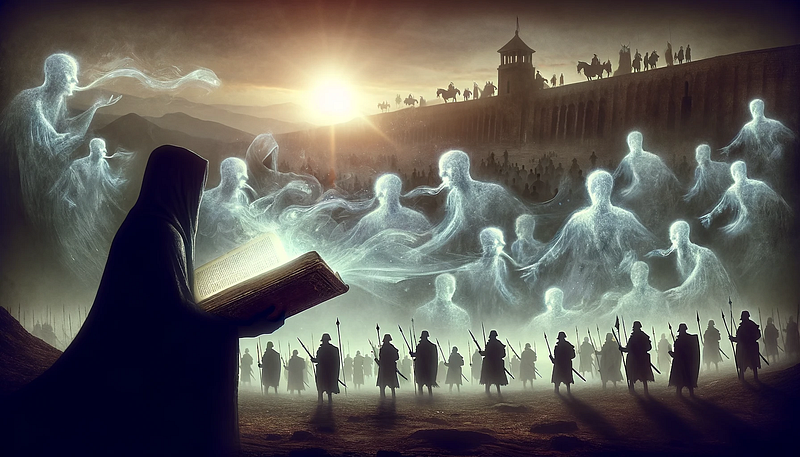
To grasp the roots of these theories, one must first understand that the human brain is a story-seeking missile, constantly on the hunt for patterns, a meaning-seeking creature in a universe that often shrugs at the concept of meaning. And when the drums of war beat, the cacophony overwhelms our sense of narrative. The enemy becomes not just a nation but a shadowy figure in the corner of our eye, a boogeyman lurking behind the veil of night. In war, the enemy is everywhere and nowhere, and so we paint them onto the canvas of our fears, often with broad, indiscriminate strokes.
Consider the great conflict spectacles of the past, where leaders didn’t just command armies but narratives. Take the Cold War, a chess game of paranoia played in bunkers and backrooms, where every move was seen not just as a strategy but as a clue to a grander, darker design. It was an era where the truth became a contortionist, bending to the will of spies and politicians, all with a finger on the world’s pulse and a hand in its pockets.
It’s the same today, though the stage has shifted to a more digital arena. Wars are no longer just fought on battlefields but on the battleground of the internet, where every user is a potential soldier, every post a potential bullet, and every conspiracy theory a potential landmine, ready to blow the legs off reality.
The birth of these conspiracy theories in warfare is no immaculate conception; it’s a gritty, messy affair, a union of fear and uncertainty giving birth to a squalling child of suspicion. They feed on the chaos of war, growing fat on the scraps of information that fall from the table of truth. And in this buffet of bewilderment, they find a feast fit for a king — or rather, a shadow king, ruling from the unseen throne of our darkest thoughts.
The dance of these theories is as hypnotic as it is destructive, twirling the dancer ever faster until the world blurs and balance is lost. They whisper to us that we are not mad; the world is and that we alone can see the strings pulling at the marionette of society. It’s an intoxicating melody, and it plays on an endless loop during times of conflict, where the only thing more abundant than the conspiracy theories themselves is the appetite for them.
In the shadowy corners of history, where fact and fiction blur, the seeds of conspiracy theories have always found fertile ground. These theories often arise in times of societal stress, war being a prime crucible. In the cauldron of conflict, misinformation, and psychological warfare have been strategic tools as potent as any physical weapon.
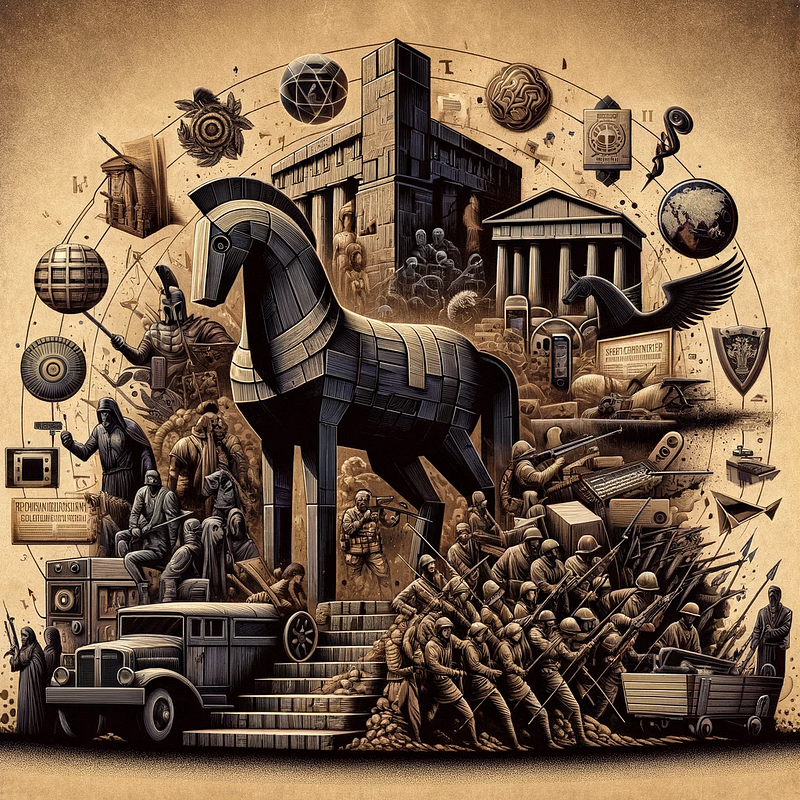
Our journey begins in the ancient world, where subterfuge was as much a part of warfare as the phalanx or the chariot. The use of deceptive tactics in war is as old as the tale of the Trojan Horse. But beyond these physical deceptions lay the murkier realm of psychological subversion. Ancient generals and politicians were masters of using rumors and false narratives to undermine their enemies’ morale or to sway public opinion.
Fast forward to the Middle Ages, when propaganda took a more sophisticated turn. The printing press became a catalyst for the rapid spread of conspiracy theories. During the Reformation, for instance, pamphlets alleging secret alliances and nefarious plots spread throughout Europe, fueling religious wars and political strife.
The 20th century they have brought about an era where the lines between propaganda and conspiracy theory became increasingly blurred. The First World War saw the use of atrocity propaganda to demonize the enemy, with fabricated tales of barbarism that were designed to mobilize public support for the war effort. The Cold War was a golden age for conspiracy theories, with both sides engaging in a covert war of disinformation, where truth was the first casualty.
In modern times, the digital age has given a megaphone to conspiracy theories, allowing them to spread with viral efficiency. The internet has democratized information but also misinformation. In the wars of the 21st century, cyber warfare and social media have created a new front-line in the battle for the truth. By understanding the past, we arm ourselves with the knowledge to confront the contemporary manifestations of these age-old tactics. Recognition of these theories is not just an academic exercise but a vital defense mechanism in the arsenal of any state or society seeking to preserve its integrity against the insidious nature of psychological warfare.
The Digital Battlefield — Conspiracy Theories in Modern Warfare
If the old wars were fought with bullets and bombs, the new wars are fought with bytes and blogs. The digital battlefield is not one of mud and blood but of memes and mood swings. It’s a place where a well-phrased hashtag can become a rallying cry, and a viral video can recruit more followers than a charismatic leader with a megaphone standing atop a soapbox in the town square.

In this brave new world, the conspiracy theory has evolved. It’s no longer the whispered rumor in the alley; it’s the trending topic on your feed. It’s the digital graffiti scrawled across the walls of our social networks, at once both anonymous and glaringly public. Here, in the electric hum of the internet, these theories find a home, an audience, and a breeding ground.
The digital warrior doesn’t march; they scroll. They don’t shout; they click. With every share, they lob a digital grenade into the trenches of the opposition, and with every like, they shield themselves with a battalion of the like-minded. The digital age has turned every one of us into potential soldiers of fortune, mercenaries in the war of information, where the currency is credibility, and the spoils are the minds of the masses.
And in this new age of digital warfare, conspiracy theories are the drones, unmanned, flying over the landscape of our discourse, dropping parcels of doubt and disruption into our backyards. They’re the snipers, aiming at a hidden vantage point, their scopes zeroing in on the vulnerabilities of our beliefs. They’re the landmines, lying in wait beneath the surface of our feeds, ready to explode into controversy with a single misstep.
Let’s take a detour into this virtual Vietnam and observe the guerrilla warfare of the modern age. Here, you might find the soldier of skepticism, armed to the teeth with dubious sources and leaps of logic, diving into the foxhole of an online forum. Or the keyboard commando, launching salvos of satire and cynicism with precision, their fingers tapping out a rhythm of rebellion.
But it’s not all doom and gloom in the digital domain. For every act of informational insurgency, there’s a counter-movement, a resistance built on the bedrock of fact-checking and sourced science. The digital battlefield is as much about defense as it is about offense, a constant push and pull between what’s possible, what’s probable, and what’s just plain paranoia.
As we dive into the murky depths of the digital battlefield, it’s like opening Pandora’s Box — except every time it’s opened, a new version of the same old chaos flies out, sprouting wings made of binary code and spreading through the world at the speed of light. This is the anatomy of a viral conspiracy theory: a beast with many heads, each whispering different versions of the same tale into the ears of anyone who will listen. It spreads through the arteries of social media, pumped by the hearts of true believers and cynics alike, each beat a share, a like, a retweet.
The spread of these digital myths is not a random walk through the park; it’s a calculated sprint through a labyrinth designed by algorithms that know you better than you know yourself. They weave through the capillaries of our communities, carrying with them not just ideas, but the emotional weight of fear, anger, and disbelief. They prey on the vulnerable parts of our psyche, the parts that haven’t yet built up a resistance to this kind of infection.
And what of our collective consciousness? It’s in the intensive care unit, hooked up to the life support of fact-checkers and digital literacy campaigns, fighting off the fever of falsehoods with a dwindling supply of trust in what we once took for granted as “the news.” The body politic is showing symptoms of distress, its pulse quickening with every breaking story that turns out to be a false alarm.
But not all hope is lost. There are digital diplomats, information warriors armed with the truth, who stand guard over our shared reality. They don’t just repel the invaders; they also repair the damage done, patching up the holes in our understanding with context, evidence, and reason. They understand that in the age of information overload, the most valuable currency is not attention, but trust.
So how do we steel ourselves for this ongoing war? It starts with education. We must become savvy navigators of the digital terrain, able to distinguish the mirage from the oasis. We must be equipped with critical thinking skills, a healthy skepticism, and a network of reliable sources. We must learn to map out the minefield, not with our footsteps, but with our discernment, avoiding the traps set by those who would lead us astray.
As we cut through the fog of misinformation, we find the path forward is paved with the solid ground of facts, reason, and shared values. It’s a path that winds back to a place where the air is clear, where we can breathe deeply and speak freely, knowing that our words are our own, not echoes of someone else’s agenda.
Welcome, then, to the front lines of the future, where every click, every search, and every post is a battle in the war for our minds. Here, in the digital trenches, the most powerful weapon is not the spread of misinformation, but the dissemination of truth. And the fight for the future is indeed just a click away — a click towards enlightenment, towards unity, and towards a society where truth prevails over fear.
Techniques for Identifying Conspiracy Theories
Now, strap on your goggles and snorkel; we’re diving into the murky waters of the conspiracy sea. Identifying conspiracy theories isn’t like spotting a clown at a funeral — startlingly obvious and wildly out of place. No, it’s more like realizing that the clown has been there the whole time, masquerading as a mourner. It’s subtle, it’s insidious — it’s the art of discerning the zebra among the horses.

The first tool in our kit is the magnifying glass of skepticism. Not the kind that scorches the earth and cynically doubts everything from the moon landing to the existence of Belgium, but a healthy, toned skepticism that does daily reps at the gym of critical thinking. This skepticism doesn’t leap; it steps cautiously, testing the ground for traps of logical fallacies and the quicksand of unverified sources.
Then there’s the Sherlock Holmes in us, the detective that doesn’t just ask, “Who benefits?” but also, “Is this even plausible?” It’s the inner investigator that looks at a theory and asks for the passport of evidence before allowing it to cross the border into Believable land. This is the detective who understands the difference between correlation and causation, that just because someone found a Bigfoot footprint in the woods after a UFO sighting doesn’t mean E.T. has a penchant for oversized sneakers.
Armed with these, we march into the battlefield of bunk. Here, we encounter the chimeras of conspiracy, beasts with the body of a rumor and the head of a half-truth, breathing the fire of sensationalism. It’s a Bestiary of Deceit, where tales of “crisis actors” and “deep state operatives” flutter about like bats in the belfry of our brains.
But how do we recognize these creatures for what they are? By the tracks they leave, of course. The footprints of falsehood are often found in the mud of emotional manipulation and the dust of dodgy data. They lead us down a path that seems to be paved with questions but, upon closer inspection, is littered with assumptions.
We also listen for the echo of expertise — or rather, the lack thereof. Genuine experts are as rare as unicorns in the field of donkeys, and they don’t bray; they bring credentials and peer-reviewed research to the table. They don’t make proclamations from the mountaintop; they publish findings in the valleys of academic journals.
Lastly, there’s the sniff test. If it smells fishy, it’s probably not a rose garden. Conspiracy theories often reek of the stench of a story too neatly packaged, a puzzle whose pieces fit a little too perfectly. Reality is messy, it’s complex, it’s a Jackson Pollock painting — not a paint-by-numbers.
Donning our detective gear, we begin our journey into the vast expanse of conspiracy theories with the precision of a seasoned sleuth. We embark upon a meticulous examination of the evidence, understanding that within the realm of the incredible, kernels of truth can sometimes be found. Our task is not to debunk for the sake of debunking, but to patiently unravel the threads of fact from the tangled web of fiction.
As informed skeptics, we approach each claim with both an open mind and a critical eye. We understand that the allure of conspiracy theories often lies in their simplicity, their offer of clear villains, and straightforward answers in a world that is inherently complex and uncertain. Yet, we resist the temptation of easy explanations, knowing that reality is rarely uncomplicated.
The tools of our trade are logic, reason, and scientific method. We ask probing questions: Who benefits from this narrative? What is the evidence, and how can it be verified? Are there alternative explanations that hold more water? This is not a process for the faint-hearted; it requires diligence, patience, and a willingness to accept that some questions may remain unanswered.
Our work is akin to that of a farmer, separating the wheat from the chaff. The chaff, in this case, is the noise that often drowns out sensible discourse — the sensationalism, the fear-mongering, the outright fabrications. The wheat is the valuable insight that can be gleaned from understanding why specific theories take hold and what they reveal about our society, our fears, and our collective psyche.
In the process of this great sorting, we sharpen our own understanding of the world. We become better equipped to identify bias, recognize propaganda, and resist manipulation. This is not just an intellectual exercise; it is a defense mechanism against the psychological warfare that is waged on the battleground of our minds.
By cultivating critical thinking and fostering a culture that values truth over sensation, we can create a fertile ground for the fruits of truth to flourish. In this garden, ideas are not accepted at face value but are nurtured with inquiry, debate, and evidence. Here, we do not fear the unknown or the unexplained; instead, we see them as opportunities for discovery and understanding.
So, let us roll up our sleeves and delve into the work that lies before us. The field of conspiracy is indeed vast, and the harvest is indeed plentiful. But with the proper techniques and a steadfast commitment to truth, we can discern the grain from the tares. And in this discernment, we do more than protect ourselves from deception; we contribute to the growth of a society grounded in reality, fortified against the whims of fancy and the allure of the baseless narrative.
Combating Conspiracy Theories — Strategies and Challenges
Imagine a world where whispers turn into shouts and shadows are seen as specters. This is the realm where conspiracy theories breed, sprawling like ivy across the walls of reason, entangling fact with fiction until the two are indistinguishable to the untrained eye. Our quest? To prune back the ivy without damaging the wall.

The first strategy in our anti-conspiracy toolkit is the light of transparency. Like sunshine through the clouds, it has the power to disinfect and disperse the mold of misinformation. But this isn’t just any light; it’s a disco ball, scattering beams in all directions, illuminating the nooks and crannies where conspiracy theories like to lurk. In this light, nothing can hide. Every detail is exposed, allowing for scrutiny, which is about as welcome to a conspiracy theory as garlic is to a vampire.
Now, while transparency cuts through the darkness, education is the soil in which the seeds of critical thought are sown. Imagine a garden where these seeds are nurtured, not with the water of rote memorization but with the compost of curiosity and the fertilizer of fact-checking. In this garden, questions are the blooms that burst forth from the stems of solid data, and healthy skepticism is the fruit that hangs from the branches, ripe for the picking.
But let’s not kid ourselves; wielding the shears of truth in the overgrown garden of conspiracy is no picnic. It’s a Sisyphean task where each rock of rumor is heavier than the last, and the hill of human credulity is steep. The challenges are as numerous as they are daunting, with the winds of social media fanning the flames of falsehoods, turning sparks into wildfires in an instant.
And yet, for all the firebreaks we can build with education and transparency, there’s the human element — the psychological underbrush that’s fuel for the fire. Our brains are wired for stories, not for statistics. We crave narrative, coherence, and villains to blame, not the cold, indifferent chaos of the universe. So the strategy here isn’t to douse the fire with a flood of facts but to fight narrative with narrative, crafting tales that are not only true but also as compelling and digestible as the conspiracies they combat.
The task at hand is comparable to an author composing a thriller that educates as much as it excites. We must find a harmony between the captivating twists of a detective story and the authoritative depth of a scholarly tome, forging a tale that quenches our thirst for the enigmatic while feeding our minds with verifiable knowledge. Our aim is to prepare a banquet of validated truths that is as tempting to the discerning reader as the most sensationalized fabrications peddled by purveyors of conspiracy.
As we embark on this section of our exploration into the realm of conspiracy theories, we arm ourselves with the most formidable weapons in our arsenal: critical thought, clear communication, and the power of compelling, evidence-based storytelling. To navigate the intricate battlefield of conspiracy narratives, we understand that it is not enough to debunk and dismiss simply; we must also offer narratives that resonate with the human condition, narratives that are as truthful as they are engaging.
In crafting these narratives, we draw upon a deep understanding of history, psychology, and the elements that make stories stick. We recognize the seductive pull of conspiracies — they often provide simple answers to complex issues and cast the believer as a hero against the shadowy “other.” Our counter-narrative must thus acknowledge the underlying concerns and fears that give rise to such beliefs, addressing them with empathy and respect.
Our tools for this task are manifold. We employ rigorous fact-checking and lean on peer-reviewed research to construct a foundation of irrefutable accuracy. We weave in the compelling elements of storytelling — conflict, character, and resolution — not to sensationalize but to humanize and connect with our audience on an emotional level. We present our narratives with clarity, avoiding jargon and technical language that might alienate or confuse.
The fight against the spread of conspiracy theories is, in essence, a battle over what shapes our perception of reality. Our minds must be analytical, able to dissect complex issues, and discern truth from falsehood. Our speech must be persuasive and capable of articulating the facts while also inspiring trust and confidence. Our stories must bridge the gap between what is and what feels, grounding sensational claims in the solid bedrock of empirical evidence while acknowledging the human propensity for wonder and the desire for simplicity.
The task before us is indeed Herculean, for we are up against a Goliath that grows more powerful with every unchecked share, every unchallenged tweet. But the reward for our labor is a society less susceptible to the whims of falsehood. This collective consciousness values truth and regards it as the fertile soil in which healthy, informed communities can grow.
In this war against deception, every cleared misconception, every enlightened mind, and every narrative that shifts the paradigm toward truth is a triumph. It is a painstaking process, but the vision of a landscape of thought — free from the invasive species of deceit, where the flora of facts can photosynthesize in the sunlight of understanding — is the ultimate reward. Our labor is an investment in the future, a commitment to a world where truth is treasured and where reality, no matter how complex, is the cornerstone of our shared narrative.
Case Studies — Recognition in Action
Welcome to the theater of the real, where the dramas of conspiracy theories play out on the stage of the world, and the audience — sometimes unwittingly — becomes part of the performance. It’s a place where the lines between actor and observer blur like a watercolor painting left out in the rain.

Let’s take our seats as we dive into the most intriguing act of this play: the case studies, where recognition techniques aren’t just theoretical dancers in the ballroom of the brain but gritty gladiators battling in the arena of reality.
First, picture a sleepy town, not unlike the one from the old T.V. show where everyone knows your name, and the most scandalous event is Mrs. Doris’s award-winning pumpkin mysteriously vanishing the night before the fair. But then, imagine a rumor starts, quiet as a mouse skittering across the floorboards, whispering that the pumpkin didn’t just vanish — no, it was stolen by a shadowy group plotting to control the world’s pumpkin spice supply.
The townsfolk might chuckle at first, but the seed is planted. Now, enter our protagonist, armed not with a sword but with the magnifying glass of skepticism and the shield of data. They don’t just debunk the rumor; they dissect it, showing how it sprouted legs from a mishmash of a local business deal gone sour and the human tendency to connect the unconnectable. They narrate the tale of the pumpkin’s true fate — a group of teenage pranksters — and in doing so, they don’t just tell a story; they reveal the method behind the madness.
Moving on, let’s zoom out to a larger stage — a bustling metropolis where the bright lights of the city can’t quite chase away the dark corners of doubt. Here, a more sinister conspiracy theory slithers through the streets, claiming that the city’s recent water shortage is the result of deliberate tampering by foreign spies.
Our urban hero, a modern-day digital detective, doesn’t leap to conclusions; they leap to their computer, analyzing patterns, tracing claims, checking, and cross-referencing. With the finesse of a chef filleting a fish, they separate fact from fiction, presenting their findings not with a wagging finger but with an open hand, inviting others to see the intricate web of truth — a web that’s as robust as it is transparent.
Each case study, from the humorous to the harrowing, is a lesson in the delicate art of discernment. Like a seasoned fisherman can spot the telltale ripples of a fish below the surface, these stories teach us to recognize the ripples of truth beneath the waves of information. They show us that recognition isn’t a bulldozer plowing through a field of lies; it’s a gardener carefully tending to the plants of perception, nurturing the growth of understanding while uprooting the invasive species of deceit.
As the final act unfolds, we find ourselves poring over a vivid collage of triumphs, a carefully curated gallery where the specters of deceit are not merely vanquished but dissected and demystified, their fallacies laid bare for scholarly scrutiny. Within this anthology of analytical victories, we encounter our navigational beacons — each case study serving simultaneously as a warning, an instruction, and a source of empowerment, all interlaced into a mosaic as richly intricate in its instruction as it is in its complexity.
This anthology enlightens us, revealing that the act of discernment transcends mere recognition — it ascends to the realm of artistry, demanding the astute perception of an artist, the meticulous touch of a craftsman, and the narrative soul of a raconteur. Equipped with this triad of talents, we emerge prepared to navigate the interplay of shadows and illumination, poised to interpret, conclude, and elucidate the enigmatic domain of conspiracy theories with renewed clarity and purpose. In this way, our understanding becomes not just a shield but a beacon, guiding us through the intricate dance of truth and myth.
Conclusion
And so, we reach the twilight of our exploration, the time when the stagehands are sweeping up the last of the confetti and the echoes of the actors’ lines still dance in the air. The conclusion of our tale of conspiracy theories is not a period at the end of a sentence but a comma, a pause inviting reflection, a whisper urging us to lean in closer.

Imagine this journey like a hike up a mountain. At the base, the path was shrouded in the mist of mystery, every rock and root a potential snake in our minds. But as we climbed, with each step of understanding, the sun broke through the canopy, illuminating our path, revealing that what we thought were serpents were just the twisted vines of human nature.
We’ve traversed the landscapes of the mind, from the fertile valleys of curiosity to the treacherous cliffs of skepticism. We’ve seen how conspiracy theories can be rooted in the soil of our psyche, sprouting like weeds, entangling our thoughts until we can’t see the forest for the trees. But armed with the tools of discernment — the secateurs of scrutiny — we’ve learned to trim back the overgrowth, to stand back and see the woodland for what it is: a complex ecosystem of truth and fiction, facts and fallacies.
In this epilogue of our journey, we’re not left with a map marked with a bold ‘X’ that says, “Here be dragons,” but rather a compass that points to our own critical thinking as true north. We’ve laughed in the face of absurdity, raised an eyebrow at the improbable, and nodded solemnly at the revelations of reality. We’ve learned that the most potent weapon against the allure of conspiracies is not a fiery sword but the gentle light of our own discernment.
As the curtain falls, we don’t exit the theater. Instead, we linger in the foyer, pondering the performance. We realize that the stage of conspiracy theories is built on the shifting sands of our collective consciousness, painted with the broad brushstrokes of our fears and desires. The actors may take off their costumes, but the roles they play linger on in the way we think, the way we speak, the way we choose to see the world.
In the end, our article isn’t just a series of words strung together in the hopes of understanding — it’s a mirror held up to the nature of belief itself. It’s a conversation, not just between writer and reader, but between the voices in our own heads — the doubter, the believer, the skeptic, and the optimist.
So let us step out into the night air, the stars above us like a billion eyes winking down, reminding us of the infinite possibilities that lie in the space between knowing and believing. Let us take with us the laughter, the raised eyebrows, the moments of awe at the resilience of truth in a world brimming with fiction. Because in this grand narrative of conspiracy theories, the final word is not one written on a page — it’s spoken in the quiet conversations we have with ourselves, in the way we choose to navigate a world rich with stories, some as old as time, some as new as the latest click on a screen.
And maybe, just maybe, in that space between the words, between the laughter and the learning, we find something resembling wisdom, a treasure not of gold but of insight — a gem to be pocketed on our journey through the ever-unfolding map of human understanding.
Thanks for reading and sharing.