
Unpopular Opinion: Soccer Isn’t a Sport, It’s a Human Rights Crisis
Being a sports fan in the United States is kind of a bummer these days. No matter what your athletic competition of preference may be, you can rest assured there’s an accompanying scandal dragging it down right now.
With the NFL, it’s accusations of racism and epidemic-level head trauma, to the point that watching the Super Bowl is enough to get you accused of supporting both.
The NBA has been dodging accusations of fixing results to meet their desired television outcomes since at least as far back as the 1985 draft, which they 100 percent rigged so Patrick Ewing could go to the Knicks and still never win a championship.
Baseball, obviously, has to deal with allegations that it’s the most boring sport to watch ever. And steroids. Those were a problem for awhile too, depending on what conspiracy theories you choose to believe.
As for hockey, no one can be sure. Hockey is Canada’s problem.
The rot isn’t just contained to professional sports, though. With March Madness kicking off last week, talk of NCAA exploitation of student athletes is all the rage right now.
Somehow, this absurd promotional video about the joys of being a student athlete just made things worse.
Probably because they left out the part where schools make millions of dollars in revenue off the hard work of players who get none of that money in return.
“Yeah, but they get a free college education.” Right, so do the kids who make it to college on band scholarships, and I’d be absolutely floored to learn that any of them ever earned their respective universities a single dime in television revenue.
There’s no doubt, everything listed above is bad times and if you’re a sports fan it absolutely should weigh on your conscience at least a little bit while you’re skipping work to celebrate the first days of spring watching basketball in a musty Buffalo Wild Wings.
That said, if American sports fans can take solace in anything when it comes to the relationship between enjoying athletic competition and ignoring atrocities, it’s that at least we don’t watch soccer.
Because people let me tell you, when it comes to controversy, no sport is better at generating them than soccer.
Soccer isn’t a sport, it’s a human rights crisis.
I mean that literally, but I’ll explain that part more in a little bit. For now, let’s compare some notorious moments of unpleasantness in American sports and their rest-of-the-world futbol counterparts.
There have been some ugly incidents of fan violence in American sports in recent years. A Giants fan got beat into a coma by Dodgers fans on opening day in 2011.
The Malice In the Palace only started because a fan threw a beer at Ron Artest.
Oakland Raiders games are the Mad Max: Fury Road of sports.
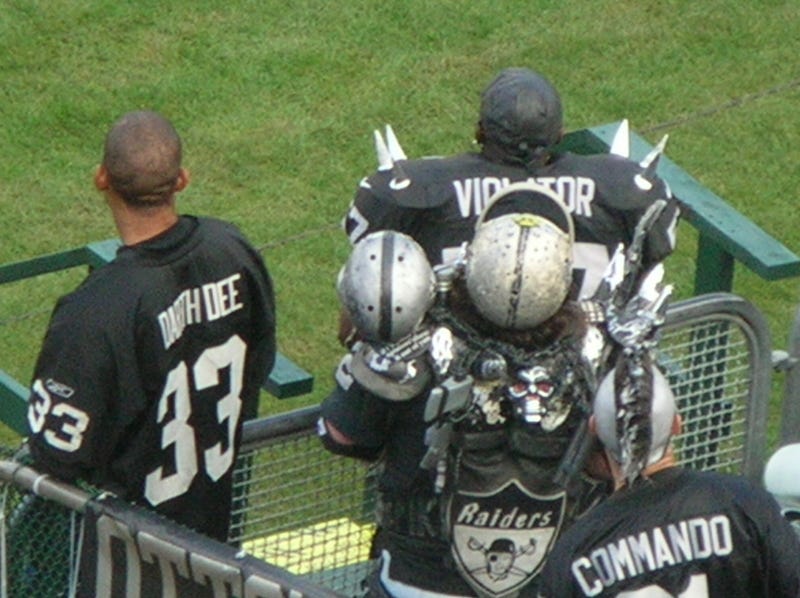
Fan violence at American sporting events definitely happens. However, those incidents are few and far between and not at all indicative of the average stadium going experience.
Do I even need to explain how soccer is objectively worse than any other sport in this regard? You probably think I’m referring to soccer hooligans, which I wasn’t, but since we’re on it, what about that? There’s an entire subset of soccer fandom whose defining characteristic is that they like to fight. The closest thing American sports has to that is, well…again, Raiders fans.
But there’s more to soccer’s violence problem than roving packs of hooligans.
For starters, watch any soccer match and you’ll note that the barrier between the fans and the players is about three feet high and appears to have all the stopping power of a few yoga mats stapled together.
I don’t think there’s a nefarious reasons for this arrangement. These barriers are typically meant to protect fans from injuries that might happen as a result of the action spilling into the stands. By the time a soccer ball reaches one of those barriers the player chasing it would probably need oxygen. In theory, the need for protection should be minimal.
An unfortunate side effect of this setup, though, is that sometimes fans just run onto the field and punch a dude in the face.
It happened twice in one day during two separate games just this month.
In one incident, during an English Championship match between Aston Villa and Birmingham, the player who got punched…
…went on to kick the game winning goal later.
That’s a fantastic movie twist that in no way overshadows or excuses the fact that punching a soccer player in the face, as a fan, is remarkably easy.
It happened again later that same day when a fan ran onto the field during a Manchester United versus Arsenal game at Emirates Stadium.
One of the most famous and catastrophic incidents of fan-on-player violence happened in 2011 when a spectator rushed the field and punched Steaua Bucharest defender George Galamaz, sending him to the hospital for 15 days with a broken cheekbone. Although it did make for a very satisfying video of Galamaz’s teammates just annihilating his attacker in the moments between the punch and when security finally traverses the vast expanse of the pitch to break things up.
Again, it’s like a great ending to a movie that should never have been made.
You’ll note that in all of these examples, the violence is being carried out by one individual. That type of violence, somehow, seems to be a little more rare than incidents involving hundreds or even thousands of fans at once.
Soccer associated group violence (SAGP) is such a huge problem in Argentina they had to impose a ban on visiting team supporters attending games, and it still didn’t fix the problem.
In November of last year, a match between Boca Juniors and River Plate had to be postponed after Boca’s bus was pelted with rocks and full beer cans by River supporters on the way into the stadium, sending several players to the hospital. The game was postponed again a few days later when it was decided it would be unfair to make Boca play so soon after having been literally assaulted by their opponent’s fans.
This all happened on the verge of Argentina being trusted to keep most of the world’s leaders safe when they hosted the G20 Summit.
No one should’ve been too surprised by these developments. A game a few years back between the same two teams had to be stopped at halftime after fans attacked River players with pepper spray.
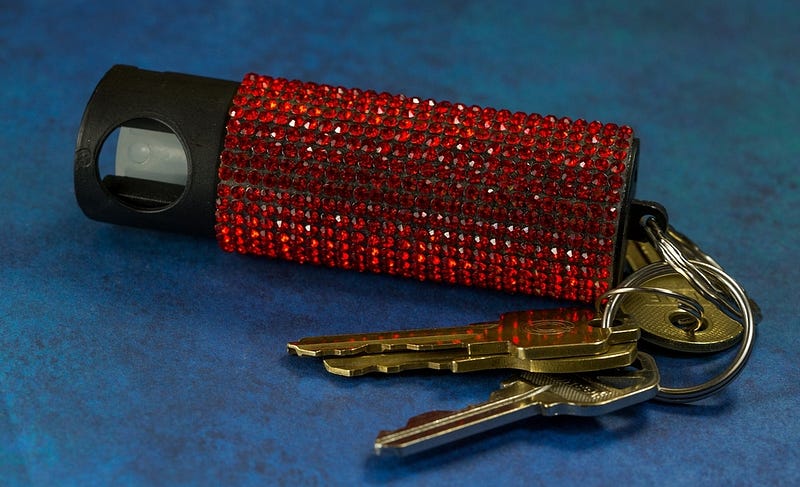
Remember that time Tom Brady got maced by a fan during a game? Of course not. If nothing else a representative from the sports gambling industry would’ve shot the guy before he made it past the sidelines.
Again, I’m not saying American sports leagues are pure by any stretch of the imagination, but they at least do a decent job of keeping their fans from committing heinous acts of violence against players.
And all that stuff about there being minimal barrier between fans and players definitely doesn’t explain it all. Basketball provides even less space and protection between fans and players and LeBron James hasn’t been punched by an angry onlooker even once.
If I was gonna make one devil’s advocate argument here, it would be that on the list of professional athletes you’re most likely to win an on-field fight against, soccer players have to be number one. Every major American sport offers fans a vast disadvantage in this way. Basketball players have an obvious reach advantage on the average American. Baseball players have bats. Football and hockey players wear pads and helmets, rendering most punches ineffective.
So yeah, soccer players are the most beatable ass in professional sports for a variety of reasons and that’s probably part of it, but there’s definitely more at work here.
Racism, for example. Just rampant, unchecked racism. A recent Business Insider article detailed three moments of professional soccer racism that happened just in the month of December.
One player, Raheem Sterling, shared an Instagram post detailing racist abuse he received at the hands of a Chelsea supporter.
Another player, Arsenal forward Pierre-Emerick Aubameyang, had a banana peel thrown at him during a match that same month.
The most shocking incident happened during a match in Italy between the Napoli and Inter Milan clubs. Before the match even started, a group of Napoli fans were met at a designated parking area by a group of Inter Milan “ultras” (I’ll explain in a second) wielding hammers, masonry mallets, and goddamn pruning sickles.
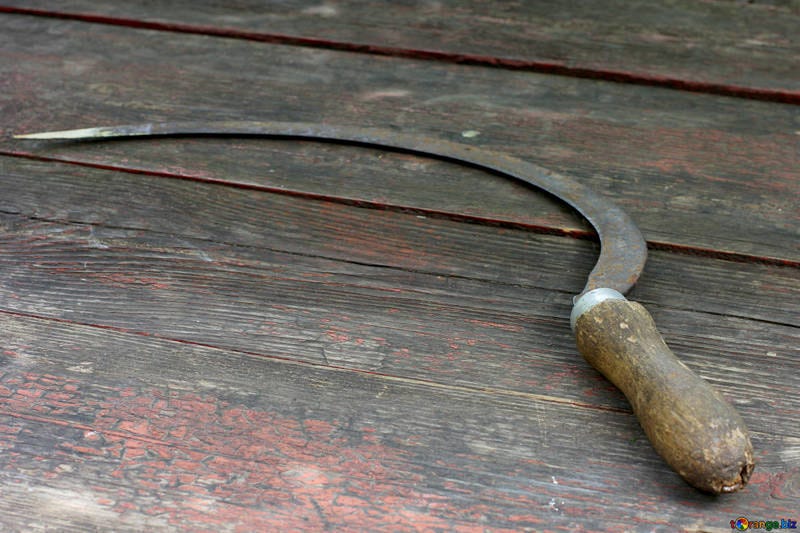
Four Napoli fans were hospitalized with deep stab wounds. An Inter Milan ultra who’d previously been banned from attending games for being a racist stain was run over by an SUV and killed.
Reminder…this was all before the match started. Things only get better inside the stadium in that no one else died. While warming up, Napoli star defender Kalidou Koulibaly was showered with monkey noises from the mouths of thousands of Inter Milan fans. It happened two more times during the match, except sometimes the monkey noises were replaced by “anti-Semitic songs.”
We’re talking about thousands of people here. Or hey, let’s say maybe it’s just hundreds, for benefit of the doubt reasons. Even then, go to a Lakers game right now and start crooning your favorite anti-Semitic tune and see if hundreds of others join in. They definitely will not.
Not that we don’t have racist fan interactions in sports here in America, but it’s usually more along the lines of what happened with the NBA’s Russell Westbrook in Utah recently, where a lone MAGA trash heap and his trash heap wife said something racist and got banned from the Louis J. Mormon Center (or wherever the Jazz play) for life.
What didn’t happen was hundreds of other fans joining in on those racist taunts and turning them into racist chants.
You see, it’s not that soccer has a more severe racism problem than other sports. No, it’s that just calling it a racism problem isn’t a severe enough description. Soccer doesn’t just have a racism problem, it also has a fascism problem.
Like, actual fascism. That’s not me trying to be clever or overly dramatic about the direction soccer fandom has taken.
I mentioned the term “ultra” earlier and promised to explain it. Here goes!
Ultras are a subgenre of soccer fans who’ve been around since the ’60s, when they were just fiercely loyal to their respective teams. Starting sometime around the mid-90s, they started getting radicalized. Now, they’re still fiercely loyal to their respective teams, but also to the ideals of Mussolini and whatnot. Damn near every soccer team in Italy has an ultra faction showing them support.
Surely, though, that support is rejected by the teams in question, right?
Nah. Ultras buy tickets and support is support, so what happens instead is Italian players will sometimes follow their fascist fans lead by refusing to shake hands with black players after games.
In all fairness, the guy in the above video isn’t Italian. He was just signed by an Italian club months after becoming internet infamous for pulling that Nazi celebration during a game.
Last year, ultras supporting a team in Rome made stickers and t-shirts with the faces of a rival team’s players superimposed on a picture of Anne Frank.
It’s at this point that at least one person reading this is thinking, “but don’t the actions of these soccer fans just reflect the direction society in Europe, and especially Italy, is moving right now?”
First of all, you stated that question very eloquently, kudos. Also, yep, it sure does, and yes, especially in Italy. We might have relegated their mafia to MTV2 status, but Italy’s fascists are thriving these days.
To address those concerns, first, I’d like to point out that this isn’t exclusive to Italy. England’s Chelsea Football Club has such a huge problem with antisemitism among their fan base, they have an entire section of their website dedicated to educating fans about how they should ease up on the Jews a bit.
Also, if this is just a reflection of what society is like in Europe, why aren’t we seeing that same reflection with American sports? There’s no doubt that sports fans and Trump fans are two demographics with a whole lot of overlap. But aside from a few idiots trying to flush their Yeezy’s down the toilet when Nike put Kaepernick in a commercial, we haven’t seen much in the way of unified protests or hatred at sporting events.
Why is that? It can’t just be because our police have guns, right?
Here’s a wild idea. What if our respective internet bubbles have us convinced we’re just as divided and racist as Europe, when the reality is we still have a long way to go before we get to that point? It’s a comforting thought in that it implies we still have time to right this sinking ship. The glaring lack of organized racism and antisemitism among American professional sports crowds could very well be the hope we need right now.
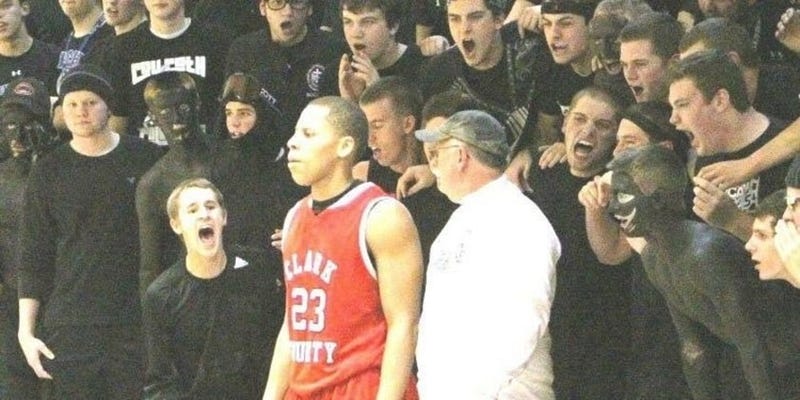
Because an in-unison display of hatred at a sporting event is a thing that could almost only happen organically, at least in this country (see image above). I’m not familiar enough with how ticket buying and selling works in the soccer world, but around these parts, getting thousands of like-minded fascists into the same game to shout the same hateful nonsense at the same time would require an aftermarket ticket buying operation of such a magnitude that tracing it back to a single organizing point would be fairly easy. Faking it would take 9/11 levels of planning.
If it happens here, it won’t be some well-organized Russian intelligence stunt. No, it will be the real deal, just like it is in those soccer stadiums.
So, sure, things are pretty bleak in this country, but they’re not “one-third of the Cincinnati Reds stadium shouting ‘build the wall’ at Javy Baez every time he’s at bat” bleak. Not yet, anyway, and that’s obviously a good thing.
I don’t say any of that to minimize the danger this country is facing at the moment. I’m just saying that we don’t have to be the next Nazi nation, the internet just makes it seem inevitable sometimes. We wouldn’t still have Trump rallies if being vehemently racist in large groups at packed basketball arenas with television cameras present was socially acceptable (again).
I mean, of course we’d still have them, it’s just that he wouldn’t need them anymore. For the time being, though, wide scale validation of your racist worldview is not a thing most American sports arenas offer. Maybe when the XFL launches next year, but until then, Trump rallies are the only game in town in that regard.
The craziest part about all of this is that we’re more than 2,000 words in and I haven’t even touched on the human rights stuff. That’s not a knock against my writing. I’m pretty great. It’s just that there’s so much awful to cover when it comes to “the beautiful game.”
So let’s talk about human rights. To say that soccer is a thing that’s literally infringing upon the freedom and safety of others is not hyperbole. There is a legitimate problem, and it all centers around the 2022 World Cup in Qatar.
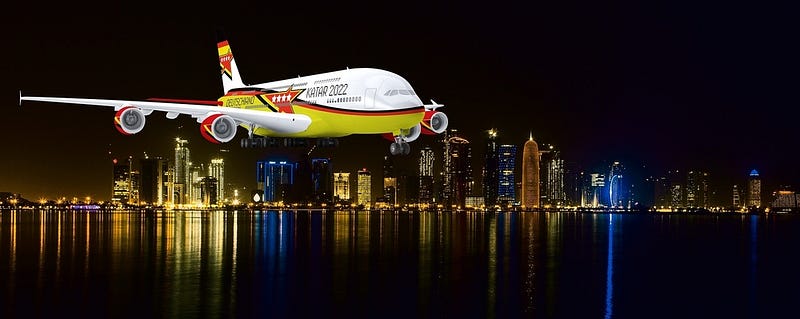
For starters, there are the gay tests. Back in 2013 Qatar announced plans to screen World Cup visitors for homosexuality. As you’d expect there was lots of outrage around that announcement, along with lots of questions about how the process would work, seeing as how a test like that doesn’t exist in the world currently.
I wasn’t able to find anything definitive that says those plans have changed, although it’s suggested in this article that Qatar backtracked and said the gay tests were just a proposal. But also that’s from an article that’s mostly about how authorities in the area had recently arrested 23 “cross-dressers and homosexuals” at a party, so no matter what, don’t expect that Qatar has gone from “gay tests” to “totally chill place for gay people” in the span of six years.
Switching gears a bit, here’s a fun fact about Qatar — the population of that country is around 90 percent migrant workers from South and Southeast Asian nations like India, Pakistan, the Philippines, and Bangladesh. Ninety. Percent. That’s not a typo.
In and of itself, that isn’t necessarily a problem. It could just mean there’s lots of jobs and opportunities in Qatar. Winning the right to host the 2022 World Cup definitely posed a labor shortage problem if nothing else. After all, the city that will be hosting the World Cup final in 2022 literally did not exist when Qatar submitted their bid. It’s being built specifically for the World Cup, right in the middle of the resource-barren desert. You know, the desert where World Cup matches will be played in 120-plus degree desert heat, speaking of humans rights disasters.
Still, a need for labor to build your soccer towns and finding that labor in other countries isn’t the problem. It’s the system that migrant labor force is working under that makes the next World Cup an actual crisis. It’s called the Kafala system, and to describe it as indentured servitude is sorta underselling it, because it implies that it never devolves into slavery.
Here’s a brief description of how it works. A recruiter approaches a potential candidate in one of those previously mentioned Asian nations, offering them a relatively plush job in Qatar. Maybe data entry. That probably sounds nice if you’ve spent most of your life doing low wage manual labor.
Oh, and those wages! You haven’t seen $400 in your entire life, and now you’re gonna make that every month? Sure, you have to pay that recruiter a $200 fee for the trouble they went through to bring you this opportunity, but that’s a small price to pay, in the most literal way possible.
Except when you arrive, it turns out the job is even more grueling manual labor, the wages are half what you were promised, and that fee is ten times more. So now you start your job months and months worth of wages in debt to your employer.
But who cares? They played you. Forget about that debt and go back home, right? Nope. Until very recently, employers were able to deny exit visas to employees who acted up. That part of the law has since been rescinded, but employers are still able to confiscate passports, so it doesn’t matter a whole lot.
For all intents and purposes, under the Kafala system, employers own their employees. Maybe workers are paid, maybe they’re not. Maybe they’ll be allowed to take a break to drink water while toiling away in the desert to build your precious World Cup arenas, maybe they won’t.
They can complain, but because they signed contracts, they can’t just go get another job. If they quit, they’re now in the country illegally because they aren’t working. Which means they’ll likely be arrested, because again, their passport was likely seized when they arrived.
The mistreatment doesn’t end with their employers, though. Migrant workers are banned from many areas in Qatar, which have been designated as “family zones” that are only open to natives and westerners. There was even a push at one point to designate Fridays as “Family Day,” meaning Kafala system workers would be banned from most public places that day. Friday is typically their only day off during the week. It’s brutal.
Also, it’s not just manual laborers who get trapped in this system. French soccer player Zahir Belounis moved to Qatar in 2007 to play for a team there. After a pay dispute in 2010, he tried to leave, at which point the team owners refused to grant him an exit visa.
This carried on for 19 months. During that time he appealed to FIFA, who refused to take up his case. He also turned to alcohol to deal with the depression caused by not being allowed to go home, and even became suicidal at one point.
As I mentioned earlier, the exit visa thing isn’t really an issue anymore, but with employers still confiscating passports, that doesn’t matter much. Even if it did, most of the damage in Qatar as it relates to the World Cup has already been done.
The 2022 World Cup, still more than three years from starting, is already the deadliest sporting event of all-time. According to the International Trade Union Confederation, around 1,200 workers have died building World Cup infrastructure in Qatar since 2010. It’s estimated that another 4,000 will have died by the time the matches actually start.
At one point, human rights investigators showed up to see what all the hubbub was about. A construction worker who was bold enough to speak to them was immediately fired and then arrested shortly thereafter for being in the country illegally (because they wouldn’t let him leave).
Playing rough with human rights investigators is the kind of thing we pull out of treaties and sometimes go to war over. In this case, it’s happening in a country where most of the population is working in indentured servitude.
So what’s the point of this article? Am I saying the UN should invade FIFA? I mean, it probably wouldn’t be the worst idea, but no, that’s not what I’m suggesting.
Should we boycott the World Cup in 2022? Well, I can promise you I won’t be going or even watching it on television, but that has nothing to do with modern day slavery. I just don’t like soccer.
If my limited knowledge of the men’s American soccer team is accurate, I don’t think we have to worry about them going either. Again, nothing to do with human rights abuses, they just aren’t that good and should probably be paid like 70 percent of what the American women’s team makes.
The truth is, I don’t have any answers here. I know there’s a popular inclination to demand that someone complaining about a problem online also offer up some solutions, but that’s not really applicable here. We all know the answer is to definitely not let Qatar host the 2022 World Cup, but it seems like that ship has sailed.
As for the future, I’ve always agreed with the notion that events like the World Cup and the Olympics should be held in the same place every time. Maybe that would lessen the devastation FIFA and the IOC tend to leave in the wake when a city is “lucky” enough to host one of their events.
Also, maybe it wouldn’t. I don’t know. Fixing soccer isn’t my job. I would say you shouldn’t watch soccer, but then how would you watch soccer? Despite all the horror and tragedy involved, it still brings you joy, and who am I to argue with those results?
That said, if you’re one of those people who lecture your friends and acquaintances about the evils of the NCAA every March, don’t also be part of the massive outdoor soccer celebrations that make the Long John Silver’s in Van Nuys completely unreachable every four years. If you love to remind people how barbaric American football is, don’t also be part of the crowd that makes Santa Monica look like the scene of an impending Oasis reunion whenever the World Cup rolls around.
Every facet of entertainment has some sort of scandal attached to it that, in theory, is well worth your cancellation. Sports are obviously no exception. Would I like to fix college sports? Sure. I’d also like to fix the electoral college, but that doesn’t mean I’m gonna stop voting until we do, you know?
So I guess all I’m saying here is let people watch March Madness in peace. Or whatever else they enjoy. Sports and all of the other massively corrupt forms of entertainment are unfortunately also most people’s only means of escape from the nightmare that the world has become.
All the institutions need to be fixed, and in time they will be fixed. But let’s not completely burn down sports and entertainment and the people who support them until we’re completely sure we don’t need to burn down the government first.