
Travel
Unplugged in India
Floating through a dream
When I was young, and cell phones were new, I did not really get the concept of wanting to be a touch away from calling someone just because you were thinking about them at that moment. And, probably more accurately, I did not see why I would ever want to be a touch away from being called.
You see, my father had an odd relationship with phones. First, he had a cat, Maya, who liked to pee on phones — direct aim. Despite this, or maybe because of it, she was his favorite cat. Second, if he didn’t feel like answering the phone just then…he didn’t.
I am my father’s daughter. So, when I did finally get a phone, it never seemed to be with me. It lay buried under my Kleenex and keys in my purse, probably not charged anyways. My husband would be amazed when I actually answered.
The first time I went to India, in 2004, I had to go to an “ITC” booth — a yellow and red affair with a phone inside, to call home. India is thirteen and a half hours different from here. So, I had to time this with precision.
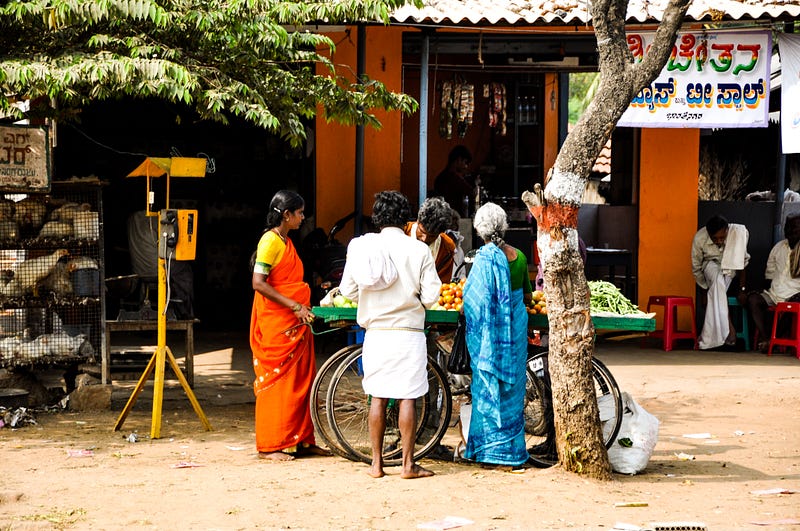
The third time I traveled to India, in 2008, photo-phones had appeared — everywhere! Clutched in the hands of children who looked like the money spent on the phone would have been better spent on food, and also by the well-dressed in Delhi, the phones were ubiquitous, and ridiculously cheap.
Being a blonde foreigner in India at that time, especially in the remote villages, was something a bit different from the norm. While I eyed the rippling silk saris, the adorable babies with anklets and earrings and twisty little curls atop their heads, and the fall of thick ebony hair streaked at the part with vermillion, they also eyed me, the tourist dressed in not-very exotic cargo pants with eyes still bleary from jet-lag.
But, yet, little girls once followed me in the “Summer Palace” for the Maharaja of Mysore and delighted in surreptitiously tugging at my hair. When I would turn around, they would giggle and pretend innocence, fingers spread across laughing lips — and then do it all over again around the next corner.
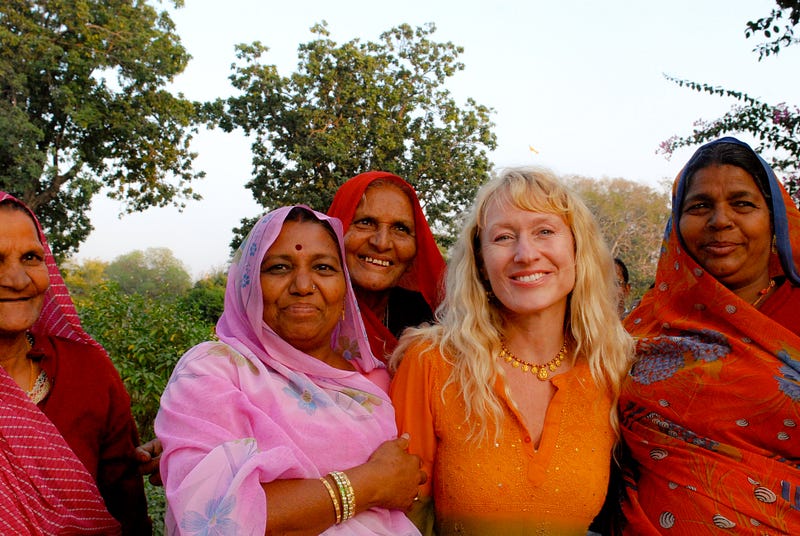
And, for a brief moment, when camera phones appeared, I felt almost like a movie star because gaggles of women, parents pushing their children into my arms, and schoolboys daring each other to go first, all wanted to take a picture with me, the strange-looking visitor, on their phones.
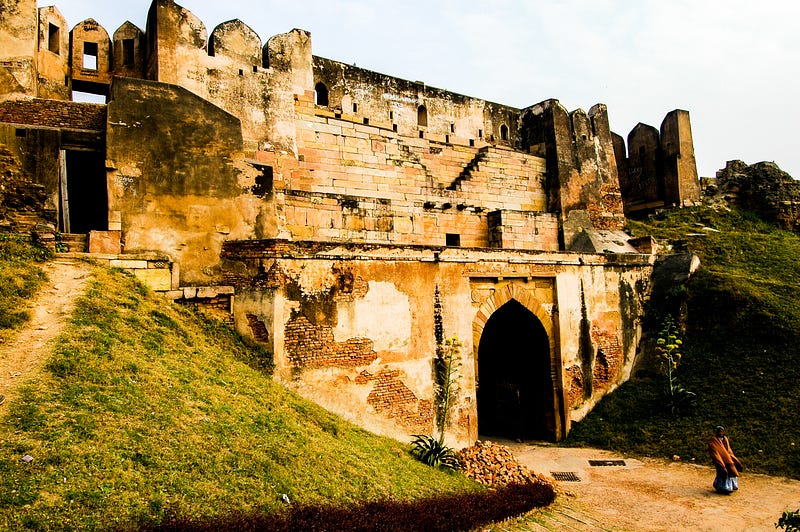
What a radical change of landscape this world of phones was for India, just in contrast to two years before, the second of our pilgrimages, when we were intending to visit Kujaraho, but ended up fogged into Varanasi for several days. We ventured out to explore the ruins of an ancient bathhouse on the outskirts of a small town a couple of hours out into the countryside, a place most foreigners never venture to.
The local children, who chattered away in Hindi, trailed us en masse. With huge eyes and grubby hands, they all wanted to touch my hair. I wasn’t sure if maybe we had entered a sacred site where women were supposed to cover their hair.
But the driver who had taken us to that village told us that these children had, literally, never seen westerners before! And, there had not been a phone in sight.
When the phones did appear, seemingly almost overnight, the big problem with them was the coverage. Spotty would be an over-glorification.
But, over the years, coverage improved, and I succumbed to the allure of the cell-phone. So, eventually, I grew accustomed to getting reception most of the time while in India.
But, there came a day a few years back, when we were rumbling down a fairly modern road, on our way to Halebid, in the back of a white ambassador. These elegant, shapely-curved cars used to be a symbol of “Old India” tourism before natural gas became a requirement.
It was New Year’s Day, at the start of our trip. I had decided to call my mother and wish her “Happy New Year’s.” Not two minutes into the call, the line went dead. I looked with disbelief at the phone and tried hitting the screen with a little more pressure. Nope.
I thought, “Oh, it will come back again in a few minutes.”
But, it didn’t.
It didn’t return for almost two weeks!
At first, I felt a great sense of itchy anxiousness. How could I “post” photos? How could I check Facebook? And, what about those e-mails?
But, as the days went by, increasingly unpunctuated by the compulsion to check the phone, the moments seemed to stretch and warp in a more continuous flow. It was almost as if time had shifted.
There is a place in South India, in the backwaters of Kerala, called Alleppey. And, in this place, you can float through the hazy evening glow on a restored rice boat, through a series of ancient canals. Here, life is lived like it has been for centuries. It is like dipping a toe into the ripples of a memory of a time long-slipped away.
In this place, you can see women crouched by the riverbank, their almost-iridescent cotton saris tucked up between their legs, clutching a naked baby in the shallows. And, a little further out, two more children splash and scream, their inky hair plastered to their faces.
And, just next door, a woman in an orange sari scrubs her pots and pans in the same water. And, in the heart of the canal, a fisherman and his two sons, dressed in worn white cotton dhotis, also tucked up between their legs, pull in their nets for the day and paddle home in long wooden canoes with upturned ends.
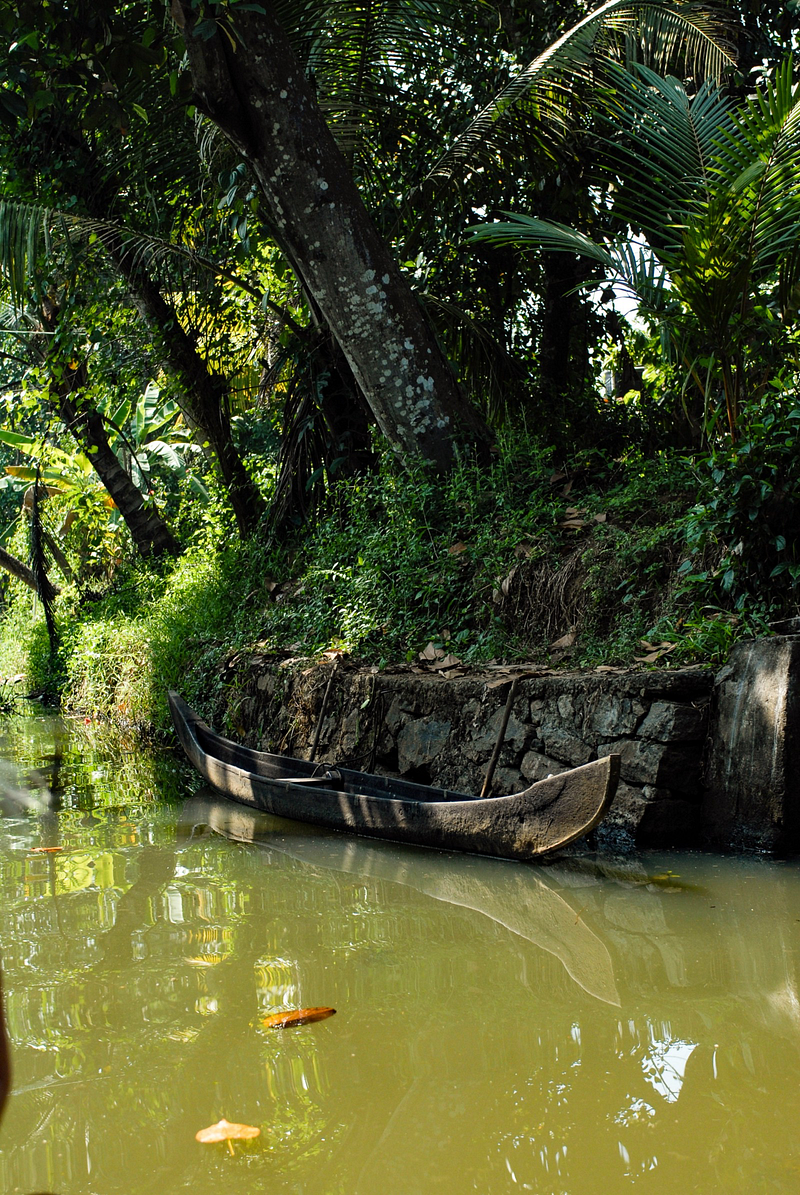
A wisteria-purple haze, lit by an almost otherworldly slant of the sunlight drifting through the smoke from evening cooking fires, enlivens the air, and brings a pleasantly cloying scent of incense and cumin. The sun, its reflection trailing long across the glassy water, spreads its golden cloak across the sky and tints the clouds to purple ink and hibiscus pink.
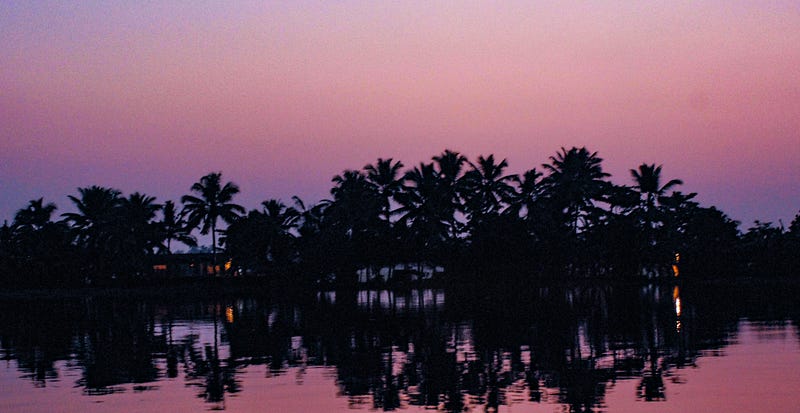
Life here is simple. But the people look happy — more content than most Americans.
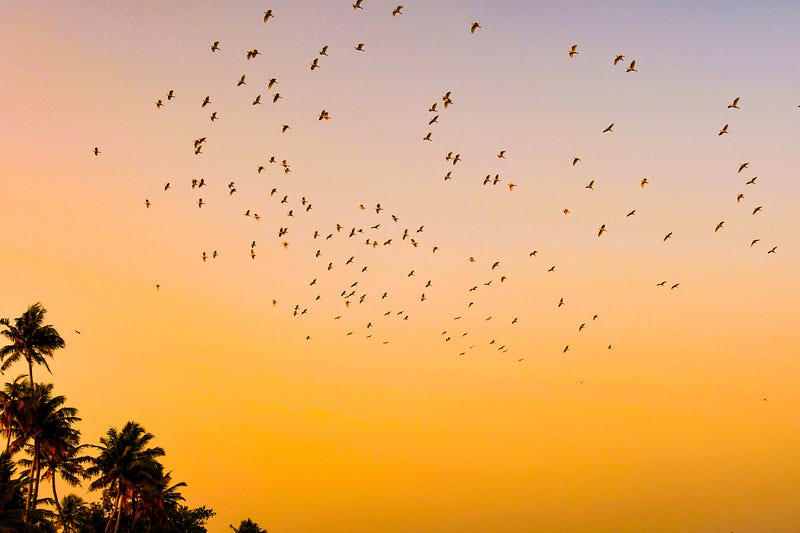
Their day unfolds with a certain rhythm which hums along with the sound of the waves lapping at the steps dropping down into the river, or the waterfowl crying out to one another as they float across a saffron-colored sky at sunrise, or the voices of families chattering while dipping bits of roti into their evening meal. All the while, the scent of the smoke and flowering hibiscus and the tinkles of laughter carry across the waters.
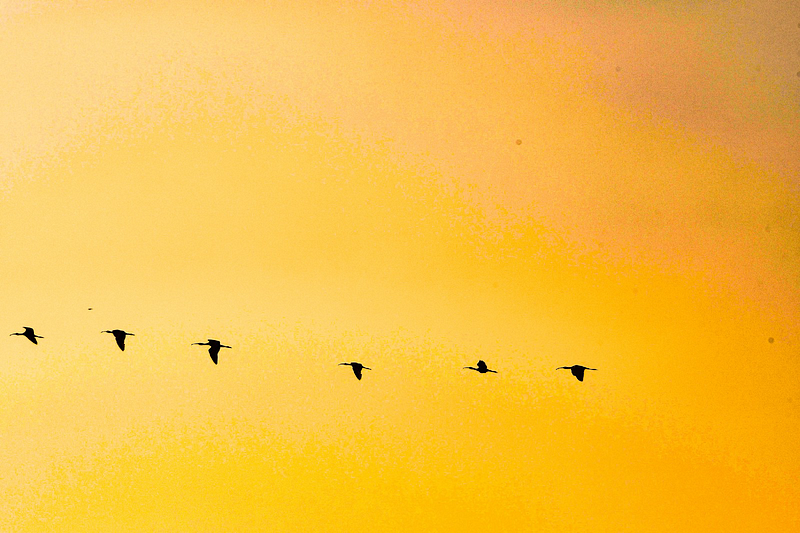
When I visualize “heaven” in my mind, it is that place in Kerala, when we floated through a dream tinged with liquid sun melting over the particles cast into the air from those cooking fires. I sit on the tip of the deck, my camera clutched to my chest as I wait to get close enough to that kingfisher to snap his photo. Or, perhaps, my husband and I are now enjoying a glass of wine while we recline on wide pillows sprawled across the deck and watch history pass by.
I remember one evening, at the Coconut Lagoon, when we perched on the porch steps, at the tip of one of those canals where it spilled out into a larger body of water. The sun, tinted mango on top and fuscia below, hovered just above the mist rising up from the backwaters.
A still stretch of shallow water at the shore, bordered by wild water hyacinth, which divided it from the greater stretch of open water beyond, reflected the sky with a liquid silver sheen. The rippling waves further out hinted at the greatness of the expanse of the inland sea. Translucent clouds, layered like lace, caught the last spark of the sun.
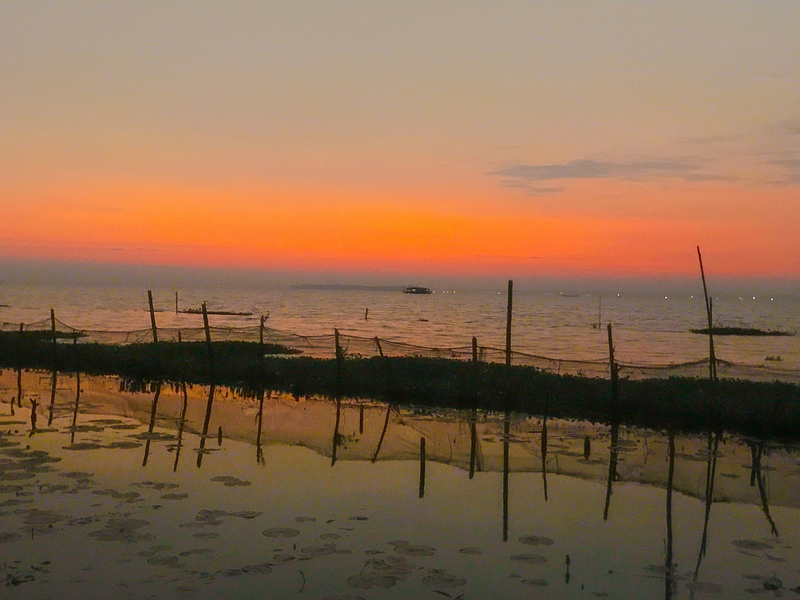
We breathed in the sweet, heavy scent of pink lotuses sprouting from the shallows, their heads closing and nodding in slumber. The jingle of a cow bell carried in the still air. School children chattered as they fluttered by, some in uniforms, some in more colorful dress, some on rickety bikes, some on foot.
The schoolgirls’ shiny black braids swung at their hips, and their anklets sang. One by one, lights from the windows of huts and the orange glow of flames appeared from the other side of the lake. The last of the fisherman, in their brightly-painted wooden canoes, bundled with nets and gear, poled their way home, their silhouettes stark against the splendor of the sunset.
Thinking of this place makes my throat catch. My heart skips fast when I imagine the timelessness of this world, a place where the faint scent of the ocean, not so far away, mingles with the mist, and hawks and seabirds dip and dive with the breeze, while towering palms rustle overhead like wind chimes made of seashells.
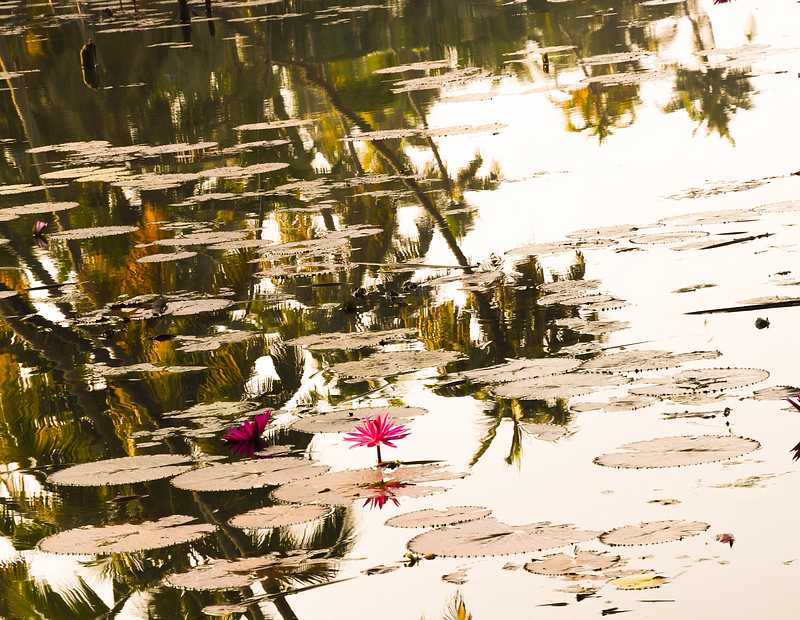
Here, time is different, more spacious. The evening beckons. The crickets sing. The bottoms of clouds are painted pink.
I envision myself drifting through those languid waters. The waves lap at the hull of the boat, soothing us like a mother’s arms as she cradles us. And I can feel a part of myself settle, sinking into that embrace.
There is a happiness in the simplicity of this life. The modern world has not quite touched this place yet. And perhaps the locals aren’t reaching too hard for it because they already have what they need.
Perhaps we all need to find a way to touch someplace like this, a place where time can stand still, even if only in our minds and our memories. I imagine that the next time I am in Kerala, there will probably be more cell phones and televisions. But in my visions of this heaven on earth, a place hovering between water and sky, where the light angles low and birds call as they glide above the soft waves, life will always exist like this.
I hope you enjoyed reading this. Many more stories about my adventures in India over the years are soon to follow. You might also enjoy:
©Erika Burkhalter, story and photos, all rights reserved.


