
TYLER WODEN | NEWS | ISRAELI-PALESTINIAN CONFLICT | NEW WRITERS WELCOME
Unpacking the Israeli-Palestinian Conflict’s Complex History
Let’s Break Down Some Key Events Of History
The History
As a history student, and someone interested in the political state of things, my attention has come to the following issue: the Israeli-Palestinian conflict to be exact.
The Israeli-Palestinian conflict is a complex and longstanding issue with deep historical roots. Here is a simplified breakdown of key events over the past century:
- Early Immigration: In the late 19th century, Jewish immigrants began settling in Palestine, inspired by the idea of a Jewish homeland.
- Balfour Declaration: In 1917, the British government endorsed the establishment of a Jewish national home in Palestine with the Balfour Declaration.
- Arab Revolt: In the 1930s, tensions between Arabs and Jews led to an Arab revolt, which the British violently suppressed.
- UN Partition: In 1947, the United Nations voted to partition Palestine into an Arab state and a Jewish state, leading to civil conflict.
- Creation of Israel: In May 1948, Israel declared independence, resulting in an Arab-Israeli war and Israel gaining control of 78% of the territory.
- Six-Day War: In 1967, Israel launched a pre-emptive strike against neighbouring countries, capturing the rest of Palestine, including the West Bank, Gaza Strip, and Jerusalem.
- Oslo Accords: In 1993, the Oslo Accords were negotiated, leading to the creation of the Palestinian National Authority with partial autonomy in the West Bank and Gaza Strip.
- Rise of Hamas: The lack of a land bridge between the territories resulted in different governing forces: Hamas in Gaza and Fatah in the West Bank.
- Ongoing Conflict: From 2007 onwards, there have been numerous conflicts between Israel and Gaza, with Israel controlling Gaza’s borders, except for the one with Egypt.
- Recent Events: The Israeli-Palestinian conflict continues, with issues like a two-state solution, Israeli settlements, Jerusalem’s status, and the refugee question remaining unresolved.
What Does It Mean?
Do you have friends in the Middle East? I do. And this is impacting them.
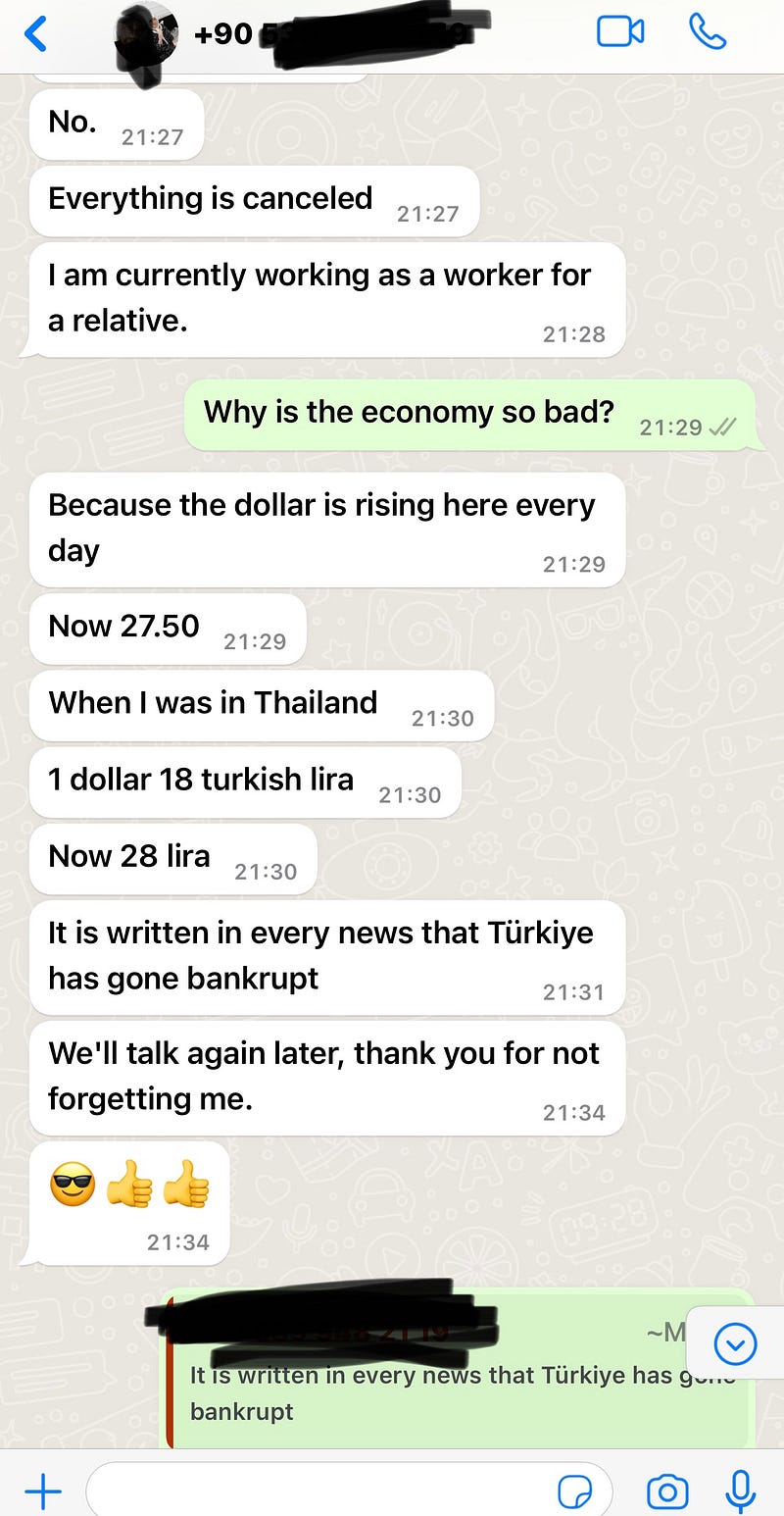
I offer a breakdown to you of the consequences. The Israeli-Palestinian conflict has far-reaching consequences for both the region and the world. Here are some insights into what this ongoing conflict means:
- Regional Instability: The conflict contributes to instability in the Middle East. It has the potential to spill over into neighbouring countries and regions, exacerbating existing tensions and conflicts. This instability can impact the security and stability of the entire Middle East.
- Humanitarian Crisis: The conflict has led to a significant humanitarian crisis, with countless people on both sides suffering the consequences of violence, displacement, and economic hardship. The world has witnessed the loss of countless lives, and the living conditions in Gaza and the West Bank remain challenging.
- Diplomatic Tensions: The Israeli-Palestinian issue has been a source of tension in international diplomacy. Different nations have varying stances on the conflict, and this has implications for diplomatic relations, alliances, and global politics.
- Terrorism and Radicalisation: The conflict can be exploited by extremist groups to recruit and radicalise individuals. This has implications for global security, as it can lead to acts of terrorism beyond the immediate region.
- Obstacle to Peace: The unresolved Israeli-Palestinian conflict remains a major obstacle to peace in the Middle East. It hinders progress on other regional issues and perpetuates a cycle of violence and distrust.
- Global Perception: The world’s perception of the Israeli-Palestinian conflict can shape public opinion and influence the policies of countries and international organisations. It’s a matter that garners significant attention and emotional investment globally.
- Two-State Solution: The question of a two-state solution, where both Israel and Palestine coexist peacefully, remains a central issue. The failure to achieve this solution has implications for the future stability and security of the region.
If you’d like some evidence for all of this, here you go:
To Summarise
In summary, the Israeli-Palestinian conflict is a complex issue with profound implications for the Middle East and the world. It affects regional stability, diplomacy, and security, and addressing this conflict remains a critical challenge for the international community.
That’s all from me today,
~TW~