Unlocking Your Memory’s Potential: Strategies to Remember More of What You Learn
Ever wonder why you forget what you read? Dive into our guide on enhancing memory retention. Discover why we forget and practical tips to remember more. Ready to unlock your memory’s potential?
✨Don’t forget to 👏 and comment💬 to share your views/thoughts. ✨
The Memory Maze: Understanding Why We Forget
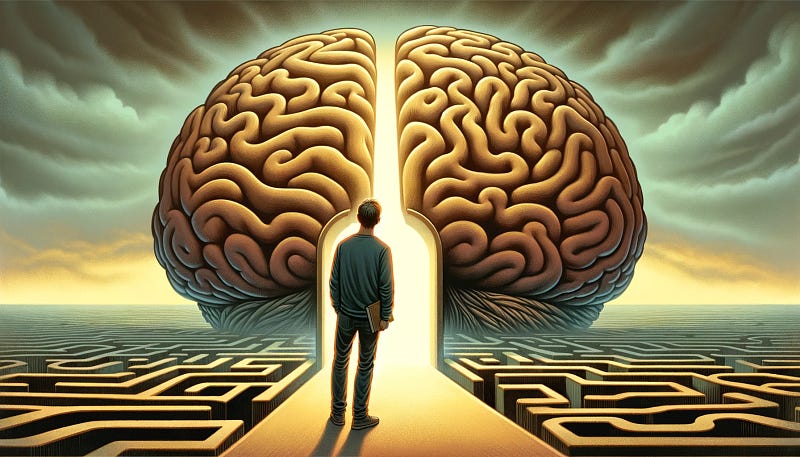
In the labyrinth of our minds, memory often plays hide-and-seek. Picture yourself at the threshold of an enormous maze, its walls and pathways sculpted in the very likeness of a brain’s intricate folds. This is the Memory Maze. There’s you, standing, a book in hand, eyes glimmering with a mix of bewilderment and determination. The journey into the maze mirrors our quest to fathom why our memories, like slippery fish, often evade our grasp. 🧠🔍
Hermann Ebbinghaus, a sage in the realm of psychology, once charted this elusive nature of memory with his ‘forgetting curve’. This curve is steeper than a mountain trail, showing how rapidly memories can fade within the first day of learning. Like footprints on a beach washed away by waves, our memories can vanish unless we repeatedly walk the same path.
But why does this happen? Let’s saunter down the first pathway of our maze — the digital age. Today, our minds, like overstuffed attics, hoard a myriad of information. The internet, a double-edged sword, presents a buffet of knowledge where we binge, yet retain little. Our brains have become like curious tourists, snapping photos (memories) but spending too little time at each attraction to truly appreciate it.
In an era where Google is the grand library and YouTube the ultimate storyteller, our memory has shifted from ‘recall’ to ‘recognition’. Gone are the days of memorizing epic poems or lengthy speeches. Instead, we now rely on recognizing where to find information, not storing it. As the wise Jared Horvath observes, our brains value recognition memory more — it’s about knowing where the info is, not embedding it in our minds.
And so, we come to a fork in the maze. One path leads to the traditional art of memory — a road less traveled these days. The other, a superhighway of digital convenience, where information is always at our fingertips, but rarely in our hearts and minds.
Let’s pause here and ponder — have you experienced this shift in your memory? How has the digital age influenced your way of remembering? Reflect on this as we prepare to delve deeper into the Memory Maze in the next chapters. 🤔💡
The Internet’s Double-Edged Sword: Externalized Memory and Its Consequences
In the modern odyssey of information, the Internet emerges as a double-edged sword, both a vast treasury and a sly thief of our memory. Envision a scene where a person, let’s call them Alex, is ensconced at a desk. Around Alex swirls a whirlpool of digital devices — a laptop, a smartphone, a tablet, each screen alight with the glow of countless social media and search engine icons. This tableau paints a vivid picture of our daily dance with digital deluge. 🌐💻
Our journey into understanding memory now delves into the murky waters of the Internet’s impact. As we wade through this sea of information, we encounter the phenomenon of ‘just-in-time learning.’ This concept, as intriguing as a mystery novel, refers to our tendency to seek information only when it’s immediately necessary. Like magicians pulling rabbits out of hats, we conjure up data with a few keystrokes, only to let it vanish into the ether once our need dissipates.
But what does this do to our memory? Picture a library where books are borrowed and returned without ever being read. That’s akin to how we treat knowledge in the age of the Internet. We’ve shifted from the deep, enriching recall memory to a more superficial recognition memory. It’s not about storing knowledge in our mental vaults anymore; it’s about knowing the path to the vault.
This shift is further amplified by our binge consumption habits. Whether it’s devouring an entire series in one sitting or skimming through article after article, we are feasting on media without savoring the flavors. This is akin to a bird hastily picking at seeds; it consumes, but does it relish or even remember each morsel?
But here lies the rub: as we gulp down information, are we truly learning? Are these bytes of data weaving themselves into the tapestry of our knowledge, or are they just fleeting visitors, leaving no trace in our minds? As Einstein poignantly said, “Information is not knowledge.” This rings truer than ever in our digital age.
So, dear reader, let’s ponder this: in your own voyage through the digital world, how has the deluge of information shaped your memory? Do you find yourself in the thrall of ‘just-in-time’ learning, or do you yearn for the depth of true understanding? Reflect on these musings as we prepare to journey further into the art of remembering. 🤔✨

The Art of Remembering: Strategies for Effective Memory Retention
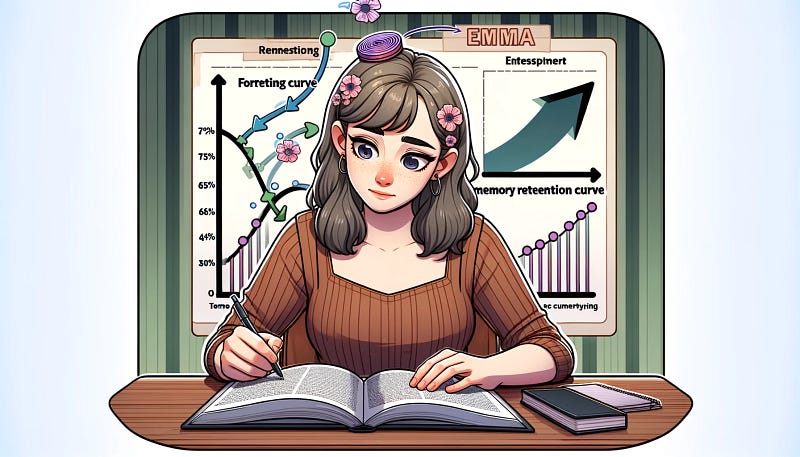
In the tapestry of our learning journey, the art of remembering emerges as a vital thread. Picture this: a student, let’s call her Emma, sits diligently at her study table. The scene is one of deep focus: an open book lies before her, its pages brimming with knowledge, while she pens questions in a notepad, her brows knitted in concentration. Behind her, a graph depicting the forgetting curve gracefully arcs downwards, only to ascend again, symbolizing the transformation into a memory retention curve. 📚🤔
This setting is more than a mere study scene; it’s the battlefield where Emma confronts the forgetting curve, armed with the potent weapon of spaced learning. This technique, as timeless as the art of storytelling, involves revisiting information at strategically spaced intervals. Like a gardener who waters a plant not just once, but regularly, to ensure its growth, spaced learning nurtures the seeds of knowledge in our minds, allowing them to flourish and take root.
In the center of this battlefield stands Scott H. Young’s Question Book Method, a beacon of hope against the tide of forgetfulness. This method, simple yet profound, transforms passive reading into an active quest for understanding. Emma, our diligent student, does not merely glide her eyes over the words; instead, she challenges herself with questions that probe the depths of the content. It’s akin to a detective sifting through clues, each question a step closer to unraveling the mystery of lasting knowledge.
This is where the journey of reading morphs into a quest for understanding. Emma’s questions, scribbled with a mixture of curiosity and resolve, are not just random queries. They are carefully crafted keys designed to unlock the treasure trove of recallable memory. Each time she revisits these questions, she strengthens the pathways in her brain, turning fleeting information into lasting knowledge.
But the art of remembering doesn’t end here. It’s a practice that extends beyond the confines of a study room. It’s about engaging with the world around us, turning every experience into a learning opportunity. When Emma walks in the park, the birds and the trees are not just elements of nature; they become subjects of wonder, prompting questions and igniting a desire to learn more.
And now, dear reader, let’s turn the lens towards you. How do you weave the fabric of your memories? Do you let the threads of knowledge slip away, or do you knit them into the tapestry of your mind with the art of questioning and spaced learning? Reflect on this as we prepare to explore further the transformative power of active engagement with knowledge in the next chapter. 🌟✍️
From Reading to Remembering: Transforming Information into Knowledge
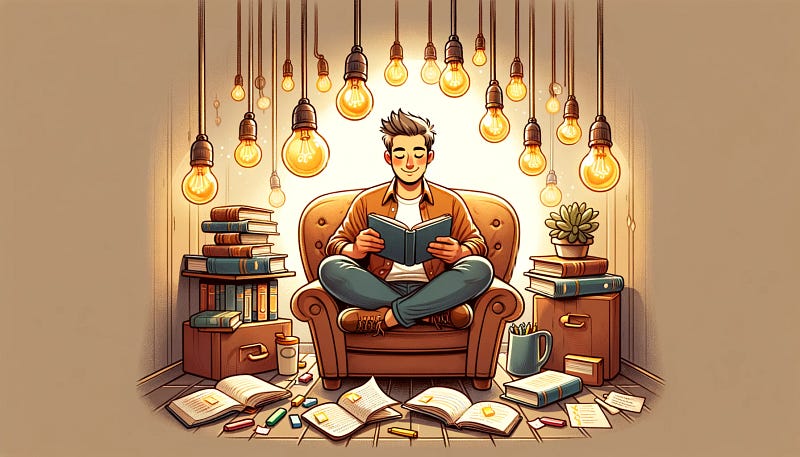
In our narrative of nurturing knowledge, we enter a sanctuary of learning: a cozy reading nook. Here, we meet Jack, a voracious reader, ensconced in his favorite chair, engrossed in a book. His reading nook is a haven, a place where reading transcends mere word consumption. It’s a realm where each sentence, each word, is a stepping stone to deeper understanding. 📖💡
Imagine Jack, his fingertips tracing the lines of text, his mind alight with curiosity. He isn’t just reading; he’s embarking on an expedition of understanding. As he delves into the pages, he highlights key phrases, scribbles questions in the margins, and pauses now and then to ponder. Above him, lightbulbs flicker on, each a symbol of an epiphany, a moment of clarity in the vast sea of information.
This is where the magic happens: the transformation of passive reading into active engagement. Jack’s journey in this cozy corner is more than just reading; it’s an active dialogue with the author, with the ideas presented in the book. He challenges concepts, questions theories, and connects the dots. This process is like a blacksmith forging a sword, turning raw metal into a finely honed blade of knowledge.
In this chapter of our story, the focus is on the techniques that turn reading into a powerhouse of memory and understanding. It’s not just about the words read; it’s about the thoughts provoked, the connections made, the insights gained. As Jack reads, he’s not just moving his eyes across a page; he’s lifting weights with his brain, each sentence a repetition that strengthens his cognitive muscles.
But let’s pause and ponder: How often do we, like Jack, transform our reading into a fully engaged activity? Do we allow ourselves to be mere spectators, or do we step into the arena, ready to wrestle with the ideas presented to us? As we turn the page to the next chapter, let’s carry with us the image of Jack, absorbed in his book, surrounded by lightbulbs of understanding, a testament to the power of active engagement in learning. 🤔✨
Your Memory Workout Plan: Simple Exercises to Boost Your Brain
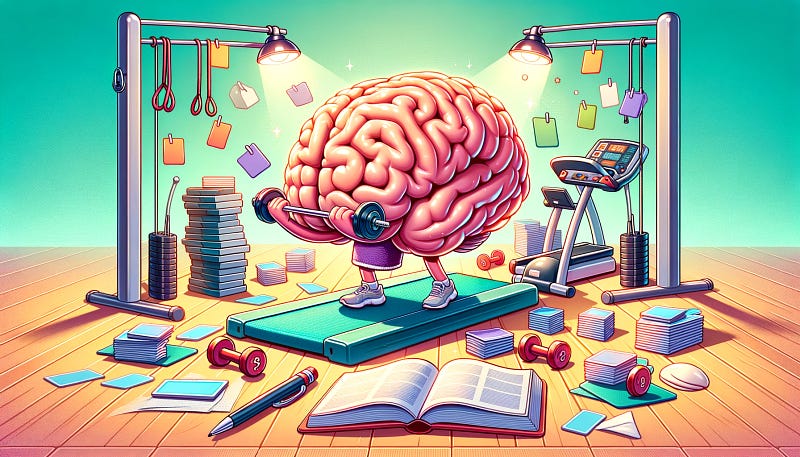
As we embark on the final chapter of our memory-enhancing saga, let’s visualize our brain as a muscle, flexing and strengthening with each new piece of knowledge. Imagine a vivid scene: a brain surrounded by an array of exercise equipment — weights, dumbbells, even a treadmill — each representing a different method to enhance memory. Picture this brain, not as a static organ, but as an active, dynamic entity, constantly evolving and strengthening. 🧠💪
In the forefront of this mental gymnasium, a book lies open, a pen ready at its side, symbolizing the tools essential for our cerebral workout. This image serves as a metaphor for the simple, yet effective exercises we can incorporate into our daily routine to bolster our memory.
Firstly, let’s consider the power of mental repetition, akin to lifting weights. Just as muscles grow stronger with each lift, our memory solidifies each time we revisit a piece of information. It’s like tracing a path in a garden; the more we walk it, the more defined it becomes.
Next, we have the treadmill of continuous learning — a metaphor for the consistent and ongoing engagement with new information. Keeping our brain active by learning new skills, whether it’s a new language or a musical instrument, is akin to a cardio workout for the mind, keeping it agile and healthy.
Furthermore, mindfulness and meditation are like the stretching exercises of our workout regime. They help us focus, improving our ability to concentrate and retain information. Picture this as a yoga mat in our mental gym, where we practice mindfulness to enhance our cognitive flexibility.
But, just like any workout plan, the key is consistency and variety. Mixing different types of memory exercises — from flashcards (our mental dumbbells) to teaching others (akin to a group workout class) — not only makes the process enjoyable but also more effective.
As we conclude this journey, let’s ponder: How can we implement these exercises in our daily life? Which of these activities resonate with you, and how can you incorporate them into your daily routine to keep your brain in tip-top shape? Remember, the path to a stronger memory is not a sprint, but a marathon, filled with persistence, patience, and perseverance. 🏃♂️📚
Thanks for reading. ❤️ Leave your views/thoughts💭, I’d love to hear from you! ✨
If my words touched your soul, please consider supporting my journey: [Donate Link](https://www.buymeacoffee.com/tokyofullstack). Your generosity weaves into every story. ❤️